
Hypoponera sulcatinasis
- Sci. Name
- Hypoponera sulcatinasis
- Tribe
- Ponerini
- Subfamily
- Ponerinae
- Author
- Santschi, 1914
- Distribution
- Found in 1 countries
Introduction
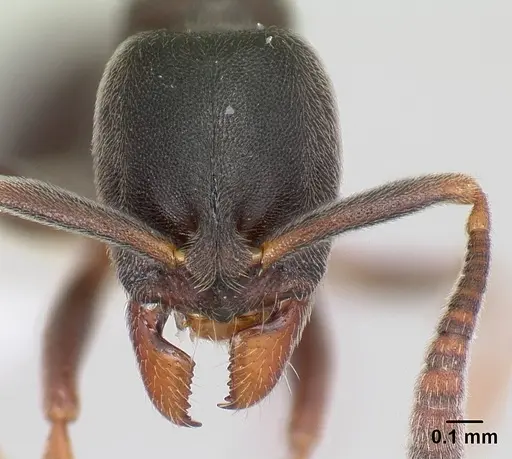
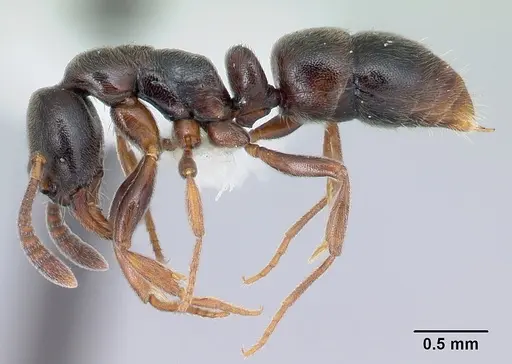
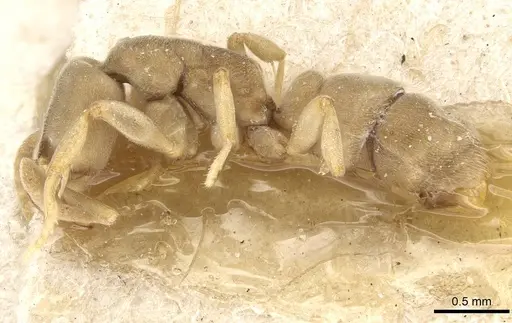
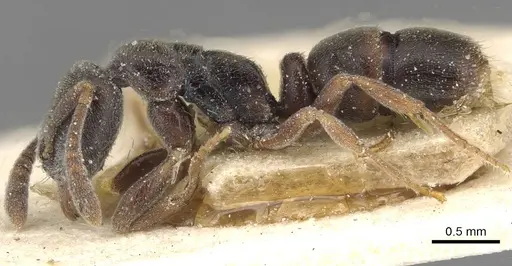
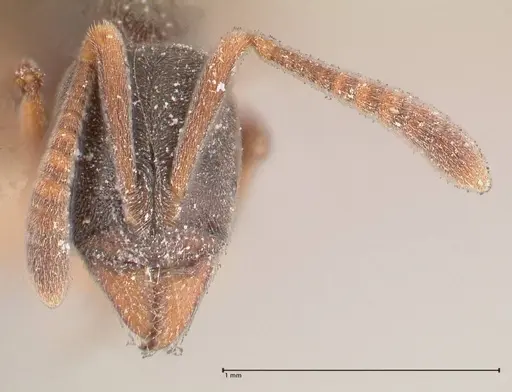
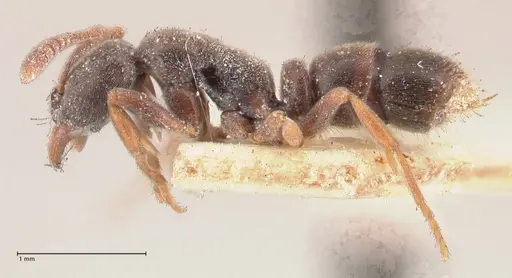
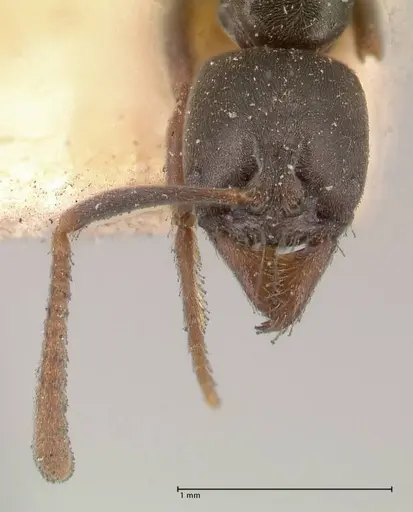
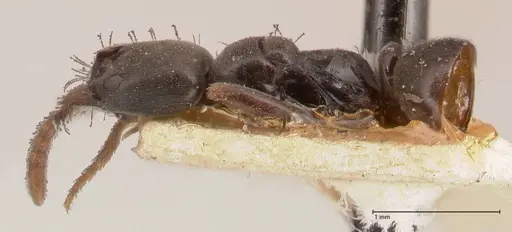
Hypoponera sulcatinasis is a large, darkly colored ant species native to South Africa, specifically found in the Natal and Kwazulu-Natal regions . Workers are immediately recognizable by their densely sculptured propodeal dorsum - the most strongly sculptured in the Hypoponera boerorum species group - making them easily identifiable among related species . Their coloration ranges from dark brown to blackish brown, and they possess small but distinct eyes with 4-6 ommatidia . This species remains one of the most poorly documented ant species in the world, with biology and colony structure completely unknown in the scientific literature . The few known specimens were collected in the early 1900s, and no research has since clarified their founding behavior, colony size, or specific care requirements. This makes them an extremely challenging species to keep, suitable only for advanced antkeepers willing to experiment with genus-level care assumptions.
Quick Summary
- Difficulty: Expert
- Origin & Habitat: South Africa (Natal, Kwazulu-Natal), Afrotropical region [1]. The type locality is Richmond, Natal. No specific habitat data exists, but Hypoponera species typically inhabit forest floors and rotting wood in shaded, damp areas.
- Colony Type: Unknown, colony structure has never been documented in scientific literature.
- Size & Growth:
- Queen: Size data unavailable, queen has never been described in scientific literature
- Worker: ~2.5-3.5mm, inferred from Hypoponera genus patterns (no total length measurement available)
- Colony: Unknown, no colony size data exists
- Growth: Unknown, no development data available
- Development: Unknown, no direct measurements exist. (Development timeline is completely unstudied. Ponerine ants typically have slower development than many common ant genera.)
- Antkeeping:
- Temperature: Aim for 22-26°C based on typical Ponerinae preferences and the warm climate of their South African range. A gentle gradient allowing workers to self-regulate is recommended.
- Humidity: Keep substrate moderately moist, damp but not waterlogged. Ponerinae ants typically prefer forest-floor conditions with good moisture but adequate ventilation to prevent mold.
- Diapause: Unknown, no seasonal data exists. South African species may have reduced activity during cooler months but true hibernation requirements are unconfirmed.
- Nesting: No specific data exists. Based on genus patterns, they likely nest in rotting wood, under stones, or in soil chambers. A naturalistic setup with damp substrate and narrow chambers would be the best starting point. Y-tong or plaster nests with moisture retention may work.
- Behavior: Behavior is completely unstudied. Based on genus patterns, Hypoponera ants are typically secretive, slow-moving predators that forage singly on the forest floor. They have a functional sting typical of Ponerinae ants. Their small eyes (4-6 ommatidia) suggest limited visual capability, relying more on chemical and tactile cues. Escape risk is moderate given their small size, standard barrier precautions apply.
- Common Issues: complete lack of biological data means all care is experimental, colonies may fail for unknown reasons, no confirmed diet acceptance, may refuse standard ant foods, founding is extremely difficult with no documented queen behavior, slow growth and secretive nature make it hard to assess colony health, risk of colony collapse with no known causes or solutions
Species Identification and Distinction
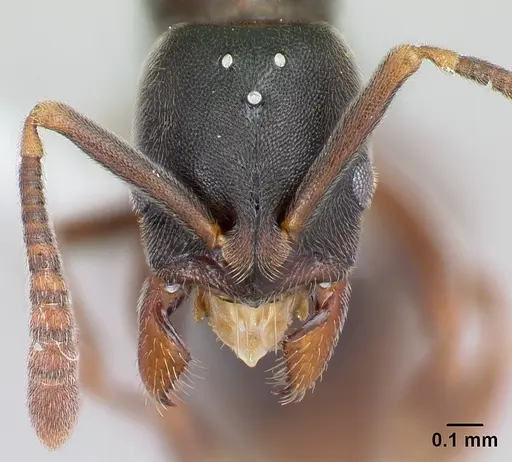
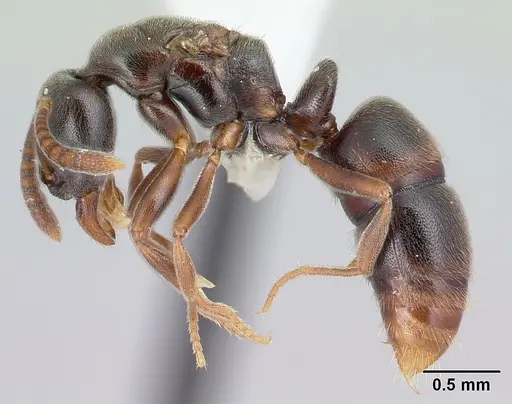
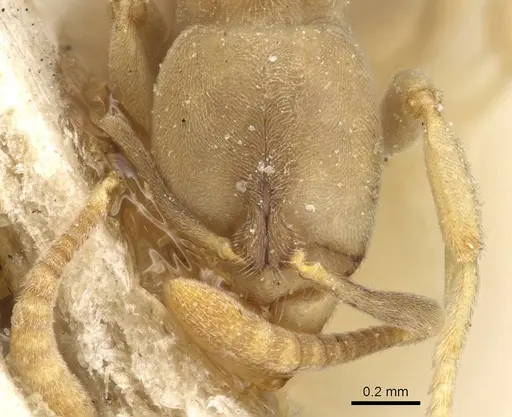
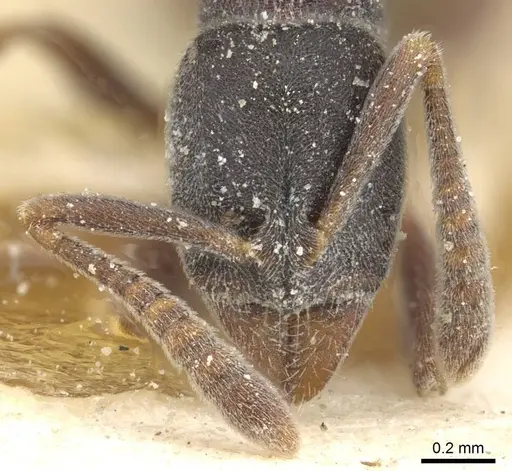
Hypoponera sulcatinasis is immediately recognizable by its densely sculptured propodeal dorsum, the most strongly sculptured of any species in the Hypoponera boerorum group. The propodeal dorsum is reticulate-punctate with sculpture covering the entire surface, contrasting sharply with the smooth, shining declivity [1]. Workers have small but distinct eyes with 4-6 ommatidia, and the metanotal groove is distinctly incised on the mesosoma dorsum. The coloration is consistently dark brown to blackish brown. These morphological features distinguish it from all other Hypoponera species in the region, with only Hypoponera hebes showing similar propodeal sculpture, but that species belongs to a different species group [1].
Housing and Nest Setup
Since nothing is known about this species' natural nesting preferences, you must make educated guesses based on genus patterns. Hypoponera species typically nest in rotting wood, under stones, or in soil chambers in shaded, damp forest-floor environments. A naturalistic setup with damp substrate (like a mix of soil and organic material) would be a reasonable starting point. Alternatively, a Y-tong or plaster nest that retains moisture while allowing some ventilation could work. Avoid completely dry environments. The nest should have narrow chambers scaled to their small worker size. Provide a water tube and keep the nest substrate consistently moist but never waterlogged. Given their secretive nature, include plenty of dark, confined spaces where they can forage and rest undisturbed.
Feeding and Diet
Diet is completely unstudied for this species. Based on genus patterns and typical Ponerinae behavior, they are likely predatory, feeding on small invertebrates like springtails, mites, and other micro-arthropods found in forest floor litter. You should start by offering small live prey items, pinhead crickets, fruit flies, and especially springtails are good candidates. Some Ponerinae species accept protein jelly or crushed insects. Sugar water acceptance is uncertain, Ponerinae are not typically heavy honeydew consumers, but you can offer a small amount occasionally and observe. Given the complete lack of dietary data, be prepared for experimentation. Start with live prey and document what gets accepted.
Temperature and Seasonal Care
No specific temperature data exists for this species. Based on their origin in the warm climate of Kwazulu-Natal, South Africa, aim for temperatures in the 22-26°C range. A slight gradient allowing workers to choose their preferred temperature is ideal, around 24°C in the center with cooler areas around 20-22°C. South Africa experiences seasonal variation, so cooler winter months may trigger reduced activity, but true hibernation requirements are unknown. Do not let temperatures drop below 15°C. If the colony shows signs of slowing during winter, reduce feeding and expect minimal activity, but maintain basic moisture. This is speculative care based on geographic origin and genus patterns.
Colony Founding Challenges
Queen founding behavior has never been documented for this species, making colony establishment extremely difficult. If you obtain a queen, expect claustral founding (queen seals herself in and lives off stored fat reserves) based on typical Ponerinae patterns, but this is unconfirmed. The safest approach is to set up a claustral founding setup: a small test tube or container with damp cotton, kept in darkness at 24-26°C, and left completely undisturbed for 8-12 weeks before checking. Do not feed the founding queen, if she is claustral, she will not eat and may abandon or consume the brood if disturbed. If she is semi-claustral (must forage), she will likely fail without prey. Given the complete lack of data, founding success rates are unknown and likely very low.
Frequently Asked Questions
How difficult is Hypoponera sulcatinasis to keep?
This is an expert-level species due to complete lack of biological data. Nothing is known about their diet, founding behavior, colony size, or specific care requirements. You will be experimenting with every aspect of their care. Only experienced antkeepers should attempt this species.
What do Hypoponera sulcatinasis ants eat?
Diet is completely unstudied. Based on genus patterns, they are likely predatory on small invertebrates. Offer small live prey like springtails, fruit flies, and pinhead crickets. Protein jelly may be accepted. Sugar water acceptance is uncertain.
What temperature do they need?
No specific data exists. Based on their South African origin, aim for 22-26°C with a gentle gradient. Start around 24°C and adjust based on colony activity. Do not let temperatures drop below 15°C.
How big do colonies get?
Colony size is completely unknown, no colony size data exists in scientific literature. Based on typical Hypoponera species, colonies are likely small to moderate.
Do they need hibernation?
Diapause requirements are unconfirmed. South African species may have reduced activity during cooler months but true hibernation is not documented. If the colony slows in winter, reduce feeding and maintain moisture at room temperature rather than forcing hibernation.
Can I keep multiple queens together?
Colony structure is completely unstudied. No data exists on whether they are monogyne (single queen) or polygyne (multiple queens). Do not attempt combining unrelated queens without data, this is experimental territory.
How long does development take?
Egg-to-worker timeline is unknown, no development data exists. Based on typical Ponerinae patterns, development likely takes several months, but this is a rough guess with no scientific backing.
What nest type is best?
No specific data exists. Based on genus patterns, they likely nest in rotting wood or soil. A naturalistic setup with damp substrate or a moisture-retaining Y-tong/plaster nest would be appropriate starting points. Avoid completely dry environments.
Do Hypoponera sulcatinasis ants sting?
Hypoponera belongs to the Ponerinae subfamily, which typically have functional stings. Handle with care and expect the possibility of a sting if provoked.
Where can I find this species?
This species is extremely rare in the antkeeping hobby. It is only known from a few specimens collected in the early 1900s in South Africa's Kwazulu-Natal region. Commercial availability is virtually nonexistent.
Are they good for beginners?
Absolutely not. This species is among the most difficult to keep due to complete lack of biological data. Every aspect of care is experimental. Beginners should start with well-documented species like Lasius niger, Camponotus species, or Myrmica rubra.
Why is so little known about this ant?
Only a few specimens have ever been collected, all in the early 1900s from South Africa's Natal region. No researchers have documented their biology, colony structure, or behavior since the original species descriptions. This makes them one of the most poorly understood ant species in captivity [2].
Report an Issue
The current care sheet is based fully on literature. See inconsistencies, or something that's incorrect? Please , it will be resolved after review from an admin. Contributing to the blogs tab also helps providing information, to make us be able to further improve the caresheets. Thank you for your support!
References

This caresheet is licensed under CC BY-SA 4.0 .
Community Blogs
CASENT0217347
View on AntWeb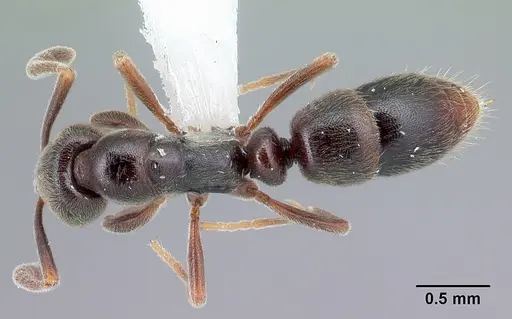
CASENT0217349
View on AntWeb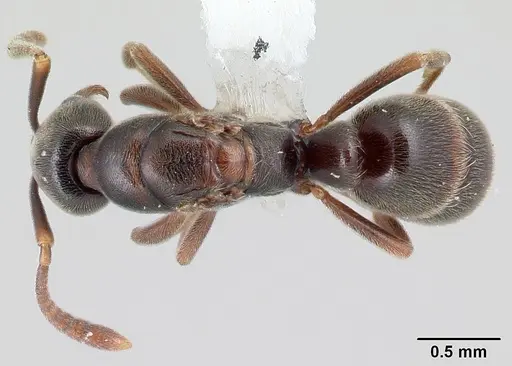
CASENT0915207
View on AntWeb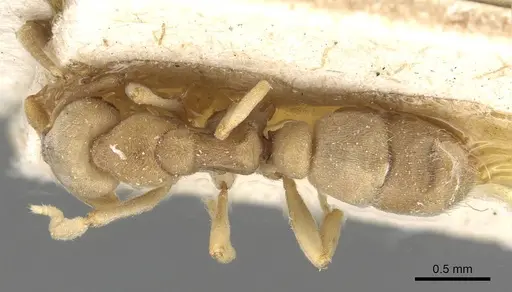
CASENT0915209
View on AntWeb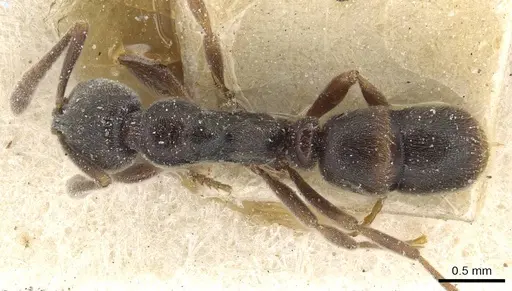
FOCOL1000
View on AntWeb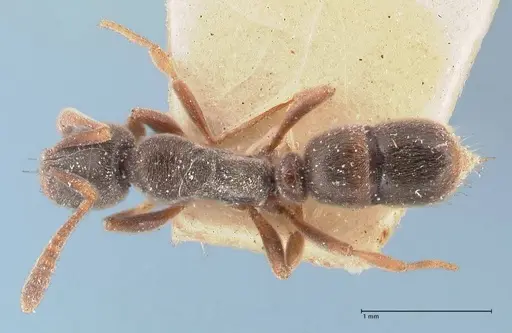
FOCOL1001
View on AntWeb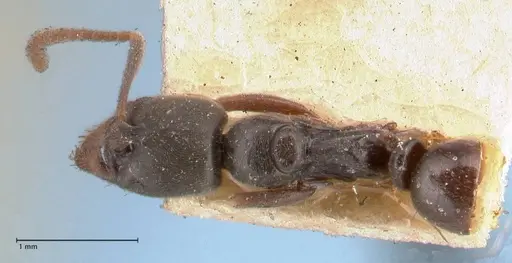
Literature
Loading distribution map...Loading products...