
Hypoponera segnis
- Sci. Name
- Hypoponera segnis
- Tribe
- Ponerini
- Subfamily
- Ponerinae
- Author
- Bolton & Fisher, 2011
- Distribution
- Found in 4 countries
Introduction
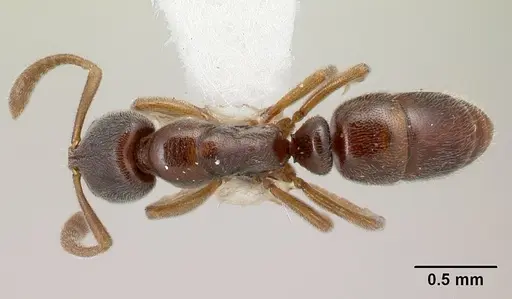
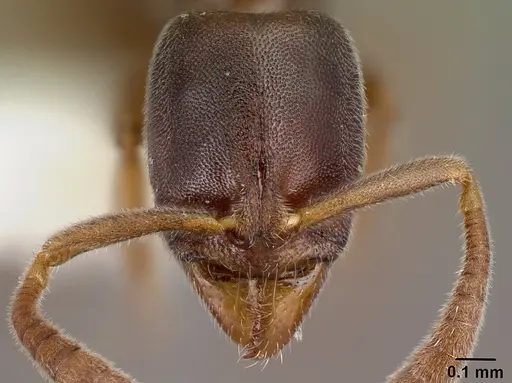
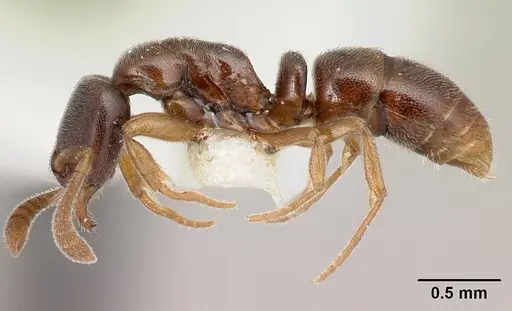
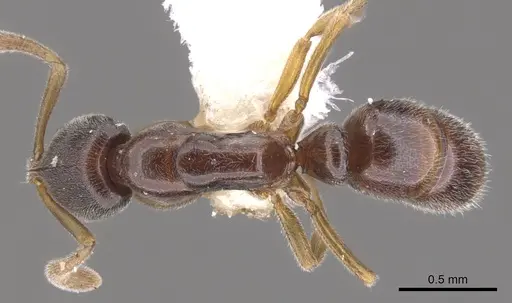
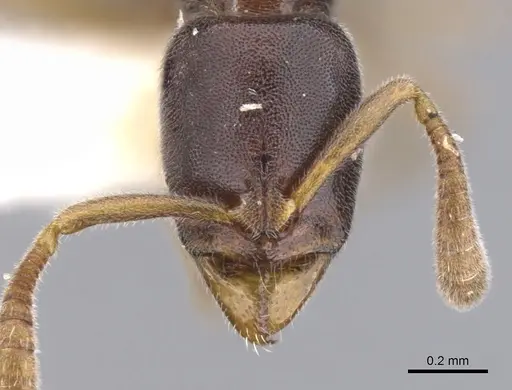
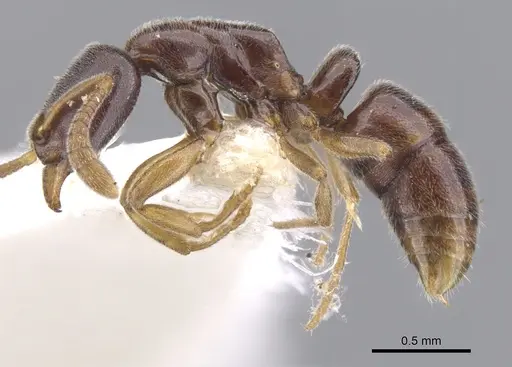
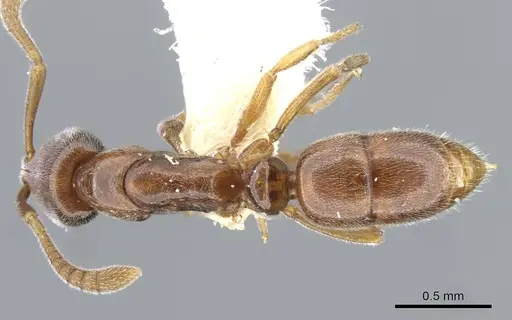
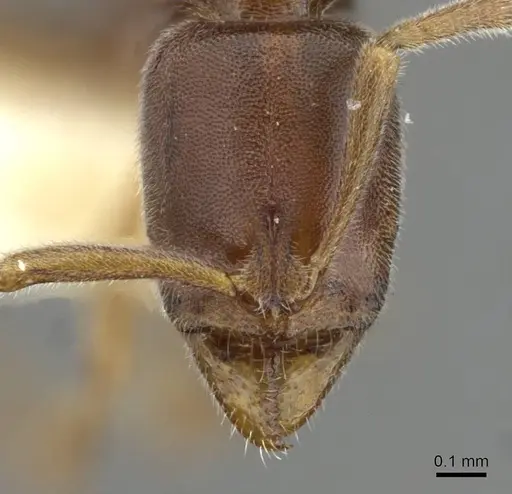
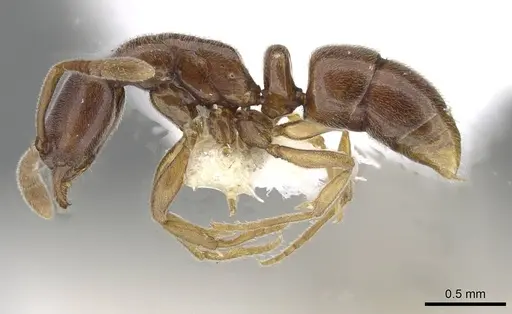
Hypoponera segnis is a tiny ponerine ant species from the Afrotropical region, known only from a handful of specimens collected in Rwanda, the Democratic Republic of Congo, and Kenya. Workers are quite small, with a distinctive tall and slender petiole (the narrow 'waist' segment between thorax and abdomen). One of the most unusual features of this species is that it appears to be essentially blind - eyes are either completely absent or reduced to a single poorly-defined ommatidium. The species was only formally described in 2011 by Bolton and Fisher, and remains one of the most poorly known ants in existence. Nothing is known about its biology, colony structure, or how it reproduces - queens and males have never been collected.
Quick Summary
- Difficulty: Expert
- Origin & Habitat: Afrotropical region, known from Rwanda, Democratic Republic of Congo, and Kenya. Type locality is Kayove, Rwanda at 2100m elevation [1][2]. Found in both primary native forest and secondary forest in Rwanda [3].
- Colony Type: Unknown, queens and males have never been collected, so colony structure is unconfirmed.
- Size & Growth:
- Queen: Unknown, queens have never been collected [4]
- Worker: ~2-4mm total length, inferred from Hypoponera genus patterns [1]
- Colony: Unknown, only small numbers of workers have ever been collected
- Growth: Unknown
- Development: Unknown, no development data exists for this species (Related Hypoponera species typically develop in 6-10 weeks at warm temperatures, but this is a rough estimate with low confidence)
- Antkeeping:
- Temperature: Unknown for this species. Based on its Afrotropical distribution and high-elevation collection site (2100m), aim for warm conditions around 24-28°C with a slight gradient. Monitor colony activity to find their preferred temperature.
- Humidity: Likely requires moderate to high humidity given its forest floor habitat in Rwanda. Keep nest substrate consistently moist but not waterlogged. Provide a humidity gradient so ants can choose their preferred zone.
- Diapause: Unknown, no data on overwintering requirements. The high-elevation Rwandan habitat suggests some seasonal temperature variation, but diapause behavior is unconfirmed.
- Nesting: No data on natural nesting preferences. Based on related species and forest floor habitat, likely nests in soil, leaf litter, or rotting wood. In captivity, a small test tube setup or Y-tong nest with moist substrate would be appropriate starting points.
- Behavior: Nothing is directly known about this species' behavior. Based on genus-level patterns, Hypoponera ants are typically generalist predators that hunt small invertebrates. Their near-blind condition suggests they rely more on chemical (pheromone) and tactile cues than visual information. They are likely secretive and slow-moving, typical of Ponerine ants. This species has a functional stinger typical of the Ponerinae subfamily, though given their tiny size, it likely cannot penetrate human skin effectively.
- Common Issues: almost no biological data exists, everything beyond basic identification is unknown or inferred, queens have never been collected so captive breeding from wild colonies may be extremely difficult, near-blind condition may affect feeding responses, offer prey that moves or vibrates, slow growth and secretive behavior may frustrate keepers expecting visible activity, wild-caught colonies may have unknown parasites or diseases since so few specimens have been studied
Why Keep Hypoponera segnis?
This is not a species for beginners or even most experienced antkeepers. Hypoponera segnis is one of the most poorly known ant species on Earth, literally nothing has been documented about its biology, colony structure, or captive care requirements. Queens and males have never been collected, meaning we do not even know basic information like how many queens a colony has or how they reproduce. The primary reason to keep this species would be scientific curiosity and the opportunity to potentially discover new information about ant biology. If you succeed in establishing and breeding this species, you would be contributing genuinely new knowledge to science. For most antkeepers, well-documented species like Lasius, Camponotus, or Messor would be far better choices. [1][4]
What We Know About This Species
The scientific description of Hypoponera segnis was published in 2011 by ant taxonomy experts Barry Bolton and Brian Fisher. The species is known from only about 20 worker specimens total, collected at a few sites in Rwanda, the Democratic Republic of Congo, and Kenya. The type locality is Kayove, Rwanda at 2100 meters elevation, this is a highland forest area. Workers are tiny, making them among the smaller ant species. The most distinctive morphological feature is the near-complete absence of eyes, they either have no eyes at all or just a single tiny ommatidium. This suggests they are essentially blind and navigate using chemical and tactile cues. The petiole (waist) is notably tall and slender compared to related species. That is essentially everything we know, no observations of behavior, feeding, reproduction, or anything else. [1][2][4]
Inferring Care from Relatives
Since nothing specific is known about H. segnis, we can make educated guesses based on what we know about the genus Hypoponera as a whole. Most Hypoponera species are generalist predators that hunt small invertebrates on the forest floor. They typically have stingers and can deliver painful bites, though given their tiny size, they probably cannot penetrate human skin effectively. Several Hypoponera species have unusual reproductive strategies, including ergatoid (worker-like) males that fight each other. However, none of this is confirmed for H. segnis specifically. The high elevation of the type locality (2100m) suggests they may tolerate cooler temperatures than typical lowland tropical ants, but this is speculative. Any care advice for this species should be treated as experimental at best.
Housing and Setup Recommendations
Given the complete lack of captive care data, any setup would be experimental. Start with a small test tube setup with a water reservoir, as this provides stable humidity and is easy to maintain. The tube should be kept in a dark or low-light area since this species appears to be essentially blind and likely prefers dark, sheltered microhabitats. Alternatively, a small Y-tong or acrylic nest with narrow chambers scaled to their tiny size could work. Keep the nest humid but ensure some ventilation to prevent mold. Given their likely predatory nature, provide a separate outworld for feeding. Because they are nearly blind, use prey items that move or vibrate to stimulate hunting responses, tiny live fruit flies, springtails, or small crickets would be appropriate. Start with room temperature around 24°C and observe colony behavior to find their preferred conditions.
Feeding and Nutrition
No direct data exists on what Hypoponera segnis eats. Based on genus patterns, they are likely generalist predators that hunt small invertebrates. In captivity, you should offer small live prey items. Appropriate options would include fruit flies (Drosophila), small springtails, pinhead crickets, small mealworms, or other tiny arthropods. Given their near-blind condition, prey that moves or creates vibrations may be more likely to trigger hunting behavior than stationary food. Sugar sources like honey or sugar water are unlikely to be accepted, Ponerine ants are typically predators, not sugar-seekers. Feed small amounts every few days and remove any uneaten prey after 24 hours to prevent mold. Monitor carefully to see if they accept any foods, and be prepared to experiment with different prey types.
Challenges and Expectations
You should expect significant challenges with this species. First, obtaining a colony may be nearly impossible since they are rarely collected and not available from commercial ant sellers. Second, even if you obtain workers, we do not know how to breed them, queens have never been observed. Third, their near-blind condition may make them reluctant to accept captive prey, requiring creative solutions. Fourth, growth will likely be very slow, as is typical for Ponerine ants. Fifth, you may lose the colony without ever knowing why, there simply is no established knowledge base to draw from. This species is best suited for advanced antkeepers with a genuine scientific interest who are willing to document their observations carefully. Any successful captive breeding would represent a genuine contribution to ant biology. [4]
Frequently Asked Questions
Is Hypoponera segnis a good species for beginners?
No. This is not a beginner species. Nothing is known about its biology, colony structure, or captive care requirements. Queens and males have never been collected, meaning we do not even know basic information like how many queens a colony has or how they reproduce. Beginners should stick with well-documented species like Lasius niger, Camponotus floridanus, or Messor barbarus.
What do Hypoponera segnis ants eat?
This is unknown for this specific species. Based on genus-level patterns, they are likely generalist predators that hunt small invertebrates. In captivity, you should experiment with small live prey like fruit flies, springtails, and tiny crickets. They probably will not accept sugar sources like honey or sugar water, as Ponerine ants are typically predators, not nectar feeders.
How big do Hypoponera segnis colonies get?
Unknown. Only about 20 worker specimens have ever been collected in the wild, so we have no data on maximum colony size. Based on their tiny worker size and the general patterns of related species, colonies are likely small, probably under 100 workers. This species appears to be naturally rare or difficult to collect.
Do Hypoponera segnis ants have queens?
We do not know. Queens have never been collected or documented for this species. This is one of the fundamental gaps in our knowledge. It is possible they have ergatoid (wingless) queens like some related Hypoponera species, or perhaps colonies reproduce in some other way entirely. This is one of many mysteries about this species waiting to be discovered.
What temperature should I keep Hypoponera segnis at?
No specific data exists. Based on the species being from a high-elevation Afrotropical location (2100m in Rwanda), aim for warm but not extreme temperatures around 24-28°C. The elevation suggests some tolerance for cooler conditions than typical lowland tropical ants. Use a temperature gradient so the ants can choose their preferred zone, and observe their behavior to find what they like best.
Do Hypoponera segnis ants sting?
Most Ponerine ants, including Hypoponera species, have functional stingers. However, given their tiny size, their stingers are probably too small to penetrate human skin effectively. They may be able to deliver a mild bite, but significant pain is unlikely. As a precaution, handle them gently and avoid provoking them.
Where can I get Hypoponera segnis ants?
This species is extremely rare in the antkeeping hobby. It has never been commercially available that I am aware of, and wild colonies are rarely encountered since they are small, cryptic, and only known from a few locations in central Africa. If you are determined to keep this species, you would likely need to travel to Rwanda, DRC, or Kenya and collect them yourself, which would require permits and expertise.
How long do Hypoponera segnis workers live?
Unknown. No research has been done on the lifespan of this species. In general, ant workers typically live several months to a few years, but without any data on this specific species, we cannot provide meaningful estimates.
Do Hypoponera segnis ants need hibernation?
Unknown. The high-elevation Rwandan habitat (2100m) does experience seasonal temperature variations, so some form of seasonal rest period may be natural. However, no data exists on whether they require a diapause period. If you keep this species, observe for seasonal changes in activity and adjust care accordingly. Many tropical ants do fine without hibernation.
Why are Hypoponera segnis ants nearly blind?
The near-complete reduction or absence of eyes is a known trait in some Hypoponera species. This is likely an adaptation to their cryptic, forest-floor lifestyle where visual cues are less important than chemical and tactile signals. They probably navigate and communicate primarily through pheromones and physical contact, similar to many other cryptic ant species.
Can I keep multiple Hypoponera segnis queens together?
We do not know. Queens have never been documented for this species, so we cannot say whether they are single-queen (monogyne) or multi-queen (polygyne) by nature. Without this basic biological information, combining queens would be pure speculation and not recommended.
What is the difference between Hypoponera segnis and Hypoponera tristis?
These two species are very closely related and were only separated in 2011. The primary difference is in the shape of the petiole (the waist segment), H. segnis has a shorter, broader petiole compared to H. tristis. Both species are known from the same general area in Rwanda. The relationship between them should be reassessed when more material becomes available.
Report an Issue
The current care sheet is based fully on literature. See inconsistencies, or something that's incorrect? Please , it will be resolved after review from an admin. Contributing to the blogs tab also helps providing information, to make us be able to further improve the caresheets. Thank you for your support!
References

This caresheet is licensed under CC BY-SA 4.0 .
Community Blogs
Literature
Loading distribution map...Loading products...