
Hypoponera perparva
- Sci. Name
- Hypoponera perparva
- Tribe
- Ponerini
- Subfamily
- Ponerinae
- Author
- Bolton & Fisher, 2011
- Distribution
- Found in 5 countries
Introduction
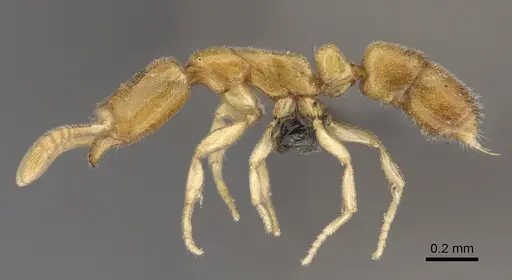
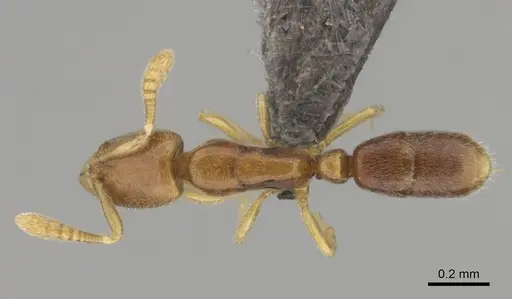
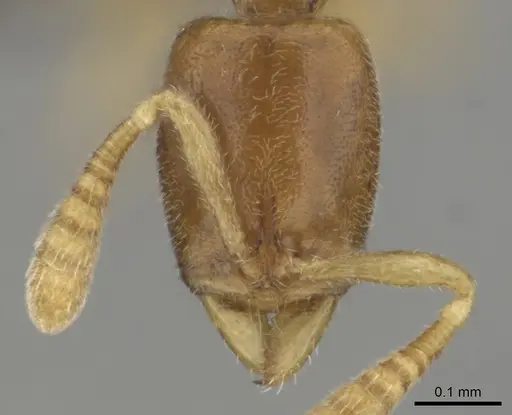
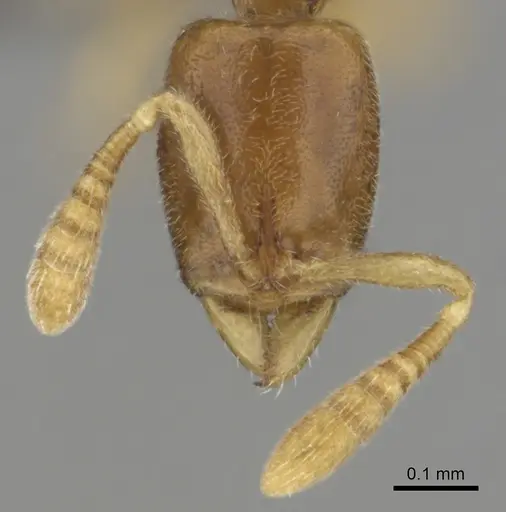
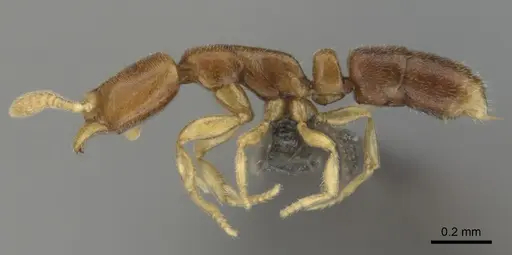
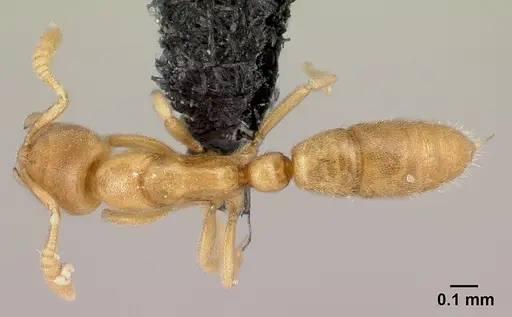
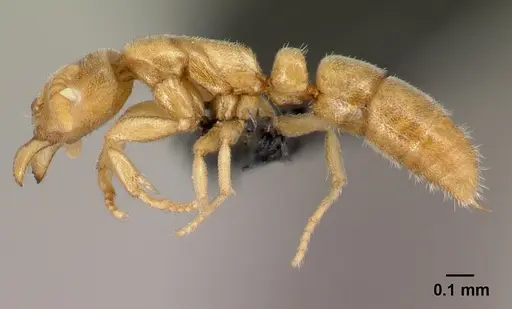
Hypoponera perparva is one of the smallest ants you can keep - workers measure approximately 2-2.5mm in total length, making them barely visible to the naked eye . They are entirely yellow in color and belong to the Ponerinae subfamily . This species was formally described in 2011 and is known from only a handful of collections in the Afrotropical region: South Africa (Kwazulu Natal), Congo, and Tanzania . In the wild, they live in rainforest leaf-litter and have also been found in grassland habitats . They closely resemble the related species Hypoponera angustata but can be distinguished by having five rather than four enlarged funicular segments .
Quick Summary
- Difficulty: Expert
- Origin & Habitat: Afrotropical region, specifically Congo, Democratic Republic of Congo, South Africa (Kwazulu Natal), and Tanzania. Found in rainforest leaf-litter and grassland habitats [1][2].
- Colony Type: Colony structure is unconfirmed. No queen specimens have been documented in the available research.
- Size & Growth:
- Queen: Unknown, queen has not been described in scientific literature
- Worker: approximately 2-2.5mm, inferred from Hypoponera genus [1]
- Colony: Unknown, only known from short series of workers
- Growth: Unknown, likely slow given minute size
- Development: Unknown, no development data exists for this species. (Development timeline is unconfirmed.)
- Antkeeping:
- Temperature: Aim for 24-28°C based on their Afrotropical rainforest origin. Use a heating cable on one side of the nest to create a gentle gradient.
- Humidity: Keep substrate consistently moist but not waterlogged. These rainforest leaf-litter ants need high humidity, think damp forest floor. Provide a water tube and mist occasionally, but avoid standing water.
- Diapause: Unknown, no seasonal data exists for this species. Afrotropical ants typically do not undergo true hibernation but may reduce activity during cooler periods.
- Nesting: Use a test tube setup with moist substrate. Given their minute size, they require very tight chambers and narrow passages. A small Y-tong or plaster nest with appropriately scaled chambers works well. Keep nesting material consistently damp.
- Behavior: This is a shy, cryptic species that forages in leaf-litter. As a Ponerine ant, they are predatory and likely hunt small micro-arthropods. They have a stinger but are not aggressive and will likely flee rather than fight. Escape prevention is absolutely critical, their tiny size means they can squeeze through gaps invisible to the naked eye. Use fine mesh and ensure all connections are sealed.
- Common Issues: escape prevention is critical, they are minute and can squeeze through the tiniest gaps, extreme small size makes them difficult to observe and house appropriately, no captive husbandry data exists, all care is based on inference from related species, humidity control is challenging, too dry kills them, too wet causes flooding, finding appropriately sized prey will be difficult, they need micro-prey like springtails
Housing and Escape Prevention
Housing Hypoponera perparva presents unique challenges due to their extreme small size. Workers measure approximately 2-2.5mm in total length, about the width of a few human hairs side by side [1]. This makes them one of the smallest ants in the hobby. Standard test tube setups work but require careful attention to escape prevention. Use cotton plugs that are firmly packed, and consider adding a small barrier of fluon around the rim. When connecting to an outworld, use tubing with very tight fits. Fine mesh is essential for any ventilation holes. Even seemingly sealed containers may allow these tiny ants to escape. A small Y-tong or plaster nest with appropriately scaled chambers can work, but ensure all edges and connections are truly sealed.
Feeding and Diet
As a Ponerine ant, Hypoponera perparva is predatory and likely hunts small micro-arthropods in the wild. In captivity, offer small live prey such as springtails, fruit flies, and other tiny insects. Because of their minute size, standard ant prey like mealworms are far too large. You may need to culture your own springtails or fruit flies to ensure a consistent food source. The frequency of feeding should be adjusted based on colony size, start with prey offered every 2-3 days and adjust based on consumption. Sugar sources are unlikely to be accepted given their predatory nature, though you can occasionally offer a tiny drop of diluted honey or sugar water to test. Always remove uneaten prey to prevent mold issues.
Temperature and Humidity
Hypoponera perparva originates from Afrotropical regions (Congo, South Africa, Tanzania) where temperatures are warm year-round [1]. They have been found in rainforest leaf-litter and grassland habitats, indicating a need for warm, humid conditions. Aim for temperatures in the 24-28°C range, with a gentle gradient allowing workers to self-regulate. A heating cable placed on one side of the nest can achieve this. For humidity, maintain substrate that is consistently moist but never waterlogged. The test tube water reservoir should be large enough to maintain humidity but small enough to avoid flooding. Mist the outworld occasionally and consider placing the nest setup in a humid room or enclosed area. Avoid both excessive drying and stagnant, overly wet conditions.
Understanding Their Tiny Size
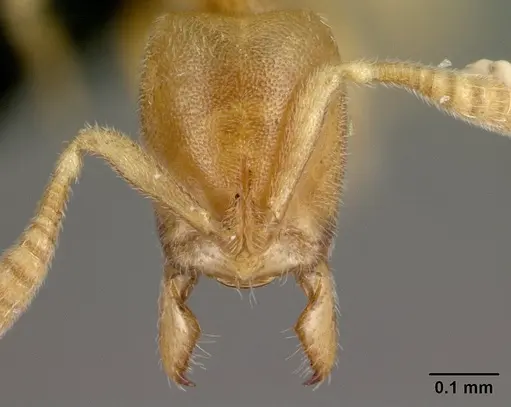
The most striking feature of Hypoponera perparva is their minute size, workers measure approximately 2-2.5mm in total length [1]. To put this in perspective, a typical Lasius worker is 10-15 times larger. This size presents unique challenges for antkeepers: they require microscopic prey, escape through gaps invisible to humans, and are difficult to observe without magnification. Their eyes are entirely absent, which is unusual among ants and indicates they likely navigate and forage through chemical cues rather than vision [1]. Their scapes (antennal segments) are very short, when laid straight back, the tip falls far short of the midpoint of the head [1]. This is a genus characteristic that helps distinguish them from similar ants. Despite their tiny size, they are fully functional ants with the same castes and behaviors as larger species, just scaled down.
Colony Establishment
Establishing a colony of Hypoponera perparva will be challenging due to the lack of documented captive husbandry. If you obtain a queen, she has not been described in scientific literature, so her size and appearance are unknown. The first workers (nanitics) will be extremely small and may take longer to develop than larger ant species. Patience is essential, colonies may grow very slowly. Do not disturb the founding chamber until several months have passed, and even then, proceed with extreme caution to avoid flooding or crushing the tiny ants.
Frequently Asked Questions
How long does it take for Hypoponera perparva to produce first workers?
The egg-to-worker timeline is unconfirmed for this species. Development may be slower than larger ant species due to their minute size.
What do Hypoponera perparva eat?
They are predatory and likely hunt small micro-arthropods. In captivity, feed live springtails, fruit flies, and other tiny insects. Standard ant prey like mealworms are too large. Sugar sources are unlikely to be accepted.
Are Hypoponera perparva dangerous?
As a Ponerine ant, they have a stinger. However, their extreme tiny size means they are not aggressive and will likely flee from threats.
Can I keep Hypoponera perparva in a test tube?
Yes, a test tube setup works well. However, escape prevention must be excellent, their minute size allows them to squeeze through gaps invisible to the naked eye. Use firmly packed cotton and consider additional barriers.
Do Hypoponera perparva need hibernation?
Diapause requirements are unknown. As an Afrotropical species from Congo, South Africa, and Tanzania, they likely do not require true hibernation but may reduce activity during cooler periods. Maintain warm temperatures year-round.
How big do Hypoponera perparva colonies get?
Colony size is unknown, this species is only known from short series of workers in the wild. Based on their tiny size and the genus, colonies are likely small.
What temperature do Hypoponera perparva need?
Aim for 24-28°C based on their Afrotropical rainforest origin. Use a heating cable on one side of the nest to create a gentle gradient. Avoid temperatures below 20°C or above 32°C.
Is Hypoponera perparva good for beginners?
No. This is an expert-level species due to their extreme tiny size, lack of captive husbandry data, and specific humidity requirements. Escape prevention is critical and challenging. Only experienced antkeepers should attempt this species.
Why are my Hypoponera perparva escaping?
Their minute size means they can escape through gaps invisible to humans. Review all connections, use fine mesh, and consider additional barriers like fluon. Even standard test tube setups may need extra protection.
Can I keep multiple queens together?
Colony structure is unconfirmed for this species. Combining unrelated queens has not been documented and is not recommended. Without data, assume single-queen colonies and keep queens separate.
Report an Issue
The current care sheet is based fully on literature. See inconsistencies, or something that's incorrect? Please , it will be resolved after review from an admin. Contributing to the blogs tab also helps providing information, to make us be able to further improve the caresheets. Thank you for your support!
References

This caresheet is licensed under CC BY-SA 4.0 .
Community Blogs
Literature
Loading distribution map...Loading products...