
Hypoponera natalensis
- Sci. Name
- Hypoponera natalensis
- Tribe
- Ponerini
- Subfamily
- Ponerinae
- Author
- Santschi, 1914
- Distribution
- Found in 1 countries
Introduction
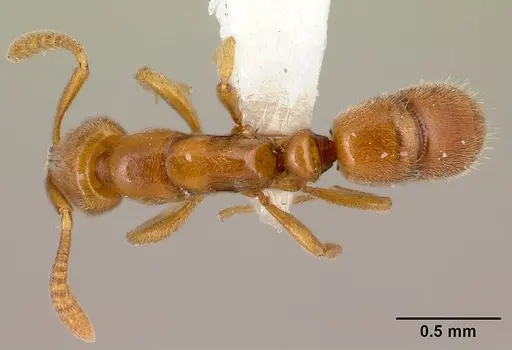
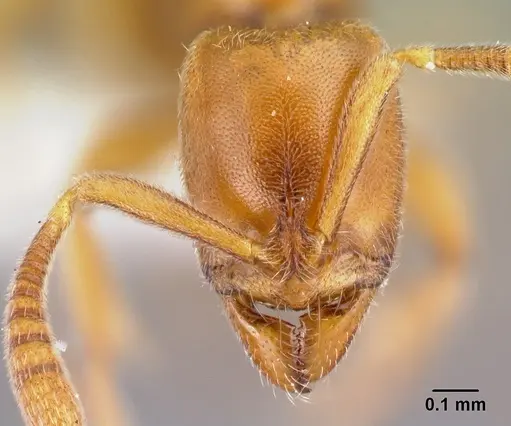
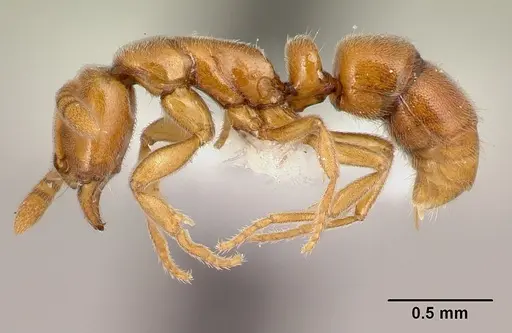
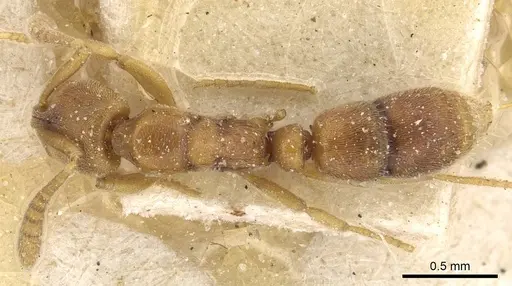
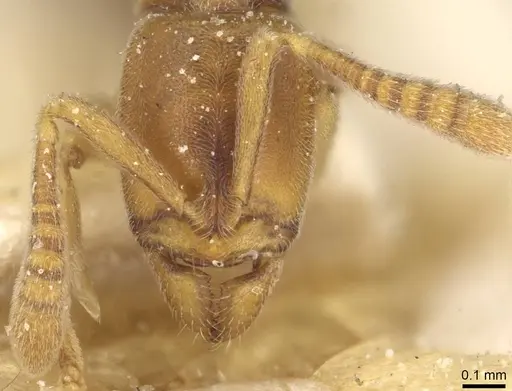
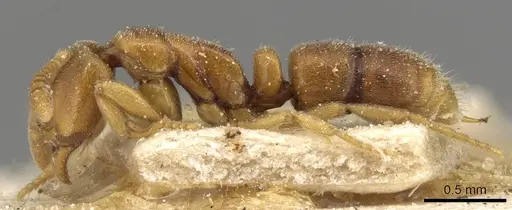
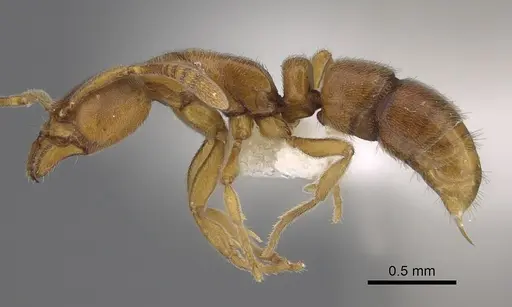
Hypoponera natalensis is a small ponerine ant native to South Africa, where it inhabits montane forest environments. Workers are yellowish brown to light brown in color and measure approximately 2.5-3mm in total length . This species belongs to the Hypoponera abeillei group and is distinguished by its short, high petiole and vestigial to completely absent eyes - a remarkable adaptation for life in the dark forest litter layer . The species was originally described as a subspecies of Ponera coarctata in 1914 before being elevated to full species status in 1938 . What makes H. natalensis particularly interesting is its place in a documented size-related morphoclinal gradient in South Africa, where several similar species show gradual reduction in eye size, petiole height, and other characters from larger to smaller forms. This species sits in the middle of this gradient, between the larger H. spei/boerorum and the smaller H. austra/meridia/perparva . The vestigial eyes and cryptic lifestyle make these ants fascinating for keepers interested in observing primitive ant behavior.
Quick Summary
- Difficulty: Medium
- Origin & Habitat: South Africa (Natal, Karkloof, Good Hope Estate), montane forest, sifted leaf litter [1][2]
- Colony Type: Unconfirmed colony structure, Hypoponera species are typically single-queen colonies but specific data for this species is lacking
- Size & Growth:
- Queen: ~4-5mm, inferred from Hypoponera genus patterns
- Worker: ~2.5-3mm [1]
- Colony: Colony size data unavailable, likely small based on typical Hypoponera patterns
- Growth: Slow, Ponerinae typically develop slower than many common ant genera
- Development: Estimated 8-12 weeks at optimal temperature based on typical Ponerinae development (Ponerine ants generally have slower development than Myrmicinae or Formicinae. Expect 2-3 months to first workers.)
- Antkeeping:
- Temperature: Keep around 22-26°C, these are forest floor ants from a temperate/montane region, so avoid overheating. Room temperature (22-24°C) is likely ideal
- Humidity: Keep the nest substrate consistently moist but not waterlogged. Montane forest litter is naturally humid.
- Diapause: Likely required, South African temperate ants typically need a winter rest period. Provide 3-4 months at 15-18°C during winter based on geographic origin.
- Nesting: Y-tong (AAC) or plaster nests work well. These are small, cryptic ants that prefer tight, humid chambers. Avoid dry setups. Naturalistic setups with soil and leaf litter mimic their natural environment.
- Behavior: Hypoponera natalensis is a cryptic, slow-moving ant that forages in leaf litter and soil. Workers are not aggressive and will likely avoid confrontation. Their vestigial eyes suggest a primarily chemoreception-based lifestyle. They are not escape artists due to their small but not tiny size, but standard escape prevention (fluon on rim, tight-fitting lids) is still recommended. As a ponerine, they have a functional stinger for prey subjugation.
- Common Issues: slow growth can frustrate keepers expecting rapid colony development, high humidity requirements mean mold can be an issue if ventilation is poor, vestigial eyes mean they are light-sensitive, avoid exposing nest to direct light, small colony size means they are vulnerable to disturbance during founding, winter diapause is essential, colonies that are kept active year-round may decline
Housing and Nest Setup
Hypoponera natalensis does best in setups that replicate its montane forest floor habitat. A Y-tong (AAC) nest or plaster formicarium with small chambers works well, these ants are small and prefer tight, humid spaces. The nest should have a water reservoir or moisture gradient so the substrate stays consistently damp. Avoid dry setups entirely. For the outworld, a small container with soil and leaf litter debris creates a naturalistic foraging area. These ants are not climbers and rarely escape, but standard escape prevention with fluon on container rims is still good practice. Keep the entire setup in dim lighting or away from direct sunlight, their vestigial eyes indicate light sensitivity. [1][2]
Feeding and Diet
As a Ponerinae ant, Hypoponera natalensis is likely a predator of small invertebrates. In captivity, offer small live prey such as fruit flies, pinhead crickets, small mealworms, and other tiny arthropods. They are probably not interested in sugar water or honey, as this is not typical for Ponerinae unless specifically documented. Feed small amounts 2-3 times per week, removing uneaten prey after 24 hours to prevent mold. Since they are slow-moving foragers, prey should be small and easy to capture. The cryptobiotic lifestyle suggests they may also scavenge on dead insects found in the leaf litter.
Temperature and Seasonal Care
Keep your colony at 22-26°C, avoiding temperatures above 30°C. Room temperature in most homes (22-24°C) is ideal for this South African species. During winter (roughly November-February in the Northern Hemisphere), provide a diapause period at 15-18°C for 3-4 months. This mimics their natural seasonal cycle in the temperate regions of South Africa. Do not cool suddenly, reduce temperature gradually over 2-3 weeks. Keep the nest humid during hibernation but reduce feeding to once every 2-3 weeks. Return to normal temperatures gradually in spring. [1]
Behavior and Observation
Hypoponera natalensis is a cryptic, ground-dwelling ant with a calm temperament. Workers move slowly and methodically through leaf litter, relying more on chemical signals than vision (consistent with their vestigial eyes). You will not see the frantic activity typical of faster ants like Lasius or Tapinoma. This makes them fascinating to observe for keepers interested in primitive ant behavior. They are not defensive and unlikely to sting humans. Colonies remain small, which makes observation of individual behaviors easier. [1]
Frequently Asked Questions
How long does it take for Hypoponera natalensis to produce first workers?
Expect 8-12 weeks from egg to first worker at optimal temperature (22-26°C). Ponerine ants develop slower than many common ant genera, so patience is required during the founding stage.
What do Hypoponera natalensis ants eat?
They are predators that likely accept small live invertebrates such as fruit flies, small crickets, and other tiny arthropods. Sugar sources are probably not accepted. Offer small prey items 2-3 times per week.
Do Hypoponera natalensis ants need hibernation?
Yes, a winter diapause of 3-4 months at 15-18°C is likely required. This species originates from South Africa's temperate regions and follows seasonal patterns.
Are Hypoponera natalensis good for beginners?
They are rated Medium difficulty. While not the easiest species, their straightforward care requirements make them suitable for keepers with some experience who understand the need for patience with slow-growing Ponerinae.
How big do Hypoponera natalensis colonies get?
Colony size data is unavailable for this species. Based on typical Hypoponera patterns, colonies likely remain small.
What humidity do Hypoponera natalensis need?
High humidity, keep the nest substrate consistently moist but not waterlogged. Their montane forest habitat is naturally humid.
Can I keep multiple queens together?
Not recommended. There is no data on pleometrosis (multiple queen founding) for this species, and combining unrelated queens of this species has not been documented.
When should I move Hypoponera natalensis to a formicarium?
Wait until the colony has 20-30 workers. These ants prefer small, tight chambers, so a Y-tong or small plaster nest works well from the start. Do not move too early.
Why are my Hypoponera natalensis dying?
Common causes include: too dry conditions (they need high humidity), temperatures above 30°C, disturbance during founding, or mold from overwatering. Check humidity levels and ensure the nest is not overheating.
Report an Issue
The current care sheet is based fully on literature. See inconsistencies, or something that's incorrect? Please , it will be resolved after review from an admin. Contributing to the blogs tab also helps providing information, to make us be able to further improve the caresheets. Thank you for your support!
References

This caresheet is licensed under CC BY-SA 4.0 .
Community Blogs
Literature
Loading distribution map...Loading products...