
Hypoponera meridia
- Sci. Name
- Hypoponera meridia
- Tribe
- Ponerini
- Subfamily
- Ponerinae
- Author
- Bolton & Fisher, 2011
- Distribution
- Found in 1 countries
Introduction
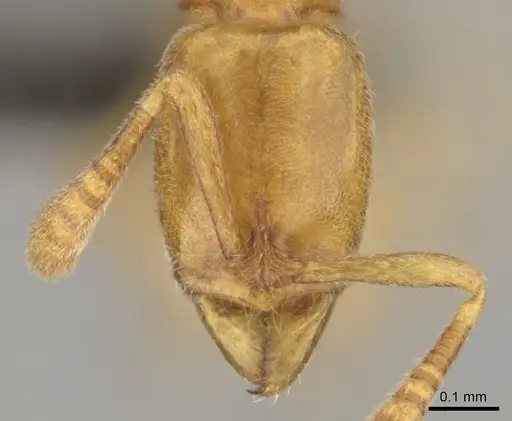
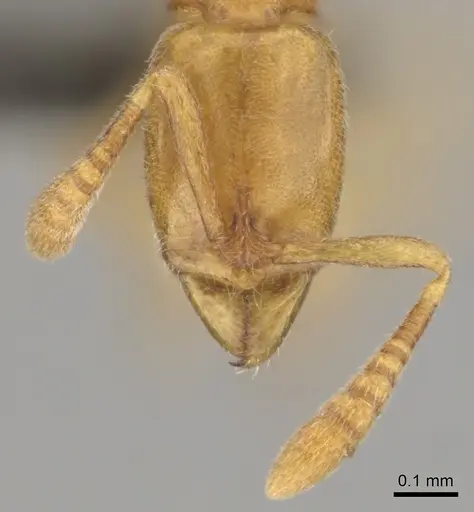
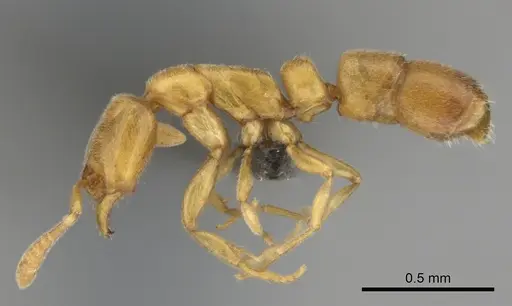
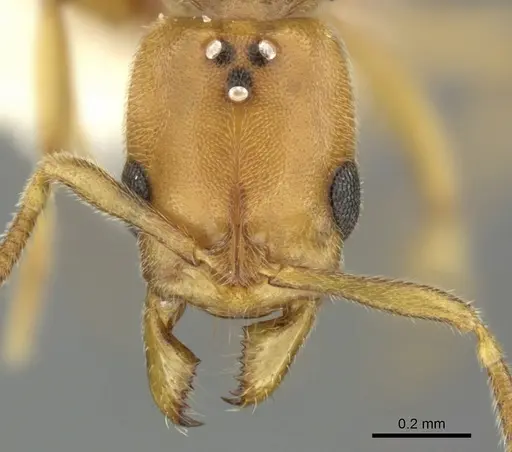
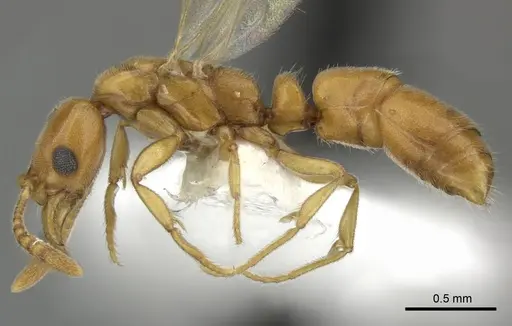
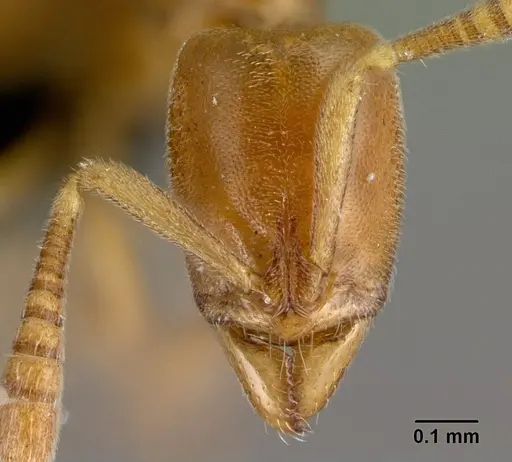
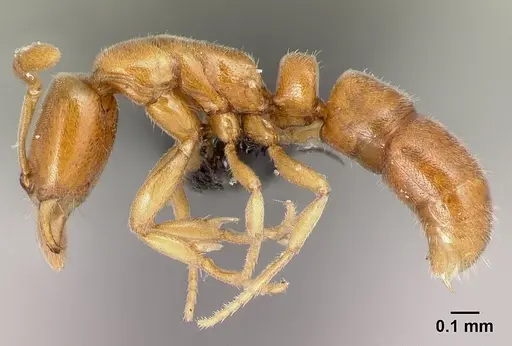
Hypoponera meridia is a tiny ponerine ant native to South Africa. Unlike most Hypoponera species that live in forests, this species lives in grasslands, specifically the Pondoland Coastal Plateau and sour grassland habitats in Kwazulu Natal and Gauteng provinces . Workers are pale yellow to yellowish brown, blind (no eyes or only a tiny depigmented spot), and lack the metanotal groove found in many other ants . Total body length is not documented in available research, but workers are very small. This is a rarely kept species that offers a unique challenge for antkeepers interested in unusual African ponerines.
Quick Summary
- Difficulty: Hard
- Origin & Habitat: South Africa (Kwazulu Natal, Gauteng provinces). Found in grasslands, an unusual niche for Hypoponera, which are typically forest-dwelling. Collected via Winkler bag extraction from leaf litter in sour grassland at elevations around 220m [1][2].
- Colony Type: Unconfirmed colony structure. Based on typical Hypoponera genus patterns, likely single-queen colonies, but this has not been documented for this species.
- Size & Growth:
- Queen: Size data unavailable, queen total body length not reported in literature [1].
- Worker: Size data unavailable, no total body length recorded. Workers are very small, yellow to yellowish brown [1].
- Colony: Unknown, not documented in available research.
- Growth: Unknown, not directly studied.
- Development: Unconfirmed. Based on typical Ponerinae patterns, estimate 6-10 weeks at optimal temperature. (Development timeline has not been directly studied for this species. Estimates are based on genus-level patterns.)
- Antkeeping:
- Temperature: Not directly studied. Based on South African grassland habitat, aim for roughly 22-26°C. Provide a gentle gradient so ants can self-regulate. Avoid temperatures below 18°C or above 30°C [1].
- Humidity: Not directly documented. Grassland habitat suggests moderate humidity needs, keep the nest substrate consistently moist but not waterlogged. Provide some drier areas for choice [1].
- Diapause: Unknown for this species. South African temperate populations may require a mild winter rest period, but specific requirements are unconfirmed.
- Nesting: In nature found in leaf litter and soil [1][2]. In captivity, a test tube setup with moist substrate works well for founding. For larger colonies, use Y-tong (AAC), plaster, or soil nests with tight chambers scaled to their tiny size.
- Behavior: These are tiny, cryptic ants that likely forage in leaf litter and soil. They have no functional eyes, relying on chemical and tactile senses [1]. They belong to the subfamily Ponerinae and have a functional stinger, but it is too small to effectively penetrate human skin. Hypoponera species are generally docile. Escape prevention is critical due to their very small size, they can squeeze through the tiniest gaps. Workers are pale yellow and nearly invisible against light-colored substrates.
- Common Issues: escape prevention is critical, their tiny size means they can slip through standard test tube barriers, colony growth may be slow, which can frustrate beginners expecting rapid development, wild-caught colonies may have parasites or pathogens that cause colony failure in captivity, lack of documented care information means keepers are essentially pioneering captive husbandry, their tiny size and pale coloration make them easy to lose or overlook during maintenance
Housing and Nest Setup
Hypoponera meridia is a tiny ant that needs appropriately scaled housing. A standard test tube setup works well for founding colonies, use a small test tube with a cotton ball separating the water reservoir from the ants. The tube should be kept horizontal or slightly tilted so the ants can walk on a moist substrate. Because they are so small, pack the cotton firmly or use a fine mesh barrier to prevent escapes [1]. Once the colony grows, consider moving them to a small Y-tong (AAC) or plaster nest with tight chambers. Avoid large, open spaces that may stress the colony. Keep chambers and passages sized appropriately for their tiny workers. A naturalistic soil setup also works, mimicking their grassland leaf-litter habitat [2].
Feeding and Diet
Like most Ponerinae, Hypoponera meridia is likely predatory on small invertebrates. Feed them tiny prey items such as fruit flies, small springtails, pinhead crickets, or other micro-arthropods. Offer protein roughly twice weekly, removing any uneaten prey after 24-48 hours. Sugar sources may be accepted, you can occasionally offer a drop of diluted honey or sugar water, but do not rely on these as a primary food source since their natural diet is protein-focused. Always ensure fresh water is available.
Temperature and Humidity
This species comes from South African grasslands where temperatures are moderate [1]. Aim for a temperature range of 22-26°C in the nest area. A heating cable on one side of the nest can create a gradient, but avoid direct heat that could dry out the colony. For humidity, keep the substrate moist but not saturated, these are not aquatic ants. A humidity level around 60-80% is likely appropriate based on grassland habitat. Monitor the colony: if workers are clustering near moisture, increase humidity, if they avoid wet areas, allow the substrate to dry slightly between mistings. Provide a gradient with one moist corner and one drier area so the ants can choose [1].
Behavior and Temperament
Hypoponera meridia is likely a docile, cryptic species that forages in leaf litter and soil rather than forming visible foraging trails. Workers are nearly blind (eyes absent or reduced to tiny spots), so they navigate using chemical signals and touch [1]. They belong to the ponerine subfamily and have a functional stinger, but it is too small to penetrate human skin effectively. The main behavioral concern for keepers is their tiny size: they are excellent escape artists and require fine mesh barriers and tightly sealed enclosures. Expect slow, deliberate movement and cryptic colony behavior rather than the active foraging seen in larger ant species.
Colony Establishment and Growth
Establishing a colony of Hypoponera meridia requires patience. If you obtain a founding queen, she will need time to lay eggs and raise the first workers (nanitics) entirely on her own. The claustral founding process (queen sealing herself in and living off stored fat reserves) is likely but unconfirmed for this species. Expect the first workers to appear weeks after the queen lays eggs, the exact timeline is unknown but likely 6-10 weeks based on related species. Colonies will grow slowly at first, but once established with a dozen or more workers, growth may accelerate slightly. Do not disturb the founding chamber unnecessarily, stress can cause queens to abandon or eat their brood. Resist the urge to check too frequently.
Frequently Asked Questions
How long does it take for Hypoponera meridia to produce first workers?
The exact timeline is unconfirmed, but based on typical Ponerinae development, expect 6-10 weeks from egg to first worker at optimal temperature (around 24°C). This is slower than many common ant species, so patience is required.
What do Hypoponera meridia ants eat?
They are predatory and likely eat small invertebrates. Feed tiny prey like fruit flies, springtails, or small crickets. They may occasionally accept sugar sources like honey water, but protein should be the primary food.
Are Hypoponera meridia good for beginners?
This species is not ideal for beginners due to the lack of documented care information, their tiny size requiring excellent escape prevention, and slow colony growth. Experienced antkeepers interested in unusual species may find them more suitable.
What temperature should I keep Hypoponera meridia at?
Based on their South African grassland habitat, aim for 22-26°C. A slight gradient allowing the colony to self-regulate is ideal. Avoid temperatures below 18°C or above 30°C [1].
Do Hypoponera meridia need hibernation?
Diapause requirements are unconfirmed for this species. South African populations may not require a true hibernation but might benefit from a mild winter cool-down period. More research is needed.
How big do Hypoponera meridia colonies get?
Maximum colony size is unknown, not documented in available research. Based on typical Hypoponera genus patterns, colonies likely remain relatively small (likely under 100-200 workers).
Can I keep multiple Hypoponera meridia queens together?
Colony structure is unconfirmed for this species. Combining unrelated queens is not recommended since it has not been documented and could result in aggression.
Why are my Hypoponera meridia escaping?
Their tiny size makes them excellent escape artists. Use fine mesh barriers, pack cotton firmly in test tubes, and ensure all openings are sealed. Check for gaps as small as 1mm.
When should I move Hypoponera meridia to a formicarium?
Move them once the colony reaches roughly 20-30 workers and the test tube space becomes cramped. Use a small nest with appropriately sized chambers, avoid large, open spaces.
Report an Issue
The current care sheet is based fully on literature. See inconsistencies, or something that's incorrect? Please , it will be resolved after review from an admin. Contributing to the blogs tab also helps providing information, to make us be able to further improve the caresheets. Thank you for your support!
References

This caresheet is licensed under CC BY-SA 4.0 .
Community Blogs
CASENT0257149
View on AntWeb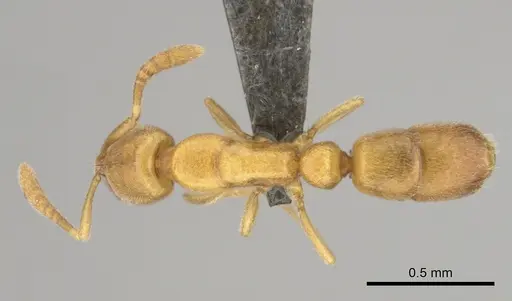
CASENT0270531
View on AntWeb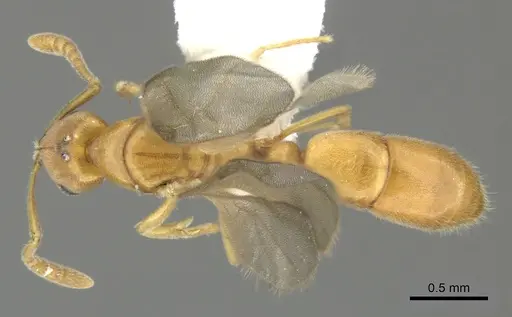
CASENT0395327
View on AntWeb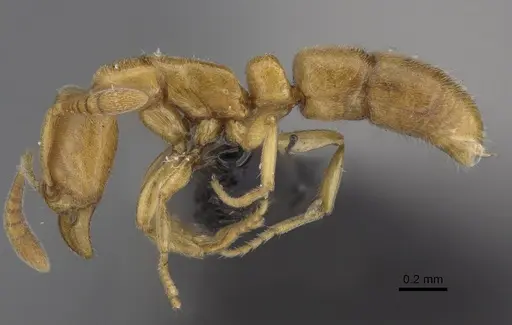
CASENT0395330
View on AntWeb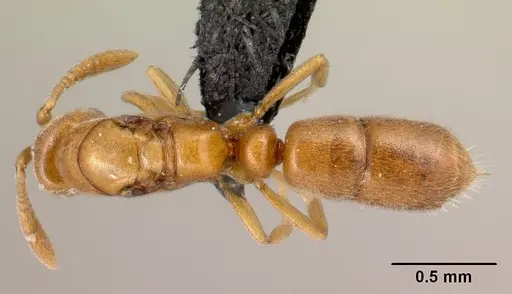
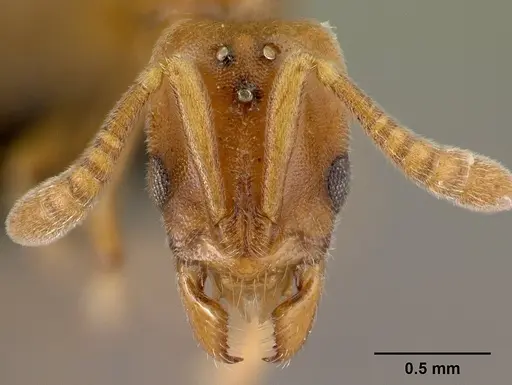
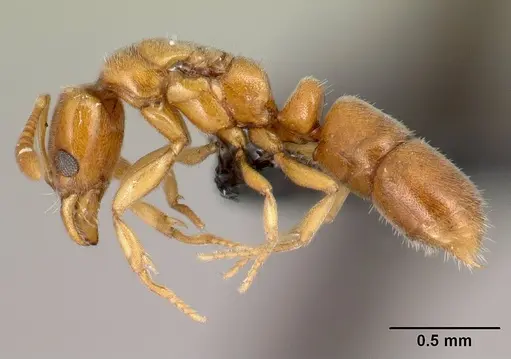
CASENT0395928
View on AntWeb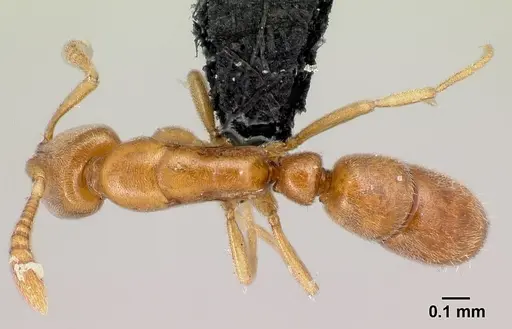
Literature
Loading distribution map...Loading products...