
Hypoponera jeanneli
- Sci. Name
- Hypoponera jeanneli
- Tribe
- Ponerini
- Subfamily
- Ponerinae
- Author
- Santschi, 1935
- Distribution
- Found in 4 countries
Introduction
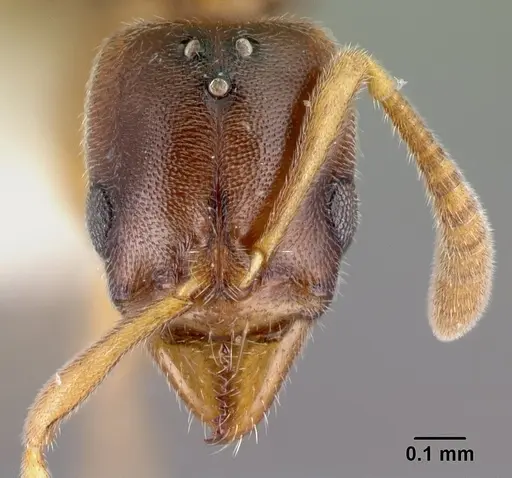
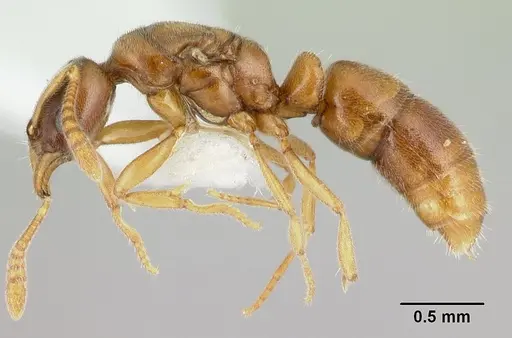
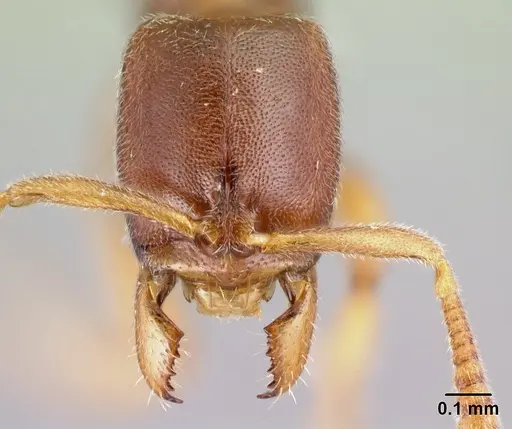
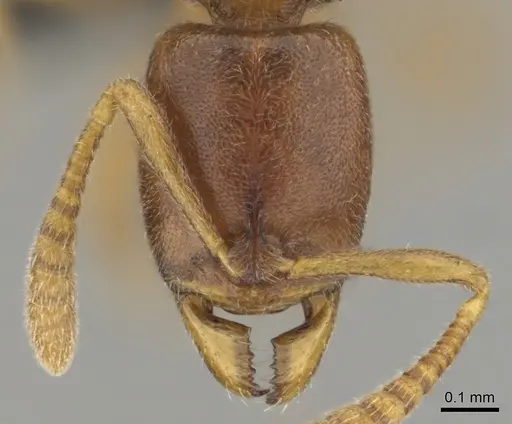
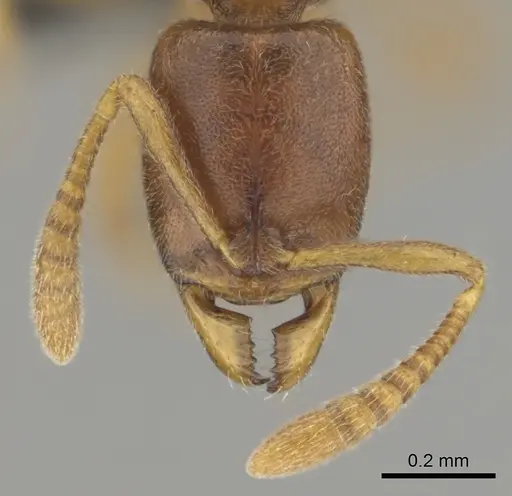
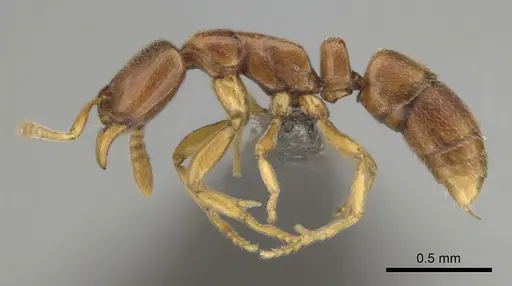
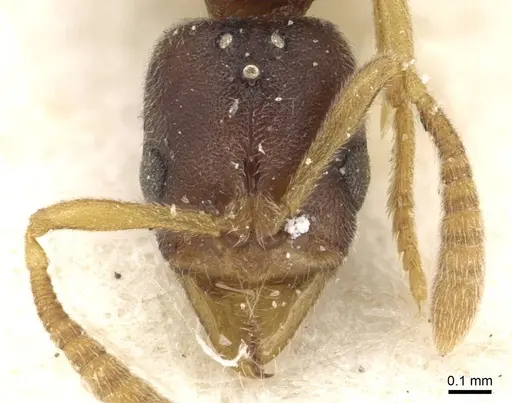
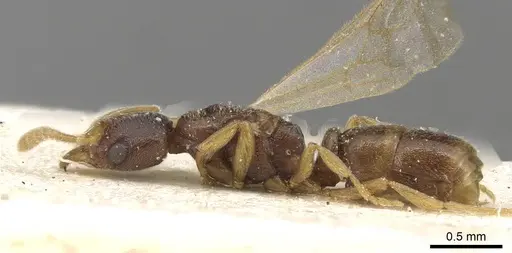
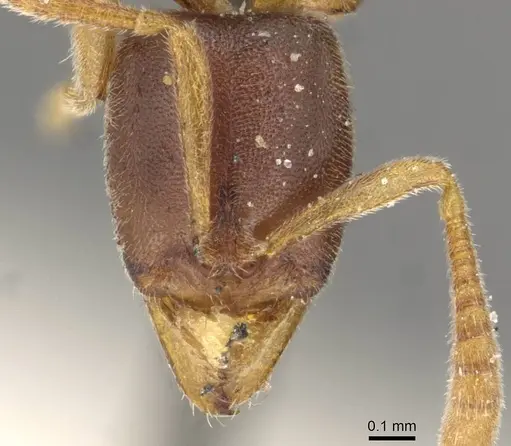
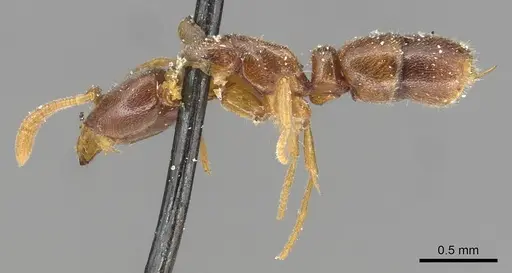
Hypoponera jeanneli is a tiny, cryptic ant species native to eastern Africa. Workers are among the smaller ants, reaching approximately 2.5-3mm total length - inferred from typical Hypoponera genus size . They belong to the Ponerinae subfamily, known for their predatory habits. These ants are nearly blind - their eyes are usually absent entirely, with only rare vestigial eye spots . They have a distinctive appearance with a smooth pronotum (much less sculpted than the head), a series of tiny cuticular ridges on the back of their petiole, and cross-ribs at the base of their second abdominal segment . Found across Cameroon, Ethiopia, Sudan, Uganda, Kenya, Rwanda, Tanzania, and Zimbabwe, they live in leaf litter at higher altitudes in primary and montane forests . This species is part of a closely related complex with H. mixta and H. ursa, and separation between these species can be difficult .
Quick Summary
- Difficulty: Medium
- Origin & Habitat: Eastern Africa, Cameroon, Ethiopia, Sudan, Uganda, Kenya, Rwanda, Tanzania, Zimbabwe. Found in primary and montane forest leaf-litter at altitude [1][2].
- Colony Type: Colony structure is unconfirmed for this specific species.
- Size & Growth:
- Queen: Size data unavailable, queen measurements have not been documented
- Worker: Approximately 2.5-3mm total length, inferred from typical Hypoponera genus size [1]
- Colony: Colony size data unavailable for this species
- Growth: Growth rate is unconfirmed
- Development: Development timeline is unconfirmed for this species (No specific development data is available.)
- Antkeeping:
- Temperature: Keep at 22-26°C. Based on their high-altitude African habitat, they prefer cooler conditions than tropical ants. A gentle gradient allowing them to choose their preferred temperature works well.
- Humidity: High humidity is essential, these are leaf-litter ants from damp forest floors. Keep the nest substrate consistently moist but not waterlogged. Provide a gradient from damp to slightly drier areas.
- Diapause: Diapause requirements are unconfirmed for this species.
- Nesting: Y-tong or plaster nests work well. Their tiny size means chambers should be small and tight. They prefer dark, humid conditions and will likely avoid bright light. A naturalistic setup with moist substrate and hiding spots also works.
- Behavior: These are shy, cryptic ants that prefer to stay hidden. They are predatory like other Ponerinae, hunting small invertebrates in the leaf litter. Workers are nearly blind and navigate using chemical cues. They are not aggressive and will flee rather than confront threats. Their tiny size means escape prevention is critical, they can squeeze through remarkably small gaps. They likely forage individually rather than in groups. As Ponerinae, they have a stinger but due to their tiny size, they are unlikely to penetrate human skin.
- Common Issues: escape prevention is critical due to their tiny size, use fine mesh and tight-fitting barriers, slow development can frustrate beginners, colonies may take months to establish, high humidity requirements can lead to mold if ventilation is poor, predatory diet means they need live prey, they cannot survive on just sugar water, wild-caught colonies may be difficult to establish in captivity
Housing and Nest Setup
Because of their tiny size, Hypoponera jeanneli needs careful housing. Y-tong nests with small chambers work well, as do plaster nests that hold humidity. The chambers should be appropriately scaled, these are very small ants. Keep the nest dark or provide plenty of covered areas, as they avoid bright light. A test tube setup can work for founding colonies, but watch for drying. The key is maintaining high humidity while allowing some ventilation to prevent mold. Place the nest in an area with stable temperatures around 22-26°C. A water reservoir connected to the nest helps maintain humidity. Outworlds should be simple with minimal height, these ants are ground-dwellers and do not need vertical space. [1][2]
Feeding and Diet
Hypoponera jeanneli is predatory, like other Ponerinae ants. They hunt small invertebrates in the leaf litter, so your colony will need live prey. Offer small live prey like fruit flies, pinhead crickets, small mealworms, and other tiny arthropods. Springtails are an excellent food source and can be cultured separately. They are primarily protein-based predators. Feed small amounts every few days, removing uneaten prey to prevent mold. A well-fed colony will have workers that appear more active and robust.
Temperature and Seasonal Care
Based on their high-altitude African habitat, these ants prefer cooler temperatures than many tropical species. Aim for 22-26°C as a baseline. They can likely tolerate brief temperature drops but should be protected from cold drafts. During winter, you may need to reduce temperatures slightly to simulate their natural seasonal cycle, though this species exact overwintering requirements are unconfirmed. Avoid temperatures above 30°C, as this can stress the colony. A heating cable on one side of the nest can create a temperature gradient, allowing the ants to self-regulate. Monitor colony activity, if workers seem sluggish, they may need it warmer, if they avoid the heated area, it may be too warm. [1]
Behavior and Colony Dynamics
These are cryptic, secretive ants that spend most of their time hidden in the nest or foraging quietly in the leaf litter. Workers are nearly blind and navigate using chemical pheromone trails. Colonies are likely small and slow-growing, do not expect the rapid expansion you might see with Lasius or Tetramorium. Queens are probably claustral founders, sealing themselves in a chamber to raise the first workers on stored body fat. The colony will grow gradually as new workers emerge. Workers are not aggressive and will retreat from threats rather than engage. This makes them fascinating to observe but less dramatic than some other species. Expect lots of quiet activity in the nest and careful, individual foraging in the outworld. [1]
Escape Prevention
With workers measuring only about 2.5-3mm total length, Hypoponera jeanneli is an extreme escape risk. They can squeeze through gaps that seem impossibly small. Use fine mesh on any ventilation holes. Ensure all connections between the nest and outworld are tight-fitting. Fluon or similar barriers applied to the edges of the outworld can help. Check for gaps regularly, these tiny ants are masters at finding the smallest openings. The outworld should be simple with smooth walls they cannot climb. Even with excellent prevention, check on the colony frequently to catch any escapes early. [1]
Frequently Asked Questions
How long does it take for Hypoponera jeanneli to produce first workers?
Development timeline is unconfirmed for this species. The exact timeline depends on temperature and feeding. Be patient, Ponerine ants typically develop more slowly than many common ant species.
Can I keep Hypoponera jeanneli in a test tube?
Yes, test tubes work well for founding colonies. Keep the water reservoir filled to maintain humidity, and place the tube in a dark location. Monitor for mold and ensure the queen has enough space. Once the colony reaches around 15-20 workers, consider moving to a proper nest.
What do Hypoponera jeanneli eat?
They are predatory and need live small invertebrates. Offer fruit flies, springtails, tiny crickets, small mealworms, or other micro-arthropods. Live prey is essential for a healthy colony.
Are Hypoponera jeanneli good for beginners?
They are rated as medium difficulty. While fascinating, they present challenges: slow development, tiny size requiring excellent escape prevention, specific humidity needs, and a predatory diet requiring live prey. They are better suited for keepers with some experience who can provide the consistent conditions they need.
Do Hypoponera jeanneli need hibernation?
Diapause requirements are unconfirmed for this species. Based on their high-altitude African origin, they may need a cooler period during winter months.
How big do Hypoponera jeanneli colonies get?
Colony size data is unavailable for this species. They are not known as large colony formers.
Why is my Hypoponera jeanneli colony dying?
Common causes include: drying out, they need high humidity, escape through tiny gaps, starvation, not enough live prey, mold from poor ventilation, or temperatures too high or too low. Check each parameter and adjust. Wild-caught colonies may also carry parasites that affect captive survival.
Can I keep multiple Hypoponera jeanneli queens together?
This has not been documented for this species. Colony type is unconfirmed. Combining unrelated queens is not recommended without evidence they can coexist.
When should I move Hypoponera jeanneli to a formicarium?
Move them when the test tube becomes crowded or the water reservoir runs low. For Hypoponera, this is typically around 15-30 workers. Choose a small-scale nest like a Y-tong or plaster formicarium with appropriately sized chambers.
Report an Issue
The current care sheet is based fully on literature. See inconsistencies, or something that's incorrect? Please , it will be resolved after review from an admin. Contributing to the blogs tab also helps providing information, to make us be able to further improve the caresheets. Thank you for your support!
References

This caresheet is licensed under CC BY-SA 4.0 .
Community Blogs
CASENT0128290
View on AntWeb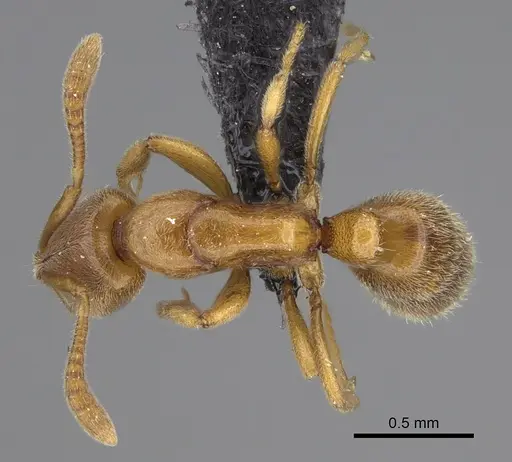
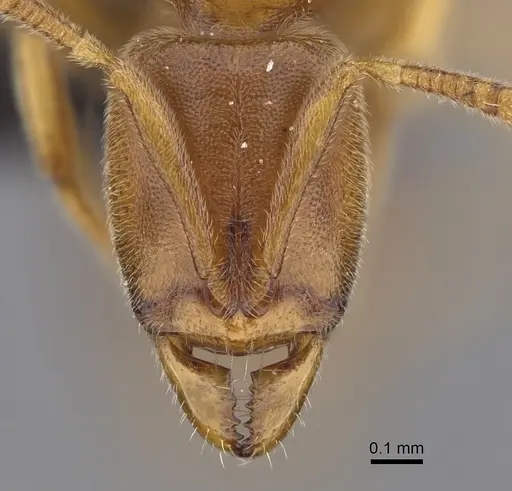
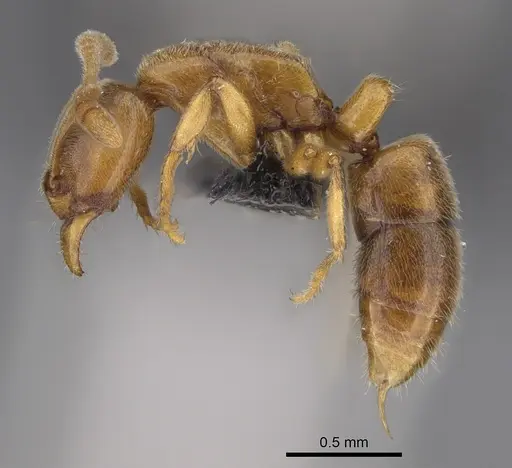
CASENT0192410
View on AntWeb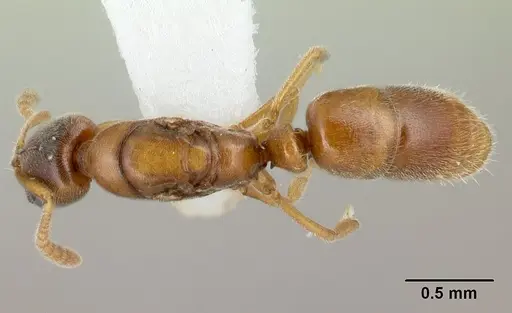
CASENT0217336
View on AntWeb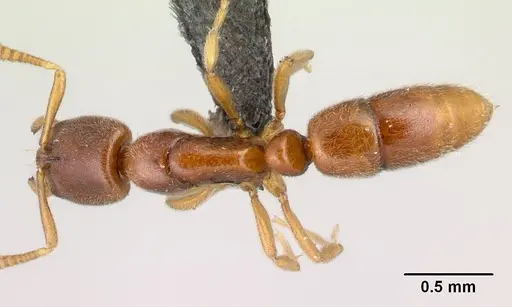
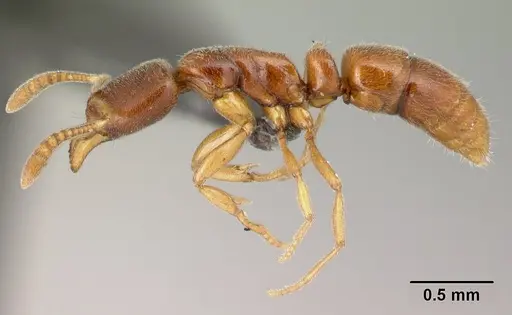
CASENT0218476
View on AntWeb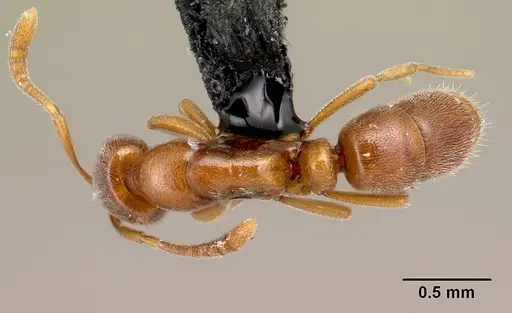
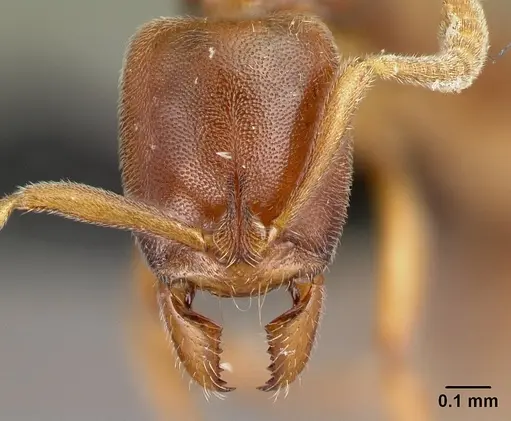
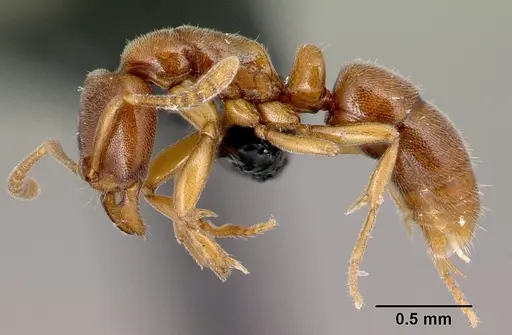
CASENT0250602
View on AntWeb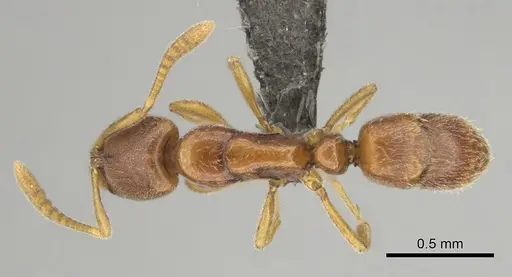
CASENT0915185
View on AntWeb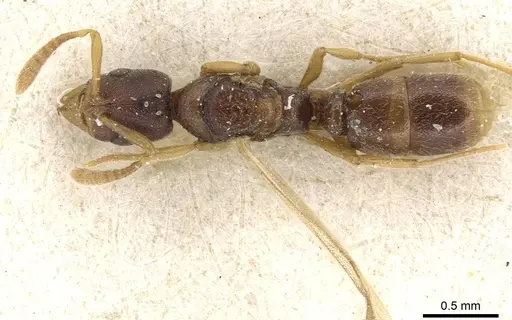
CASENT0915198
View on AntWeb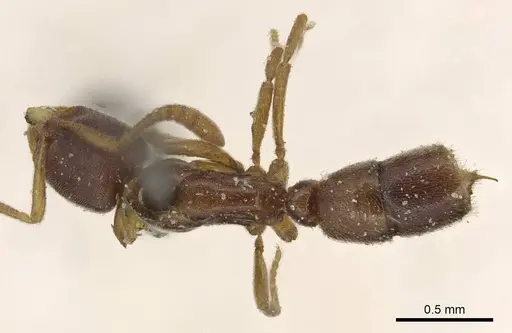
CASENT0923394
View on AntWeb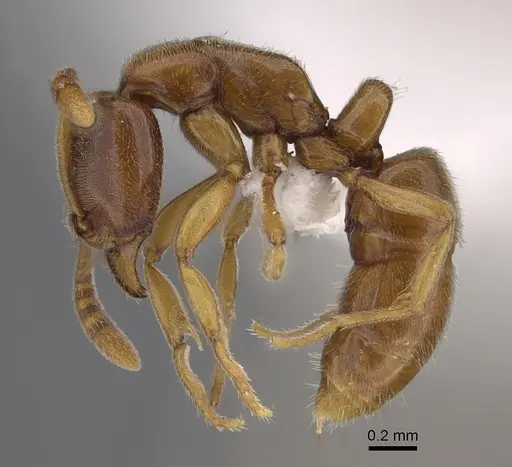
Literature
Loading distribution map...Loading products...