
Hypoponera importuna
- Sci. Name
- Hypoponera importuna
- Tribe
- Ponerini
- Subfamily
- Ponerinae
- Author
- Bolton & Fisher, 2011
- Distribution
- Found in 1 countries
Introduction
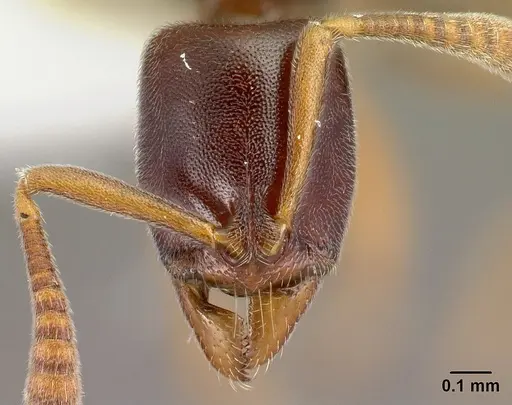
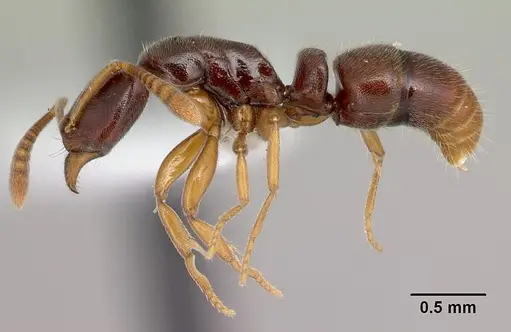
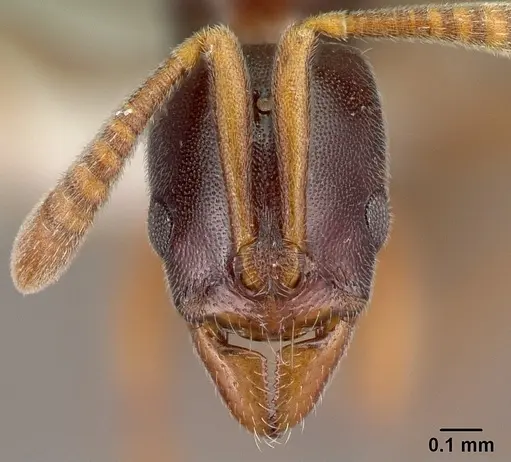
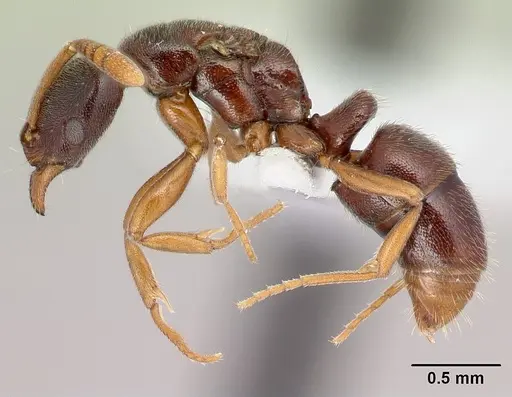
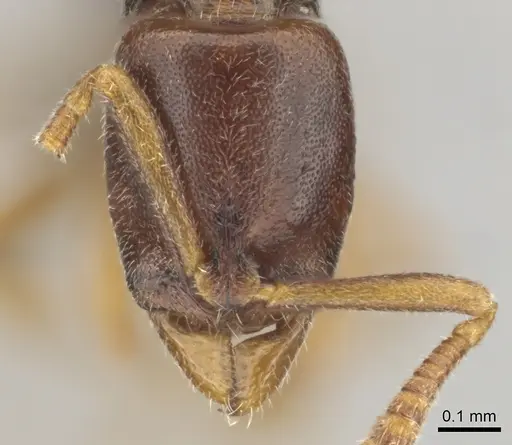
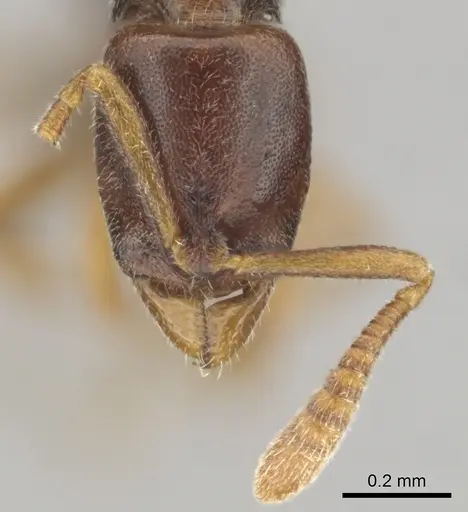
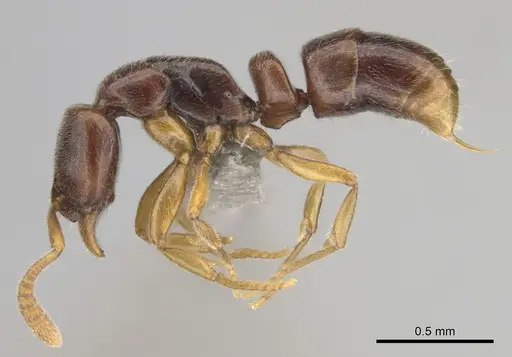
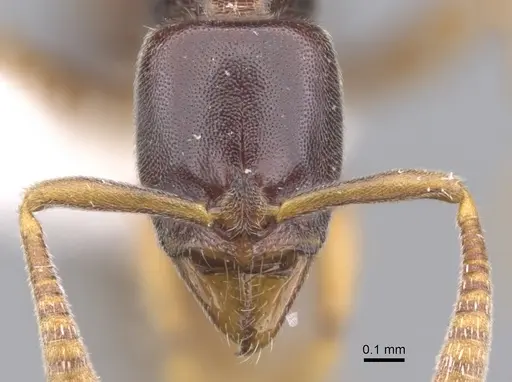
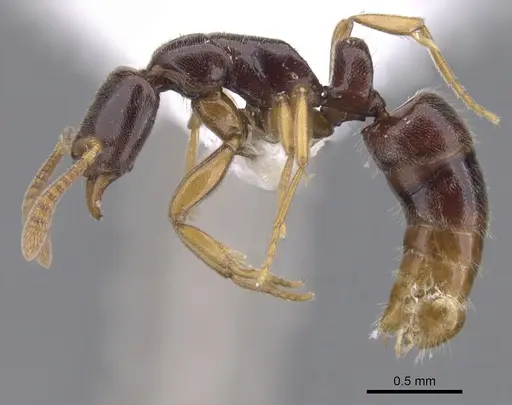
Hypoponera importuna is a tiny ponerine ant species native to Central African rainforests. Workers are dark reddish brown and measure approximately 2.5-3mm in total length, making them among the smaller ants in the hobby. They have a distinctive very broad petiole node that sets them apart from related species like Hypoponera occidentalis. Their eyes are absent or reduced to a tiny spot, indicating they are adapted to life in dark, hidden microhabitats like leaf litter and rotting wood. This species was formally described in 2011 and belongs to the Hypoponera abeillei group. They are closely related to H. occidentalis but can be distinguished by their broader petiole node .
Quick Summary
- Difficulty: Medium
- Origin & Habitat: Rainforest leaf litter in Central African Republic, Gabon, and Kenya [1][2]
- Colony Type: Colony structure is unconfirmed. Ergatoid (wingless) queens have been documented alongside regular dealate queens, suggesting potential for replacement reproductives within established colonies [1].
- Size & Growth:
- Queen: ~4-5mm, inferred from genus patterns
- Worker: ~2.5-3mm total length, inferred from genus patterns [1]
- Colony: Up to 500 workers based on typical Hypoponera patterns
- Growth: Moderate
- Development: Approximately 8 weeks at optimal temperature (Ponerinae typically have slower development than Myrmicinae. Exact timing unconfirmed for this specific species.)
- Antkeeping:
- Temperature: Keep around 22-26°C. As a rainforest species from central Africa, they prefer warm, stable conditions.
- Humidity: High humidity is essential, keep the nest substrate consistently moist but not waterlogged. These leaf-litter ants need constant moisture to survive.
- Diapause: No, based on their Afrotropical origin (Gabon, Kenya, Central African Republic), they do not require true hibernation [1][2]
- Nesting: In captivity, they do well in moist test tubes, Y-tong nests, or plaster nests with small chambers scaled to their tiny size. They prefer dark, confined spaces and will often nest in the most humid areas of the setup.
- Behavior: Hypoponera are cryptic, ground-dwelling ants that prefer to stay hidden. Workers are slow-moving and not aggressive, but they possess a functional stinger for defense. Their tiny size and reduced eyes suggest they rely on chemical cues rather than vision. They can squeeze through very small gaps due to their minute size, so escape prevention is critical. Foraging is done slowly through the substrate.
- Common Issues: tiny size means escapes are likely without fine mesh barriers and tight-fitting lids, high humidity requirements can lead to mold if ventilation is inadequate, slow growth may frustrate beginners expecting rapid colony development, predatory nature means they need live prey, sugar sources are unlikely to be accepted, wild-caught colonies may harbor parasites that can decimate the colony in captivity
Housing and Nest Setup
Hypoponera importuna is a tiny ant that needs appropriately scaled housing. In captivity, they do well in test tubes with a water reservoir, Y-tong nests with small chambers, or moist plaster nests. The key requirement is high humidity, these rainforest leaf-litter ants need constant moisture. Use a small outworld container since they are not active foragers. Because of their minute size, escape prevention must be excellent. Apply Fluon to the rim of the test tube or formicarium, and use tight-fitting lids. A small piece of damp cotton in the outworld can help maintain humidity. They prefer dark spaces and will often nest in the most humid area of the setup, so consider providing a shaded area or covering part of the nest. [1][2]
Feeding and Diet
As a Ponerinae species, Hypoponera importuna is predatory and needs live food. Offer small live prey appropriate to their tiny size: fruit flies, pinhead crickets, small mealworms, and other micro-arthropods. Springtails are an excellent choice as they are small and can be cultured easily. Unlike many ants, Ponerinae typically do not rely heavily on sugar sources. You can occasionally offer a drop of honey or sugar water, but do not expect enthusiastic acceptance. Feed small amounts 2-3 times per week, removing any uneaten prey after 24 hours to prevent mold. The key is offering live, moving prey, these ants are likely ambush predators that capture small invertebrates in the leaf litter. [2]
Temperature and Humidity
Keep your colony at 22-26°C, which mimics the warm, stable conditions of their rainforest habitat. A slight temperature gradient allows workers to move between warmer and cooler areas as needed. Use a heating cable on one side of the nest if room temperature is below 22°C, but always ensure there is an unheated area for the ants to escape excessive heat. Humidity is critical, maintain consistently moist substrate without flooding. The nest area should feel damp to the touch. Mist the outworld occasionally, but avoid letting water pool in the nest. Good ventilation is important to prevent mold while maintaining humidity. If you see condensation constantly pooling, increase ventilation, if the substrate dries quickly between mistings, increase humidity. [1][2]
Behavior and Temperament
Hypoponera importuna is a cryptic species that prefers to stay hidden. Workers are slow-moving and not particularly aggressive, but they possess a functional stinger that they can use for defense. Unlike many ants that readily venture into the open, these ants will mostly remain in their nest and foraging passages. Their reduced eyes confirm they are not visual foragers, they likely navigate and communicate through chemical signals. When disturbed, they may retreat deeper into the nest rather than engaging. They are not suitable for keepers who want active, visible ants. Instead, they appeal to those who enjoy observing cryptic species in naturalistic setups. Their small size means they can squeeze through gaps that larger ants cannot, so check for escape routes regularly. [1]
Colony Development
Colony growth is expected to be moderate. Like other Ponerinae, the first workers (nanitics) will likely be smaller than subsequent workers. Development from egg to worker likely takes approximately 8 weeks at optimal temperature, though this is estimated based on related species rather than documented for H. importuna specifically. Once the first workers emerge, the colony will gradually grow. Ponerinae colonies typically do not reach the massive sizes of species like Camponotus or Formica, expect a mature colony of perhaps a few hundred workers. The presence of ergatoid (wingless) queens documented in the type series suggests this species may have replacement reproductives, meaning if the primary queen dies, an ergatoid may take over reproduction duties. [1]
Frequently Asked Questions
How long does it take for Hypoponera importuna to produce first workers?
Exact timing is unconfirmed for this species, but based on typical Ponerinae development, expect approximately 8 weeks from egg to worker at optimal temperature (22-26°C). The first workers will be nanitics (smaller than normal workers) and may take some time to fully develop.
What do Hypoponera importuna ants eat?
They are predatory and need live small prey. Offer fruit flies, springtails, tiny crickets, or small mealworms. Sugar sources like honey water may be occasionally accepted but should not be a primary food source. Remove uneaten prey after 24 hours.
Can I keep Hypoponera importuna in a test tube?
Yes, test tubes work well for this species. Keep the water reservoir filled and maintain high humidity around the nest. Ensure the cotton is damp but not soaking wet. Use a tight-fitting lid and consider Fluon for escape prevention due to their tiny size.
What temperature do Hypoponera importuna need?
Keep them at 22-26°C. This rainforest species prefers warm, stable conditions. A gentle temperature gradient allows self-regulation. Avoid temperatures below 20°C or above 30°C.
Are Hypoponera importuna good for beginners?
They are rated Medium difficulty. While not the most challenging species, their high humidity requirements, need for live prey, and slow growth make them better suited for keepers who already have some experience with Ponerinae or other moisture-dependent species.
How big do Hypoponera importuna colonies get?
Colony size is unconfirmed for this species, but based on genus patterns, mature colonies likely reach up to 500 workers. They are not among the large colony-forming ants.
Do Hypoponera importuna need hibernation?
Based on their Afrotropical origin (Gabon, Kenya, Central African Republic), they do not require true hibernation. They may reduce activity during cooler periods, but a full diapause is not necessary. Maintain normal temperatures year-round.
Why are my Hypoponera importuna dying?
Common causes include: too low humidity (they need consistently damp conditions), temperature extremes (outside 22-26°C range), lack of live prey, or escapes due to their tiny size. Also check for parasites which commonly affect wild-caught colonies.
When should I move Hypoponera importuna to a formicarium?
You can keep them in a test tube setup indefinitely if humidity is maintained. Move to a larger formicarium only when the colony reaches several dozen workers and the test tube becomes crowded. They prefer small chambers scaled to their tiny size.
Report an Issue
The current care sheet is based fully on literature. See inconsistencies, or something that's incorrect? Please , it will be resolved after review from an admin. Contributing to the blogs tab also helps providing information, to make us be able to further improve the caresheets. Thank you for your support!
References

This caresheet is licensed under CC BY-SA 4.0 .
Community Blogs
CASENT0218464
View on AntWeb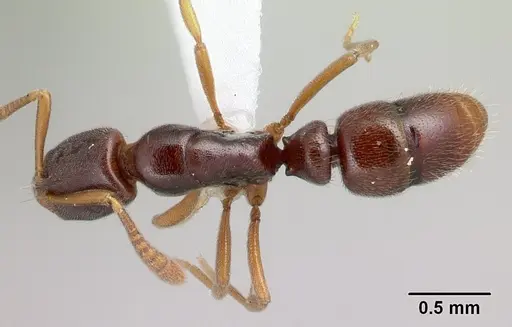
CASENT0218472
View on AntWeb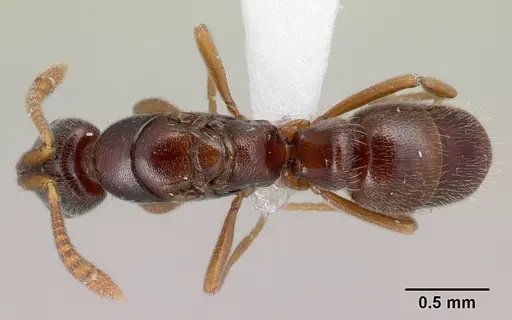
CASENT0218473
View on AntWeb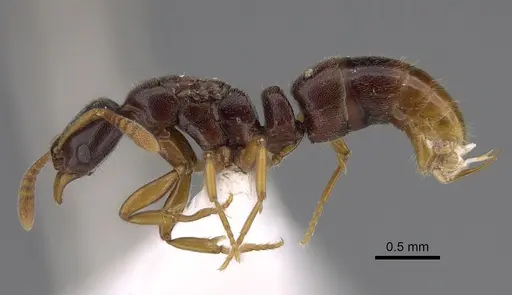
CASENT0250707
View on AntWeb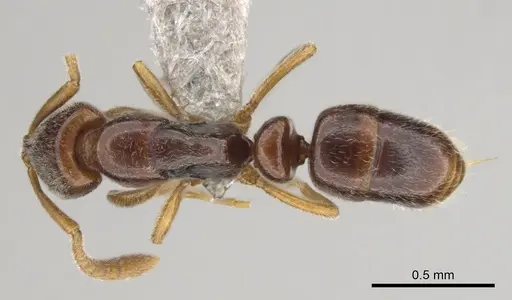
CASENT0902560
View on AntWeb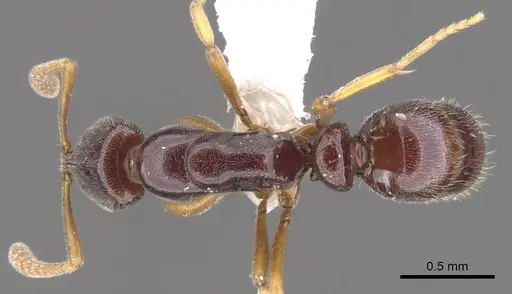
Literature
Loading distribution map...Loading products...