
Hypoponera hebes
- Sci. Name
- Hypoponera hebes
- Tribe
- Ponerini
- Subfamily
- Ponerinae
- Author
- Bolton & Fisher, 2011
- Distribution
- Found in 1 countries
Introduction
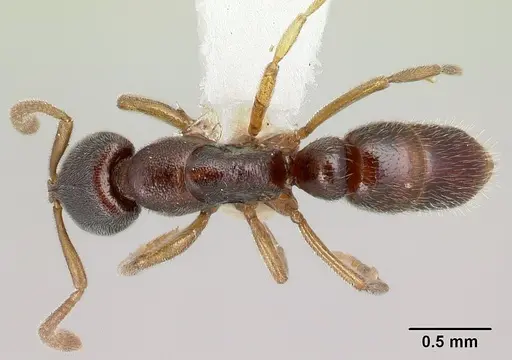
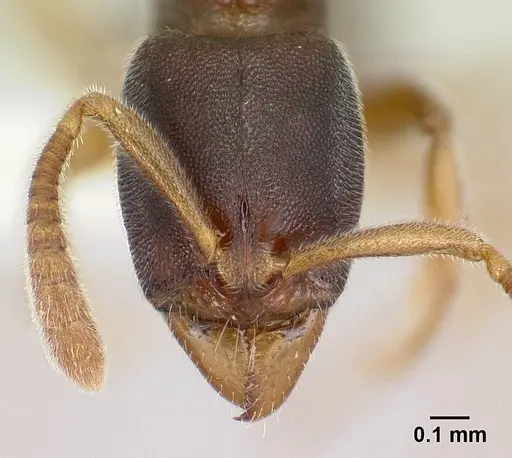
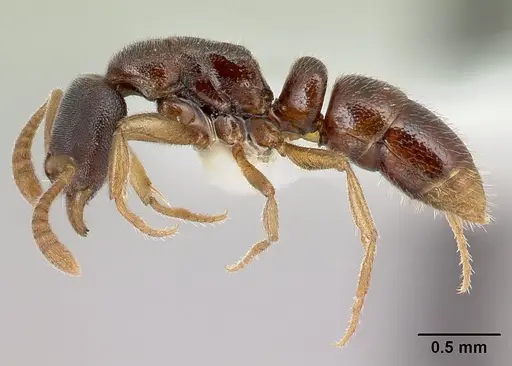
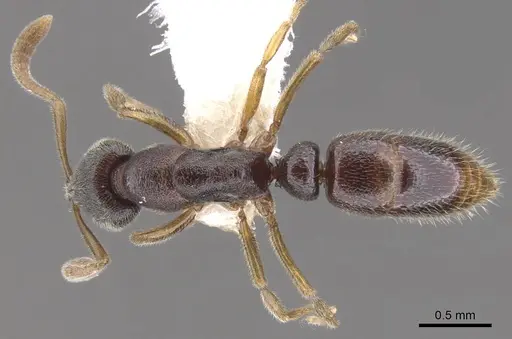
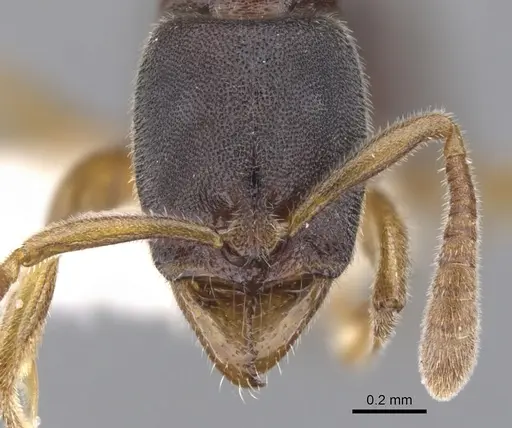
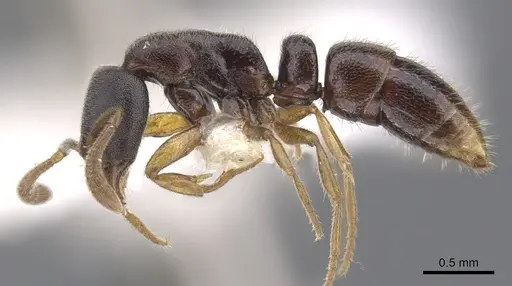
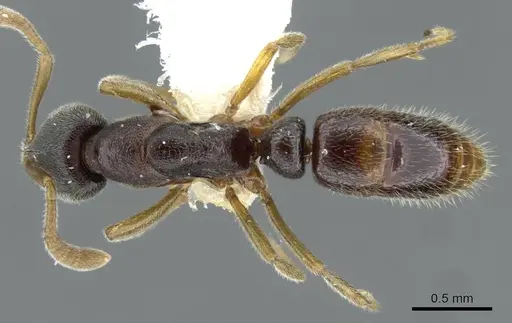
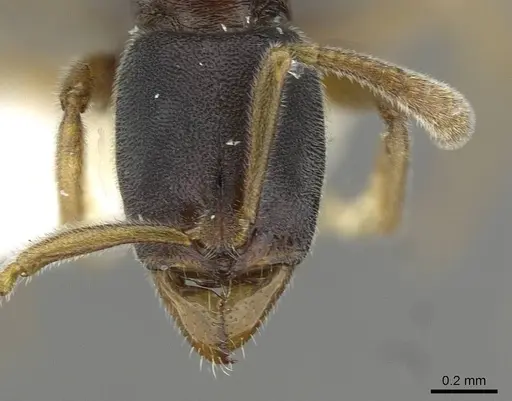
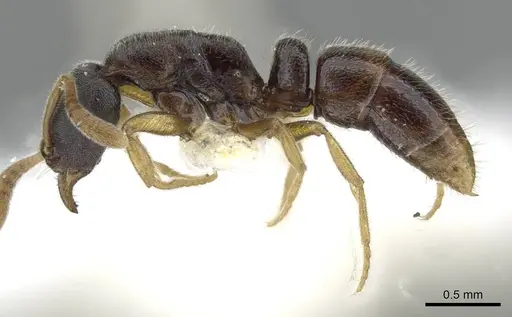
Hypoponera hebes is a tiny ponerine ant species only known from Rwanda, East Africa. Workers are among the smaller ant species, with a body size around 1mm. This species is notable for having some of the most strongly developed sculpture in the entire Afrotropical Hypoponera genus - their bodies are covered in coarse, dense reticulate-punctate texture that gives them a distinctly roughened appearance. They lack eyes entirely, which is unusual among ants and suggests they live in dark microhabitats. The most distinctive feature is the long, erect standing setae on the first gastral tergite, which are clearly differentiated from the underlying fine hairs. Found only in the Rangiro area of Rwanda at 1800m elevation, this species is likely endemic to that region .
Quick Summary
- Difficulty: Unknown, too little data to assess
- Origin & Habitat: Rangiro, Rwanda at 1800m elevation in the Afrotropical region [1]. The specific habitat is not documented.
- Colony Type: Unconfirmed, colony structure has not been documented
- Size & Growth:
- Queen: Size data unavailable, only dealate queen mentioned in type series [2]
- Worker: Size data unavailable, only head measurements exist in literature [2]
- Colony: Unknown, only known from type series
- Growth: Unknown
- Development: Unknown, no development data exists for this species (Development timeline has not been studied.)
- Antkeeping:
- Temperature: Unknown, no specific data exists for this species. Likely needs warm conditions similar to other Afrotropical forest ants.
- Humidity: Unknown, likely requires moderate to high humidity based on forest floor habitat. Keep substrate consistently moist but not waterlogged.
- Diapause: Unknown, no seasonal data available. Rwanda is tropical, so diapause is likely not required.
- Nesting: Natural nesting habitat is unconfirmed. Likely nests in rotting wood, under stones, or in leaf litter in forest environments.
- Behavior: Behavior is unstudied. Hypoponera species are typically predatory, hunting small invertebrates. They are generally non-aggressive and cryptic, spending most of their time underground or in concealed microhabitats. Their lack of eyes indicates they navigate and hunt primarily through chemical and tactile cues.
- Common Issues: this species has never been kept in captivity, no husbandry information exists, very limited distribution means wild colonies are essentially unavailable to collectors, lack of eyes suggests stress from bright lighting should be avoided, no information on what foods they accept, likely predatory on tiny arthropods, no data on founding behavior or colony development
Species Identification and Distinction
Hypoponera hebes can be identified by several unique characteristics within the genus. The sculpture on their body is among the most strongly developed of any Afrotropical Hypoponera species, the reticulate-punctate texture is extremely coarse and dense, particularly on the head and pronotum. The complete absence of eyes is another key identifying feature. Most distinctive are the long, erect standing setae on the first gastral tergite, which are conspicuously longer than the underlying pubescence. Among species with cuticular ridges on the posterior surface of the petiole node, only Hypoponera faex approaches this level of sculpturation, but H. faex is larger, has well-developed eyes, and lacks these long standing setae [2]. This species belongs to the Hypoponera abeillei group.
Distribution and Rarity
This species is known only from the type locality of Rangiro in Rwanda at an elevation of 1800 meters. It is considered likely endemic to Rwanda, meaning it may be found nowhere else on Earth [1]. The species was described in 2011 by Bolton and Fisher based on type material collected in 1973,with only two additional series ever collected from the same general area. This extreme rarity makes wild collection for antkeeping essentially impossible, the species is not available in the antkeeping hobby and no captive colonies are known to exist.
Genus-Level Care Guidance
Since no biological or husbandry data exists specifically for Hypoponera hebes, care must be inferred from what is known about the genus Hypoponera generally. Hypoponera ants are small ponerine ants found primarily in forested regions worldwide. Most species are predatory, hunting small invertebrates such as springtails, mites, and other micro-arthropods. They typically nest in rotting wood, under stones, or in accumulated leaf litter on the forest floor. Given that this species lacks eyes, it likely inhabits dark microhabitats and would prefer dim conditions in captivity. Avoid bright lighting and provide plenty of hiding spaces.
Defense Mechanism
As a member of the subfamily Ponerinae, Hypoponera hebes possesses a functional stinger capable of injecting venom. However, given their tiny size (around 1mm total length), any sting would be negligible to humans. The primary defense for this species would likely be chemical alarm secretions rather than stinging, as they are cryptic and spend most of their time in concealed microhabitats.
Why This Species Remains Unstudied
Hypoponera hebes represents a gap in our knowledge of ant biology. Despite being described in 2011,virtually nothing is known about its natural history, colony structure, diet, or development. This is not unusual for many ant species, the majority of described ants have never been studied in detail. The species is known only from a handful of specimens collected decades ago from a single location, and no researcher has yet conducted field studies on its behavior or ecology. For antkeepers, this means Hypoponera hebes remains a scientific curiosity rather than a viable species for captive husbandry. [2][1]
Frequently Asked Questions
Can I keep Hypoponera hebes as a pet ant?
No, this species is not available in the antkeeping hobby and has never been kept in captivity. It is only known from a few specimens collected in Rwanda and is considered likely endemic to that region. No wild colonies are available for collection, and no captive breeding populations exist.
What does Hypoponera hebes look like?
They are tiny ants, estimated around 1mm in total body length. They are dark brown to black with extremely coarse sculpture, their body surface is densely roughened with reticulate-punctate texture. Most notably, they completely lack eyes and have long erect bristles standing up from the first gastral segment.
Where is Hypoponera hebes found?
Only in Rwanda, East Africa, specifically at the type locality of Rangiro at 1800 meters elevation. It is likely endemic to this small area.
What do Hypoponera hebes eat?
Unknown for this specific species. Based on genus patterns, they are likely predatory on small invertebrates like springtails and mites. No feeding observations have been documented.
How do Hypoponera hebes colonies form?
Unconfirmed, founding behavior has not been documented.
Are Hypoponera hebes good for beginners?
This species cannot be kept, it is not available in the antkeeping hobby and no captive husbandry information exists. Even if it were available, the complete lack of biological data would make it unsuitable for beginners.
What is the colony size of Hypoponera hebes?
Unknown, only small type series have ever been collected. No data exists on maximum colony size.
Report an Issue
The current care sheet is based fully on literature. See inconsistencies, or something that's incorrect? Please , it will be resolved after review from an admin. Contributing to the blogs tab also helps providing information, to make us be able to further improve the caresheets. Thank you for your support!
References

This caresheet is licensed under CC BY-SA 4.0 .
Community Blogs
Literature
Loading distribution map...Loading products...