
Hypoponera dis
- Sci. Name
- Hypoponera dis
- Tribe
- Ponerini
- Subfamily
- Ponerinae
- Author
- Bolton & Fisher, 2011
- Distribution
- Found in 1 countries
Introduction
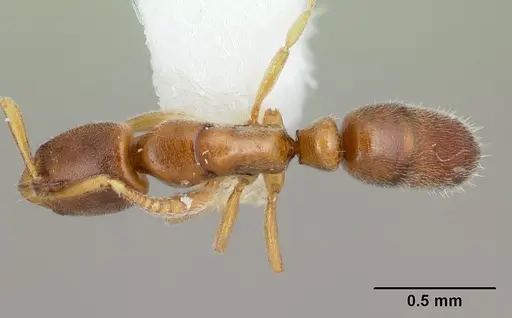
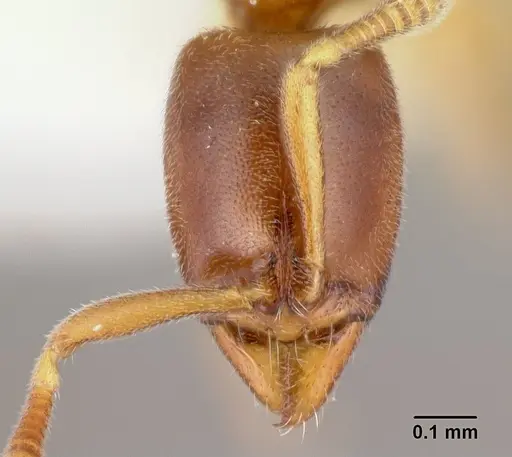
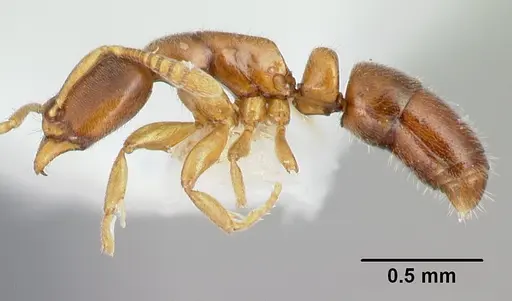
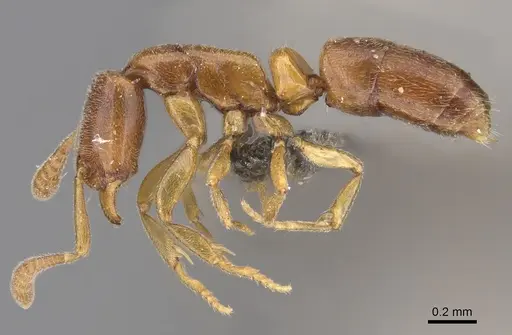
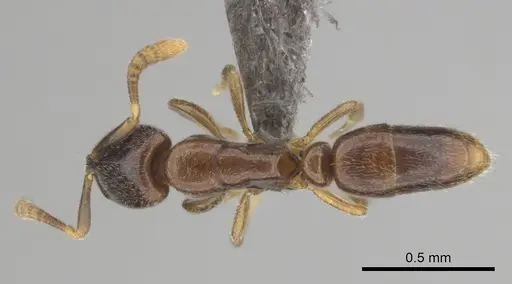
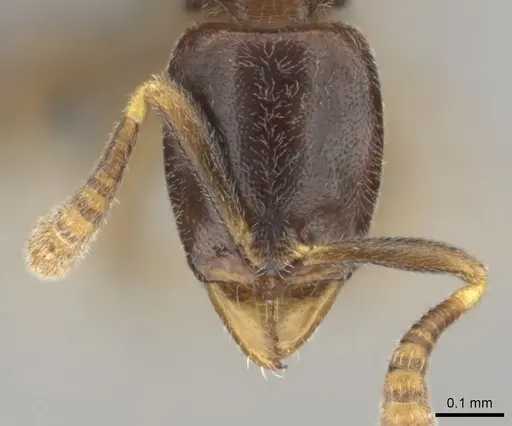
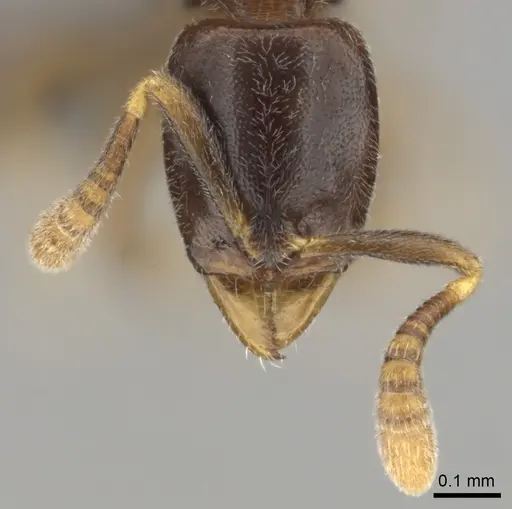
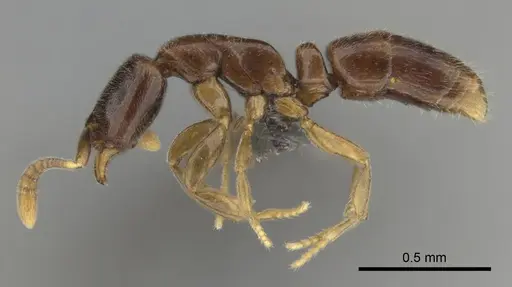
Hypoponera dis is a tiny, predatory ant measuring about 3 mm in total length . Workers are light to medium brown and completely lack eyes . Originally described from Tanzania's Mafia Island , this species has since been recorded across much of the Neotropics, from Costa Rica and Panama down to Argentina . It lives in leaf litter of forests (including primary, pine, eucalyptus, and urban areas) and is classified as a cryptic species . Unusually for ground-living ants, workers are strong swimmers . In the wild they have been observed preying on earthworms .
Quick Summary
- Difficulty: Expert
- Origin & Habitat: Described from Tanzania (Afrotropical) but widely recorded across the Neotropics: Guatemala, Honduras, Costa Rica, Panama, Venezuela, Trinidad, Ecuador, Peru, Brazil, Bolivia, Paraguay, Argentina, and Colombia [1][10][3][11][4]. Inhabits leaf litter in various forest types – primary forest, pine plantations, eucalyptus plantations, urban green spaces – from lowland to around 1200 m elevation [2][6][12]. It is a ground‑dwelling, cryptic species often collected with Winkler traps and pitfall traps [5].
- Colony Type: Unknown, no data on colony structure. Single‑queen (monogyne) is unconfirmed. Founding behavior is unobserved.
- Size & Growth:
- Queen: Undescribed, measurements unavailable.
- Worker: Approximately 3 mm total length [1]. Note: head width measurements (0.38–0.40 mm) exist [2] but are not body size.
- Colony: Unknown, not documented in the literature.
- Growth: Moderate (inferred from related Ponerinae patterns)
- Development: Unknown, no specific data. Related Ponerinae often take 6–10 weeks, but this is speculative. (Development time is unstudied for this species. Keep stable conditions and observe.)
- Antkeeping:
- Temperature: Keep warm and stable, around 22–26°C, matching tropical leaf‑litter conditions [7]. A slight gradient (cooler outworld, warmer nest) helps self‑regulation.
- Humidity: High humidity is critical. Keep the nest substrate consistently moist (like damp forest floor) but not waterlogged. These ants desiccate quickly if too dry.
- Diapause: Unknown. As a tropical species (both Afrotropical and Neotropical records), it likely does not require true hibernation. Provide stable warmth year‑round. A slight winter cool‑down might be beneficial, but is unproven.
- Nesting: Use a naturalistic setup with moist soil or plaster nest that holds humidity well. Y‑tong (AAC) blocks also work. Chambers must be small and tight‑fitting. Escape prevention is critical – use fine mesh and seal all gaps. Do not use acrylic nests.
- Behavior: Cryptic, slow‑moving solitary forager. Workers do not form obvious trails, they hunt alone in the leaf litter. They possess a functional sting (potent for their size) used to subdue prey, and can tackle surprisingly large prey like earthworms [8][9]. Not aggressive toward humans but will sting if threatened. They are strong swimmers, an unusual ability for ground ants [7]. Escape risk is extremely high due to tiny size.
- Common Issues: escape prevention is critical – these ants are tiny and can squeeze through the smallest gaps, colonies may fail if humidity drops too low – they need constant moisture to prevent desiccation, slow colony growth compared to common ants may frustrate beginners, predatory diet requires live prey – they will not accept sugar water alone, wild‑caught colonies may carry parasites or suffer from unknown founding conditions, very few colony observations exist – much care advice is inferred from related species
Housing and Nest Setup
Because Hypoponera dis is tiny and a cryptic leaf‑litter dweller, you need a setup that holds high humidity and prevents escape. Use a Y‑tong (AAC) or plaster nest with small, low chambers that mimic natural soil cavities. A soil or coconut fibre substrate can also work, but must stay consistently moist. Provide a water reservoir or regular misting. Escape prevention is vital – use very fine mesh on vents and seal every joint with silicone or PTFE. An outworld with a thin layer of leaf litter allows natural foraging. For a colony of unknown size, start with a small nest (e.g.,10×10 cm) and expand as needed. Never use acrylic nests (poor humidity retention, ants can escape through seams). [2][1]
Feeding and Diet
These are specialized predators. In nature they hunt earthworms [8][9], so live protein is essential. Offer small live prey such as springtails, fruit flies, small mealworms, microworms, or freshly killed pinhead crickets. They may also accept pieces of earthworm. Do not rely on sugar water or honey – they show little interest. Feed prey 2–3 times per week, remove uneaten items after 24 hours to prevent mold. As the colony grows, you can offer larger prey. Always ensure prey is appropriate size (smaller than the workers).
Temperature and Humidity
Keep these ants in warm, stable conditions (22–26°C) with high humidity. A heating cable on one side of the nest provides a gradient so workers can choose their preferred spot. Humidity is the most critical factor – the nest substrate must remain consistently moist but not waterlogged. Mist the nest as needed to keep the substrate feeling damp to the touch. Use a hygrometer in the setup, aim for near 90–95% relative humidity inside the nest chamber. Avoid dry heat sources that dry out the nest too quickly. [7]
Behavior and Temperament
Hypoponera dis is a solitary hunter: workers wander slowly through the leaf litter, never forming trails. They rely on their sting to subdue prey and can overpower surprisingly large earthworms [8][9]. They are not aggressive toward humans but will sting if handled. Their swimming ability is notable – classified as ‘strong’ among Ponerinae [7]. This likely helps them survive floods in their natural leaf‑litter habitat. Because of their tiny size (3 mm), they are expert escapers. Always use fine mesh and tight seals.
Colony Development
Colony development is virtually undocumented. Based on related Ponerinae, growth is probably moderate (several dozen to a few hundred workers at maturity). The first workers (nanitics) may be smaller than later workers. Queen founding is unobserved – do not assume claustral. Do not expect high initial survival from wild‑caught queens, many may die before producing workers. If you obtain a colony, handle it gently and provide optimal conditions. No data exists on nuptial flights, pleometrosis, or polygyny in this species.
Frequently Asked Questions
How long does it take for Hypoponera dis to produce first workers?
Specific data is unavailable. Related Ponerinae often take 6–10 weeks from egg to worker at optimal temperature, but this is speculative.
What do Hypoponera dis ants eat?
They need live prey. Offer small insects like springtails, fruit flies, tiny mealworms, or pieces of earthworm. They have been observed predating on earthworms in the wild [8][9].
Are Hypoponera dis good for beginners?
No – they are considered expert level. Their tiny size, high humidity needs, predatory diet, and unknown founding make them very challenging.
What temperature do Hypoponera dis need?
Keep them at 22–26°C. They are tropical ants that need stable warmth [7].
How big do Hypoponera dis colonies get?
Colony size is unknown – no published data. Based on related Hypoponera, probably a few hundred workers, but this is guesswork.
Can I keep multiple queens together?
Colony structure is not documented. Do not attempt to combine unrelated queens, solitary queen colonies appear most likely.
Do Hypoponera dis need hibernation?
This is a tropical species (both Afrotropical and Neotropical), so true hibernation is not required. Keep warm year‑round.
Why are my Hypoponera dis dying?
Most likely causes: low humidity (desiccation), escape (tiny size), inadequate live prey, or poor water quality. Many wild‑caught colonies also have unknown founding issues.
What type of nest is best for Hypoponera dis?
A Y‑tong (AAC) or plaster nest with high moisture retention. Small chambers and excellent sealing are essential. Avoid acrylic nests.
Report an Issue
The current care sheet is based fully on literature. See inconsistencies, or something that's incorrect? Please , it will be resolved after review from an admin. Contributing to the blogs tab also helps providing information, to make us be able to further improve the caresheets. Thank you for your support!
References

This caresheet is licensed under CC BY-SA 4.0 .
Community Blogs
Literature
Loading distribution map...Loading products...