
Hypoponera dema
- Sci. Name
- Hypoponera dema
- Tribe
- Ponerini
- Subfamily
- Ponerinae
- Author
- Bolton & Fisher, 2011
- Distribution
- Found in 1 countries
Introduction
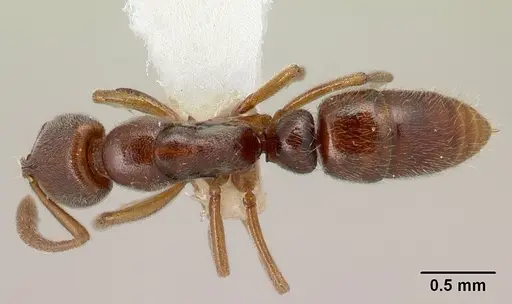
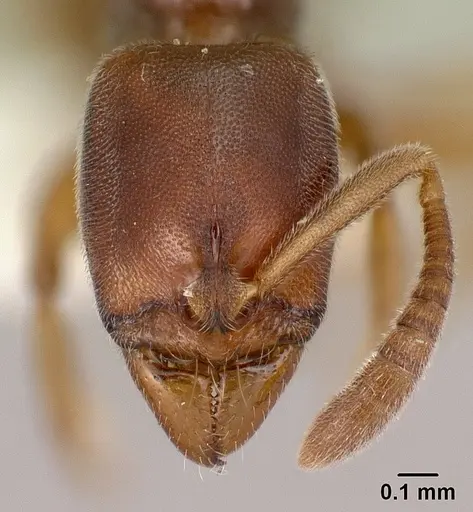
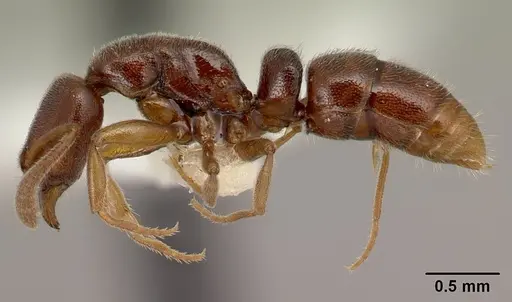
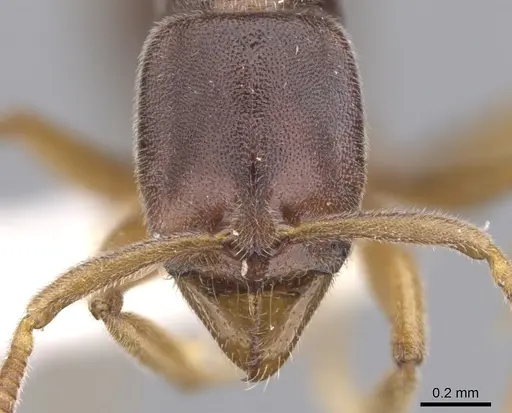
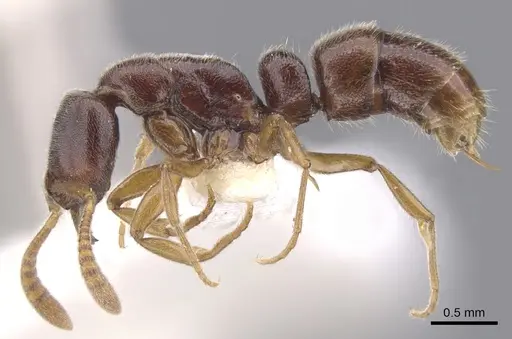
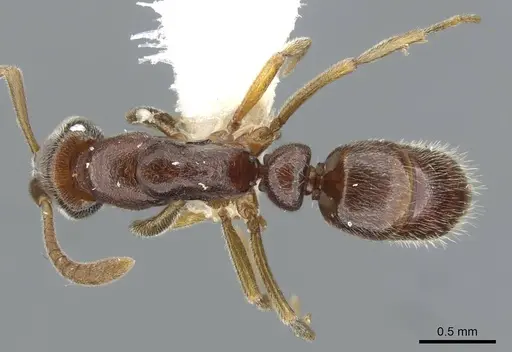
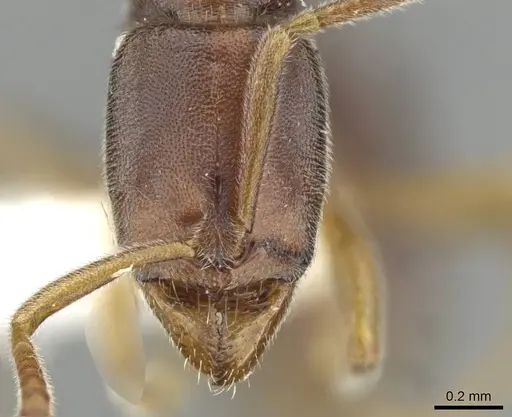
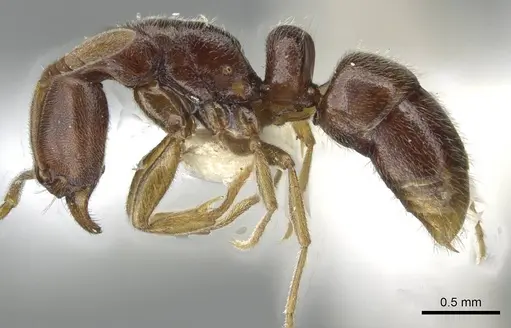
Hypoponera dema is a small ponerine ant species described in 2011 from specimens collected in Rwanda and Uganda . It belongs to the Hypoponera abeillei group and is among the larger species in this complex . The species has a distinctive sharp denticle at the midpoint of the anterior clypeal margin, and the first gastral tergite is distinctly wider than the second . Eyes are either absent or present as small, poorly defined structures . This species is known only from high-elevation sites in Rwanda (type locality at 1800m) and Uganda . Nothing is known about the biology of Hypoponera dema - this is one of the least documented ant species in the hobby . The genus Hypoponera contains cryptic species that nest in soil or decaying wood, and most species are generalist predators . Some Hypoponera species have unusual reproductive strategies including ergatoid (worker-like) replacement reproductives . For antkeepers, this means you are essentially pioneering the captive care of a species with no established husbandry guidelines.
Quick Summary
- Difficulty: Unknown, no captive husbandry data exists
- Origin & Habitat: High-elevation Afrotropical region (Rwanda and Uganda), specifically documented from Rangiro, Rwanda at 1800m elevation [2]. Known from Akagera National Park and Nyungwe tropical rainforest [4][5].
- Colony Type: Unconfirmed, colony structure has not been documented. Some Hypoponera species have ergatoid replacement reproductives, but this is unknown for H. dema specifically.
- Size & Growth:
- Queen: size data unavailable, paratype queen exists but measurements not published [1]
- Worker: ~2.5-3mm estimated from genus patterns (small Hypoponera workers typically 2-4mm total length)
- Colony: Unknown, no colony size data available
- Growth: Unknown, no development data exists
- Development: Unconfirmed, no species-specific measurements exist (Development time is completely unknown for this species.)
- Antkeeping:
- Temperature: Keep at stable room temperature. Avoid temperatures above 30°C or below 18°C. The elevation of 1800m suggests they experience cooler conditions than lowland tropical areas.
- Humidity: Keep the nest substrate consistently moist but not waterlogged. Hypoponera species typically nest in soil and decaying wood in forest habitats [4].
- Diapause: Unknown, no seasonal data exists for this species.
- Nesting: Likely prefers soil-based or rotting wood nesting. In captivity, a test tube setup with moist substrate or a Y-tong/plaster nest with moisture would be appropriate. The genus is known for cryptic, soil-nesting habits [4].
- Behavior: Inferred from genus: Hypoponera dema is likely a cryptic, slow-moving predator. The genus contains generalist predators that hunt small invertebrates [5]. They are probably not aggressive and may be nocturnal or crepuscular. Workers are very small (under 1mm) so standard escape prevention measures apply. As a Ponerinae species, they have a functional stinger, though the small size likely limits sting effectiveness against vertebrates.
- Common Issues: no husbandry precedent exists, this species has never been kept in captivity, so all care is experimental, unknown founding behavior means colony establishment may be difficult, high elevation origin suggests sensitivity to overheating, keep well below 30°C, cryptic nature means colonies may appear inactive or stressed without obvious cause, wild-caught colonies may have parasites or diseases with no documented treatment
Nest Preferences and Housing
Hypoponera dema is a cryptic soil-nesting species, so your setup should mimic natural forest floor conditions [4]. In the wild, Hypoponera species nest in soil or decaying wood, often hidden under debris or within rotten logs [4]. For captivity, a test tube setup works well for founding colonies, keep the tube humid but not waterlogged. Once established, you can transition to a Y-tong or plaster nest with a moisture reservoir. The chambers should be relatively small and snug, these are tiny ants. Avoid large, open spaces in the outworld. Provide a dark cover over the nest area since they prefer dark, concealed spaces. Some keepers add a thin layer of soil or coco fiber in the outworld to encourage natural foraging behavior.
Feeding and Diet
Hypoponera species are generalist predators that hunt small invertebrates [5]. In captivity, offer small live prey items such as fruit flies, pinhead crickets, small mealworms, and other tiny arthropods. Since workers are very small, prey should be appropriately small, springtails and fruit flies are ideal. You can also offer small amounts of protein paste or crushed insects. Sugar sources may or may not be accepted, some Hypoponera species will take honey water or sugar water, but this is not guaranteed. Feed every 2-3 days with small prey items, removing any uneaten food promptly to prevent mold. The cryptic nature of these ants means they may not readily take prey in open spaces, consider providing hiding spots or feeding in low-light conditions.
Temperature and Seasonal Care
The type locality at 1800m elevation suggests Hypoponera dema originates from a cooler, highland climate compared to typical tropical ants [2]. Aim for stable temperatures in the 22-26°C range, avoid exceeding 30°C as this could be lethal. Room temperature (around 20-24°C in many homes) is likely suitable. A gentle thermal gradient in the nest allows the colony to self-regulate. Place the nest on the cooler side of the setup and consider using a very low-wattage heating cable only if your room runs cold. Humidity should be moderate to high to match their forest floor habitat. Use a moisture reservoir in test tube setups and check that the substrate stays damp but not soggy. No specific diapause requirements are documented, but Rwanda has distinct wet and dry seasons, you might consider a slight temperature reduction during winter months, though this is speculative.
Colony Establishment and Founding
Since nothing is known about the founding behavior of Hypoponera dema, you are entering uncharted territory [3]. If you obtain a founding queen, provide a small, humid test tube with a dark cover. Place it in a quiet, undisturbed location. Do not check on the queen frequently, stress can cause abandonment. Wait several weeks before checking for eggs, then larvae, then workers (nanitics). The first workers will likely be smaller than normal workers (nanitics). If the colony fails to establish, do not be discouraged, this species has no captive history and experimental approaches may be needed.
Behavior and Observation
Hypoponera dema is likely a secretive, slow-moving ant that avoids bright light and open spaces [4]. Workers probably forage individually rather than in obvious trails. You may not see dramatic activity levels, these ants are built for stealth hunting rather than mass foraging. The genus is known for unusual reproductive strategies including ergatoid (worker-like) males that fight for reproductive rights [5], though this specific behavior is unconfirmed for H. dema. Observation is best done with a red light or in dim conditions, as bright light may stress them. Their cryptic nature makes them fascinating to watch but challenging to keep, success requires patience and attention to subtle environmental cues.
Frequently Asked Questions
How do I keep Hypoponera dema ants?
Since no captive husbandry data exists, all care is experimental. Start with a humid test tube setup for founding colonies, then transition to a Y-tong or plaster nest. Keep at stable room temperature with moderate humidity. Feed small live prey like fruit flies or springtails. This is pioneering work, be prepared to experiment and adjust based on colony response.
What do Hypoponera dema ants eat?
Based on genus patterns, they are generalist predators that hunt small invertebrates [5]. Offer small live prey: fruit flies, springtails, tiny crickets, or small mealworms. Some may accept sugar water or honey, but this is not guaranteed. Feed small amounts every 2-3 days.
How long does it take for Hypoponera dema to produce first workers?
Unknown, no species-specific development data exists. Development time is completely unstudied for this species.
Do Hypoponera dema ants sting?
Hypoponera belongs to the Ponerinae subfamily, which includes many stinging species. The genus has a functional stinger, though their very small size likely limits sting effectiveness against humans. Treat them as potentially capable of stinging but low risk to keepers.
Are Hypoponera dema good for beginners?
No. This species has no captive husbandry history and is not recommended for beginners. The complete lack of documented care means you are experimenting from scratch. Choose a species with established care guidelines if you are new to antkeeping.
What temperature do Hypoponera dema need?
Based on their high-elevation origin (1800m in Rwanda), keep them in the 22-26°C range. Avoid temperatures above 30°C or below 18°C. Room temperature in most homes is likely suitable.
Where is Hypoponera dema found?
Only known from Rwanda and Uganda in the Afrotropical region. The type locality is Rangiro, Rwanda at 1800m elevation [1][2]. Also recorded from Akagera National Park in eastern Rwanda and Nyungwe tropical rainforest [4][5].
How big do Hypoponera dema colonies get?
Unknown, no colony size data has been published.
Can I keep multiple Hypoponera dema queens together?
Unknown, colony structure has not been documented for this species. Some Hypoponera species have ergatoid replacement reproductives, but combining unrelated queens is not recommended without evidence they accept multiple foundresses.
Do Hypoponera dema need hibernation?
Unknown, no seasonal data exists. Rwanda's highland climate has distinct seasons, so some form of seasonal adjustment may be beneficial, but this is speculative.
Report an Issue
The current care sheet is based fully on literature. See inconsistencies, or something that's incorrect? Please , it will be resolved after review from an admin. Contributing to the blogs tab also helps providing information, to make us be able to further improve the caresheets. Thank you for your support!
References

This caresheet is licensed under CC BY-SA 4.0 .
Community Blogs
Literature
Loading distribution map...Loading products...