
Hypoponera congrua
- Sci. Name
- Hypoponera congrua
- Tribe
- Ponerini
- Subfamily
- Ponerinae
- Author
- Wheeler, 1934
- Distribution
- Found in 1 countries
Introduction
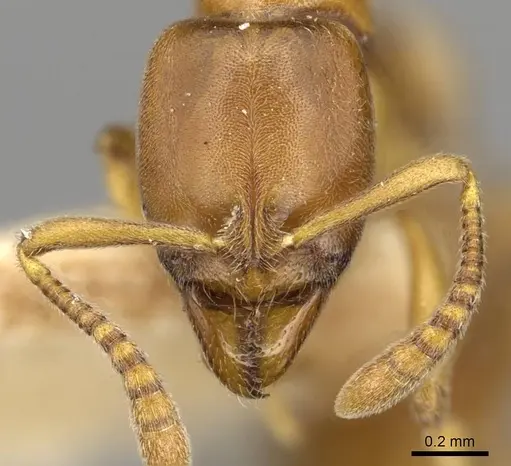
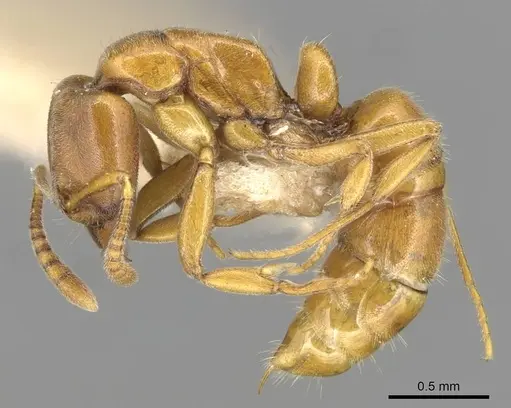
Hypoponera congrua is a small ponerine ant native to Western Australia. Workers measure 3-3.5mm and queens measure 4-4.2mm. Workers are yellowish-red with paler yellow legs and antennae, while queens are darker with brownish-red thoraces and darker heads and gasters. This species has minute eyes with only 4-5 facets, giving them limited vision. They nest in sandy and limestone soils, often in areas with low shrub cover. As a Ponerine ant, they belong to an evolutionarily older group known for their predatory habits and functional stingers .
Quick Summary
- Difficulty: Medium
- Origin & Habitat: Western Australia, specifically the Fremantle area and south-west regions. They prefer limestone and sandy soils but can also be found in wetter areas of the south-west. Nests are located in sandy soil often protected by low shrub cover [2].
- Colony Type: Colony structure is unconfirmed for this species.
- Size & Growth:
- Queen: 4-4.2 mm [1]
- Worker: 3-3.5 mm [1]
- Colony: Colony size data is unavailable for this species
- Growth: Moderate, typical for Ponerine ants
- Development: Development time is unconfirmed for this species. Based on typical Ponerinae patterns, expect several months from egg to first worker. (Ponerine ants generally develop slower than advanced ant genera.)
- Antkeeping:
- Temperature: Keep around 22-26°C. These are Australian ants from a temperate region, so room temperature or slightly above works well.
- Humidity: Moderate to high. They naturally inhabit areas ranging from sandy limestone to wetter south-west habitats. Keep the nest substrate moist but not waterlogged.
- Diapause: Diapause requirements are unconfirmed for this species. Western Australian temperate ants may need a winter rest period.
- Nesting: Ponerine ants prefer dark, humid nests. Y-tong (AAC) nests or plaster nests work well. Test tube setups also work for founding colonies. Keep the nest dark and avoid excessive disturbance.
- Behavior: Hypoponera ants are predatory, using their stinger to subdue prey. They are generally less aggressive than some other Ponerines but will defend their colony if threatened. Workers are relatively slow-moving and forage individually. Their tiny eyes suggest limited visual reliance, they likely use chemical and tactile cues. They can squeeze through small gaps despite their moderate size.
- Common Issues: Ponerine ants are sensitive to disturbance, avoid frequent nest inspections that can stress the colony, Predatory nature means they need live prey, they may not accept dead food readily, Small colony sizes mean losses are more impactful, each worker matters, Humidity control is critical, too dry and brood dies, too wet and mold becomes a problem, Limited documented care information means you may need to adjust conditions based on colony behavior
Housing and Nest Setup
Hypoponera congrua does well in standard ant keeping setups. Y-tong (AAC) nests or plaster nests provide the dark, humid environment these ants prefer. Test tube setups also work, especially for founding colonies, use a water reservoir but avoid overfilling that could flood the colony. Place the nest in a quiet area away from direct sunlight and vibrations. These ants do not need much vertical space. The outworld should be simple with a foraging area and access to water. Because they are small, ensure your setup has no gaps larger than 1mm to prevent escapes. [2][1]
Feeding and Diet
As predatory Ponerine ants, Hypoponera congrua needs live prey to thrive. Offer small insects like fruit flies, pinhead crickets, mealworms, and other appropriately-sized arthropods. They are likely to accept soft-bodied prey more readily than hard-shelled insects. They may not accept sugar water or honey as readily, their diet is primarily protein-based. Feed small prey items 2-3 times per week for established colonies, more frequently for growing colonies with brood. Remove uneaten prey after 24-48 hours to prevent mold. [1]
Temperature and Seasonal Care
Maintain temperatures between 22-26°C for optimal colony health and brood development. Australian temperate ants like H. congrua do not need extreme heat, room temperature is often suitable. A heat cable on one side of the nest can create a gradient if your home runs cool. Diapause requirements are not well documented for this species. Reduce feeding during any winter rest period but never let the nest dry out completely. [2]
Colony Founding and Early Growth
If you obtain a founding queen, provide a small cricket or fruit fly occasionally. The queen may seal herself into a chamber initially but may need to leave to hunt. Once the first workers emerge, they will be smaller than normal workers, this is typical. The colony grows slowly at first, which is normal for Ponerines. Do not disturb the founding chamber excessively. Wait until you see several workers before offering larger prey. [1]
Behavior and Defense
Hypoponera congrua workers are relatively docile compared to some other Ponerines. They are not aggressive toward keepers and rarely bite. However, they possess a stinger and will use it if directly threatened or handled roughly. Their stinger is small and the pain level is minimal for humans. Workers forage individually rather than in groups, using chemical trails to communicate food discoveries. They are not strong climbers and typically stay on the ground surface. Their small eyes suggest they rely more on chemical signals than vision. [1]
Frequently Asked Questions
How long does it take for Hypoponera congrua to produce first workers?
Development time is unconfirmed for this species. Based on typical Ponerine development, expect several months from egg to first worker at optimal temperature. The first workers will be smaller and the colony will grow gradually from there.
What do Hypoponera congrua eat?
They are predatory and need live small insects like fruit flies, pinhead crickets, and small mealworms. They may not accept sugar water or dead food readily. Offer appropriately-sized live prey 2-3 times per week.
Can I keep multiple queens together?
This is not recommended. Colony structure is not documented for this species, and combining unrelated queens could result in fighting. Start with a single queen colony.
Do Hypoponera congrua need hibernation?
Diapause requirements are unconfirmed for this species. Some Western Australian temperate ants may need a winter rest period. Monitor your colony and adjust accordingly.
Are Hypoponera congrua good for beginners?
They are rated as medium difficulty. They require more specific care than common species, particularly regarding live prey and humidity. However, they are not as aggressive or demanding as some other Ponerines. Beginners should research Ponerine care before attempting this species.
How big do Hypoponera congrua colonies get?
Colony size is not well documented for this species. They are not supercolonial and likely maintain relatively modest colony sizes.
What nest type is best for Hypoponera congrua?
They prefer dark, humid environments. Y-tong (AAC) nests, plaster nests, or well-maintained test tube setups all work well. Avoid overly dry or bright setups. Keep the nest humid but ensure adequate ventilation to prevent mold.
Why is my colony not growing?
Ponerine ants naturally grow slowly. Ensure you are offering live prey regularly, maintaining proper humidity, and keeping temperatures in the 22-26°C range. Also check that the queen is still laying eggs and that workers are not dying in unusual numbers. Avoid disturbing the nest too frequently.
Report an Issue
The current care sheet is based fully on literature. See inconsistencies, or something that's incorrect? Please , it will be resolved after review from an admin. Contributing to the blogs tab also helps providing information, to make us be able to further improve the caresheets. Thank you for your support!
References

This caresheet is licensed under CC BY-SA 4.0 .
Community Blogs
CASENT0915192
View on AntWeb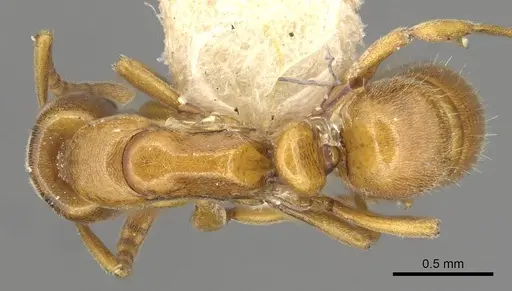
Literature
Loading distribution map...Loading products...