
Hypoponera bulawayensis
- Sci. Name
- Hypoponera bulawayensis
- Tribe
- Ponerini
- Subfamily
- Ponerinae
- Author
- Forel, 1913
- Distribution
- Found in 1 countries
Introduction
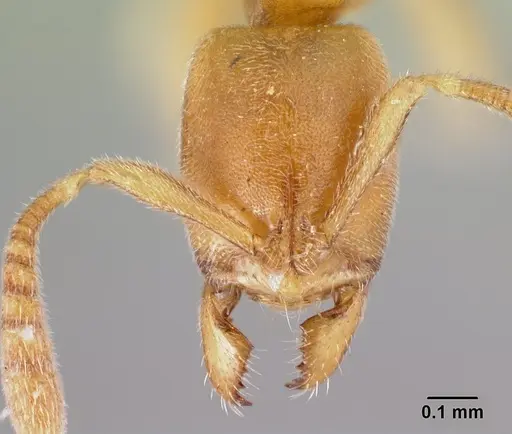
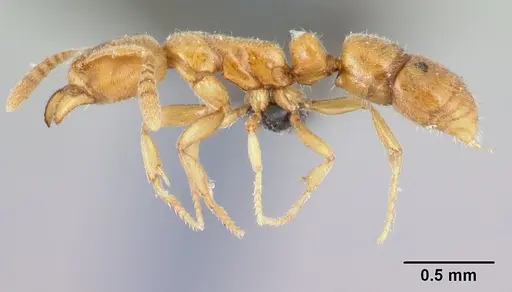
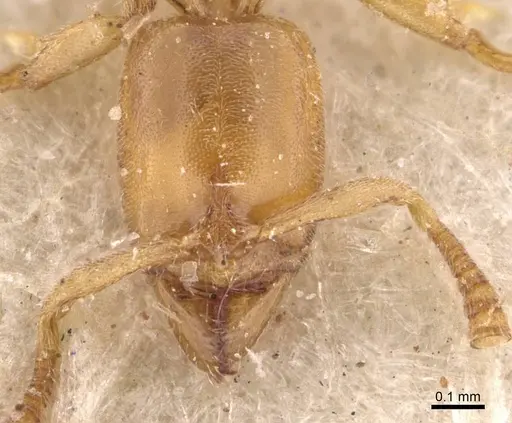
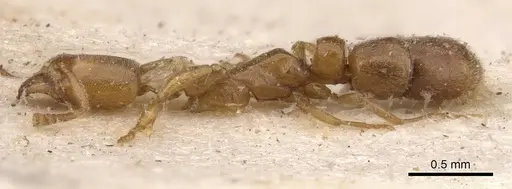
Hypoponera bulawayensis is an extremely rare ponerine ant known only from two specimens collected in widely separated locations: Bulawayo, Zimbabwe (the type locality collected in 1913) and Mafia Island, Tanzania . Workers are tiny, uniformly yellow ants with no eyes. They belong to the Hypoponera abeillei group, distinguished by their relatively long scapes and five enlarging apical funicular segments. The most distinctive morphological feature is the unusually long, low petiole node, which separates this species from related forms. Despite being formally described in 1913,virtually nothing is known about their biology, behavior, or colony structure in the wild.
Quick Summary
- Difficulty: Expert
- Origin & Habitat: Afrotropical Region, known only from Zimbabwe (Bulawayo) and Tanzania (Mafia Island) [1]. The exact habitat is unknown, but Hypoponera species typically nest in soil, rotting wood, or under stones in forested areas.
- Colony Type: Colony structure is unconfirmed. Only two worker specimens have ever been collected, making any determination about queen number speculative.
- Size & Growth:
- Queen: Unknown, no queens have been described
- Worker: ~2-2.5mm, inferred from Hypoponera genus (tiny species)
- Colony: Unknown, only two specimens ever collected [1]
- Growth: Unknown
- Development: Unknown, no developmental data exists for this species (Based on typical Hypoponera patterns, development likely takes several months, but this is entirely speculative)
- Antkeeping:
- Temperature: Start around 24-26°C and observe colony activity. No specific thermal data exists for this species, but Hypoponera generally prefer warm, stable conditions.
- Humidity: Keep substrate consistently moist but not waterlogged. Hypoponera species typically require humid conditions similar to their forest floor habitat.
- Diapause: Unknown, no seasonal data exists. Tropical origin suggests they may not require a true hibernation, but cool periods may slow activity.
- Nesting: Use a test tube setup initially. Given their tiny size and likely ground-nesting habits, a small Y-tong or plaster nest with fine chambers would be appropriate once the colony establishes.
- Behavior: Hypoponera ants are typically predatory and secretive. Workers are small, slow-moving, and likely forage individually for small prey. They have no eyes, so they navigate using chemical cues. Escape prevention is critical due to their minute size, they can squeeze through the tiniest gaps. As a Ponerine ant, they possess a stinger, though due to their tiny size any sting would be imperceptible to humans. Temperament is likely non-aggressive, as is typical for small Hypoponera.
- Common Issues: extreme rarity means virtually no biological data exists, care is entirely speculative, tiny size makes escape prevention challenging, use fine mesh and tight-fitting lids, no confirmed diet acceptance, start with small live prey like springtails, slow growth and development may frustrate keepers expecting rapid colony expansion, wild-caught colonies are essentially impossible to obtain
Rarity and Collection History
Hypoponera bulawayensis is one of the rarest ant species in the world, known from only two specimens collected over a century apart. The holotype worker was collected by G. Arnold in Bulawayo, Zimbabwe on March 23,1913. The second specimen was found on Mafia Island, Tanzania, a location thousands of kilometers from the type locality [1]. This extreme rarity makes the species virtually unavailable to antkeepers, as no wild colonies have ever been documented for collection. The species was originally misidentified as a subspecies of Hypoponera ragusai before being raised to full species status by Bolton and Fisher in 2011 [1].
Identification and Morphology
Workers of H. bulawayensis are tiny ants, uniformly yellow in color throughout adulthood, with no dark markings. The most distinctive feature is the petiole node, relatively long and low, which is unusual within the abeillei group. In dorsal view, the petiole node is only 10% broader than long, making it unusually elongate compared to related species. They lack eyes entirely, and have relatively long scapes that reach about 90% of head length when laid back. The funiculus has five conspicuously enlarging apical segments [1]. These morphological traits are important for identification but tell us little about their biology.
Housing and Nest Setup
Since this species has never been kept in captivity and no biological data exists, housing recommendations must be based on what works for related Hypoponera species. Start with a standard test tube setup with a water reservoir. The tiny size of workers means chambers and passages must be very small. Once a colony establishes, a small Y-tong or plaster nest with fine chambers would be appropriate. Given their likely ground-nesting habits, provide a layer of moist substrate. Escape prevention is absolutely critical, these ants can squeeze through gaps too small for most other ants to pass. Use tight-fitting lids and consider fine mesh on any ventilation holes.
Feeding and Diet
No specific dietary data exists for this species. Hypoponera ants are typically predatory, hunting small invertebrates. Based on related species, they likely accept small live prey such as springtails, micro-arthropods, and other tiny invertebrates. Their small size means prey items must be appropriately sized, essentially microscopic. Sugar sources may or may not be accepted. Start with live springtails and other micro-prey, and experiment cautiously with very small amounts of honey or sugar water. Do not overfeed, small colonies are easily overwhelmed by excess food that molds.
Temperature and Humidity
No thermal tolerance data exists for this species. Their tropical/subtropical distribution suggests they prefer warm conditions, likely in the 24-28°C range. Provide a temperature gradient so the ants can self-regulate. Humidity should be moderate to high, think forest floor conditions. Keep the nest substrate moist but not waterlogged, with some variation across the setup. A small water tube or moisture reservoir in the test tube setup maintains humidity. Monitor for condensation, which indicates adequate humidity.
Behavior and Temperament
Nothing is known about the behavior of H. bulawayensis specifically. However, Hypoponera ants in general are secretive, slow-moving predators that typically forage individually rather than in groups. Workers are non-aggressive and rely on chemical communication. The complete absence of eyes indicates they navigate entirely through chemical and tactile cues. They likely spend most of their time hunting in leaf litter or soil. Colonies are probably small and slow-growing, as is typical for the genus. Their tiny size and cryptic habits make them difficult to observe. As members of the subfamily Ponerinae, they possess a functional stinger, though given their minute size any sting would be imperceptible to humans.
Report an Issue
The current care sheet is based fully on literature. See inconsistencies, or something that's incorrect? Please , it will be resolved after review from an admin. Contributing to the blogs tab also helps providing information, to make us be able to further improve the caresheets. Thank you for your support!
References

This caresheet is licensed under CC BY-SA 4.0 .
Community Blogs
CASENT0192424
View on AntWeb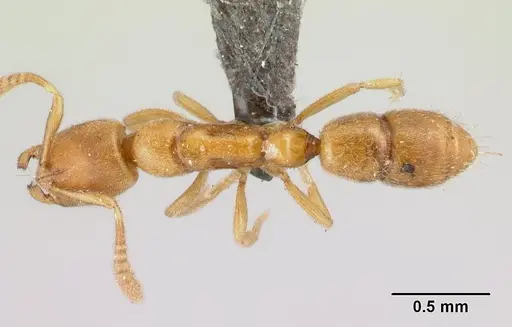
CASENT0907322
View on AntWeb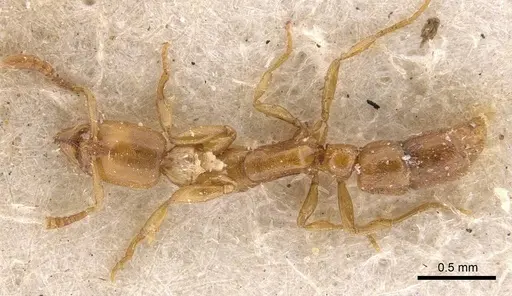
Literature
Loading distribution map...Loading products...