
Southern Crypt ant
Hypoponera austra
- Sci. Name
- Hypoponera austra
- Tribe
- Ponerini
- Subfamily
- Ponerinae
- Author
- Bolton & Fisher, 2011
- Common Name
- Southern Crypt ant
- Distribution
- Found in 1 countries
Introduction
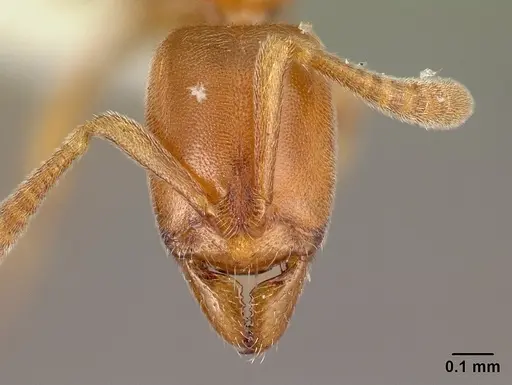
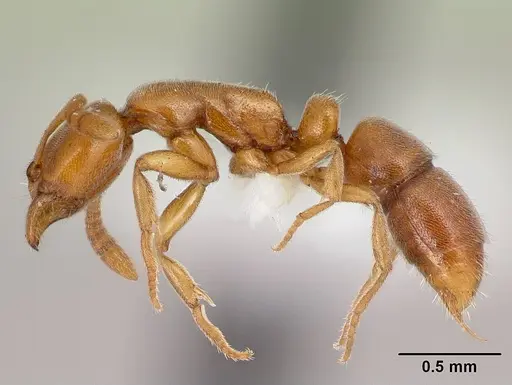
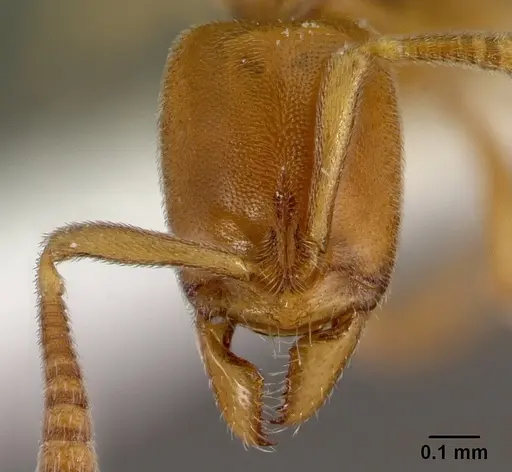
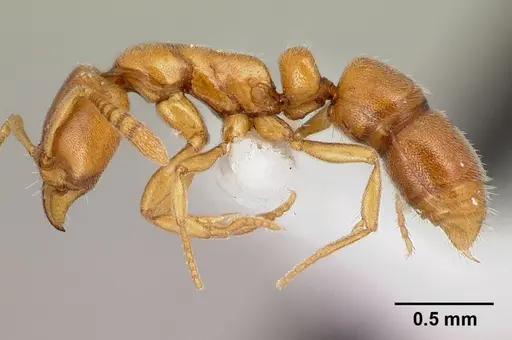
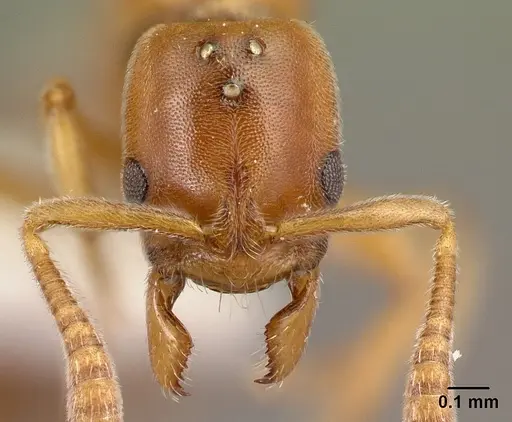
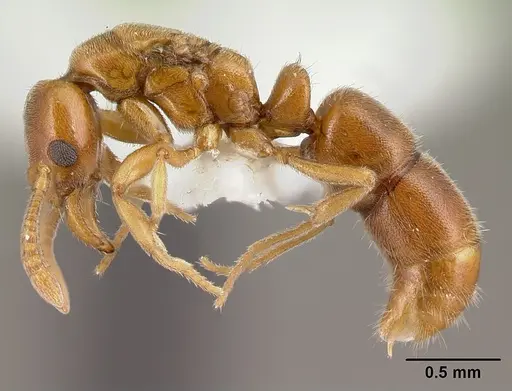
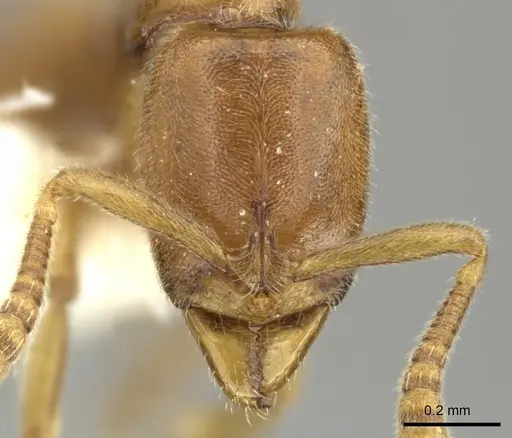
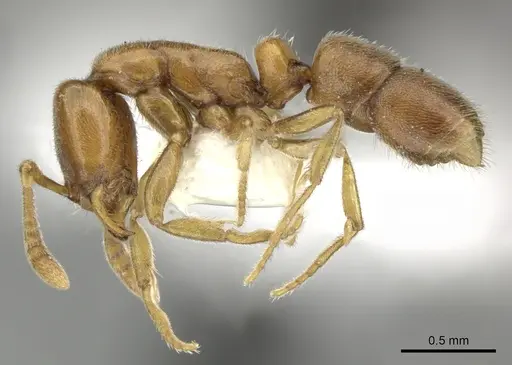
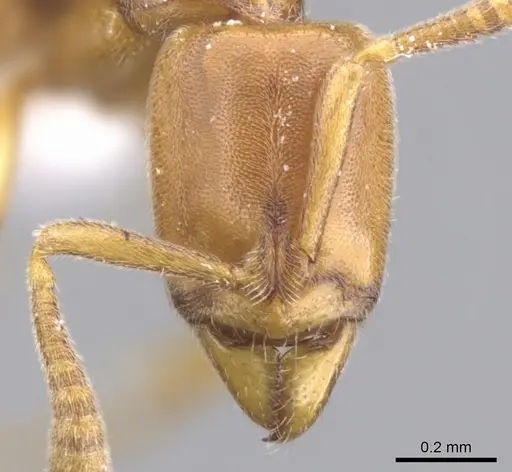
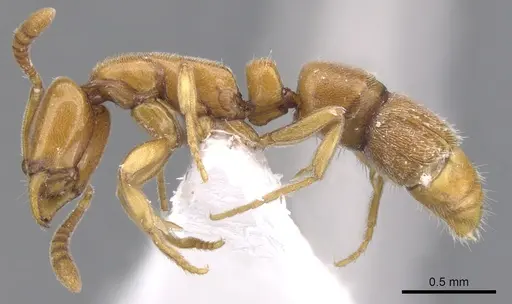
Hypoponera austra is a tiny ponerine ant endemic to the Western Cape Province of South Africa, where it inhabits montane forest areas like Table Mountain and Knysna . Workers are small and uniformly yellowish-brown to light brown, measuring approximately 2.5-3mm in total length with a distinctive shallow transverse groove on the posterior face of the petiole node . This species belongs to the Hypoponera abeillei group and can be distinguished from related species by its relatively longer, narrower petiole and the absence of radiating ridges within the petiolar impression . The biology of H. austra remains largely undocumented in scientific literature. What makes this species interesting is the presence of ergatoid (wingless) queens alongside fully dealate queens in some populations, suggesting flexible reproductive strategies . These ants are part of the Ponerinae subfamily, which typically indicates predatory habits with functional stingers, though specific diet information for this species is unavailable.
Quick Summary
- Difficulty: Unknown, species too poorly studied to rate
- Origin & Habitat: Endemic to South Africa's Western Cape Province, specifically found in montane forest habitats like Table Mountain's Orange Kloof and Knysna rainforests [1]. These areas feature damp, shaded conditions with abundant leaf litter and rotting wood.
- Colony Type: Likely single-queen colonies with documented ergatoid replacement reproductives. Both fully winged dealate queens and wingless ergatoid queens have been described [1].
- Size & Growth:
- Queen: Approximately 3-4mm total length, inferred from worker proportions and genus patterns
- Worker: Approximately 2.5-3mm total length, inferred from genus patterns (Hypoponera workers typically 2-4mm)
- Colony: Unknown, no colony size data available
- Growth: Unknown, likely slow based on typical Ponerinae patterns
- Development: Unconfirmed, no development data exists for this species. (Development timeline is entirely unstudied. Ponerine ants typically develop slower than many common keeping species.)
- Antkeeping:
- Temperature: Inferred from habitat, montane forest suggests moderate temperatures around 20-24°C. Provide a gradient allowing workers to self-regulate.
- Humidity: High humidity is likely essential. Montane rainforest habitat indicates need for consistently moist substrate. Keep nest substrate damp but not waterlogged.
- Diapause: Unknown, no data on overwintering requirements. South African temperate regions experience mild winters, so a cool period may be beneficial but is unconfirmed.
- Nesting: Natural nesting occurs in leaf mold and rotting wood within forest litter [1]. In captivity, a naturalistic setup with moist substrate (soil/peat mix) or a Y-tong nest with high humidity would likely suit them. Tight chambers scaled to their tiny size are important.
- Behavior: Behavior is unstudied. As a Ponerine ant, they are likely predatory on small invertebrates. Workers probably forage individually through leaf litter. Their tiny size and vestigial eyes suggest they may be more cryptic and less aggressive than larger ponerines. Escape prevention should be excellent given their small size, they can easily slip through standard barriers. They likely prefer dark, humid microhabitats and may be nocturnal or crepuscular. Ponerine ants have functional stingers, though the sting of such tiny ants is unlikely to penetrate human skin.
- Common Issues: complete lack of biological data makes captive care speculative, humidity requirements are inferred rather than confirmed, growth rate and development timeline unknown, colonies may stall without apparent cause, tiny size creates significant escape risk through standard barriers, no documented feeding acceptance, live prey likely required but unconfirmed
Nest Preferences and Housing
In their natural habitat, H. austra has been collected from sifted leaf mold and rotting wood in montane rainforest [1]. This indicates they are litter-dwelling ants that prefer dark, humid microhabitats within forest floor debris. For captive care, a naturalistic setup using a soil/peat substrate mixture that maintains moisture would best replicate their natural conditions. A Y-tong nest with narrow chambers or a plaster nest that holds humidity well would also be appropriate. The chambers should be small and tight-fitting given their tiny worker size. Provide some dry areas within the setup so workers can self-regulate their humidity preference.
Feeding and Diet
As members of the Ponerinae subfamily, Hypoponera species are typically predatory, hunting small invertebrates like springtails, mites, and other micro-arthropods found in leaf litter. However, no specific dietary observations exist for H. austra. In captivity, you should offer small live prey items such as springtails, fruit flies, tiny crickets, and other appropriately-sized invertebrates. Sugar sources may be accepted but are not guaranteed, Ponerinae generally rely more on protein than carbohydrates. Start with offering live prey and observe acceptance. Remove uneaten prey within 24-48 hours to prevent mold issues in the humid setup they require.
Temperature and Seasonal Care
No specific temperature data exists for this species. The montane forest habitat of South Africa's Western Cape suggests they experience moderate temperatures with cool, moist conditions. Aim for a temperature range around 20-24°C with some spatial variation so workers can choose their preferred zone. A heating cable on one side of the nest can create this gradient, place it on top of the nest to avoid drying the substrate. Winter care is unstudied, but South Africa's Western Cape has mild winters. A slight temperature reduction during winter months (cool room temperature around 15-18°C) may be appropriate but is not confirmed as necessary. [1]
Behavior and Temperament
Direct behavioral observations are lacking for this species. The workers have vestigial to absent eyes, suggesting they rely more on chemical and tactile cues than vision [1]. They likely forage singly through the leaf litter layer rather than forming visible foraging trails. Ponerine ants typically have functional stingers, though the sting of such tiny ants is unlikely to penetrate human skin. Given their small size, they are not aggressive and will likely flee rather than engage threats. Escape prevention is critical, their tiny size allows them to slip through gaps that larger ants cannot. Use fine mesh and ensure all connections are sealed.
Colony Structure and Reproduction
Both dealate (winged, mated) queens and ergatoid (wingless) queens have been documented for this species [1]. Ergatoid queens are replacement reproductives that can take over if the primary queen dies, making the colony more resilient. This suggests H. austra has flexible reproductive strategies. The colony structure appears to be single-queen in most cases, though the presence of ergatoids provides redundancy. No data exists on colony size, growth rate, or nuptial flight timing. The unusual specimens noted with partially developed eyes and thickened petioles may represent intercaste forms or developmental anomalies [1].
Frequently Asked Questions
How difficult is Hypoponera austra to keep?
Difficulty level cannot be rated, this species is too poorly studied in both the wild and captivity to provide meaningful guidance. The complete lack of biological data means all care is speculative. Only experienced antkeepers comfortable with experimental setups should attempt this species.
What do Hypoponera austra ants eat?
Diet is unconfirmed. As a Ponerine ant, they are likely predatory on small invertebrates. Offer small live prey like springtails, fruit flies, and tiny crickets. Sugar acceptance is uncertain, do not rely on honey or sugar water as primary food sources.
What temperature do Hypoponera austra need?
Temperature requirements are unconfirmed. Based on their montane forest habitat, aim for 20-24°C with a gradient allowing self-regulation. Start in this range and observe colony activity to fine-tune.
Do Hypoponera austra need hibernation?
Diapause requirements are unknown. South Africa's Western Cape has mild winters, so a cool period around 15-18°C may be appropriate but is not confirmed as necessary.
How big do Hypoponera austra colonies get?
Maximum colony size is unknown, no colony size data exists for this species.
How long does it take for Hypoponera austra to develop from egg to worker?
Egg-to-worker timeline is unconfirmed. Based on typical Ponerine development patterns, expect 8-12 weeks at warm temperatures, but this is entirely an estimate with no species-specific data.
Can I keep multiple Hypoponera austra queens together?
Not recommended. While ergatoid replacement reproductives exist within established colonies, combining unrelated foundress queens has not been documented and would likely result in aggression.
What nest type is best for Hypoponera austra?
A naturalistic setup with moist substrate (soil/peat mix) or a Y-tong/plaster nest with high humidity works best. Chambers should be small and tight-fitting given their tiny size. Provide both humid and slightly drier areas.
Why are my Hypoponera austra dying?
Without basic biological data, diagnosing problems is extremely difficult. Ensure humidity is high but not stagnant, temperature is stable in the 20-24°C range, and escape prevention is excellent. Colonies may fail without apparent cause due to our fundamental lack of knowledge about their requirements.
Report an Issue
The current care sheet is based fully on literature. See inconsistencies, or something that's incorrect? Please , it will be resolved after review from an admin. Contributing to the blogs tab also helps providing information, to make us be able to further improve the caresheets. Thank you for your support!
References

This caresheet is licensed under CC BY-SA 4.0 .
Community Blogs
BLF1542(10)-6
View on AntWeb-6_1.webp)
CASENT0010977
View on AntWeb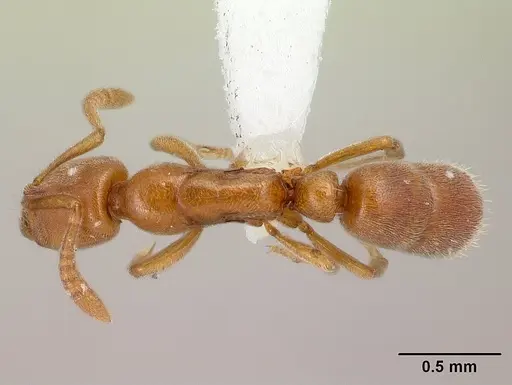
CASENT0217344
View on AntWeb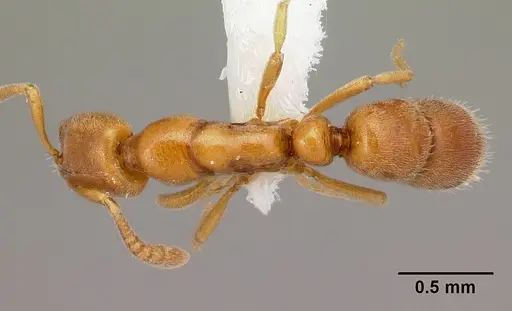
CASENT0217346
View on AntWeb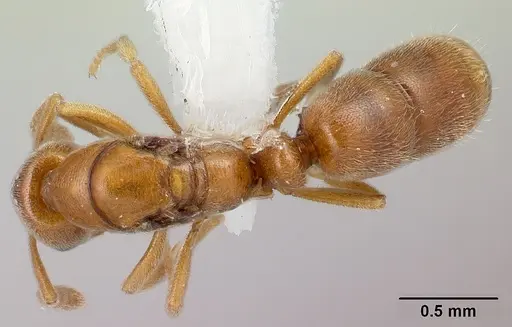
CASENT0270528
View on AntWeb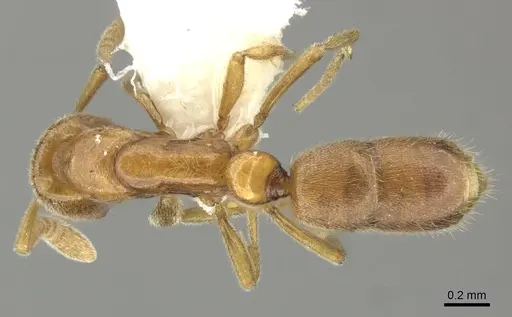
CASENT0902559
View on AntWeb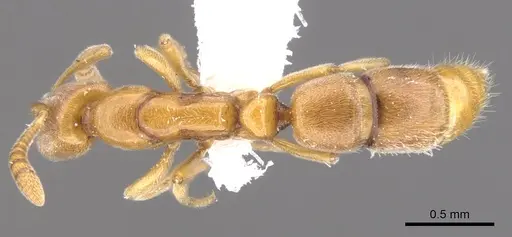
Literature
Loading distribution map...Loading products...