
Hypoponera assmuthi
- Sci. Name
- Hypoponera assmuthi
- Tribe
- Ponerini
- Subfamily
- Ponerinae
- Author
- Forel, 1905
- Distribution
- Found in 1 countries
Introduction
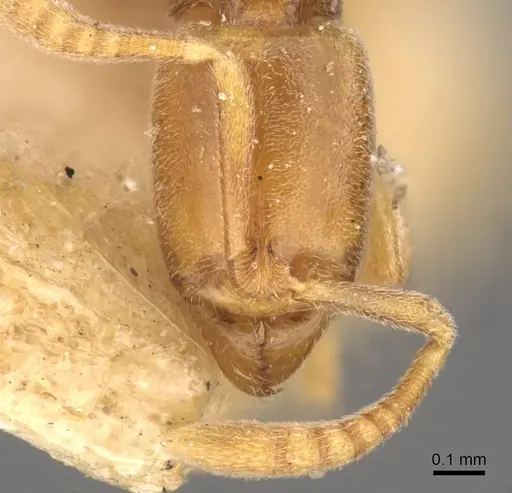
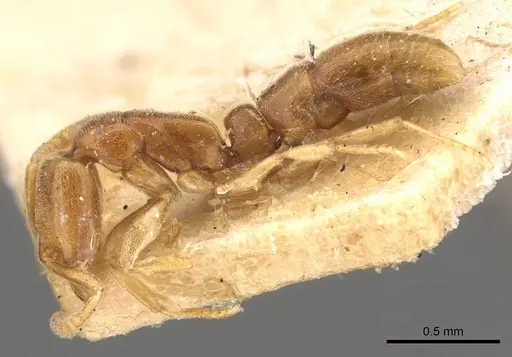
Hypoponera assmuthi is a tiny, cryptic ant species endemic to India. Workers are pale yellowish-brown and completely blind, while queens are darker brown . This species lacks eyes entirely - workers navigate and find prey using chemical cues and vibrations instead . They live in leaf litter and soil across much of India, from the Himalayan foothills (400m elevation in Jammu & Kashmir) up to 2800m in Arunachal Pradesh . The genus Hypoponera belongs to the Ponerinae subfamily, which includes predatory ants with stings, though these tiny ants are too small to penetrate human skin.
Quick Summary
- Difficulty: Medium
- Origin & Habitat: Endemic to India, found in leaf litter and soil samples across multiple states including Arunachal Pradesh, Assam, Jammu & Kashmir, Karnataka, Maharashtra, Nagaland, Sikkim, and West Bengal [2]. They inhabit elevations ranging from 400m to 2800m.
- Colony Type: Colony structure is unconfirmed.
- Size & Growth:
- Queen: ~3mm, inferred from Hypoponera genus
- Worker: ~2.5mm, inferred from Hypoponera genus
- Colony: Unknown, likely small colonies based on genus patterns
- Growth: Moderate
- Development: Unconfirmed, estimated 6-10 weeks based on typical Ponerine development (Direct development data unavailable. Nanitics (first workers) typically appear smaller and develop faster than normal workers.)
- Antkeeping:
- Temperature: Keep at 24-28°C. They occur across a wide elevation range in India, so they likely tolerate 22-30°C. Provide a gentle temperature gradient if possible.
- Humidity: High humidity required, these are leaf litter ants that need damp substrate. Keep nest substrate consistently moist but not waterlogged. Aim for 70-85% humidity in the nest area.
- Diapause: Likely no true diapause, India has mild winters in most of their range. However, reduce feeding and slightly lower temperatures during winter months if your room temperature drops.
- Nesting: Naturalistic setup works best, they nest in soil and leaf litter. A Y-tong (AAC) nest with moist substrate or a plaster nest with a water reservoir also works well. Provide plenty of hiding spaces and a thick layer of substrate for foraging.
- Behavior: These are shy, cryptic ants that prefer to stay hidden. Workers are blind but actively forage through leaf litter and soil, hunting small prey. They are not aggressive and will flee rather than fight, but they possess a sting (typical of Ponerinae) that is too small to affect humans. Escape prevention is critical due to their tiny size, they can squeeze through standard test tube openings. Use fine mesh and tight-fitting barriers. They are slow-moving and not particularly active compared to faster ants.
- Common Issues: escape prevention is critical, their tiny size means they can slip through the smallest gaps, colonies may be slow to establish and require patience, high humidity can lead to mold if ventilation is poor, wild-caught colonies may contain parasites that can devastate captive colonies, their small size makes them easy to overfeed, remove uneaten prey promptly
Housing and Nest Setup
Hypoponera assmuthi is a tiny leaf-litter ant that thrives in naturalistic setups. Use a container with a deep layer of moist soil (at least 3-4cm) mixed with leaf litter, small pieces of bark, and other debris to mimic their natural forest floor habitat. This gives them plenty of hunting ground and places to hide. Alternatively, a Y-tong (AAC) nest with moist substrate works well, the key is maintaining high humidity without flooding. Test tube setups are risky because their tiny size makes escapes likely, if you use them, wrap the cotton with additional barrier material and use fine mesh on all openings. Provide an outworld with hunting space and small prey items. [1]
Feeding and Diet
As Ponerine ants, Hypoponera assmuthi are predators that hunt small invertebrates. Feed them small live prey like fruit flies, pinhead crickets, small mealworms, and other tiny arthropods. They will also likely accept protein jelly or crushed insects. Unlike some ants, they are not particularly interested in sugar sources, their diet is primarily predatory. Feed small amounts every 2-3 days and remove any uneaten prey within 24 hours to prevent mold. A varied diet helps ensure healthy colonies.
Temperature and Humidity
Keep these ants warm and humid. Maintain temperatures between 24-28°C with a slight gradient if possible. They occur across a wide elevation range in India (400-2800m), so they are somewhat adaptable, but warmth speeds up development. High humidity is essential, aim for 70-85% in the nest area. The substrate should feel consistently damp but never soggy. Use a water reservoir or mist regularly, and ensure the setup has some ventilation to prevent stagnant air and mold. A hygrometer helps monitor conditions. [1][2]
Behavior and Temperament
Hypoponera assmuthi is a shy, secretive ant that avoids confrontation. Workers are blind (they have no eyes) and navigate using chemical signals and vibrations [1]. They are not aggressive and will retreat from threats rather than fight. However, they possess a sting typical of Ponerine ants, it is present but too small to penetrate human skin in any meaningful way. They are slow-moving and spend much of their time hunting through leaf litter. Colonies are likely small and slow to grow. The biggest behavioral concern is escape, their tiny size means they can slip through gaps that larger ants cannot.
Colony Establishment
New colonies start with a single queen. She will lay eggs and raise the first workers (nanitics) entirely on her own, using stored fat reserves. This founding period can take several months. Once the first workers emerge, they will begin foraging for prey to feed the colony. Growth is typically slow, expect several months before you have more than a handful of workers. Patience is key with this species. If you acquire a wild-caught colony, watch for parasites which are common in leaf-litter ants.
Frequently Asked Questions
How long does it take for Hypoponera assmuthi to produce first workers?
Estimated 6-10 weeks from egg to first worker at optimal temperature (around 26°C). This is based on typical Ponerine development, as specific development data for this species is not available.
Can I keep Hypoponera assmuthi in a test tube setup?
It is possible but risky due to their tiny size. They are excellent escape artists. If using test tubes, wrap the cotton with additional barrier material and cover all openings with fine mesh. A naturalistic setup or Y-tong nest is generally better.
What do Hypoponera assmuthi eat?
They are predatory ants that hunt small invertebrates. Feed them small live prey like fruit flies, pinhead crickets, small mealworms, or other tiny arthropods. They are not particularly interested in sugar sources.
Are Hypoponera assmuthi good for beginners?
They are rated as medium difficulty. Their small size and need for high humidity make them slightly challenging for complete beginners, but they are not aggressive and don't require special equipment beyond good escape prevention.
How big do Hypoponera assmuthi colonies get?
Colony size is not well documented. Based on similar species, they likely remain relatively small.
Do Hypoponera assmuthi need hibernation?
No true hibernation is required. They are from tropical/subtropical India where winters are mild. Simply reduce feeding and accept slightly lower room temperatures in winter if your home cools down.
Why are my Hypoponera assmuthi dying?
Common causes include: escapes (check all barriers), mold from poor ventilation or overwatering, parasites from wild-caught colonies, and starvation if prey is too large or not offered frequently enough. Their small size makes them vulnerable.
Can I keep multiple queens together?
This has not been documented for this species. Single-queen colonies are typical for most Hypoponera species. Do not attempt combining unrelated queens without evidence they will accept each other.
When should I move Hypoponera assmuthi to a formicarium?
Wait until the colony has at least 20-30 workers and is actively foraging. Moving too early can stress the queen. A naturalistic setup often works better than a commercial formicarium for these tiny leaf-litter ants.
Report an Issue
The current care sheet is based fully on literature. See inconsistencies, or something that's incorrect? Please , it will be resolved after review from an admin. Contributing to the blogs tab also helps providing information, to make us be able to further improve the caresheets. Thank you for your support!
References

This caresheet is licensed under CC BY-SA 4.0 .
Community Blogs
CASENT0907298
View on AntWeb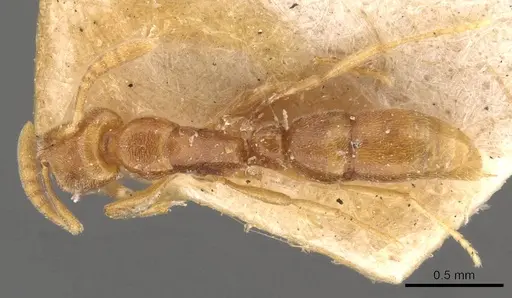
Literature
Loading distribution map...Loading products...