
Hypoponera angustata
- Sci. Name
- Hypoponera angustata
- Tribe
- Ponerini
- Subfamily
- Ponerinae
- Author
- Santschi, 1914
- Distribution
- Found in 9 countries
Introduction
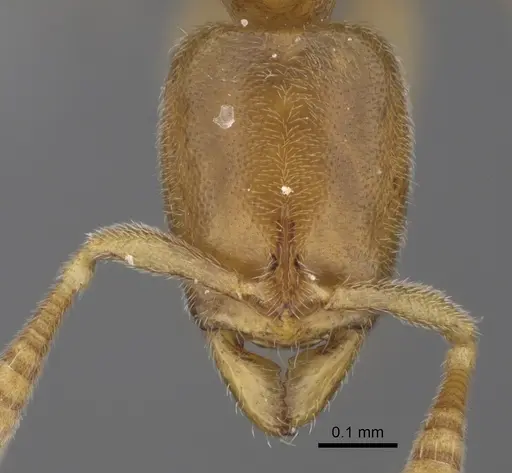
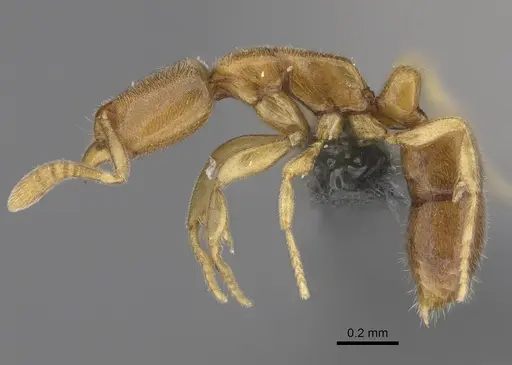
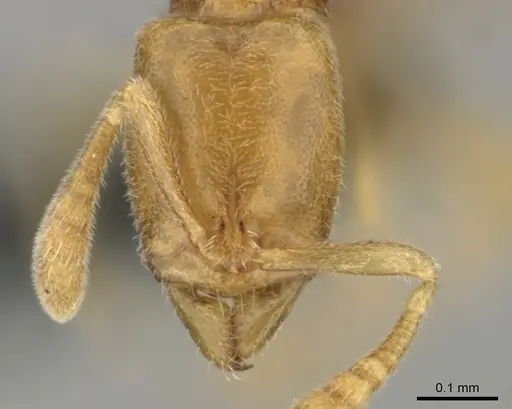
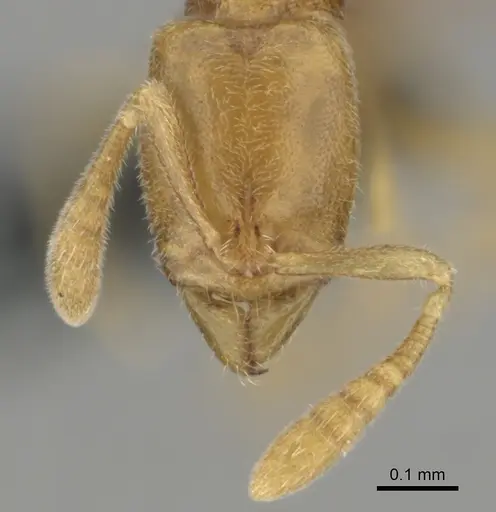
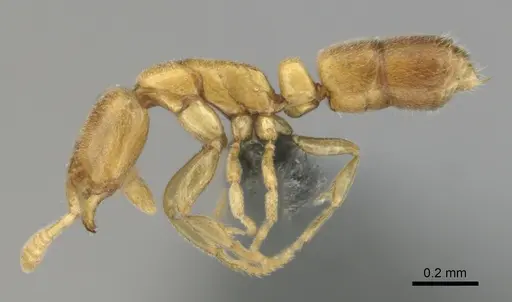
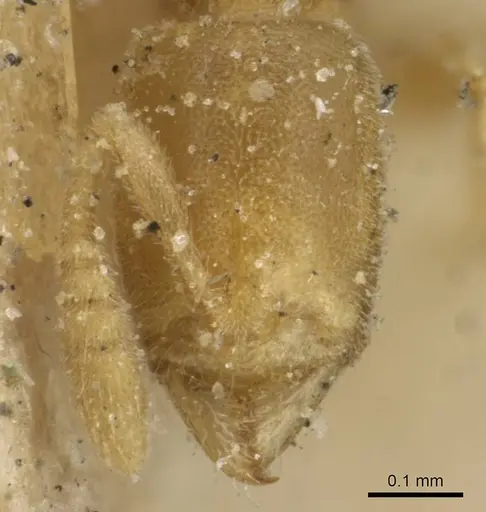
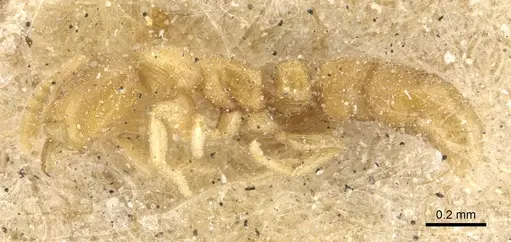
Hypoponera angustata is a minute yellow ant species native to the forests of West, Central, and East Africa. Workers are extremely small - among the smallest ants you can keep. They are easily recognized by their distinctive 4-segmented antennal club, the only Afrotropical Hypoponera species with this feature. Unlike many ants, they lack eyes entirely, which is typical for leaf-litter-dwelling cryptic species. These ants live in leaf litter and rotting wood throughout African forest zones, from Guinea and Ghana across to Kenya and Uganda . This species represents an unusual opportunity for antkeepers interested in predatory micro-ants. As part of the Ponerini tribe, they are generalist predators. Their tiny size and cryptic lifestyle make them a challenging but rewarding species to observe. The absence of eyes gives them a distinctive appearance compared to typical antkeepers' species.
Quick Summary
- Difficulty: Medium
- Origin & Habitat: West, Central, and East African forest zones, found in leaf litter and rotting wood from Guinea, Ghana, and Ivory Coast across to Kenya, Uganda, Rwanda, and the Democratic Republic of Congo [1][2].
- Colony Type: Colony structure is unconfirmed. The genus Hypoponera is known for having species with unusual reproductive strategies, including ergatoid (worker-like) replacement reproductives and combative ergatoid males [3].
- Size & Growth:
- Queen: Size data unavailable, no specific measurements for queens exist. Workers are minute (approximately 2-3mm total length inferred from genus patterns) [1]
- Worker: Approximately 2-3mm total length, inferred from genus patterns for minute Hypoponera species [1]
- Colony: Size data unavailable, no specific colony size data exists for this species
- Growth: Unknown
- Development: Unconfirmed, no specific development data available for this species (No development data exists for this species.)
- Antkeeping:
- Temperature: Keep at 22-26°C. As a tropical African species, they prefer warm conditions.
- Humidity: High humidity is essential, these ants live in leaf litter and rotting wood in humid forest floors. Keep the nest substrate consistently moist but not waterlogged.
- Diapause: Unlikely, as a tropical species from African forests, they probably do not require a hibernation period.
- Nesting: Use a naturalistic setup with moist substrate (coco fiber, soil mix) or a Y-tong/plaster nest with tight chambers scaled to their tiny size. They prefer dark, humid conditions.
- Behavior: These ants are cryptic and slow-moving. Workers are blind but navigate using chemical trails and vibrations. They are generalist predators, they hunt small prey like springtails, mites, and other micro-arthropods [3]. They are not aggressive toward keepers. Escape prevention is critical, their minute size means they can squeeze through standard barriers.
- Common Issues: escape prevention is critical due to their tiny size, standard mesh and gaps may allow escape, high humidity requirements can lead to mold if ventilation is poor, slow growth means colonies may appear stagnant for months, prey must be appropriately sized, too large prey will be ignored, wild-caught colonies may contain parasites
Housing and Nest Setup
Hypoponera angustata requires a setup that matches their natural habitat in leaf litter and rotting wood. A naturalistic terrarium-style setup works well, use a moist substrate mixture of coco fiber and soil, with pieces of rotting wood or leaf litter as cover. Keep the substrate consistently damp but not soggy. Alternatively, a Y-tong or plaster nest with small chambers works if you maintain high humidity. The key is darkness and humidity, these cryptic ants avoid light and need moist conditions to survive. A small outworld provides space for feeding. Because they are so tiny, all connections should use narrow tubing and all barriers must be escape-proof. Fluon on the rim of the outworld is essential. [1]
Feeding and Diet
As generalist predators, these ants need live small prey. Their tiny size means prey must be appropriately scaled, springtails, fruit flies, and tiny mites are ideal. You can culture springtails specifically for feeding. Offer prey 2-3 times per week, removing uneaten prey after 24 hours to prevent mold. Sugar sources are unlikely to be accepted, these are predators. Fresh water should always be available via a test tube water feeder. [3]
Temperature and Humidity
Maintain temperatures between 22-26°C. As a tropical African species from forest habitats, they need consistent warmth. A heating cable on one side of the nest creates a gentle gradient, but avoid direct heat that could dry out the nest. Humidity is critical, aim for high relative humidity within the nest. The substrate should feel damp to the touch. Mist the outworld occasionally and keep the water tube filled. Good ventilation is necessary to prevent mold, but avoid excessive airflow that dries the nest. [1]
Behavior and Observation
These are cryptic, slow-moving ants that spend most of their time in the dark, humid depths of the nest. Workers are blind but navigate using chemical pheromones and vibrations. You will see them emerge to hunt and collect prey, but they are not active foragers like some species. They are peaceful and do not sting humans. Observation is best done with a magnifying glass or macro lens, given their minute size. [1][3]
Colony Establishment
If you obtain a founding queen, she should be housed in a test tube setup with a water reservoir. Keep the tube dark and humid. Once the first workers emerge, you can begin offering tiny prey. Colony growth will be slow. Do not disturb the founding chamber excessively. Transfer to a larger nest only when the colony shows signs of crowding.
Defense Mechanism
Hypoponera angustata belongs to the subfamily Ponerinae, tribe Ponerini. Members of this tribe have a functional stinger capable of injecting venom. However, due to their extremely small size, they pose minimal sting risk to humans.
Frequently Asked Questions
How long does it take for Hypoponera angustata to produce first workers?
The exact timeline is unconfirmed for this species. No specific development data exists.
Can I keep Hypoponera angustata in a test tube?
Yes, test tubes work for founding colonies. Use a small test tube with a cotton water reservoir. Keep it dark and humid. Transfer to a larger nest only when the colony is established.
What do Hypoponera angustata eat?
They are generalist predators. Feed live small prey like springtails, fruit flies, and tiny mites. Springtail cultures are ideal. Remove uneaten prey after 24 hours.
Do Hypoponera angustata ants sting?
They belong to the Ponerini tribe which has a functional stinger, but their extremely small size means they pose minimal sting risk to humans.
Are Hypoponera angustata good for beginners?
This species is rated Medium difficulty. Their tiny size and high humidity needs make them challenging for complete beginners, but experienced antkeepers interested in predatory micro-ants will find them rewarding.
Do Hypoponera angustata need hibernation?
Unlikely, as a tropical African forest species, they probably do not require hibernation.
Why are my Hypoponera angustata dying?
Common causes include: drying out, mold from overfeeding or poor ventilation, escape through tiny gaps, or parasites from wild-caught colonies. Review humidity levels, feeding amounts, and escape prevention first.
How big do Hypoponera angustata colonies get?
Colony size is unconfirmed. No specific data exists for this species.
When should I move Hypoponera angustata to a formicarium?
Move when the test tube shows signs of drying, crowding, or the colony is clearly active and needs more space. A naturalistic setup with moist substrate works best.
Can I keep multiple queens together?
Colony structure is unconfirmed for this species. Combining unrelated queens has not been documented and is not recommended.
Report an Issue
The current care sheet is based fully on literature. See inconsistencies, or something that's incorrect? Please , it will be resolved after review from an admin. Contributing to the blogs tab also helps providing information, to make us be able to further improve the caresheets. Thank you for your support!
References

This caresheet is licensed under CC BY-SA 4.0 .
Community Blogs
CASENT0226555
View on AntWeb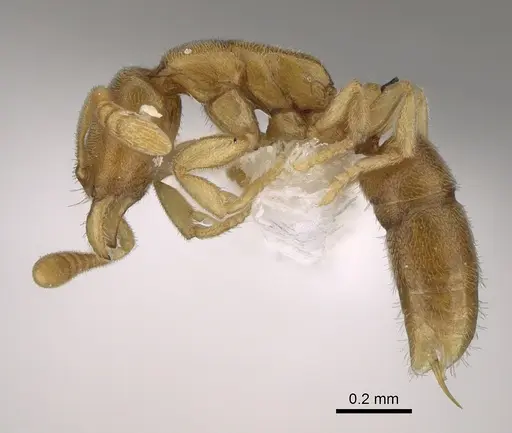
CASENT0226559
View on AntWeb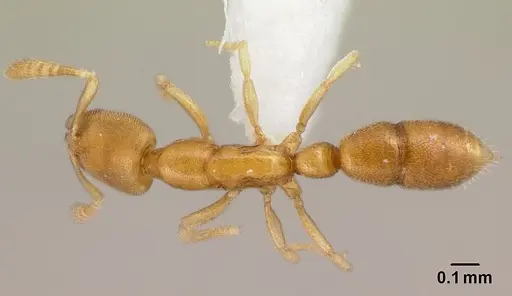
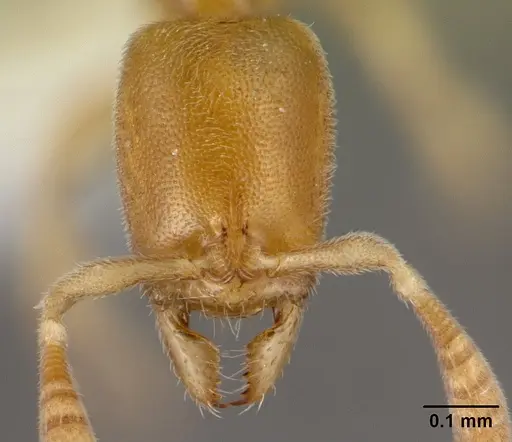
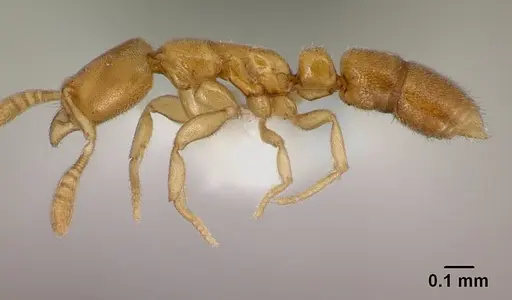
CASENT0784819
View on AntWeb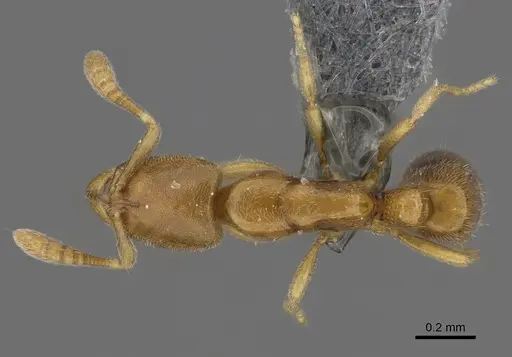
CASENT0818300
View on AntWeb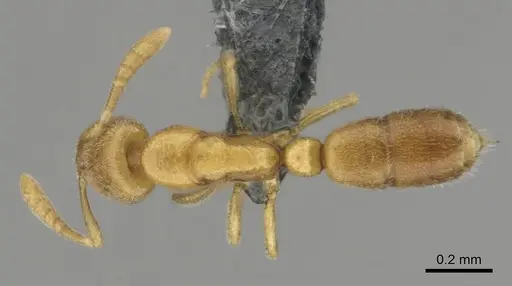
CASENT0915186
View on AntWeb
Literature
Loading distribution map...Loading products...