
Hypoponera abeillei
- Sci. Name
- Hypoponera abeillei
- Tribe
- Ponerini
- Subfamily
- Ponerinae
- Author
- André, 1881
- Distribution
- Found in 2 countries
Introduction
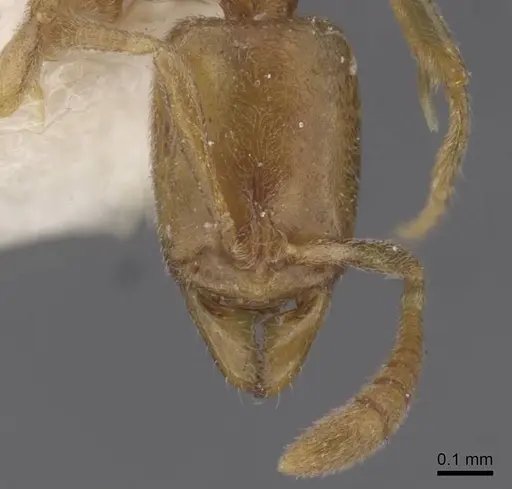
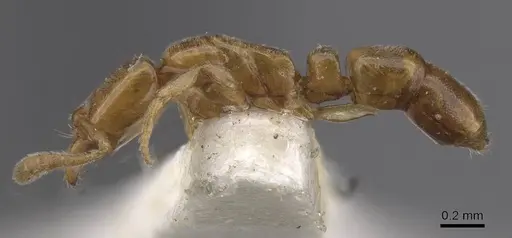
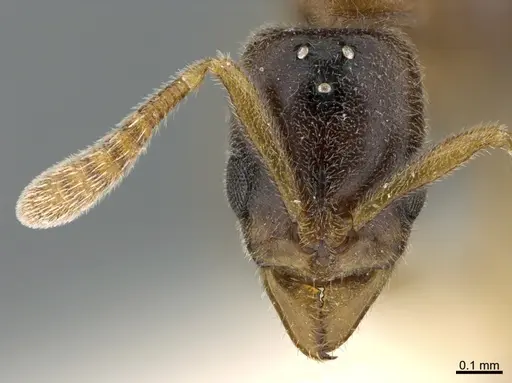
Hypoponera abeillei is a tiny, pale ponerine ant native to the Mediterranean region. Workers are completely eyeless - a rare trait that makes them easily identifiable among Mediterranean Hypoponera species . They have a distinctive elongated head with parallel sides and a light brownish-yellow coloration . This species is extraordinarily rare, having been found fewer than twenty times globally despite its wide circum-Mediterranean distribution spanning Portugal, Spain, France, Italy, Malta, Israel, Saudi Arabia, Egypt, Tunisia, and Oman . They are hypogaeic (subterranean), living underground which makes them extremely difficult to detect . The species belongs to the abeillei group, which has Afrotropical origins but H. abeillei is the sole representative in the West-Palearctic region .
Quick Summary
- Difficulty: Expert
- Origin & Habitat: Circum-Mediterranean region including Portugal, Spain, France, Italy, Malta, Israel, Saudi Arabia, Egypt, Tunisia, and Oman. Found in dry soil, leaf litter, and beneath plants in scrubland habitats [5][2]. Most records come from coastal thermophilous sites [4].
- Colony Type: Colony structure is unconfirmed. No direct data on whether colonies are single-queen or multi-queen.
- Size & Growth:
- Queen: Approximately 4-5mm, inferred from Hypoponera genus patterns [4].
- Worker: Approximately 2.5-3mm, inferred from Hypoponera genus patterns [1].
- Colony: Unknown, no colony size data exists for this species.
- Growth: Unknown.
- Development: Unconfirmed, no development data exists for this species. (No direct development data exists for this species.)
- Antkeeping:
- Temperature: Keep at 22-26°C, mimicking warm Mediterranean coastal conditions. A gentle heat gradient allows the colony to self-regulate.
- Humidity: Moderate. Found in dry soil in Oman and around plant roots in Mediterranean habitats. Keep substrate lightly moist but allow to dry partially between waterings.
- Diapause: Likely requires a mild winter rest period given their Mediterranean distribution, but this is unconfirmed.
- Nesting: Hypogaeic (subterranean) species. Use a naturalistic setup with deep soil or a Y-tong/plaster nest with narrow chambers. They prefer enclosed, dark spaces.
- Behavior: This is a cryptic, subterranean species that rarely comes to the surface. Workers are blind (no eyes) and likely navigate using chemical cues [1]. They are not aggressive and pose no sting threat to humans due to their tiny size. Escape risk is low as they stay hidden, but their small size means they could slip through standard test tube barriers if they do surface.
- Common Issues: extreme rarity in the hobby means captive colonies are virtually nonexistent, finding a colony to keep is the primary challenge, subterranean lifestyle makes them difficult to observe and easy to lose track of in setups, no established husbandry guidelines exist, keepers must experiment with conditions, blind workers may have difficulty finding food in open setups, very small size requires fine mesh barriers if escape occurs
Why This Species Is So Rare
Hypoponera abeillei represents one of the rarest ant species in the Mediterranean, with fewer than twenty global sightings [2]. This scarcity is because they live entirely underground (hypogaeic), making standard ant collection methods ineffective [3]. Most detections come from finding winged queens or males rather than worker colonies [3]. The workers are completely eyeless, suggesting they never come to the surface and spend their entire lives in subterranean tunnels [1]. This makes them a true specialist of the underground world.
Identification and Key Traits
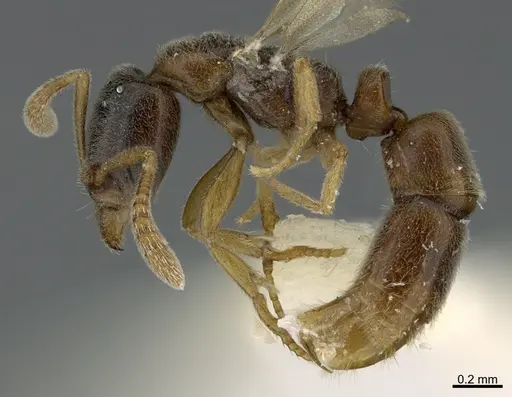
Among Mediterranean Hypoponera species, H. abeillei stands out for three distinctive features: complete absence of eyes in workers, an extremely elongated head with parallel sides, and distinct cross-ribs at the base of the second gastral segment [1]. Workers are light brownish-yellow [1]. The elongated head is so distinctive that it's used as a primary identification character in the field [3]. Queens are larger and do have eyes, unlike workers, this sexual dimorphism in eye development is unusual among ants [4]. Males have a unique appearance with whitish antennal segments that help distinguish them from related species [4].
Nuptial Flight Biology
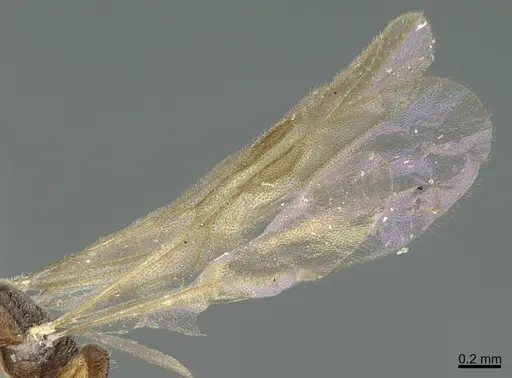
We have good data for H. abeillei nuptial flights. They occur from July to October, with peak activity in August [4]. Queens have been found from July 15 to August 25,while males appear from July 27 to October 2 [4]. Interestingly,82% of males and 40% of queens were found drowned or dead on water surfaces, suggesting they mate near water and many fail to survive [4]. This preference for coastal areas combined with high mortality on water explains why finding this species is so difficult. Winged queens have been collected in vinegar traps and even swimming pools in human dwellings [3][2].
Housing and Care Challenges
Keeping Hypoponera abeillei presents unique challenges because no established husbandry exists. These are subterranean ants that avoid light, so provide a deeply filled naturalistic setup or a Y-tong nest with narrow, dark chambers. The nest material should be kept lightly moist but never waterlogged, they naturally occur in dry soil conditions. Because workers are blind, place food directly in their tunnels or very close to nest entrances. Feed small protein sources like springtails, tiny mealworms, or fruit flies. Temperature should mimic Mediterranean warmth (22-26°C). A mild winter rest may benefit colonies given their Mediterranean origin. Most importantly, be patient, this species grows slowly and colonies remain small.
Distribution and Biogeography
Hypoponera abeillei has a scattered circum-Mediterranean distribution with records from Portugal, Spain, France (including Corsica), Italy, Malta, Israel, Saudi Arabia, Egypt, Tunisia, and Oman [1][6]. The species appears to be of Afrotropical origin but has not been detected south of the Sahara [1]. Western populations (Italy, Spain, Malta) may be distinct from eastern populations (Arabian Peninsula, Israel) and potentially represent different species [4]. In Portugal, they were found in scrubland dominated by Cistus ladanifer with cork oak trees [5]. In Oman, they were collected from leaf litter in dry soil [7]. This patchy distribution across such a wide area, combined with their subterranean lifestyle, makes understanding their true range difficult.
Frequently Asked Questions
Is Hypoponera abeillei available in the antkeeping hobby?
No. This is one of the rarest ant species in the world with fewer than twenty documented sightings. Captive colonies essentially do not exist in the hobby. Even professional myrmecologists rarely encounter this species.
How do I identify Hypoponera abeillei?
Look for three key traits: workers completely lack eyes, have an extremely elongated head with parallel sides, and are very small. They are light brownish-yellow. These features make them unique among Mediterranean Hypoponera species.
What do Hypoponera abeillei eat?
Their diet is unconfirmed, but related Hypoponera species are predatory on small soil arthropods. Feed small live prey like springtails, fruit flies, or tiny mealworms. Place food directly in their tunnels since blind workers may have difficulty finding food in open spaces.
How do I set up a nest for Hypoponera abeillei?
Use a deeply filled naturalistic setup or a Y-tong/plaster nest with narrow, dark chambers. Keep the substrate lightly moist but allow drying between waterings. They prefer enclosed, humid spaces mimicking their subterranean lifestyle.
What temperature do Hypoponera abeillei need?
Keep them at 22-26°C, mimicking warm Mediterranean coastal conditions. A gentle heat gradient allows the colony to self-regulate. They naturally occur in thermophilous coastal sites.
Do Hypoponera abeillei need hibernation?
Likely yes, a mild winter rest is probably beneficial given their Mediterranean distribution. However, this is unconfirmed since no captive colonies exist to test this.
How big do Hypoponera abeillei colonies get?
Unknown. No colony size data exists for this species due to its extreme rarity.
When do Hypoponera abeillei have nuptial flights?
Nuptial flights occur from July to October, peaking in August. Queens can be found from mid-July to late August, while males appear from late July through early October.
Why are Hypoponera abeillei so hard to find?
They are hypogaeic (subterranean) and completely eyeless, meaning they rarely come to the surface. Standard ant collection methods don't work for finding underground species. Most detections come from finding winged sexuals rather than worker colonies.
Are Hypoponera abeillei good for beginners?
No. This species is for expert keepers only, in fact, there are no captive colonies in the hobby. They are extremely rare, their biology is poorly understood, and no established care protocols exist. This is a species to appreciate from afar rather than attempt to keep.
Can I keep multiple queens together?
Unknown. No data exists on colony structure for this species. Given how rare this species is, combining unrelated queens has never been studied and cannot be recommended.
Report an Issue
The current care sheet is based fully on literature. See inconsistencies, or something that's incorrect? Please , it will be resolved after review from an admin. Contributing to the blogs tab also helps providing information, to make us be able to further improve the caresheets. Thank you for your support!
References

This caresheet is licensed under CC BY-SA 4.0 .
Community Blogs
CASENT0915488
View on AntWeb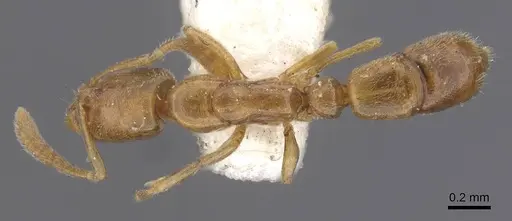
CASENT0923602
View on AntWeb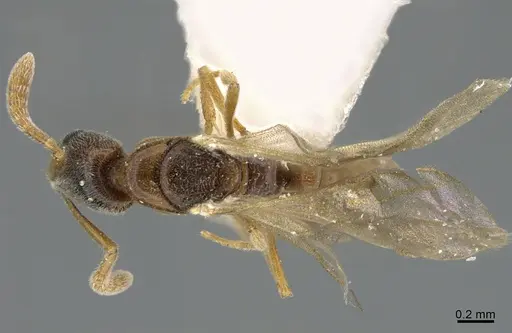
Literature
Loading distribution map...Loading products...