
Hylomyrma transversa
- Sci. Name
- Hylomyrma transversa
- Tribe
- Pogonomyrmecini
- Subfamily
- Myrmicinae
- Author
- Kempf, 1973
- Distribution
- Found in 2 countries
Introduction
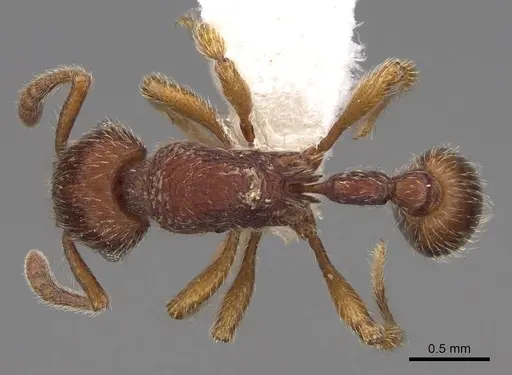
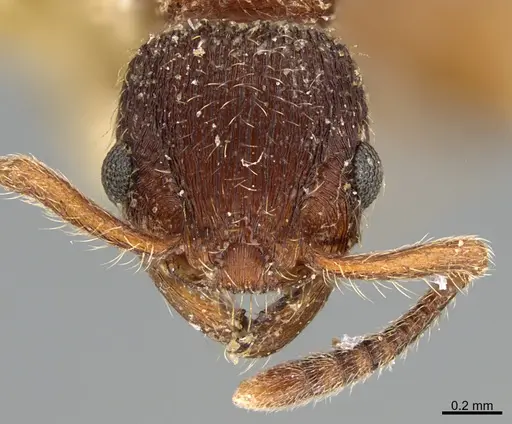
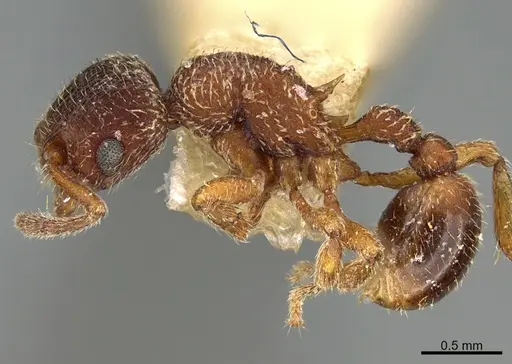
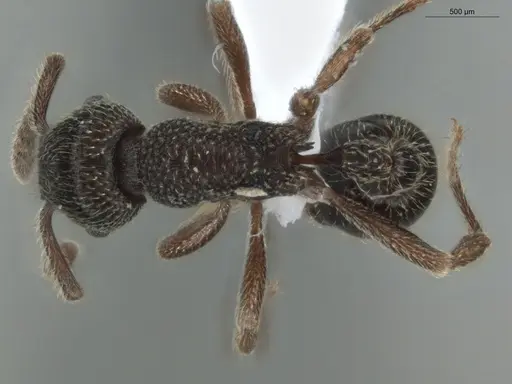
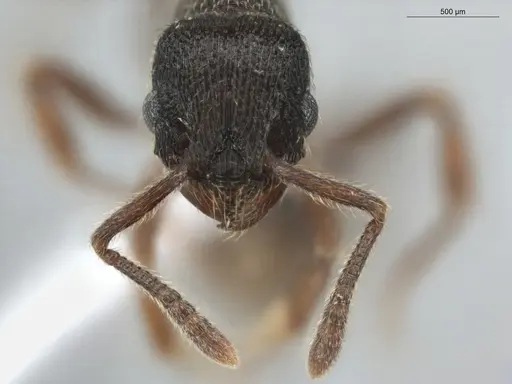
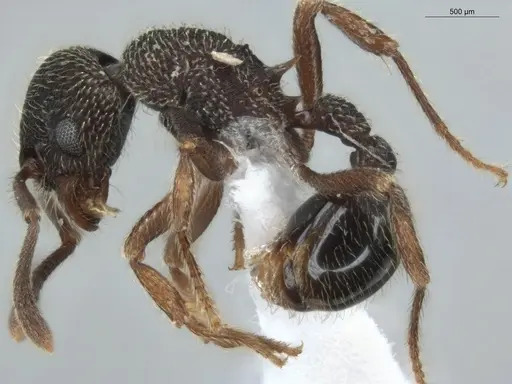
Hylomyrma transversa is a small Neotropical ant species native to the northwestern Amazon basin, found in Peru, Colombia, Bolivia, and the Brazilian Amazon. Workers measure 4.40-4.80mm with a shiny to slightly matte body covered in distinctive branched setae that have multiple long branches - a key identifying feature of this genus. The species gets its name from the Latin 'transversus' referring to the transverse (crosswise) striae on the mesonotum, which distinguishes it from related species like Hylomyrma reitteri. Queens are slightly larger at 5.15mm. These ants inhabit tropical rainforest environments where they nest in fallen logs, rotten wood, or natural cavities in the soil surface layer. Workers forage on the forest floor and are attracted to bait, making them relatively easy to locate in the wild.
Quick Summary
- Difficulty: Medium
- Origin & Habitat: Tropical rainforest of northwestern South America, Brazilian Amazon, Bolivia, Colombia, and Peru. Nests are located in fallen logs, rotten wood, between leaves, or inside natural cavities of superficial soil layers [1][2].
- Colony Type: Colony structure is unconfirmed. No published data on whether this species is single-queen (monogyne) or multi-queen (polygyne).
- Size & Growth:
- Queen: 5.15 mm [1]
- Worker: 4.40-4.80 mm [1]
- Colony: Unknown, no published colony size data
- Growth: Unknown, no development timing data available
- Development: Unknown, no direct measurements available. Estimate 4-8 weeks at warm temperatures based on typical Myrmicinae patterns. (Development timeline has not been studied for this species.)
- Antkeeping:
- Temperature: Keep warm, around 24-28°C. As a tropical rainforest species, they need consistently warm conditions similar to their natural habitat in the Amazon basin.
- Humidity: High humidity is essential, aim for 70-85%. These ants naturally live in damp forest floor environments with rotting wood. Keep the nest substrate consistently moist but not waterlogged.
- Diapause: No, tropical species from the Amazon basin do not require diapause.
- Nesting: Provide a naturalistic setup with rotting wood, cork, or a moist plaster nest. They naturally nest in fallen logs and decaying wood, so a setup that mimics these conditions works well. Y-tong nests with damp substrates also work.
- Behavior: Workers are foragers on the forest floor, attracted to both pitfall traps and food baits. They likely have a generalist diet, accepting protein sources and sugar. The genus is known for its distinctive branched setae, which may serve a defensive or sensory function. Workers are small but not extremely tiny. No documented stinging behavior for this specific species, but Myrmicinae ants can bite.
- Common Issues: high humidity requirements mean mold can develop if ventilation is poor, lack of published care information means trial and error may be needed, tropical species may be sensitive to temperature drops or drafts, wild-caught colonies may have parasites or diseases not yet documented in captivity, slow colony growth due to lack of documented development data can frustrate keepers
Natural History and Distribution
Hylomyrma transversa is found across the northwestern Amazon region, with confirmed populations in Peru, Colombia, Bolivia, and the Brazilian Amazon. The type locality is in Loreto, Peru. These ants live in tropical rainforest environments where the climate is warm and humid year-round. Specimens have been collected using pitfall traps placed on the forest floor and by using attractive baits, which confirms that workers actively forage on the ground surface. Their nests are located in fallen logs, rotting wood, leaf litter, or natural cavities in the top layers of soil, typical of forest floor nesting ants. The species was first described by Kempf in 1973 and was revised taxonomically by Ulysséa and Brandão in 2021,which provides the detailed morphological information we have today. [1][2]
Identification and Distinguishing Features
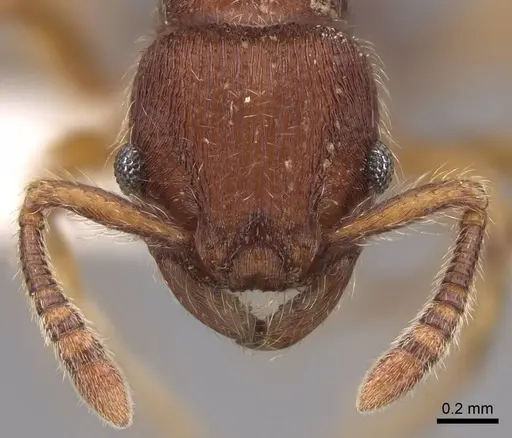
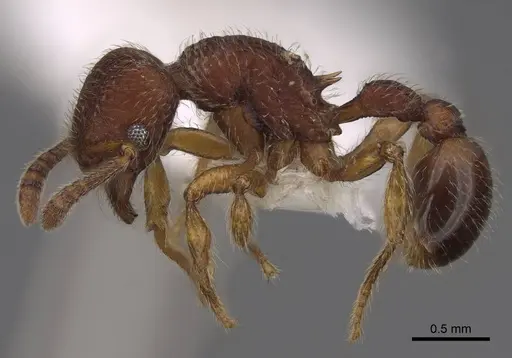
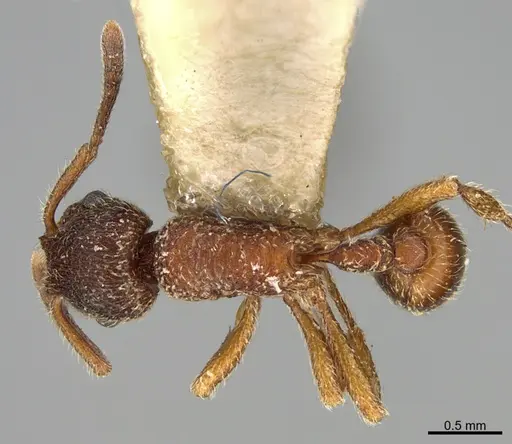
Hylomyrma transversa can be identified by several distinctive features. Workers are small (4.40-4.80mm) with a shiny to slightly matte integument. The most characteristic feature is the branched setae, hairs that have multiple branches extending from a main axis, with branches that are relatively long and roughly equal in size. These branched setae are mainly found on the posterior and lateral regions of the head, mesosoma, petiole, and postpetiole. The species gets its name from the transverse striae (grooves) on the mesonotum, which is unique among Hylomyrma species. Other distinguishing features include a drop-shaped eye, a discontinuous dorsal margin of the petiole, and striation covering the ventral surface of the petiole. It closely resembles Hylomyrma reitteri but can be distinguished by the transverse striae on the mesonotal dorsum (versus longitudinal in H. reitteri), the drop-shaped eye (versus reniform), and the striate ventral petiolar surface (versus smooth). [1]
Housing and Nest Preferences
Based on their natural nesting habits, Hylomyrma transversa does best in setups that mimic the damp forest floor environment. They naturally nest in fallen logs, rotting wood, and shallow soil cavities, so a naturalistic setup with cork, rotting wood, or a moist substrate works well. Y-tong nests with damp cotton or plaster also work, provided humidity is maintained high. Test tubes can be used for founding colonies but may need to be upgraded to more spacious accommodations as the colony grows. The key is maintaining consistently moist conditions without flooding, the substrate should feel damp to the touch. Avoid dry conditions entirely, as this species is adapted to the humid understory of tropical rainforests. [2]
Feeding and Diet
While specific dietary studies for Hylomyrma transversa do not exist, forest floor foragers in the Myrmicinae typically have generalist diets. They likely consume small insects, arthropods, and honeydew from aphids or scale insects. In captivity, offer a varied diet including small live prey like fruit flies, pinhead crickets, or mealworms, along with sugar sources such as honey water or sugar water. Protein should be offered regularly, especially for colonies with brood. As a starting point, offer protein prey 2-3 times per week and keep sugar water available at all times. Observe your colony's preferences and adjust accordingly.
Temperature and Humidity Requirements
As a tropical rainforest species from the Amazon basin, Hylomyrma transversa requires warm and humid conditions. Keep temperatures in the range of 24-28°C (75-82°F). Lower temperatures may slow activity and potentially harm the colony. Humidity should be maintained at 70-85%, these ants are adapted to the constantly moist environment of the rainforest floor. Use a hygrometer to monitor conditions if possible. The nest substrate should remain consistently damp but never waterlogged. A water reservoir setup (like a test tube with water and a cotton plug) works well for maintaining humidity. Avoid placing the colony near air conditioning vents, drafts, or windows with direct sunlight that could cause temperature fluctuations. [2]
Colony Development and Growth
Unfortunately, there is no published data on the development timeline for Hylomyrma transversa. Queens measure 5.15mm and workers are 4.40-4.80mm. Based on typical Myrmicinae patterns for tropical species, the first workers may emerge within 4-8 weeks under optimal warm conditions. However, this is an estimate rather than confirmed data. Colony size in the wild is unknown, no published colony surveys exist. When keeping this species, patience will be important as colony growth may be gradual, especially given the limited documented information about their captive requirements. Monitor your colony closely and adjust care based on their activity and brood development. [1]
Frequently Asked Questions
How long does it take for Hylomyrma transversa to produce first workers?
The exact development timeline has not been scientifically documented for this species. Based on typical Myrmicinae patterns for tropical ants, estimate 4-8 weeks from egg to first worker at optimal warm temperatures (24-28°C). This is an estimate, your colony may be faster or slower.
What do Hylomyrma transversa ants eat?
While not specifically studied, forest floor foragers like this species typically accept small insects, arthropods, and sugar sources. Offer a varied diet including small live prey (fruit flies, pinhead crickets, small mealworms) and sugar water or honey. Protein should be available regularly for colonies with brood.
Can I keep Hylomyrma transversa in a test tube?
Yes, test tubes work for founding colonies. However, because they require high humidity, monitor the water reservoir and ensure the cotton remains damp. You may need to upgrade to a larger setup (like a Y-tong or naturalistic setup) as the colony grows, since they naturally nest in rotting wood and damp substrates.
What temperature should I keep Hylomyrma transversa at?
Keep them warm, around 24-28°C (75-82°F). This matches their natural tropical rainforest habitat in the Amazon basin. Avoid temperatures below 22°C as they are adapted to consistently warm conditions.
How big do Hylomyrma transversa colonies get?
The maximum colony size is unknown, no published colony surveys exist for this species.
Is Hylomyrma transversa good for beginners?
This species is rated as Medium difficulty. While not the most challenging ant to keep, the lack of published care information means you may need to experiment to find what works best. Their high humidity requirements are the main consideration. If you are experienced with tropical ant species, this can be a rewarding species to keep.
Do Hylomyrma transversa need hibernation or diapause?
No, as a tropical species from the Amazon basin, they do not require a true diapause. A slight reduction in temperature during winter months (by a few degrees) may be beneficial and mimic natural seasonal changes. Avoid prolonged cold exposure.
Why are my Hylomyrma transversa dying?
Common causes include: low humidity (they need 70-85%), temperatures below 22°C, drying out of the nest substrate, or poor ventilation causing mold. Also check for escape issues, inadequate protein sources, or stress from excessive disturbance. Review our housing and temperature sections for specific guidance.
Can I keep multiple queens together?
The colony structure (monogyne vs polygyne) has not been documented for this species. Until more information is available, it is not recommended to house multiple unrelated queens together, as conflicts may occur.
Report an Issue
The current care sheet is based fully on literature. See inconsistencies, or something that's incorrect? Please , it will be resolved after review from an admin. Contributing to the blogs tab also helps providing information, to make us be able to further improve the caresheets. Thank you for your support!
References

This caresheet is licensed under CC BY-SA 4.0 .
Community Blogs
Literature
Loading distribution map...Loading products...