
Hylomyrma macielae
- Sci. Name
- Hylomyrma macielae
- Tribe
- Pogonomyrmecini
- Subfamily
- Myrmicinae
- Author
- Ulysséa, 2021
- Distribution
- Found in 1 countries
Introduction
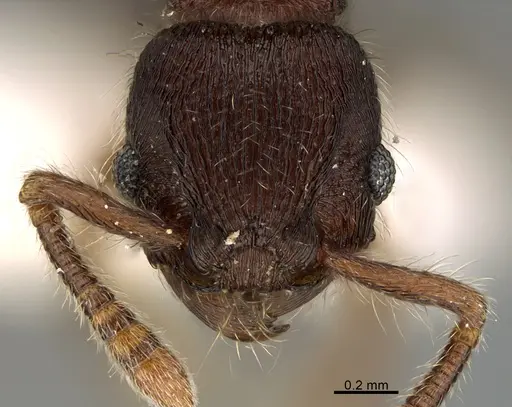
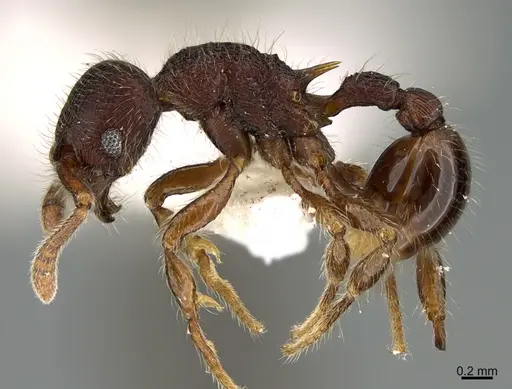
Hylomyrma macielae is a small Neotropical ant species native to the northern Andes region of South America, found in Colombia, Ecuador, Peru, and Venezuela. Workers measure 4.28-4.42mm total length with a distinctive appearance featuring longitudinal striae on the head and irregular striae on the mesosoma, along with notably long propodeal spines. Queens are larger at 4.78-5.29mm total length. This species was only described in 2021,making it one of the newer additions to the ant-keeping hobby, with much of its biology still requiring observation in captivity. They inhabit elevations between 96 and 1430m in the Andean foothills, where they nest in leaflitter, fallen logs, and rotting wood .
Quick Summary
- Difficulty: Medium
- Origin & Habitat: Northern Andes region of South America (Colombia, Ecuador, Peru, Venezuela) at elevations between 96-1430m. Found in leaflitter, fallen logs, rotten wood, and natural cavities in superficial soil layers [1][2].
- Colony Type: Colony structure is unconfirmed, no published data on queen number or colony size exists for this recently described species.
- Size & Growth:
- Queen: 4.78-5.29mm [1]
- Worker: 4.28-4.42mm [1]
- Colony: Unknown, no colony size data has been published
- Growth: Unknown, no development data exists for this species
- Development: Unknown, no development data exists for this species (This is a recently described species (2021) with no published development data.)
- Antkeeping:
- Temperature: Keep around 22-26°C, with a slight gradient allowing cooler areas. The high-elevation habitat (up to 1430m) suggests they can tolerate cooler conditions than lowland tropical ants [1].
- Humidity: High humidity is essential, aim for 70-85%. These leaflitter ants prefer consistently moist substrate. Use a naturalistic setup with damp soil, leaf litter, and pieces of rotting wood for them to explore [2].
- Diapause: Unknown, no published data on overwintering requirements. The high-elevation habitat suggests some seasonal response to cooler conditions may be beneficial.
- Nesting: A naturalistic setup works best, a mix of damp soil, leaf litter, and small pieces of rotting wood or cork bark. They will nest in the decomposing wood material. A Y-tong or plaster nest with small chambers can also work if humidity is maintained. Avoid dry, airy setups.
- Behavior: Behavior in captivity is not well documented. Based on genus-level observations, they are likely docile and non-aggressive. Workers are small (4.28mm) so escape prevention must be excellent, they can squeeze through standard test tube cotton if gaps exist. Foraging style is unknown but related species are scavengers that likely exploit leaflitter microhabitats. They are not known to sting and present no danger to keepers.
- Common Issues: no colony size data makes it difficult to plan long-term housing needs, very recently described species with limited captive observation, care recommendations are estimates, high humidity requirements can lead to mold problems if ventilation is poor, small worker size creates escape risk through standard mesh barriers, no published data on founding behavior or development timeline makes timing uncertain
Natural History and Distribution
Hylomyrma macielae is a recently described species (2021) endemic to the northern Andes mountain range in South America. Its distribution spans from southern Venezuela through Colombia and Ecuador to northern Peru, typically found at elevations between 96 and 1430 meters above sea level [1]. The type locality is in the Territorio Kofán in Nariño, Colombia, at approximately 1000m elevation.
Specimens have been collected using winkler extractors and Berlese-Tüllgren funnels, which are methods used to sample insects living in leaflitter and decomposing wood. This indicates that H. macielae is a leaflitter ant species, nesting in the humid microhabitats found in forest floor debris, fallen logs, and the upper layers of soil [2]. The high-elevation collection sites suggest this species prefers cooler, more humid conditions than many lowland tropical ants.
Housing and Nest Setup
Given their leaflitter nesting habits, a naturalistic setup is the most appropriate housing option for Hylomyrma macielae. Create an enclosure with a base layer of damp, loose substrate (a mix of soil, sand, and peat works well) topped with leaf litter, small twigs, and pieces of rotting wood or cork bark. This mimics their natural forest floor habitat and provides them with multiple nesting options.
Keep the substrate consistently moist but not waterlogged. The surface should feel damp to the touch. Adding pieces of decaying wood gives them natural nesting cavities to explore and eventually occupy. A layer of live moss can help maintain humidity. For the outworld, provide a small water source and offer food on a shallow dish or directly on the substrate surface.
If using a formicarium, a Y-tong or plaster nest with small, tight chambers works better than large open spaces. These ants are tiny and feel secure in more confined spaces. Whatever setup you choose, maintain high humidity (70-85%) and ensure some ventilation to prevent mold buildup. [2]
Feeding and Diet
The specific diet of Hylomyrma macielae has not been documented in scientific literature. As a leaflitter ant in the Myrmicinae subfamily, they likely follow the general feeding patterns of their genus relatives, which are omnivorous scavengers that exploit the rich organic matter found in decomposing forest floor material.
In captivity, offer a varied diet including small protein sources such as fruit flies, small mealworms, or other tiny insects. Sugar sources like diluted honey or sugar water may be accepted, though leaflitter ants often prefer more diverse nutrition. Given their small size, prey items should be appropriately sized, tiny insects and arthropods are more suitable than larger feeder insects.
Feed small amounts of protein 2-3 times per week, removing any uneaten prey after 24-48 hours to prevent mold. Keep a constant supply of fresh water available, either in a test tube with a cotton wick or a small shallow dish.
Temperature and Seasonal Care
Based on their elevation range (96-1430m), Hylomyrma macielae likely prefers temperatures cooler than typical lowland tropical ants. Aim for a temperature range of 22-26°C in the nest area, with a slight gradient allowing workers to move between warmer and cooler zones. Room temperature within this range is often suitable.
Avoid temperatures above 28°C for extended periods, as this species comes from higher elevations where temperatures are moderated by altitude. A small heating cable on one side of the nest can create a useful gradient, but is often unnecessary if room temperature is within range.
Regarding diapause or winter rest, no published data exists. The high-elevation habitat suggests some seasonal temperature fluctuation is natural. Many antkeepers in temperate regions find that reducing temperatures slightly during winter months (by 5-8°C for 2-3 months) helps simulate natural cycles, though this may not be strictly required for this species. [1]
Handling and Temperament
Hylomyrma macielae is a small, docile ant that poses no threat to keepers. Workers measure only 4.28-4.42mm total length, making them among the smaller ants commonly kept in captivity. They are not known to possess a painful sting, and their small size means even if they did attempt to bite, it would not be noticeable to human skin.
Their small size does create an important practical concern: escape prevention. Workers can easily slip through standard mesh barriers if the gaps are larger than about 0.5mm. Use fine mesh or apply fluon to barrier edges. When setting up their enclosure, check all potential escape routes carefully, these tiny ants will find any gap.
In terms of behavior, expect them to be relatively calm and not overly active. They will likely spend most of their time within the nest or exploring the immediate vicinity of their nesting material, rather than venturing far into an open outworld. [1]
Acquiring This Species
Hylomyrma macielae was only described in 2021,making it one of the more recently discovered ant species available to hobbyists. As such, it remains uncommon in the ant-keeping trade, and colonies may be difficult to find. The best way to acquire this species is through specialized ant vendors who focus on rare or newly described Neotropical species.
When purchasing a colony, verify the species identification comes from a reputable source. Given the recent description and limited distribution, ensure your vendor can confirm the exact species. Wild-caught colonies from the northern Andes region may occasionally be available, but captive-bred colonies are preferable when available.
Always check the legal requirements for keeping this species in your jurisdiction before purchasing. Some countries have restrictions on keeping native or introduced ant species. [1]
Frequently Asked Questions
How long does it take for Hylomyrma macielae to produce first workers?
The exact development timeline is unknown for this recently described species. No published development data exists, so timing will require patient observation in captivity.
What is the best nest type for Hylomyrma macielae?
A naturalistic setup with damp substrate, leaf litter, and rotting wood pieces works best as it mimics their natural leaflitter habitat. If using a formicarium, choose a Y-tong or plaster nest with small, tight chambers scaled to their tiny 4mm worker size. Whatever setup, maintain high humidity (70-85%).
Are Hylomyrma macielae good for beginners?
This species is rated as Medium difficulty. While they are docile and small, the main challenge is their specific humidity requirements and the fact that they are a recently described species with limited captive observation data. Beginners should be comfortable maintaining high humidity setups before trying this species.
How big do Hylomyrma macielae colonies get?
The maximum colony size is unknown, no published data exists on wild colony sizes for this species.
What do Hylomyrma macielae eat?
Specific diet data is lacking, but they likely scavenge like other leaflitter Myrmicinae. Offer small protein sources (fruit flies, tiny mealworms) 2-3 times per week. Sugar water or honey may be accepted. Given their tiny size, prey items must be appropriately small.
Do Hylomyrma macielae need hibernation?
Diapause requirements are unconfirmed. Their high-elevation habitat (up to 1430m) suggests some seasonal temperature response is natural. Many keepers successfully keep them year-round at stable temperatures within their 22-26°C range without issues.
Can I keep multiple queens together?
Colony structure (monogyne vs polygyne) has not been documented for this species. Until more data is available, it is not recommended to combine unrelated foundress queens, as aggressive interactions are likely.
Why are my Hylomyrma macielae dying?
Common causes include: low humidity (must stay above 70%), mold from poor ventilation, temperatures above 28°C, or escape through tiny gaps. Their small size makes escape prevention critical. Also ensure prey is appropriately sized, too-large insects may not be accepted.
When should I move Hylomyrma macielae to a formicarium?
Move them when the colony reaches several dozen workers and the founding setup becomes crowded. However, a naturalistic setup often works best long-term for this leaflitter species. If moving to a formicarium, choose one with small chambers and maintain high humidity.
Report an Issue
The current care sheet is based fully on literature. See inconsistencies, or something that's incorrect? Please , it will be resolved after review from an admin. Contributing to the blogs tab also helps providing information, to make us be able to further improve the caresheets. Thank you for your support!
References

This caresheet is licensed under CC BY-SA 4.0 .
Community Blogs
MCZ-ENT00525515
View on AntWeb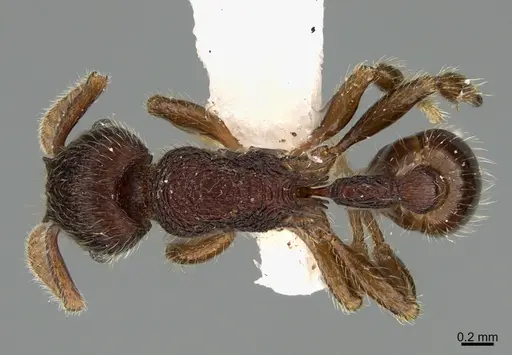
Literature
Loading distribution map...Loading products...