
Hylomyrma dolichops
- Sci. Name
- Hylomyrma dolichops
- Tribe
- Pogonomyrmecini
- Subfamily
- Myrmicinae
- Author
- Kempf, 1973
- Distribution
- Found in 4 countries
Introduction
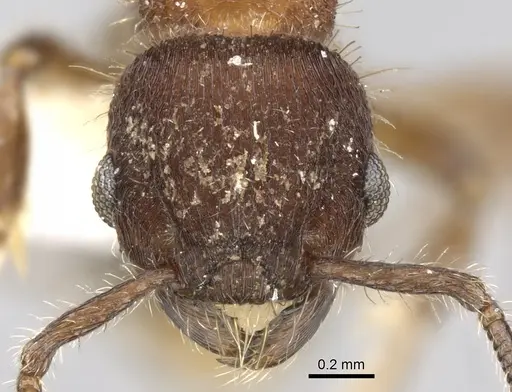
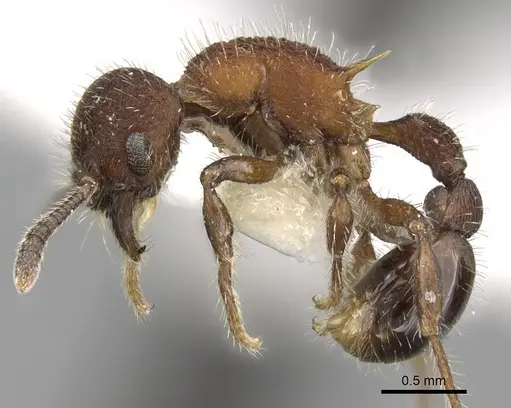
Hylomyrma dolichops is a medium to large-sized ant species native to the Neotropical region, found in Brazil, Colombia, Ecuador, and Venezuela. Workers measure 4.90-5.43mm with a distinctive appearance featuring branched setae with multiple lobes at the tip and a uniquely kidney-shaped (reniform) eye that gives the species its name - 'dolichops' comes from Greek for 'kidney-bean' . The head has distinctive striation patterns with vermicular markings on the front half and more irregular parallel striations on the back. These ants inhabit tropical rainforest leaf-litter at elevations between 260-700m, where they nest in fallen logs, rotten wood, or natural cavities in shallow soil layers . This is a poorly-studied genus with virtually no research on captive care. As a leaf-litter dwelling ant from tropical rainforests, they represent an interesting challenge for advanced antkeepers willing to work with species that have no established husbandry protocols. Their most distinctive morphological feature is the branched, lobed setae that distinguish them from related species like Hylomyrma columbica, which has simple unbranched hairs.
Quick Summary
- Difficulty: Expert
- Origin & Habitat: Tropical rainforest leaf-litter in the Amazon region of Colombia, Ecuador, Brazil, and Venezuela at elevations 260-700m [1]. Nests are located in fallen logs, rotten wood, or natural cavities in superficial soil layers [2].
- Colony Type: Colony structure is unconfirmed, no research documents whether they are single-queen (monogyne) or multi-queen (polygyne) colonies.
- Size & Growth:
- Queen: 5.59-5.98mm [1]
- Worker: 4.90-5.43mm [1]
- Colony: Unknown, no colony size data available
- Growth: Unknown, no development data available for this species
- Development: Unknown, no direct research exists for this species (No specific development studies exist. Related tropical Myrmicinae typically develop from egg to worker in 4-8 weeks at warm temperatures, but this is unconfirmed for Hylomyrma dolichops.)
- Antkeeping:
- Temperature: As a tropical rainforest species from elevations 260-700m, aim for warm conditions around 24-26°C. Avoid temperatures below 22°C or above 30°C. Provide a gentle temperature gradient if possible
- Humidity: Tropical rainforest leaf-litter dwellers need high humidity, aim for 70-85% relative humidity. Keep the nest substrate consistently moist but not waterlogged. Provide a moisture gradient so ants can choose their preferred zone
- Diapause: No, these are tropical ants from regions without cold winters. They do not require hibernation or diapause
- Nesting: In captivity, they likely prefer naturalistic setups that mimic their natural leaf-litter environment. A Y-tong or plaster nest with moisture chambers works well, or a naturalistic terrarium-style setup with soil, leaf litter, and rotting wood pieces. They seem to prefer tight, humid spaces rather than large open areas.
- Behavior: Behavior is poorly documented. As leaf-litter ants, they are likely more cryptic and less aggressive than open-nesting Myrmicinae. Workers are medium-sized and relatively slow-moving. Escape risk is moderate, their size (around 5mm) means standard formicarium barriers are usually sufficient, but they are small enough to exploit gaps in poorly maintained setups. They likely forage in the leaf-litter layer rather than on open trails.
- Common Issues: no established husbandry protocols, this is a species with no documented captive breeding success, so keepers are essentially pioneering care methods, humidity management is critical, being rainforest dwellers, they likely fail quickly in dry conditions, slow growth and lack of data means colonies may take months or years to establish, testing keeper patience, wild-caught colonies may have parasites or health issues from collection stress, quarantine and careful monitoring essential, temperature sensitivity, being from stable tropical conditions, they may be sensitive to temperature fluctuations
Nest Preferences and Housing
Hylomyrma dolichops is a leaf-litter dwelling species that in nature nests in fallen logs, rotten wood, and natural cavities in superficial soil layers [2]. They were collected using berlesate (leaf-litter extraction) methods, indicating they live primarily in the forest floor layer rather than underground or in elevated positions [1]. For captive care, naturalistic setups tend to work best for such species, a terrarium-style formicarium with a deep soil layer (at least 5-10cm), pieces of rotting wood, leaf litter, and moss provides ideal conditions. Alternatively, a Y-tong or plaster nest with moisture chambers can work if humidity is carefully maintained. The key is providing tight, humid spaces that mimic the microclimate of tropical forest floor litter. Avoid large open chambers, these ants prefer confined spaces similar to what they would find under logs or in rotting wood stumps. Ensure the nest material can hold moisture without becoming saturated, as stagnant water promotes mold.
Feeding and Diet
No specific dietary studies exist for Hylomyrma dolichops. As a member of the tribe Pogonomyrmecini (which includes seed-harvesting ants like Pogonomyrmex), they may have some omnivorous tendencies, but being a leaf-litter dweller rather than a desert species suggests a different dietary focus. Based on typical leaf-litter Myrmicinae behavior, they likely forage for small arthropods, honeydew, and plant materials in the forest floor layer. In captivity, offer a varied diet: protein sources like small crickets, mealworms, or fruit flies should be provided regularly, along with sugar sources like honey water or sugar water. Given their small size (workers around 5mm), prey items should be appropriately sized, very small insects or pre-killed arthropods work better than large feeder insects. Observe your colony's preferences and adjust accordingly. Remove uneaten food promptly to prevent mold.
Temperature and Environmental Control
As a tropical species from the Amazon region, Hylomyrma dolichops requires warm, stable temperatures. The natural habitat at elevations of 260-700m in tropical rainforest provides consistently warm conditions year-round [1]. Aim for temperatures in the range of 24-26°C, with a slight gradient allowing workers to choose their preferred zone. Avoid temperatures below 22°C or above 30°C, sudden drops or spikes can stress colonies. A small heating cable on one side of the nest can help maintain warmth, but always provide unheated areas so ants can regulate their own temperature. Room temperature within the 24-26°C range is acceptable without additional heating. Unlike temperate species, these ants do not require any cooling period or hibernation, maintaining consistent tropical conditions year-round is essential for colony health and growth.
Humidity Management
Humidity is likely the most critical factor for successfully keeping Hylomyrma dolichops. Being tropical rainforest leaf-litter inhabitants, they are adapted to consistently humid conditions, think damp forest floor, not dry room. Aim for relative humidity around 70-85% in the nest area. The substrate should feel consistently moist to the touch but never waterlogged or sitting with standing water. A moisture gradient is ideal, some areas slightly damper than others allows ants to self-regulate. In naturalistic setups, misting the leaf litter and substrate regularly helps maintain humidity. In Y-tong or plaster nests, water reservoirs or periodic misting of the nest material maintains moisture. Watch for condensation on nest walls, some condensation is normal and good, but excessive pooling indicates too much water. Equally important is ventilation, stagnant, overly humid air promotes mold growth that can devastate colonies. Balance humidity with adequate airflow. [2]
Colony Establishment and Growth
No documented captive breeding success exists for Hylomyrma dolichops, making this a true pioneer species for antkeeping. If you obtain a founding queen, she should be housed in a small test tube or founding chamber with moist substrate. The queen will seal herself in and lay eggs, raising the first workers on her own body reserves. Expect a long wait, no development data exists for this species, so timelines are completely unknown. Once workers emerge, growth is likely slow initially. Colonies may take many months or even years to reach significant sizes given the lack of established protocols. Patience is essential. Monitor for mold, mite infestations, and queen health. If founding fails, try adjusting humidity and temperature, what works best will likely be discovered through keeper experimentation. Wild-caught colonies may establish faster but face risks from collection stress and potential parasites.
Behavior and Temperament
Specific behavioral observations for Hylomyrma dolichops are not documented in scientific literature. As leaf-litter dwelling ants, they are likely more cryptic and less aggressive than many Myrmicinae. They probably forage individually or in small groups through the leaf-litter layer rather than forming large visible trails. Workers are medium-sized (4.90-5.43mm) and relatively robust [1]. Their stinger is present (typical for Myrmicinae) but their small size means sting potency for humans is minimal to moderate, more of a mild burn than serious pain. Escape prevention should be moderate, their size means standard formicarium barriers work, but any gaps or poor-fitting connections should be addressed. They are not aggressive toward keepers and handling is straightforward if needed. The most notable behavioral trait is likely their cryptic, reclusive nature typical of leaf-litter ants.
Frequently Asked Questions
How difficult is Hylomyrma dolichops to keep?
This is an expert-level species. No established captive husbandry protocols exist, you will be pioneering care methods for a species with virtually no documented captive breeding success. They require high humidity, stable tropical temperatures, and significant patience as growth rates are completely unknown. Only experienced antkeepers willing to experiment should attempt this species.
What do Hylomyrma dolichops ants eat?
No specific dietary studies exist. Based on related leaf-litter Myrmicinae, they likely accept small protein sources (fruit flies, small crickets, mealworms) and sugar sources (honey water, sugar water). Offer a varied diet and remove uneaten food promptly to prevent mold.
What temperature do they need?
Aim for 24-26°C as a tropical rainforest species from elevations 260-700m. Avoid temperatures below 22°C or above 30°C. A gentle temperature gradient allows self-regulation.
Do they need hibernation?
No, these are tropical ants from the Amazon region with no cold season. Maintain consistent warm conditions year-round.
How long does it take for first workers to emerge?
Unknown, no development studies exist for this species. Development timelines are completely unstudied.
Can I keep multiple queens together?
Not documented. Colony structure (monogyne vs polygyne) is completely unstudied for this species. Do not attempt combining unrelated queens without evidence they can coexist.
What size do workers and queens reach?
Workers are 4.90-5.43mm, queens are larger at 5.59-5.98mm [1].
Where is Hylomyrma dolichops found?
They inhabit tropical rainforest leaf-litter in Brazil, Colombia, Ecuador, and Venezuela at elevations between 260-700m [1].
Do they sting?
Yes, Myrmicinae ants have stingers, but given their small size (around 5mm), the sting effect on humans is minimal to moderate, likely a mild burning sensation rather than serious pain.
What nest type is best?
Naturalistic setups with deep soil, leaf litter, and rotting wood pieces best mimic their natural habitat. A Y-tong or plaster nest with moisture chambers can also work if humidity is carefully maintained. They prefer tight, humid spaces over large open chambers.
How big do colonies get?
Unknown, no colony size data exists for this species. Related Hylomyrma species are not known for supercolonies, so expect moderate-sized colonies.
Are they good for beginners?
No, this species is not recommended for beginners. There are no established care protocols, and they require specific humidity and temperature conditions that beginners may struggle to maintain. Choose a more documented species for your first colony.
Report an Issue
The current care sheet is based fully on literature. See inconsistencies, or something that's incorrect? Please , it will be resolved after review from an admin. Contributing to the blogs tab also helps providing information, to make us be able to further improve the caresheets. Thank you for your support!
References

This caresheet is licensed under CC BY-SA 4.0 .
Community Blogs
CASENT0280845
View on AntWeb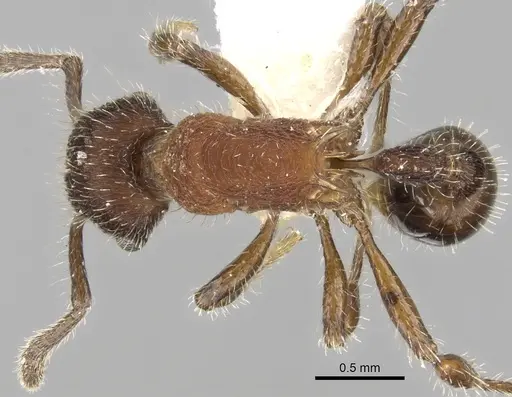
Literature
Loading distribution map...Loading products...