
Hylomyrma dentiloba
- Sci. Name
- Hylomyrma dentiloba
- Tribe
- Pogonomyrmecini
- Subfamily
- Myrmicinae
- Author
- Santschi, 1931
- Distribution
- Found in 7 countries
Introduction
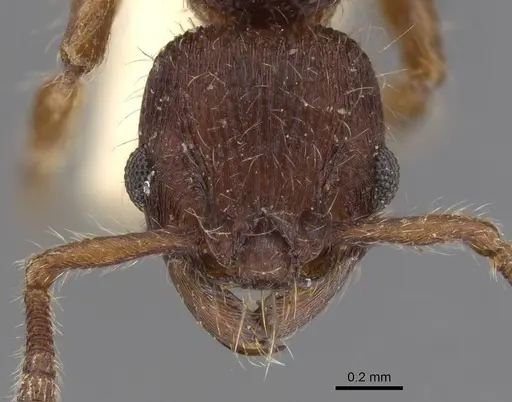
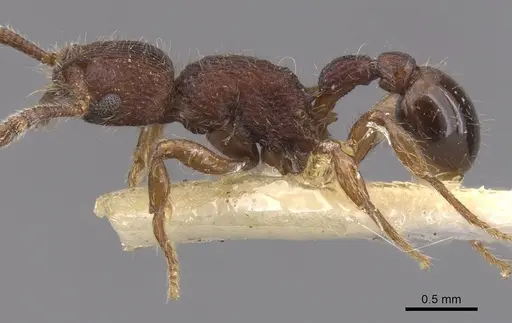
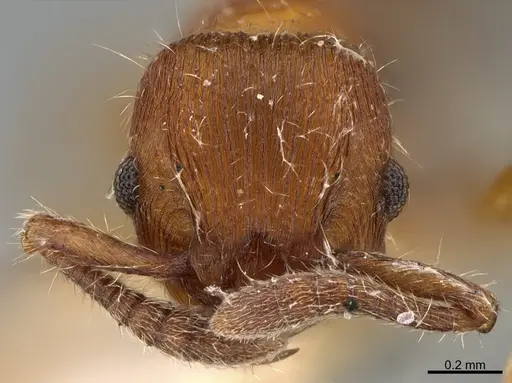
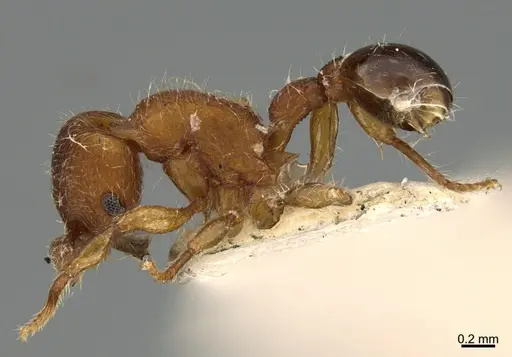
Hylomyrma dentiloba is a small to midsized ant native to Central America, found only in Panama and the Osa Peninsula of Costa Rica . Workers measure 4.15–4.65 mm . The body is somewhat dull except for the shiny gaster, with regular striae (grooves) on the head and a flattened upper part of the body. Eyes are relatively large compared to many ground‑nesting ants . This species is cryptic – it looks nearly identical to the closely related Hylomyrma versuta, and genetic studies suggest there may actually be several hidden species within what we call H. dentiloba . These ants live in lowland humid forests at 90–100 m elevation, and are typically collected by sifting through leaf litter .
Quick Summary
- Difficulty: Expert
- Origin & Habitat: Panama and Costa Rica (Osa Peninsula) – lowland humid rainforest at 90–100 m elevation [1][3]. Collected from leaf litter in humid, rainy forests [4].
- Colony Type: Colony structure is unconfirmed. No data on queen number or ergatoid systems exist.
- Size & Growth:
- Queen: 4.79–4.98 mm [3]
- Worker: 4.15–4.65 mm [3]
- Colony: Unknown – no data available. Based on similar small Myrmicinae, probably under a few hundred workers at most.
- Growth: Unknown – inferred as moderate from related species
- Development: Unknown – estimated 6–10 weeks at tropical temperatures, based on typical Myrmicinae patterns (No direct studies. Estimates come from related Pogonomyrmecini species.)
- Antkeeping:
- Temperature: 24–28 °C – they come from lowland tropical rainforest, so they need warmth [4]. Provide a gentle temperature gradient.
- Humidity: High humidity is critical. Keep the nest substrate consistently moist but not waterlogged – think damp forest floor. Provide a water source at all times [4]. Poor humidity is a common killer of this species in captivity.
- Diapause: Unknown – likely not required since they are tropical. A slight drop in temperature during the dry season may be harmless but is unstudied.
- Nesting: In the wild they nest in leaf litter, rotten wood, or soil cavities [3]. In captivity, use a naturalistic setup with moist soil/rotting wood, or a Y‑tong/plaster nest with good moisture retention. Match the substrate to their forest floor habitat.
- Behavior: This species is very poorly documented. Based on related Pogonomyrmecini, they are probably ground‑dwelling, shy, and non‑aggressive. Their relatively large eyes might make them more visually responsive than many ants [1]. Escape risk is moderate – workers are about 4 mm, so use standard barriers.
- Common Issues: high humidity is vital – these rainforest ants crash quickly in dry conditions, colony growth may be slow because optimal nutrition is unknown, wild‑caught colonies may carry parasites (common in leaf‑litter species), the species is extremely rare in the hobby – expect little support or supplier stock, temperature stability matters – avoid cold drafts or sudden drops
Natural History and Distribution
Hylomyrma dentiloba was originally described from Panama’s France Field in 1931 by Santschi [17813
Report an Issue
The current care sheet is based fully on literature. See inconsistencies, or something that's incorrect? Please , it will be resolved after review from an admin. Contributing to the blogs tab also helps providing information, to make us be able to further improve the caresheets. Thank you for your support!
References

This caresheet is licensed under CC BY-SA 4.0 .
Community Blogs
CASENT0913528
View on AntWeb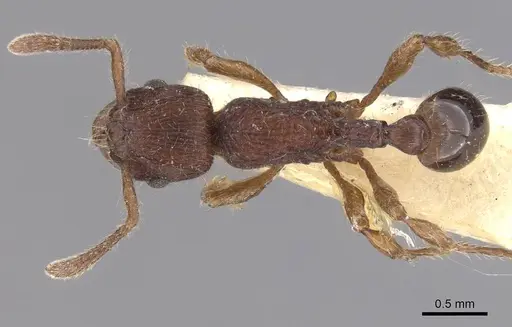
CASENT0923620
View on AntWeb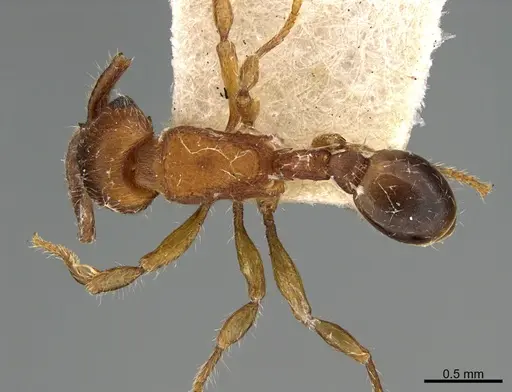
Literature
Loading distribution map...Loading products...