
Holcoponera extra
- Sci. Name
- Holcoponera extra
- Tribe
- Ectatommini
- Subfamily
- Ectatomminae
- Author
- Lattke, 1995
- Distribution
- Found in 1 countries
Introduction
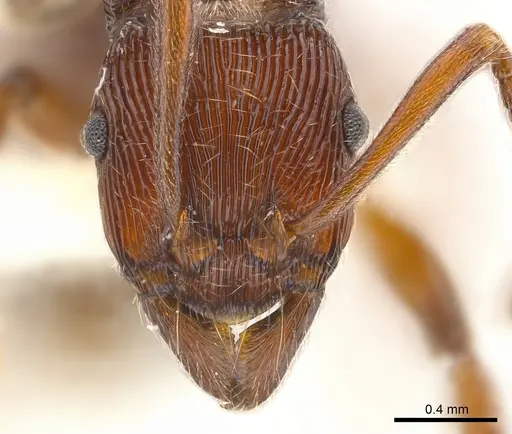
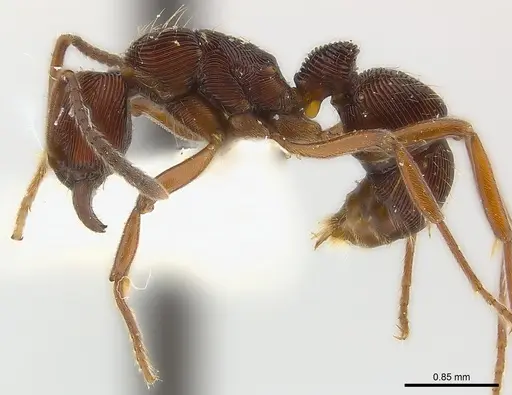
Holcoponera extra is a small predatory ant species native to the humid lowland forests of western Colombia and Ecuador. Workers have a distinctive dark brown body with lighter legs and antennae, featuring a pointed petiolar node that is more robust and semi-square compared to related species. The species was previously classified as Gnamptogenys extra before taxonomic revision in 2022 moved it to Holcoponera. It prefers elevations below 1,100 meters and has been recorded in the Colombian departments of Cauca, Chocó, and Valle del Cauca, as well as Pichincha in Ecuador . This species is predatory, with nest debris analysis revealing remains of beetles and parts of Atta worker ants, confirming active hunting behavior . The species is extremely rare in collections, with only a handful of specimens ever collected. This makes captive husbandry challenging as there is limited biological data to draw from.
Quick Summary
- Difficulty: Expert
- Origin & Habitat: Humid lowland tropical forests in western Colombia and Ecuador, below 1,100 meters elevation [1][2]
- Colony Type: Unknown, colony structure has not been documented. No information on queen number or colony size is available.
- Size & Growth:
- Queen: Undescribed, queen caste has not been documented in scientific literature
- Worker: Size data unavailable, only partial measurements (head length, head width, mesosoma length) exist in scientific literature, not total body length
- Colony: Unknown, only a small number of worker specimens have ever been collected
- Growth: Unknown
- Development: Unconfirmed, no development data exists for this species (No data available on egg-to-worker development timeline.)
- Antkeeping:
- Temperature: Inferred: 24-28°C, this is a tropical lowland species from humid Colombian and Ecuadorian forests. Provide a warm enclosure with a temperature gradient allowing the ants to self-regulate.
- Humidity: High humidity required, these ants inhabit humid tropical forests. Keep nest substrate consistently moist but not waterlogged. Mist occasionally and provide a water source.
- Diapause: Unlikely, as a tropical species from lowland forests near the equator, they probably do not require a diapause period. Maintain warm conditions year-round.
- Nesting: Inferred: Likely nests in rotting wood or soil in humid forest environments. A naturalistic setup with moist substrate (like a dirt-filled formicarium or Y-tong with soil) would be appropriate. Provide damp conditions and minimal disturbance.
- Behavior: Predatory behavior confirmed, remains of beetles and Atta worker parts have been found in nest debris [1][3]. Workers likely hunt small invertebrates. This species belongs to the Ectatomminae subfamily, which possesses a functional sting used to inject neurotoxins. Treat with caution. Escape prevention should be moderate as workers are small.
- Common Issues: extreme rarity makes obtaining founding queens nearly impossible, no biological data exists, keepers must experiment with all aspects of care, predatory diet requires live prey which can be difficult to source for such small ants, tropical humidity requirements can lead to mold problems if ventilation is poor, unknown development time means patience is essential, colonies may take months or years to establish
Obtaining Holcoponera extra
This is perhaps the greatest challenge with this species. Holcoponera extra is extremely rare, only a handful of worker specimens have ever been collected scientifically, with most collected between 1976 and 1995. There are no documented colonies in captive ant populations, and no known queen sales or colony availability. If you wish to keep this species, your only option would be to locate a wild colony in the humid forests of Colombia or Ecuador during nuptial flight season and collect a mated queen. This requires significant effort, travel, and research permits. For most antkeepers, this species remains effectively unobtainable. Consider exploring more commonly available Poneromorph species like Ponera, Hypoponera, or Gnamptogenys species that are regularly available in the antkeeping hobby.
Housing and Nest Setup
Since no captive husbandry data exists, we must infer appropriate conditions from the species' natural habitat. Holcoponera extra inhabits humid lowland tropical forests in Colombia and Ecuador, typically below 1,100 meters elevation [1]. A naturalistic setup with moist substrate would be most appropriate, a dirt-filled formicarium or a Y-tong nest with a soil chamber allows for proper humidity retention. The nest should be kept in a warm, humid area of your home away from direct sunlight and air conditioning vents. Provide a water tube for drinking and mist the outworld occasionally to maintain humidity. Given their small size and predatory nature, include a small outworld area where you can offer live prey.
Feeding and Diet
Holcoponera extra is confirmed predatory, nest debris analysis revealed remains of beetles and parts of Atta worker ants [1][3]. This means they actively hunt and consume other insects. In captivity, you should offer small live prey appropriate to their size. Suitable prey would include tiny insects such as springtails, fruit fly larvae, small mealworms cut into pieces, and other micro-arthropods. Prey should be offered in the outworld and removed if uneaten after 24-48 hours to prevent mold. Do not rely on sugar water or honey, this is a predatory species, not a honeydew consumer. Feed small amounts of live prey every few days, adjusting based on consumption rate.
Temperature and Humidity Requirements
As a tropical lowland species from near the equator, Holcoponera extra requires warm and humid conditions. Aim for temperatures in the range of 24-28°C. A small heating cable on one side of the nest can help maintain warmth if your room temperature is below this range. Place the heating element on top of the nest, not underneath, to avoid drying out the substrate. Humidity should be high, these ants come from humid Colombian and Ecuadorian forests. Keep the nest substrate consistently moist but not waterlogged. Provide a water tube and occasionally mist the outworld. Good ventilation is important to prevent mold while maintaining humidity. [1][2]
Understanding the Challenge
This caresheet represents a significant challenge in antkeeping: writing care instructions for a species with almost no biological data. The only information available comes from worker specimens collected decades ago. We have no data on queen size, colony structure, founding behavior, development time, nuptial flight timing, or most aspects of their biology. Everything in this caresheet is either inferred from related species or is speculation. If you are fortunate enough to obtain this species, your observations will be genuinely valuable to the antkeeping community. Document everything, feeding acceptance, behavior, development, and colony growth. Consider reaching out to researchers studying Neotropical ants to share your findings. This is truly a species for the most dedicated and experimental antkeepers.
Frequently Asked Questions
Is Holcoponera extra available for purchase?
No, this species is extremely rare and not available in the commercial antkeeping hobby. Only a handful of worker specimens have ever been scientifically collected, and there are no documented captive colonies. You would need to travel to Colombia or Ecuador and collect a wild queen, which would require research permits.
How long do Holcoponera extra workers live?
Unknown, no research has examined worker longevity for this species.
Do Holcoponera extra ants sting?
This species belongs to subfamily Ectatomminae, which possesses a functional sting used to inject neurotoxins. Treat this species with caution until specific behavior is documented.
What do Holcoponera extra queens look like?
Unknown, the queen caste has never been described or documented. No queen specimens have been collected or studied. We have no information on queen size, morphology, or how they differ from workers.
How big do Holcoponera extra colonies get?
Unknown, colony size has never been documented. Based on related Gnamptogenys species, colonies might reach several hundred workers, but this is purely an estimate.
Are Holcoponera extra good for beginners?
No, this species is rated Expert difficulty due to complete lack of biological data, extreme rarity, and specific tropical requirements. There are no established husbandry protocols. This species is only for experienced antkeepers who enjoy experimentation and documentation.
What is the best nest type for Holcoponera extra?
Inferred: A naturalistic setup with moist soil substrate would best replicate their natural habitat in humid lowland forests. A Y-tong nest with a dirt chamber or a custom dirt-filled formicarium would maintain the humidity they require. Avoid dry setups.
When do Holcoponera extra have nuptial flights?
Unknown, nuptial flight timing has not been documented. As a tropical species from near the equator, they may have less defined seasonal flight patterns compared to temperate species.
Can I keep multiple Holcoponera extra queens together?
Unknown, we have no data on colony structure or whether this species is single-queen (monogyne) or multi-queen (polygyne). Without this basic information, combining queens is not recommended.
How long from egg to worker in Holcoponera extra?
Unconfirmed, no development data exists for this species.
Do Holcoponera extra need hibernation?
Unlikely, as a tropical lowland species from near the equator, they do not likely require a diapause or hibernation period. Maintain warm, stable temperatures year-round (24-28°C).
Why are Holcoponera extra so rare?
This species appears to have a very limited distribution in specific humid forest habitats in western Colombia and Ecuador. Combined with their small size and likely low colony numbers, they have rarely been encountered by researchers. The lack of recent collections also suggests they may be locally uncommon or difficult to find.
Report an Issue
The current care sheet is based fully on literature. See inconsistencies, or something that's incorrect? Please , it will be resolved after review from an admin. Contributing to the blogs tab also helps providing information, to make us be able to further improve the caresheets. Thank you for your support!
References

This caresheet is licensed under CC BY-SA 4.0 .
Community Blogs
CASENT0179995
View on AntWeb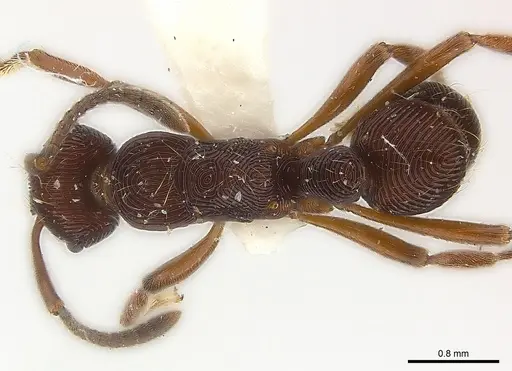
Literature
Loading distribution map...Loading products...