
Holcoponera andina
- Sci. Name
- Holcoponera andina
- Tribe
- Ectatommini
- Subfamily
- Ectatomminae
- Author
- Lattke, 1995
- Distribution
- Found in 2 countries
Introduction
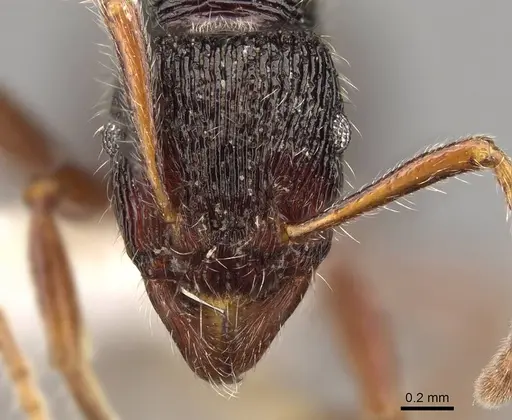
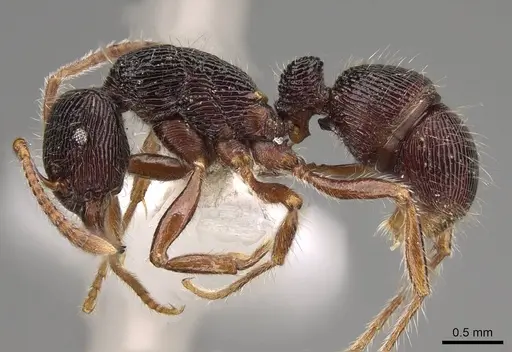
Holcoponera andina is a small predatory ant native to the Andean regions of Colombia and Ecuador. Workers have a dark brown to black body with yellowish legs and feature distinctive costulate (ridged) sculpture, a concave vertex margin, and triangular mandibles . The species name refers to the Andes mountains where they inhabit forests between 1,000 and 2,300 meters elevation . Queens have never been collected, making this one of the most poorly documented ant species in the hobby . This species belongs to the Ectatomminae subfamily and possesses a functional sting for defense.
Quick Summary
- Difficulty: Expert
- Origin & Habitat: Andean forests in Colombia and Ecuador, found at elevations between 1,000-2,300 meters. Nests in decomposing wood on soil [1][2].
- Colony Type: Unknown colony structure. Queens have never been collected, so colony type (single-queen or multi-queen) is unconfirmed [3].
- Size & Growth:
- Queen: Unknown, queens have not been collected [3]
- Worker: Size data unavailable, the context provides head and mesosoma measurements only, not total body length
- Colony: Unknown, colony size has not been documented
- Growth: Unknown
- Development: Unknown, development has not been studied (No data available on egg-to-worker development.)
- Antkeeping:
- Temperature: Based on their Andean habitat (1,000-2,300m elevation), they likely prefer cooler temperatures than typical tropical ants. Start around 18-22°C and observe colony behavior. Avoid overheating.
- Humidity: Found in decomposing wood in humid forest habitats. Keep nest substrate moderately moist but not waterlogged. Provide a moisture gradient so ants can choose their preferred zone.
- Diapause: Unknown, no research on seasonal dormancy. Andean elevation suggests they may tolerate cooler conditions and possibly require a cooler period, but this is unconfirmed.
- Nesting: Natural nesting is in decomposing wood on soil. In captivity, a naturalistic setup with rotting wood pieces or a Y-tong/plaster nest with moisture retention works well. Avoid dry, desert-style setups.
- Behavior: Based on genus patterns, this is a predatory species that hunts small invertebrates. They forage in leaf litter and soil layers. Workers have small eyes, suggesting they may be more nocturnal or ground-foraging. Escape risk is moderate, standard barrier methods should suffice. They possess a sting but are too small to cause significant discomfort to humans.
- Common Issues: queen unavailability, queens have never been collected, making established colonies extremely rare in the hobby, lack of biological data, almost nothing is known about their care requirements, so keepers must experiment, slow colony growth, typical of many Ectatomminae species, expect gradual development, humidity management, decomposing wood nesting suggests they need stable, moderate humidity without drying out, escape prevention, while not tiny, standard barriers recommended as they may squeeze through small gaps
Species Overview and Identification
Holcoponera andina is a member of the Ectatomminae subfamily, formerly classified as Holcoponera andina before being transferred to Holcoponera in 2022 [2]. They are distinctive among related species by their larger size, relatively small eyes, and the distinctive concave vertex margin visible in frontal view [4]. The body is dark brown to black with yellowish legs, and the sculpture shows characteristic costae (ridges) [2]. They are part of the strigata subgroup and are similar to Holcoponera strigata, though H. strigata is smaller with relatively larger eyes [1]. This species possesses a functional sting used for prey capture and defense.
Natural Habitat and Distribution
This species inhabits Andean forests across Colombia and Ecuador at elevations between 1,000 and 2,300 meters [1][2]. In Colombia, they have been recorded in multiple departments including Amazonas, Antioquia, Caldas, Caquetá, Nariño, Norte de Santander, Quindío, Risaralda, Valle del Cauca, and Vichada [1][5]. They nest in decomposing wood on soil, and have been found exclusively in shaded coffee plantations in some studies [6]. They occur in both leaf-litter and soil layers in premontane tropical forests [7]. The higher elevation habitat suggests they prefer cooler, more humid conditions than typical lowland tropical ants.
Current Knowledge Gaps
Almost nothing is known about the biology of Holcoponera andina, this is one of the most poorly documented ant species in the Ectatomminae subfamily [3]. Queens have never been collected, meaning we have no information about colony founding, nuptial flight timing, or colony structure [3]. Colony size, development timeline, and precise temperature/humidity requirements remain unknown. This makes keeping this species particularly challenging, as there is no established care protocol. Keepers must be prepared to experiment and document their observations carefully. The complete absence of queen specimens also means wild colonies are rarely available, and most specimens in scientific collections are workers only.
Housing and Nesting Recommendations
Based on their natural nesting in decomposing wood on soil, a naturalistic setup with rotting wood pieces or a Y-tong/plaster nest with good moisture retention would be most appropriate. Provide a moisture gradient so ants can regulate their own humidity. Since they are found in leaf-litter and soil layers, include some substrate material they can manipulate. Avoid dry, desert-style formicarium setups, these ants are adapted to humid forest floor conditions. A test tube setup can work for founding, but established colonies will likely benefit from more naturalistic housing. [1][2]
Feeding and Diet
As a member of the Ectatomminae, Holcoponera andina is likely predatory like other Gnamptogenys species. They probably hunt small invertebrates in leaf litter and soil. In captivity, offer small live prey such as springtails, fruit flies, and other tiny arthropods. Sugar sources may be accepted but are not a primary food source for this group. Feed protein prey 2-3 times per week and remove uneaten prey to prevent mold. Since their exact diet is unknown, offer variety and document what they accept.
Temperature and Seasonal Care
The Andean habitat (1,000-2,300m elevation) suggests this species prefers cooler temperatures than typical tropical ants. Start around 18-22°C and monitor colony behavior. If workers cluster near heat sources, increase slightly, if they avoid heated areas, reduce temperature. Avoid overheating, these ants are not adapted to hot conditions. No research exists on diapause requirements, but the cooler Andean climate suggests they may tolerate or even benefit from a cooler winter period. If colony shows reduced activity in winter, reduce temperatures slightly (to around 15-18°C) for 2-3 months. [1][2]
Challenges and Considerations
Keeping Holcoponera andina presents significant challenges due to the complete lack of biological data. Queens have never been collected, making established colonies exceptionally rare in the hobby [3]. Most antkeepers will not find this species available for purchase. If you do obtain wild-caught workers, expect a colony that may not survive long without a queen. Growth is likely slow, typical of the subfamily. The primary value in keeping this species would be documenting previously unknown behaviors and care requirements. Only experienced antkeepers should attempt this species, and only if they obtain a colony with a queen.
Frequently Asked Questions
Can I keep Holcoponera andina in a test tube?
A test tube setup can work for a founding colony if you obtain one, but established colonies will likely do better in a naturalistic setup with rotting wood or a moist plaster nest. They naturally nest in decomposing wood on soil, so replicate those conditions.
How long does it take for Holcoponera andina to develop from egg to worker?
This is completely unknown, no research has studied their development timeline.
Are Holcoponera andina good for beginners?
No. This species is not recommended for beginners. Almost nothing is known about their biology, queens have never been collected, and established colonies are essentially unavailable in the antkeeping hobby. Only expert antkeepers should attempt this species.
Do Holcoponera andina ants sting?
Yes. Ectatomminae ants have stingers. However, they are small ants and any sting would cause minimal discomfort to humans.
What do Holcoponera andina eat?
Based on genus patterns, they are likely predatory on small invertebrates. Offer small live prey like springtails, fruit flies, and tiny arthropods. Sugar sources may be accepted but are not primary.
What temperature do Holcoponera andina need?
Based on their Andean habitat (1,000-2,300m elevation), they prefer cooler temperatures than typical tropical ants. Start around 18-22°C and adjust based on colony behavior. Avoid overheating.
Can I keep multiple queens together?
Unknown, queens have never been collected, so colony structure is completely unconfirmed. Do not attempt combining unrelated queens without documented evidence this is safe.
Do Holcoponera andina need hibernation?
Unknown, no research exists on their seasonal requirements. However, their Andean habitat suggests they may tolerate cooler conditions. If colony shows reduced winter activity, a slight temperature reduction (15-18°C) for 2-3 months may be beneficial.
How big do Holcoponera andina colonies get?
Unknown, colony size has not been documented.
Where does Holcoponera andina live?
They live in Andean forests in Colombia and Ecuador at elevations between 1,000 and 2,300 meters. They nest in decomposing wood on soil in humid forest habitats.
Why are Holcoponera andina so rare in the hobby?
Queens have never been collected by scientists, making wild colonies essentially unavailable. Almost nothing is known about their biology, so even if found, establishing care protocols would require significant experimentation.
Are Holcoponera andina aggressive?
Based on genus patterns, they are likely moderate in temperament, not particularly aggressive but will defend their nest. They are predatory and may be more active in foraging than some other ants.
Report an Issue
The current care sheet is based fully on literature. See inconsistencies, or something that's incorrect? Please , it will be resolved after review from an admin. Contributing to the blogs tab also helps providing information, to make us be able to further improve the caresheets. Thank you for your support!
References

This caresheet is licensed under CC BY-SA 4.0 .
Community Blogs
CASENT0281513
View on AntWeb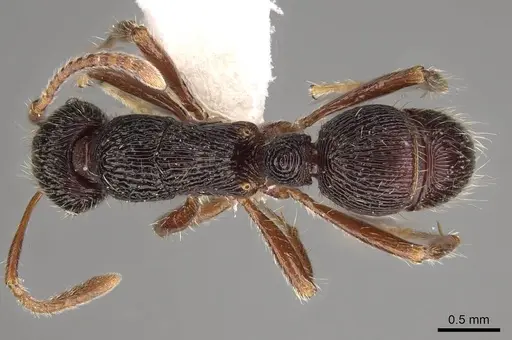
Literature
Loading distribution map...Loading products...