
Heteroponera relicta
- Sci. Name
- Heteroponera relicta
- Tribe
- Heteroponerini
- Subfamily
- Ectatomminae
- Author
- Wheeler, 1915
- Distribution
- Found in 1 countries
Introduction
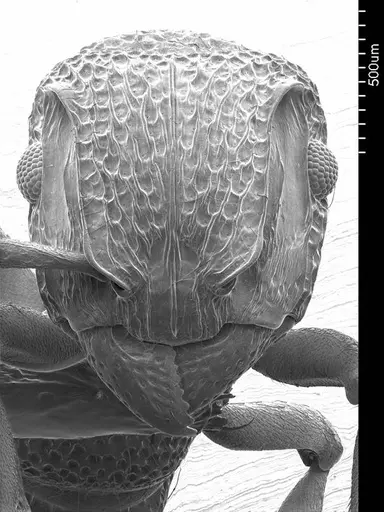
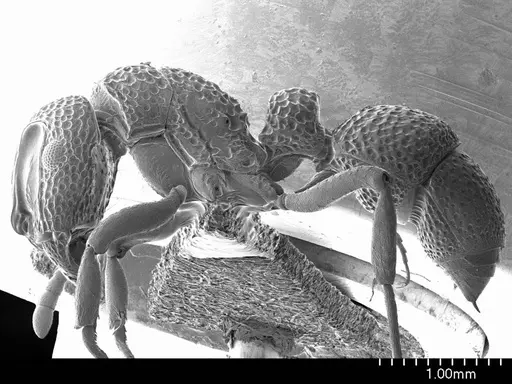
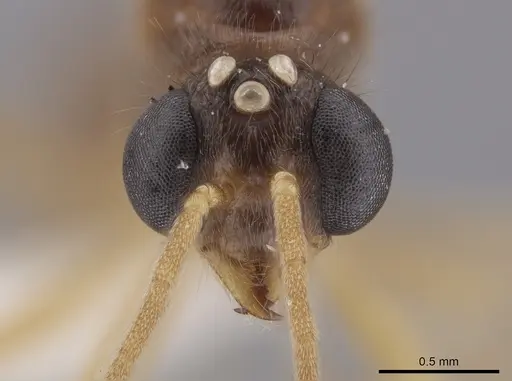
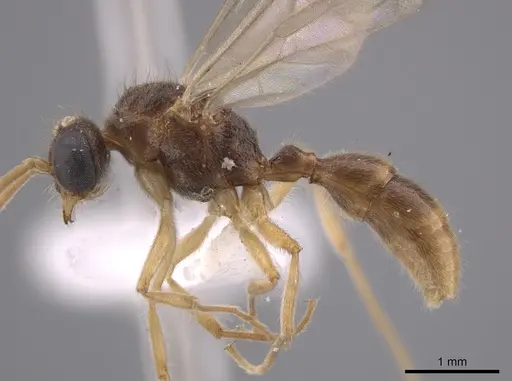
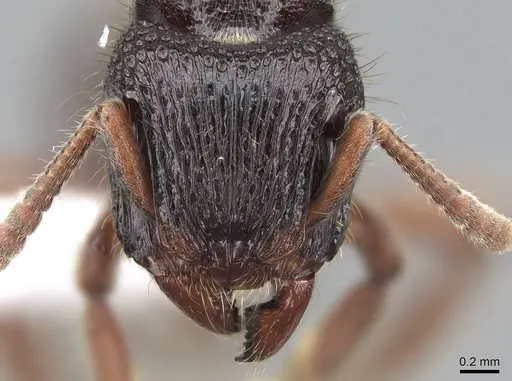
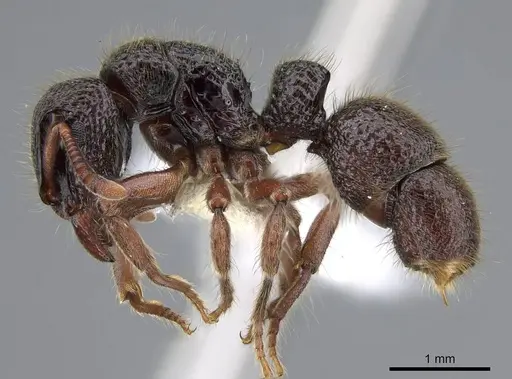
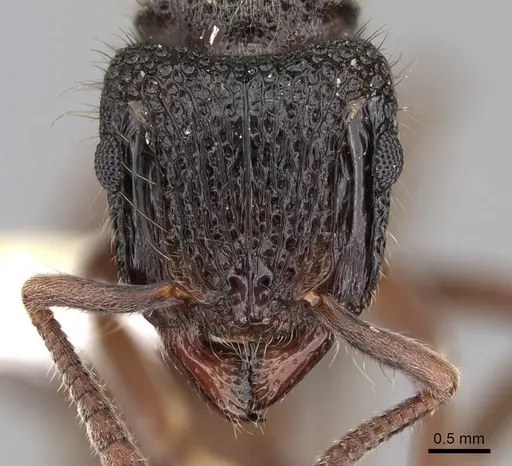
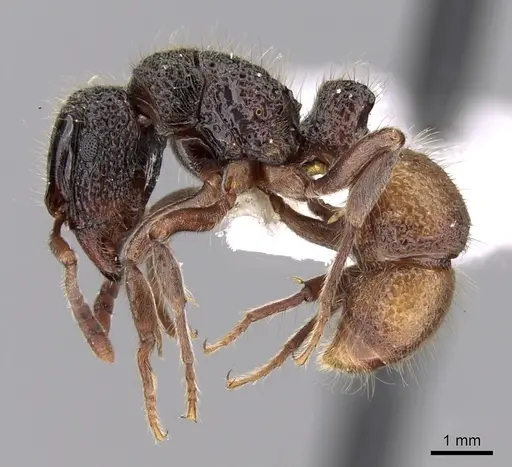
Heteroponera relicta is a medium-sized poneromorph ant endemic to the rainforests of northeastern Queensland, Australia. Workers measure 5.1-6.0mm total length with a robust, dark body (frequently nearly black) and distinctive features including well-developed humeral angles, deep antennal scrobes, and a smooth propodeal declivity . This species belongs to the relicta species group and is closely related to H. rhodopygea, with workers averaging slightly larger than its sister species . Colonies are found in rotting wood fragments, logs on the forest floor, or in soil under stones . What makes H. relicta particularly interesting is its reproductive biology - the species has ergatoid queens (wingless, worker-like reproductives) as the only known reproductive form, rather than the typical winged queens found in most ants . Workers have been observed carrying phoretic mites clustered in their antennal scrobes, which is an unusual behavior . As a cold climate specialist with Bassian biogeographic affinity, this species prefers the cooler, humid conditions of high-elevation rainforest .
Quick Summary
- Difficulty: Medium
- Origin & Habitat: Northeastern Queensland, Australia, restricted to rainforest habitats in the Wet Tropics World Heritage Area, from near Cooktown south to near Townsville, within about 35km of the coast. Found at elevations from 60m to 1000-1200m [1][4].
- Colony Type: Ergatoid queen system, the only reproductive forms are ergatoid (wingless) queens that develop from the worker caste rather than winged queens. Colony structure is not fully resolved but appears to have single-queen colonies [2][1][5].
- Size & Growth:
- Queen: 5.7-6.6mm total length (ergatoid gyne) [1]
- Worker: 5.1-6.0mm total length [1]
- Colony: Maximum colony size is unconfirmed
- Growth: Growth rate data unavailable for this species
- Development: Development timeline is unconfirmed for this species (No direct development data available. Poneromorph ants generally have slower development than many common ant species.)
- Antkeeping:
- Temperature: Keep at 20-24°C. As a cold climate specialist from high-elevation rainforest, avoid overheating. Room temperature (around 22°C) is ideal [3].
- Humidity: High humidity required, these are rainforest ants. Keep nest substrate consistently moist but not waterlogged. Provide a water source and maintain 70-80% humidity in the outworld.
- Diapause: A cool period may be beneficial based on the species' Bassian biogeographic affinity and high-elevation habitat, though specific requirements are unconfirmed.
- Nesting: Provide a naturalistic setup with rotting wood pieces, leaf litter, or a moist plaster nest. They naturally nest in decaying wood on the forest floor [1]. Y-tong nests with moisture reservoirs also work well.
- Behavior: These ants are relatively docile and not aggressive. Workers are moderate foragers that search for prey and honeydew. They are not known to be particularly defensive and rarely sting. Escape risk is moderate, workers are around 5-6mm so standard escape prevention measures (fluon on edges, tight-fitting lids) are sufficient. The ergatoid queen system means colonies may have multiple potential replacement reproductives if the primary queen dies.
- Common Issues: high humidity requirements mean mold can develop if ventilation is poor, cold climate specialist, overheating from heating cables can kill colonies, slow development compared to common ant species may cause keepers to lose patience, ergatoid queen system is unusual, finding a mated queen for sale may be difficult, wild-caught colonies may introduce phoretic mites or other parasites
Housing and Nest Setup
Heteroponera relicta does well in naturalistic setups that mimic its rainforest floor habitat. Provide a moist substrate (a mix of soil and rotting wood fragments works well) in a shallow container or formicarium. You can also use Y-tong nests with a water reservoir, as these provide the humidity control this species needs. The key is maintaining consistently moist (but not waterlogged) conditions. Add pieces of decaying wood or bark to the outworld, these ants naturally nest in and under rotting wood [1]. A shallow water dish should be always available. Lighting is not critical, but these ants do well with a regular day/night cycle.
Feeding and Diet
Like most poneromorph ants, H. relicta is a predator that hunts small invertebrates. Offer small live prey such as fruit flies, pinhead crickets, small mealworms, and other tiny arthropods. They likely also collect honeydew from aphids and scale insects in nature, so you can offer sugar water or honey occasionally. Feed protein-rich prey 2-3 times per week, and provide a constant sugar source. Remove uneaten prey after 24-48 hours to prevent mold. Because they are relatively slow-growing, do not overfeed, excess food decomposes and creates mold problems. [2]
Temperature and Seasonal Care
These ants require cooler temperatures than many common ant species. Keep the nest at 20-24°C, with room temperature being ideal. As a cold climate specialist from high-elevation Queensland rainforests, they do not tolerate heat well, avoid placing the colony near direct sunlight or heat sources [3]. A cool period during winter months may be beneficial to simulate their natural seasonal cycle. Monitor humidity closely in winter as condensation can be an issue.
Understanding Ergatoid Queens
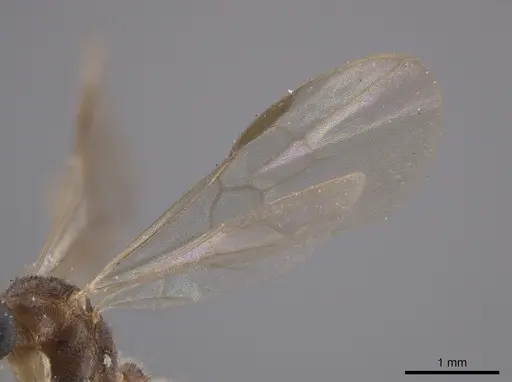
One of the most unusual aspects of H. relicta is its reproductive system. Unlike most ants that have winged queens that fly away to start new colonies, this species has ergatoid queens, reproductives that develop from the worker caste and are wingless throughout their lives [2]. They look more like workers but are larger and have more ovarioles (egg-producing tubes). Queens have 8 ovarioles while workers have only 2 [5]. This means colonies likely reproduce through colony fission (splitting), where a group of workers and the queen establish a new nest elsewhere, rather than through nuptial flights. This is why finding wild-caught mated queens for sale is very difficult.
Behavior and Colony Dynamics
Heteroponera relicta workers are relatively calm and not particularly aggressive. They forage individually rather than in large raiding parties. Workers have been observed carrying phoretic mites clustered in their antennal scrobes, this is a mutualistic relationship where mites get transportation and the ants may get cleaning services or protection [1]. The colony structure appears to have single-queen colonies, but because ergatoid queens can develop from workers, there may be backup reproductives ready if the primary queen dies or becomes inadequate. This makes the colony more resilient to queen loss than species with only winged queens.
Frequently Asked Questions
How long does it take for Heteroponera relicta to produce first workers?
The exact development timeline is unconfirmed for this species. No specific data is available on egg-to-worker development time.
Can I keep multiple Heteroponera relicta queens together?
This species appears to have single-queen colonies in natural conditions. The ergatoid queen system means replacement reproductives develop from workers within the colony, but unrelated queens are not typically found together. Combining unrelated ergatoid queens has not been documented and is not recommended.
Do Heteroponera relicta ants sting?
Yes, as a poneromorph ant, they have a functional stinger. However, they are not particularly aggressive and rarely sting.
What temperature range is best for Heteroponera relicta?
Keep them at 20-24°C. As a cold climate specialist from high-elevation rainforest, they do not tolerate heat well. Room temperature (around 22°C) is ideal. Avoid any heating above 26°C.
Are Heteroponera relicta good for beginners?
This species is rated as medium difficulty. While not overly aggressive, they have specific requirements (high humidity, cooler temperatures, slow development) that make them better suited for keepers who already have some experience with ant keeping. Finding a colony to purchase may also be difficult due to their ergatoid queen system.
Do Heteroponera relicta need hibernation?
A cool period during winter months may be beneficial based on the species' Bassian biogeographic affinity and high-elevation habitat, though specific duration and temperature requirements are unconfirmed.
What do Heteroponera relicta eat?
They are predators that hunt small invertebrates. Feed small live prey like fruit flies, pinhead crickets, small mealworms, and other tiny arthropods. They likely also accept sugar sources like honey water. Feed protein 2-3 times per week with constant sugar access.
How big do Heteroponera relicta colonies get?
The maximum colony size is unconfirmed. No specific data on maximum colony size is available in the research literature.
Why are the queens wingless?
Heteroponera relicta has ergatoid queens, a reproductive caste that develops from workers and remains wingless throughout life. This is a derived trait in some ant lineages. Instead of flying to start new colonies, the colony reproduces by fission (splitting), with a group of workers and the queen establishing a new nest.
Report an Issue
The current care sheet is based fully on literature. See inconsistencies, or something that's incorrect? Please , it will be resolved after review from an admin. Contributing to the blogs tab also helps providing information, to make us be able to further improve the caresheets. Thank you for your support!
References

This caresheet is licensed under CC BY-SA 4.0 .
Community Blogs
ANTWEB1008534
View on AntWeb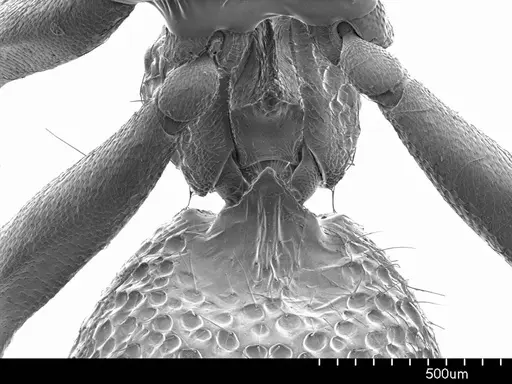
CASENT0660058
View on AntWeb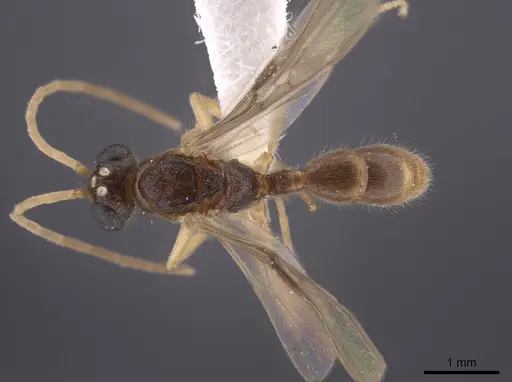
CASENT0922018
View on AntWeb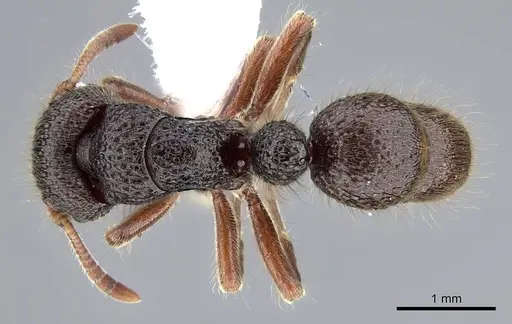
JTLC000008725
View on AntWeb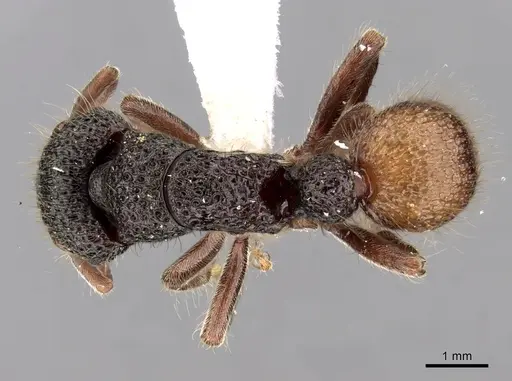
Literature
Loading distribution map...Loading products...