
Harpegnathos macgregori
- Sci. Name
- Harpegnathos macgregori
- Tribe
- Ponerini
- Subfamily
- Ponerinae
- Author
- Wheeler & Chapman, 1925
- Distribution
- Found in 0 countries
Introduction
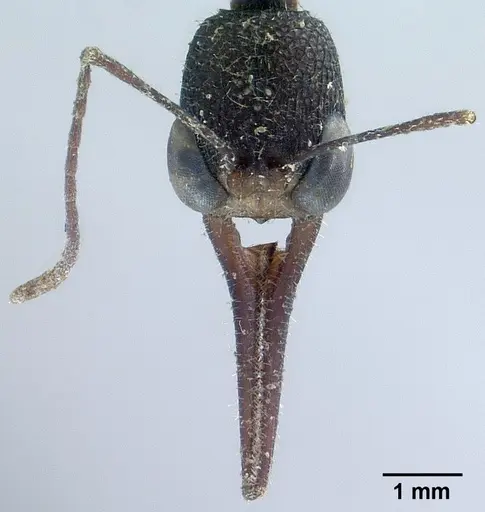
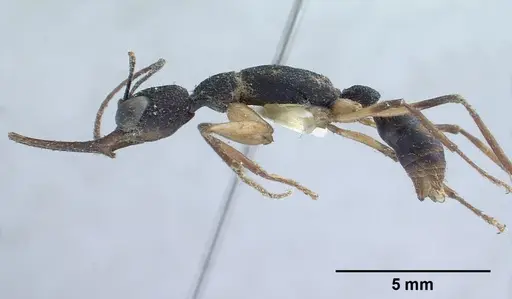
Harpegnathos macgregori is a predatory ant native to the Philippines, specifically recorded from Biliran Island . Workers have large mandibles and long antennae that extend past the head . Size data is unavailable from current research. This species has an ergatoid queen system, where wingless reproductive females lead colonies, often with gamergates .
Quick Summary
- Difficulty: Expert
- Origin & Habitat: Native to the Philippines, specifically Biliran Island in the Visayas region. Inhabits tropical forest environments [1][2].
- Colony Type: Colonies are led by ergatoid (wingless) queens, and may have multiple reproductive females. This system often involves gamergates [2].
- Size & Growth:
- Queen: Size data unavailable
- Worker: Size data unavailable
- Colony: Unknown, no specific data on colony size
- Growth: Moderate, inferred from semi-claustral founding patterns, but founding type is unconfirmed
- Development: Estimated 6-10 weeks at tropical temperatures, based on genus-level patterns for Ponerinae [2] (Semi-claustral founding may extend development timeline)
- Antkeeping:
- Temperature: Keep nest area at 25-30°C with a gradient, as these are tropical ants [2].
- Humidity: Maintain high humidity with moist substrate, but not waterlogged [2].
- Diapause: No, tropical species do not require hibernation.
- Nesting: Use Y-tong (AAC) nests or naturalistic setups with moist soil. Provide dark nesting areas [2].
- Behavior: Workers are active predators with excellent vision and a potent sting. They are not aggressive toward humans but can sting if threatened. Escape prevention is critical due to small size [2].
- Common Issues: escape prevention is critical due to small size and activity., founding is challenging as queens must hunt for food., require live prey to thrive., high humidity can lead to mold if ventilation is poor.
Housing and Nest Setup
Harpegnathos macgregori does well in Y-tong (AAC) nests or naturalistic setups with moist soil [2]. Because founding behavior is unconfirmed, you cannot assume sealing in a closed chamber. For established colonies, provide a dark nesting area with chambers scaled to their size. They need an outworld for foraging where you can offer prey items. Use test tubes for water reservoirs but ensure they cannot flood the nest. Escape prevention is essential, use tight-fitting lids, fine mesh on ventilation, and apply fluon or other barriers to the rim of the outworld [2].
Feeding and Diet
As predatory Ponerinae ants, Harpegnathos macgregori requires live prey to thrive [2]. Offer small live insects such as fruit flies, small crickets, mealworms, and other appropriately-sized prey twice weekly. They may occasionally accept sugar water, but protein-rich prey should be the primary food source. Always remove uneaten prey after 24-48 hours to prevent mold.
Temperature and Heating
These are tropical ants from the Philippines and require warm conditions year-round [2]. Keep the nest area at 25-30°C with a slight gradient allowing workers to thermoregulate. A heating cable placed on one side of the nest works well, place it on top to avoid evaporating moisture too quickly. Room temperature alone is likely too cool and will result in sluggish colonies.
Colony Social Structure
Harpegnathos macgregori has an ergatoid queen system, where wingless reproductive females lead colonies [2]. Many colonies are led by gamergates, which are workers that have become reproductive. Multiple reproductive females may coexist in a single colony. When keeping established colonies, you may notice several large workers that appear more robust, these are likely the reproductive individuals.
Handling and Safety
Harpegnathos macgregori is not aggressive toward humans, but they can deliver a painful sting if threatened or handled roughly [2]. Their sting is potent and designed for subduing prey. These ants have excellent vision and are quick to respond to threats, so move slowly when working with them. Never grab at workers with your fingers. If stung, wash the area with soap and water and apply a cold compress.
Frequently Asked Questions
Is Harpegnathos macgregori good for beginners?
No, this species is not recommended for beginners. They are challenging to care for due to unconfirmed founding behavior, requirement for live prey, and specific humidity and temperature conditions [2].
How long does it take for Harpegnathos macgregori to produce first workers?
Based on genus-level patterns for Ponerinae ants, expect approximately 6-10 weeks from egg to first worker at optimal temperatures [2].
Do Harpegnathos macgregori queens have wings?
No, they have ergatoid (wingless) queens [2].
Can I keep multiple Harpegnathos macgregori queens together?
Yes, multiple reproductive females can coexist in established colonies [2]. However, introduce unrelated queens slowly and monitor for aggression.
What do Harpegnathos macgregori eat?
They require live prey such as small insects [2]. Offer fruit flies, small crickets, mealworms, and other small arthropods.
Do Harpegnathos macgregori ants sting?
Yes, they can sting and their sting is potent [2].
What temperature do Harpegnathos macgregori need?
Keep them at 25-30°C in the nest area [2].
Do Harpegnathos macgregori need hibernation?
No, they do not require hibernation as tropical ants [2].
When should I move Harpegnathos macgregori to a formicarium?
Wait until the colony is well-established before moving to a formicarium [2]. Disturbing them too early can cause issues.
Why is my Harpegnathos macgregori colony dying?
Common causes include temperatures too low, insufficient live prey, poor humidity, or parasites from wild-caught colonies [2]. Check heating, offer varied live prey, and ensure high humidity.
Report an Issue
The current care sheet is based fully on literature. See inconsistencies, or something that's incorrect? Please , it will be resolved after review from an admin. Contributing to the blogs tab also helps providing information, to make us be able to further improve the caresheets. Thank you for your support!
References

This caresheet is licensed under CC BY-SA 4.0 .
Community Blogs
CASENT0179013
View on AntWeb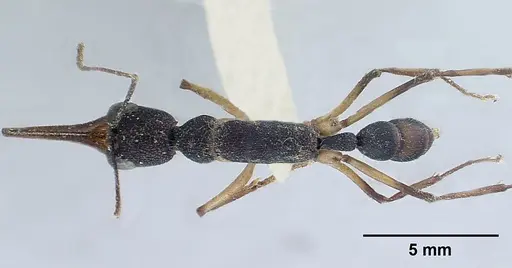
Literature
Loading distribution map...Loading products...