
Harpegnathos honestoi
- Sci. Name
- Harpegnathos honestoi
- Tribe
- Ponerini
- Subfamily
- Ponerinae
- Author
- General, 2016
- Distribution
- Found in 1 countries
Introduction
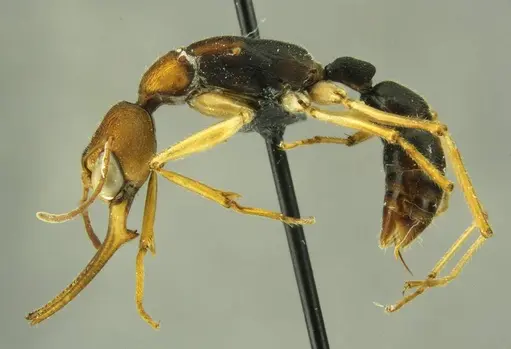
Harpegnathos honestoi is a large ant species from the Philippines, with workers measuring approximately 20mm in total length . The head, mandibles, antennae, and pronotum are orange, while the rest of the body is brownish black with yellow legs . This species is remarkable because it is the first known sub-arboreal (vegetation-dwelling) Harpegnathos - all other species in this genus are ground-nesting. The single known specimen was collected from a spider's web about 1 meter above ground in low vegetation on Mt. Isarog . Only one worker has ever been documented, making this one of the rarest ants in the world.
Quick Summary
- Difficulty: Expert
- Origin & Habitat: Philippines, Luzon Island, Camarines Sur, Naga City, Panicuason Village, Mt. Isarog at 500-550m elevation. This is a sub-arboreal species found in low vegetation, unlike other Harpegnathos which are ground-nesting [1].
- Colony Type: Unknown, only a single worker has ever been collected. Queen and male are unknown [1].
- Size & Growth:
- Antkeeping:
- Temperature: Based on its tropical Philippine origin, likely prefers warm conditions around 24-28°C. Provide a temperature gradient.
- Humidity: As a sub-arboreal species from tropical Philippines, likely requires moderate to high humidity. Keep the nest moderately humid but well-ventilated.
- Diapause: Unlikely, being a tropical species from the Philippines, diapause is probably not required.
- Nesting: This species is sub-arboreal. In captivity, provide a naturalistic setup with climbing structures, cork bark, or plants. A Y-tong nest with vertical orientation and climbing opportunities would suit this species.
- Behavior: Harpegnathos ants are known for their powerful trap-jaw mandibles and predatory behavior. They hunt insects and are active foragers. Workers are large so escape prevention is straightforward compared to tiny ants. However, their powerful mandibles mean they can grip surfaces and climb smooth vertical surfaces. A functional sting is present [1].
- Common Issues: this species is extremely rare in captivity, virtually no captive colonies exist., no established care protocols exist since only one wild specimen has ever been documented., the sub-arboreal nature means standard ground-nesting setups may be inappropriate., as a tropical species, temperature control is critical, avoid cold conditions., prey availability is critical, harpegnathos are obligate predators requiring live insect prey.
Rarity and Collection History
Harpegnathos honestoi is one of the rarest ant species in the world, known from only a single specimen collected in 2002 on Mt. Isarog in the Philippines. The holotype worker was found trapped in a theridiid spider's web about 1 meter above ground in low vegetation [1]. This is remarkable because all other known Harpegnathos species are ground-nesting. The ant was collected while the spider was attempting to wrap it in silk, the researcher collected both the spider and the ant [1]. The queen and male remain unknown, and no other specimens have been found despite subsequent surveys.
Identification and Appearance
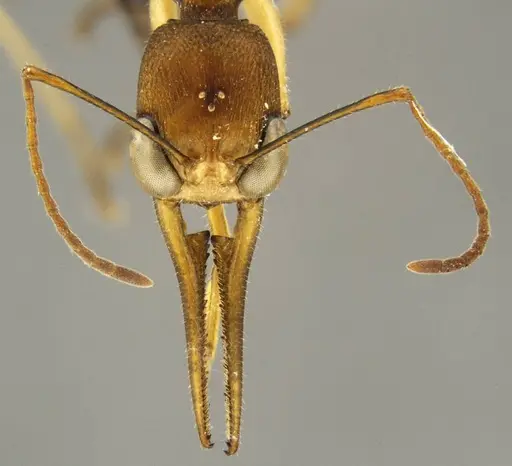
This is a large ant species, with the worker measuring 20.44mm total length [1]. The most distinctive feature is its coloration: the head, mandibles, antennae, and pronotum are orange, while the rest of the body is brownish black, and the legs are yellow [1]. The eyes are extremely large and ovate, occupying the anterior lateral margin of the head, this suggests excellent vision, possibly for hunting in low-light understory conditions. The mandibles are long and powerful, typical of the trap-jaw Harpegnathos genus. The petiole (waist) is longer than tall, and a functional sting is present [1].
Sub-Arboreal Lifestyle
This species is groundbreaking because it represents the first known sub-arboreal Harpegnathos species. All other members of this genus are strictly ground-nesting, typically on forest floors. The fact that H. honestoi was collected from a spider web at 1m height suggests it forages or nests in low vegetation, possibly in tree hollows, under bark, or in leaf litter suspended above ground [1]. This has significant implications for captive care, unlike most Harpegnathos which thrive in horizontal naturalistic setups, this species may need vertical space with climbing structures. Provide cork bark, live plants, or other vertical structures in the outworld.
Genus-Level Care Guidelines
Since species-specific care data does not exist, we must extrapolate from what is known about Harpegnathos as a genus. These ants are predatory, using their powerful trap-jaw mandibles to capture prey. They require live insect prey. They are not sugar-dependent but may accept occasional honey or sugar water. Provide a warm, humid environment with minimal disturbance during the founding stage.
Challenges and Ethical Considerations
This species presents extreme challenges for antkeepers. First, virtually no captive colonies exist, this is not a species you can simply purchase. Second, even if specimens become available, no established care protocols exist. Third, the sub-arboreal nature means much of what we know about Harpegnathos care may not apply. For these reasons, Harpegnathos honestoi is truly an expert-only species that should only be attempted by those with extensive experience and the ability to document their findings carefully. If you somehow obtain a colony, your observations would contribute significantly to scientific knowledge.
Frequently Asked Questions
Can I keep Harpegnathos honestoi in captivity?
This is extremely unlikely. Only a single worker has ever been documented, and no captive colonies exist. This species is not available in the antkeeping hobby and may be extremely rare in the wild.
What do Harpegnathos honestoi ants eat?
Based on genus-level knowledge, Harpegnathos ants are predatory and require live insect prey. They are unlikely to accept sugar water as a primary food source. However, no specific feeding data exists for this species.
How big do Harpegnathos honestoi colonies get?
Unknown, no colony data exists for this species. Only a single worker has ever been collected.
What temperature do Harpegnathos honestoi need?
Based on its tropical Philippine origin, likely requires warm conditions around 24-28°C. However, no species-specific temperature data exists.
Is Harpegnathos honestoi a good species for beginners?
No. This is an expert-only species due to its extreme rarity, complete lack of captive care data, and unique sub-arboreal lifestyle. Even experienced antkeepers would struggle with this species.
Where does Harpegnathos honestoi live?
Only known from Mt. Isarog on Luzon Island, Philippines, at 500-550m elevation. It is the first known sub-arboreal species in its genus, unlike other Harpegnathos which are ground-nesting.
How long do Harpegnathos honestoi workers live?
Unknown, no longevity data exists for this species.
Do Harpegnathos honestoi need hibernation?
Unlikely, being from tropical Philippines, they probably do not require a diapause period. However, a slight temperature reduction during cooler months may be beneficial.
What is the best nest type for Harpegnathos honestoi?
Unknown, no captive specimens exist. However, given that this is a sub-arboreal species, a vertical naturalistic setup with climbing structures would likely be more appropriate than a standard horizontal nest.
Report an Issue
The current care sheet is based fully on literature. See inconsistencies, or something that's incorrect? Please , it will be resolved after review from an admin. Contributing to the blogs tab also helps providing information, to make us be able to further improve the caresheets. Thank you for your support!
References

This caresheet is licensed under CC BY-SA 4.0 .
Community Blogs
ANTWEB1008902
View on AntWeb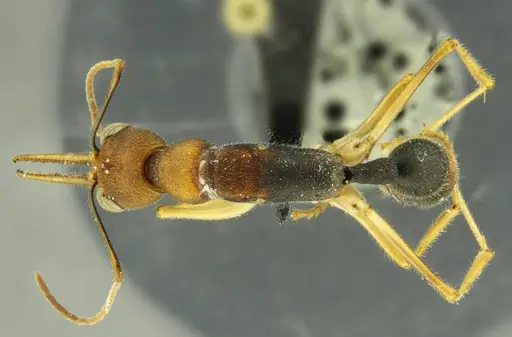
Literature
Loading distribution map...Loading products...