
Gnamptogenys kempfi
- Sci. Name
- Gnamptogenys kempfi
- Tribe
- Ectatommini
- Subfamily
- Ectatomminae
- Author
- Lenko, 1964
- Distribution
- Found in 3 countries
Introduction
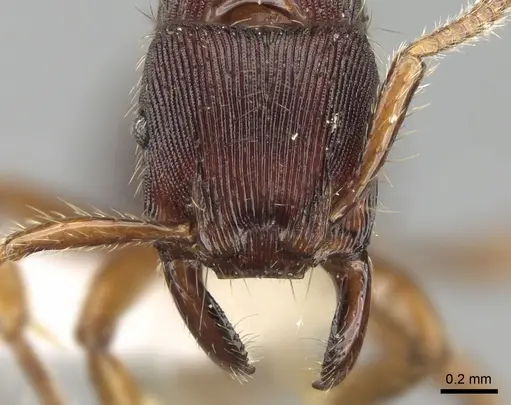
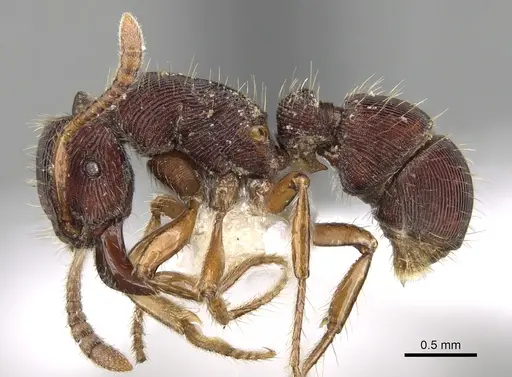
Gnamptogenys kempfi is a predatory ant belonging to the subfamily Ectatomminae. Workers are dark brown to brown with semi-triangular, smooth, shiny mandibles, transverse ridges (costae) on the mesosoma and petiole, a large propodeal spiracle, and a metacoxal tooth . Body size is unconfirmed but inferred from related species at roughly 6-8 mm. The species is part of the annulata complex within the regularis subgroup of the mordax species group . This ant is known from the upper Amazon river basin, with records in Brazil (Mato Grosso), Colombia (Amazonas, Caquetá), Ecuador, and Peru (Madre de Dios) . It inhabits terra firme (non‑flooded) rainforest at low elevations around 325 m . Almost nothing is documented about its biology - colony size, founding behavior, diet, and nesting habits remain unstudied . Like other Ectatomminae, it has a functional sting, but the sting is not medically significant to humans.
Quick Summary
- Difficulty: Hard
- Origin & Habitat: Amazon basin: Brazil (Mato Grosso), Colombia (Amazonas, Caquetá), Ecuador, Peru (Madre de Dios). Inhabits terra firme (non‑flooded) tropical forest at approximately 325 m elevation [7][8][4].
- Colony Type: Unknown, colony structure (single queen or multiple queens) has not been documented in the scientific literature.
- Size & Growth:
- Queen: Size data unavailable, inferred from Gnamptogenys genus patterns (~8-10 mm)
- Worker: Size data unavailable, inferred from Gnamptogenys genus patterns (~6-8 mm) [1]
- Colony: Unknown
- Growth: Unknown
- Development: Unknown, no published data exists for this species (Development time cannot be estimated with confidence. Based on related Ectatomminae at 24-28°C, a rough guess would be 6-10 weeks, but this is speculative.)
- Antkeeping:
- Temperature: No specific data. As an Amazon rainforest species, likely requires warm, stable temperatures. Aim for 24-28°C with a gentle gradient from a heating cable. Avoid sudden drops below 20°C.
- Humidity: No specific data. Rainforest floor ants need high moisture. Keep nest substrate consistently damp but not waterlogged, with some drier spots. Maintain relative humidity around 70-85%.
- Diapause: No data. As a tropical species, true diapause is unlikely. Maintain year‑round warm conditions, any seasonal slowdown should be mild and not require cooling.
- Nesting: No published data on natural nesting. Likely nests in soil, under logs, or in leaf litter. For captivity, use a dark, humid nest with fine substrate, Y‑tong (AAC), plaster, or soil nests with small chambers work well. Avoid dry, open nests.
- Behavior: Very little known. As a predatory poneromorph, it hunts small invertebrates in leaf litter. Based on general Ectatomminae traits, workers likely use chemical recruitment for prey and are solitary foragers that can recruit nestmates. Temperament is probably calm but they will sting if the nest is disturbed, the sting is not medically significant. Escape risk is moderate (worker size ~6-8 mm), use standard barriers.
- Common Issues: almost no biological data exists, captive care is entirely experimental, humidity is critical: too dry kills the colony, too wet invites mold, predatory diet requires live prey, they cannot survive on sugars alone, wild‑caught colonies may carry mites or parasites that are hard to treat, slow or uncertain growth may frustrate keepers expecting reliable development
Natural History and Distribution
Gnamptogenys kempfi is known only from scattered records across the upper Amazon basin: Brazil (Mato Grosso, type locality near Rio Papagaio at 325 m), Colombia (Amazonas and Caquetá departments), Ecuador, and Peru (Madre de Dios) [4][5][6][7]. It has been collected in terra firme (non‑flooded) rainforest [8]. The species is considered poorly collected, probably because it forages in the leaf litter and is easily missed by standard sampling methods [2][9]. Morphologically, it belongs to the annulata complex (regularis subgroup of the mordax species group) [3]. Almost nothing is known about its ecology, nest sites, or social organization.
Identification and Morphology
You can identify Gnamptogenys kempfi workers by these features: semi‑triangular mandibles that are smooth and shiny on the upper side, transverse costae (ridges) running across the mesosoma and petiole, a large propodeal spiracle, and a metacoxal tooth on the hind coxa [2][9][1]. The body is brown to dark brown, the head is subquadrate (nearly square in dorsal view) with a cephalic index above 0.78 [1]. The propodeum and metacoxal dorsum lack teeth (edentate) [1]. The type series includes a holotype worker,1 paratype queen, and 33 paratype workers collected in July 1961 by K. Lenko, they are deposited in Brazilian museums [7].
Nest Preferences and Housing
No natural nest sites have been reported for G. kempfi. Most Gnamptogenys species nest in soil, under stones, or in rotten wood on the forest floor. For captive housing, provide a dark, humid nest with fine substrate (soil‑sand mix) that stays moist. Y‑tong (AAC) or plaster nests with small‑to‑medium chambers work well, keep them dark and enclosed. The outworld should have a shallow water dish and enough space for hunting. Use standard escape prevention, these ants are not notorious escape artists, but ensure tight seals because they are medium‑sized (~6-8 mm).
Feeding and Diet
Gnamptogenys kempfi is a predator, but its specific prey is unstudied. Related Gnamptogenys are generalist hunters of small arthropods (springtails, fly larvae, small crickets). In captivity, offer live prey such as fruit flies, pinhead crickets, or small mealworms 2-3 times per week. Remove leftovers after 24 hours. Sugar sources (honey water) may be accepted occasionally but cannot replace protein, these ants require meat to rear brood. Always provide fresh water.
Temperature and Humidity Requirements
Because G. kempfi comes from the Amazon basin, it needs warm, stable conditions. No exact data exists, but aim for 24-28°C. Use a heating cable on one side of the nest to create a gradient so the ants can choose their preferred temperature. Humidity should be high, keep the nest substrate consistently damp but not waterlogged. A moisture reservoir in the nest helps. Avoid placing the setup near air conditioning or heating vents that cause rapid drying. Do not hibernate this species, maintain tropical conditions year‑round.
Behavior and Colony Dynamics
Direct behavioral observations are lacking. As an Ectatomminae, G. kempfi likely uses a functional sting for prey capture and defense (not medically significant). Workers probably forage solitarily or in small groups in leaf litter, recruiting nestmates to large prey via chemical trails, a common pattern in poneromorph ants. Colony size, queen number, and founding method are completely unknown. Based on related Gnamptogenys, colonies may reach a few hundred workers, but this is speculative. Workers are generally non‑aggressive toward keepers but will defend the nest if disturbed.
Frequently Asked Questions
How long does it take for Gnamptogenys kempfi to raise first workers?
There is no published data. Based on related Ectatomminae at 24-28°C, development might take 6-10 weeks, but this is a very rough guess. Expect uncertainty.
What do Gnamptogenys kempfi ants eat?
They are predators that need live prey. Offer fruit flies, pinhead crickets, or small mealworms. Sugar water is not a substitute for protein. Remove uneaten prey after 24 hours.
Are Gnamptogenys kempfi ants difficult to keep?
Yes, this species is considered hard because almost nothing is known about its biology. You must guess most care requirements. High humidity, warm temperatures, and live food are essential. Not recommended for beginners.
Do Gnamptogenys kempfi ants need hibernation?
No data. As a tropical Amazon species, true hibernation is unlikely. Keep warm year‑round. They may slow down in cooler months but should not be refrigerated.
What size colony does Gnamptogenys kempfi reach?
Unknown. Related Gnamptogenys species can have up to several hundred workers, but this is unconfirmed for G. kempfi. They are not known to form supercolonies.
Can I keep multiple Gnamptogenys kempfi queens together?
This has not been studied. Do not combine wild‑caught queens, the colony structure (monogyne vs. polygyne) is unknown. It is safest to assume single‑queen colonies.
What nest type is best for Gnamptogenys kempfi?
Use a dark, humid nest: Y‑tong (AAC), plaster, or soil with small chambers. The substrate must stay moist but not wet. Avoid dry or airy nests.
Do Gnamptogenys kempfi ants sting?
Yes, like other Ectatomminae, they have a functional sting. It is not medically significant, causing only mild, temporary discomfort. They are not aggressive and sting only if the nest is disturbed.
Where is Gnamptogenys kempfi found in the wild?
In the Amazon basin: Brazil (Mato Grosso), Colombia (Amazonas, Caquetá), Ecuador, and Peru (Madre de Dios). They live in non‑flooded (terra firme) rainforest at low elevations (~325 m) [4][5][6][7][8].
Report an Issue
The current care sheet is based fully on literature. See inconsistencies, or something that's incorrect? Please , it will be resolved after review from an admin. Contributing to the blogs tab also helps providing information, to make us be able to further improve the caresheets. Thank you for your support!
References

This caresheet is licensed under CC BY-SA 4.0 .
Community Blogs
CASENT0281841
View on AntWeb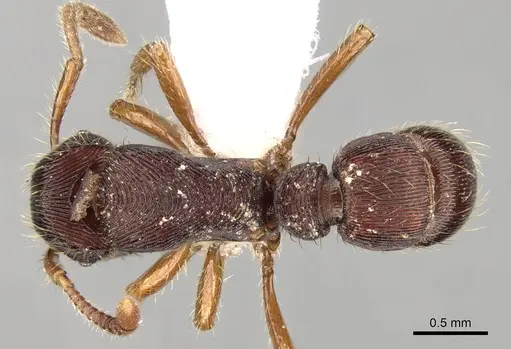
Literature
Loading distribution map...Loading products...