
Gnamptogenys curvoclypeata
- Sci. Name
- Gnamptogenys curvoclypeata
- Tribe
- Ectatommini
- Subfamily
- Ectatomminae
- Author
- Lattke, 1990
- Distribution
- Found in 2 countries
Introduction
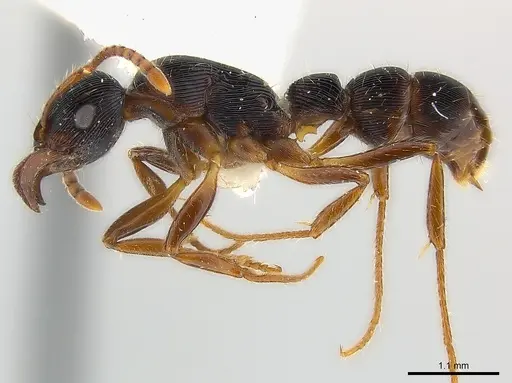
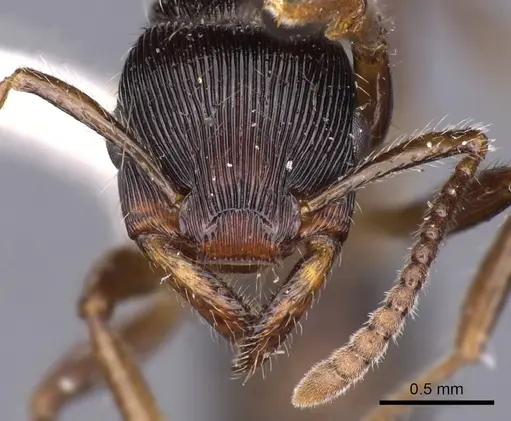
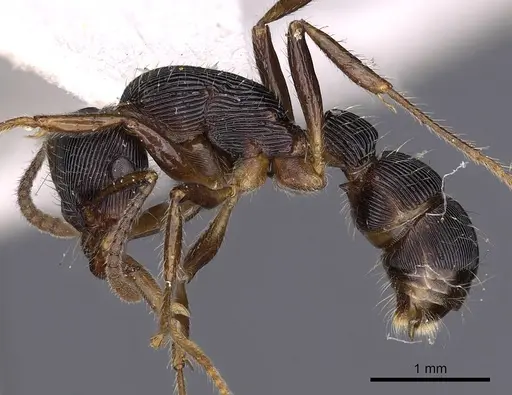
Gnamptogenys curvoclypeata is a medium-sized predatory ant native to the northern South American tropics. Workers have a distinctive dark piceous (nearly black) body with rust-colored antennae, legs, and coxae, creating a two-toned appearance. This species belongs to the sulcata complex within the Gnamptogenys genus, a group known for their cryptic, ground-dwelling habits. They inhabit lowland tropical forests where they nest in decaying wood on the ground and forage through leaf litter . The promesonotal suture is very weakly impressed, visible only at certain angles, and the meso- and metacoxae are smooth and shiny on their median and basal lateral faces . This species belongs to the Ectatomminae subfamily, which possesses a functional sting used for defense. While the sting is not considered dangerous to humans, it is present and functional. Almost nothing is known about the specific biology of this species in captivity. What we can infer comes from broader genus patterns - Gnamptogenys ants are predatory, hunting small invertebrates in the leaf litter layer.
Quick Summary
- Difficulty: Medium to Hard
- Origin & Habitat: Northern South America (Venezuela, Colombia, Brazil). Inhabits lowland tropical rainforests in the Amazonas region, typically found in leaf litter and decaying wood on the forest floor [1][2][3].
- Colony Type: Colony structure is unconfirmed. Based on genus patterns, likely single queen but this has not been directly studied.
- Size & Growth:
- Queen: Size data unavailable, no measurements exist for queens
- Worker: Size data unavailable, no total length measurements exist for this species. Based on genus patterns, workers likely measure 5-7mm
- Colony: Unknown, estimated up to several hundred workers based on genus patterns
- Growth: Unknown, likely moderate based on tropical litter ant patterns
- Development: Unconfirmed, estimated 6-10 weeks based on related Ectatomminae patterns (No direct development data exists for this species.)
- Antkeeping:
- Temperature: Keep at 24-28°C. This species comes from lowland tropical forests, so warmth and humidity are important [1][2].
- Humidity: Keep substrate consistently moist but not waterlogged. These ants live in decaying wood on the forest floor, so they prefer damp conditions with some dry refuge areas available.
- Diapause: No, being a tropical species, they do not require a diapause period.
- Nesting: Provide a moist nest setup. In the wild, they nest in decomposing wood on soil [1][2]. A Y-tong nest or plaster nest with moisture-retentive substrate works well. They prefer tight, cryptic spaces rather than open chambers.
- Behavior: This is a cryptic, slow-moving predatory ant that forages in leaf litter. Workers are not aggressive toward humans but possess a functional sting that may cause mild irritation if handled roughly. They are not known to be escape artists, but standard escape prevention should still be used. They hunt small invertebrates rather than scavenging on sugar sources.
- Common Issues: lack of biological data makes captive care uncertain, much is inferred from genus patterns, predatory diet requirements may be challenging, need constant supply of small live prey, tropical humidity needs can lead to mold issues if ventilation is poor, slow colony growth may frustrate keepers expecting rapid development, wild-caught colonies may have parasites that are difficult to treat
Natural History and Distribution
Gnamptogenys curvoclypeata is found across the northern Amazon basin, with confirmed records from Venezuela and Colombia (specifically the Amazonas department), and a possible first record from Brazil [4][3]. This species inhabits lowland tropical rainforests, particularly the leaf litter layer and understory. Only one nest has been documented in the scientific literature, it was found in decomposing wood resting on the forest floor [1][2]. Most specimens have been collected through leaf litter sampling, which involves sifting through the top layer of forest debris to capture small, cryptic ants. This suggests they are primarily ground-dwelling and rarely venture into elevated positions. The species was first described by Lattke in 1990 from specimens collected in Venezuela, and subsequent research has expanded our understanding of its range to include the Colombian Amazon [5].
Identification and Morphology
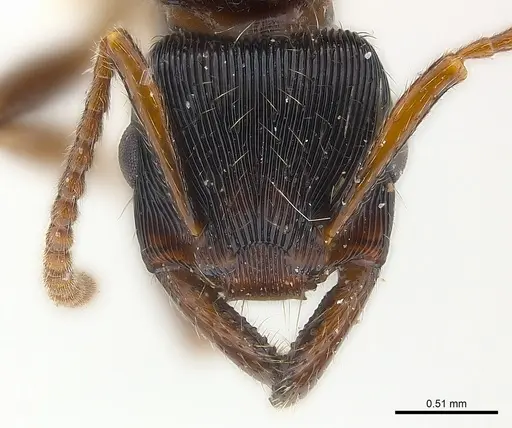
Workers of Gnamptogenys curvoclypeata are distinctive within their genus. The body is piceous (dark brown to nearly black), while the antennae, legs, and coxae are ferruginous (rusty reddish-brown), creating a striking two-toned appearance [1][2]. The promesonotal suture (the groove between the mesosoma and metasoma) is very weakly impressed and only visible under certain angles of light. The middle and hind coxae are smooth and shining on their median and basal lateral faces. The hind coxae possess weakly developed triangular dorsal lobes [1]. The clypeal lamella (a plate on the face) is medially convex but laterally concave, and the lateral edges are angular [6]. These morphological features help distinguish this species from related Gnamptogenys in the sulcata complex.
Nest Preferences and Housing
In the wild, Gnamptogenys curvoclypeata nests in decaying wood on the ground [1][2]. This indicates a preference for moist, cryptic nesting sites with some wood material. For captive care, provide a nest setup that mimics these conditions, a Y-tong nest or a plaster nest with moisture-retentive properties works well. The chambers should be relatively tight and enclosed, reflecting their cryptic nature. Keep the nest substrate consistently moist but avoid waterlogging, as this can lead to fungal growth and drown the colony. A water tube attached to the nest provides a constant humidity source. Place the nest in a dark area or provide hides, as these ants prefer dim conditions. The outworld can be simple, a shallow foraging area with leaf litter or moss for cover encourages natural foraging behavior.
Feeding and Diet
Gnamptogenys ants are predatory, hunting small invertebrates in the leaf litter. In captivity, their primary food should be small live prey such as springtails, isopods, fruit flies, and other micro-arthropods. Offer prey items twice weekly or as needed, remove any uneaten prey after 24-48 hours to prevent mold. Unlike some ants, Gnamptogenys are not typically scavengers and show little interest in sugar sources like honey or sugar water. Some keepers report success offering occasional protein jelly or freeze-dried insects, but live prey is essential for long-term colony health. The cryptic, slow-moving foraging style of this species suggests they are ambush predators rather than active hunters, ensure prey items can move through the foraging area where ants can encounter them.
Temperature and Seasonal Care
As a lowland tropical species from the Amazon basin, Gnamptogenys curvoclypeata requires warm, stable temperatures. Aim for 24-28°C in the nest area. A heating cable placed on one side of the nest creates a temperature gradient allowing workers to self-regulate. Place the heating element on top of the nest to avoid drying out the substrate. Room temperature may be sufficient if your home stays in this range, but supplemental heating is often needed. Being a tropical species, they do not require a diapause or hibernation period. Maintain humidity by keeping the nest substrate moist and occasionally misting the outworld. [1][2]
Behavior and Colony Dynamics
Based on genus patterns, Gnamptogenys curvoclypeata is likely a cryptic, slow-moving ant that forages primarily at night or during crepuscular hours. Workers probably hunt alone rather than in groups, using ambush or stealth tactics to capture small prey in the leaf litter. They possess a functional sting but are not aggressive toward humans. Colonies are likely moderate in size, potentially reaching several hundred workers over several years. The colony structure (single queen vs. multiple queens) has not been documented, but based on related species, expect a single reproductive queen. Workers likely have moderate lifespans, with the queen living several years. These ants are not known for escape attempts, but standard prevention measures should still be used, especially when the colony grows larger.
Frequently Asked Questions
How long does it take for Gnamptogenys curvoclypeata to produce first workers?
The egg-to-worker timeline is unconfirmed for this species. Based on typical development patterns for related Ectatomminae ants in tropical conditions (24-28°C), estimate 6-10 weeks from egg to first worker. This is a rough estimate, actual timing may vary.
What do Gnamptogenys curvoclypeata ants eat?
They are predatory ants that hunt small invertebrates. Feed them live springtails, isopods, fruit flies, and other micro-arthropods twice weekly. They are not interested in sugar sources. Live prey is essential for colony health.
Can I keep Gnamptogenys curvoclypeata in a test tube?
A test tube can work for a founding queen, but this species prefers more cryptic conditions. Once the colony reaches 10-15 workers, move them to a small nest setup like a Y-tong or moist plaster nest that can hold moisture.
Do Gnamptogenys curvoclypeata ants sting?
Yes, they possess a functional sting. However, the sting is not considered dangerous to humans and typically causes only mild irritation. These ants are cryptic and non-aggressive, preferring to flee rather than use their sting.
What temperature do Gnamptogenys curvoclypeata need?
Keep them warm at 24-28°C. Being from lowland tropical forests, they need consistent warmth. A heating cable on one side of the nest creates a useful gradient.
How big do Gnamptogenys curvoclypeata colonies get?
Colony size is not documented for this species. Based on genus patterns, expect moderate colonies of up to several hundred workers over 2-4 years. Growth is likely slow to moderate.
Is Gnamptogenys curvoclypeata good for beginners?
This species is not recommended for beginners due to the lack of captive care information. Most of what we know is inferred from genus patterns. If you have experience with other predatory ants like Amblyopone or Proceratium, you may have success.
Do they need hibernation or diapause?
Being a tropical species from the Amazon basin, they do not require a diapause period. Maintain stable temperatures year-round.
Where is Gnamptogenys curvoclypeata found in the wild?
They are native to northern South America, specifically Venezuela, Colombia (Amazonas department), and possibly Brazil. They inhabit lowland tropical rainforests in the Amazon basin, living in leaf litter and decaying wood on the forest floor.
Why is so little known about this species?
Gnamptogenys curvoclypeata is a cryptic, leaf-litter dwelling ant that is rarely observed. Most records come from scientific leaf litter sampling rather than direct nest observations. This makes detailed biological study challenging.
Report an Issue
The current care sheet is based fully on literature. See inconsistencies, or something that's incorrect? Please , it will be resolved after review from an admin. Contributing to the blogs tab also helps providing information, to make us be able to further improve the caresheets. Thank you for your support!
References

This caresheet is licensed under CC BY-SA 4.0 .
Community Blogs
CASENT0179996
View on AntWeb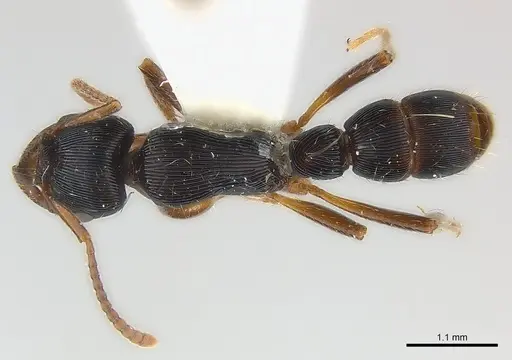
CASENT0900554
View on AntWeb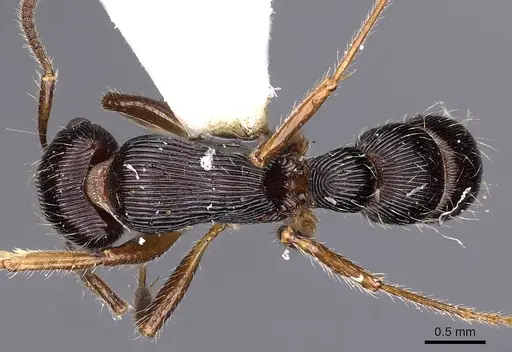
Literature
Loading distribution map...Loading products...