
Fulakora degenerata
- Sci. Name
- Fulakora degenerata
- Tribe
- Amblyoponini
- Subfamily
- Amblyoponinae
- Author
- Borgmeier, 1957
- Distribution
- Found in 3 countries
Introduction
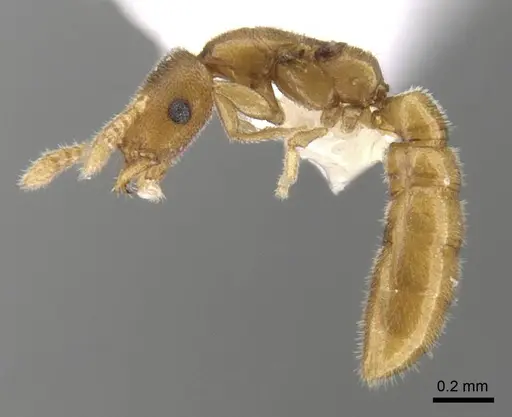
Fulakora degenerata is a small, cryptic ant species belonging to the Amblyoponinae subfamily, commonly known as dracula ants due to their unique feeding behavior. Workers are tiny with distinctive 6-7 segmented antennae . This species ranges from Guatemala through Central America down to Brazil and Peru, living in mature forest environments and forest fragments below 2000 meters elevation . Unlike many ants, they are rarely observed and known only from the worker caste - the male has never been positively identified despite speculation it may be Paraprionopelta minima . These ants are specialized predators that raid the brood of other ant colonies to feed on hemolymph, a behavior that gives dracula ants their memorable common name.
Quick Summary
- Difficulty: Expert
- Origin & Habitat: Native to the Neotropical region, ranging from Guatemala to Brazil. Found in mature forests and forest fragments below 2000m elevation, typically in clay soil at the base of large trees [2][3].
- Colony Type: Colony structure is unconfirmed. Only known from workers, no queen or male specimens have been described. This makes captive breeding extremely challenging as no one has documented a colony in the wild.
- Size & Growth:
- Queen: size data unavailable, queen caste has never been described [2]
- Worker: size data unavailable, only head width and trunk length measurements exist (head width
- Colony: Unknown, only isolated workers have been collected
- Growth: Unknown
- Development: Unknown, no breeding observations exist (Development timeline is completely unstudied.)
- Antkeeping:
- Temperature: Keep at tropical room temperature, roughly 24-28°C. No specific studies exist, but related species from similar habitats suggest warmth is essential [2].
- Humidity: High humidity required, these are forest floor ants from humid tropical environments. Keep substrate consistently moist but not waterlogged.
- Diapause: Unknown, no seasonal studies exist. Given their tropical distribution, they likely do not require a diapause period.
- Nesting: In the wild they nest in clay soil at tree bases and in leaf litter [3]. In captivity, a naturalistic setup with moist soil or a plaster nest with high humidity would be most appropriate. Their tiny size means chambers must be small and passages narrow.
- Behavior: This is one of the most poorly known ant species in the hobby. Based on related Fulakora and Amblyopone species, they are specialized predators that raid other ant colonies to feed on brood hemolymph, the 'dracula ant' feeding strategy [4]. Workers are likely nocturnal or cryptically active, rarely foraging in the open. Their tiny size makes escape prevention critical. Temperament is unknown but likely defensive if provoked. The subfamily Amblyoponinae uses a sting as their primary defense mechanism.
- Common Issues: No documented captive breeding success, queens have never been observed or described, making propagation essentially impossible., Extremely small size means escape prevention must be excellent, they can squeeze through standard barrier gaps., Wild-caught colonies may not survive transfer due to stress and unknown dietary needs., The specialized predatory diet (raiding other ant brood) is extremely difficult to replicate in captivity., No male or queen specimens exist in any collection, this species remains scientifically mysterious.
Why This Species Is So Difficult to Keep
Fulakora degenerata represents one of the most challenging ants to keep in captivity, not because of any special care requirements, but because we literally do not know how to reproduce them. The queen caste has never been scientifically described, meaning no one has ever found a colony with a laying queen [2]. All specimens known to science are isolated workers collected from soil samples and leaf litter. This suggests the species may live in very small colonies or is simply so cryptic that full colonies have never been discovered. Without a queen, captive breeding is impossible. This makes F. degenerata a species for advanced researchers rather than hobbyists, there is simply no path to establishing a sustainable captive population.
The Dracula Ant Feeding Strategy
Fulakora belongs to the Amblyoponinae subfamily, famous for their 'dracula ant' behavior. Unlike typical ants that feed on nectar, honeydew, or dead insects, these ants raid the nests of other ant species and puncture their larvae and pupae to drink the hemolymph, the insect equivalent of blood [4]. This specialized diet is extremely difficult to replicate in captivity. You'd need to maintain a constant supply of brood from other ant species, which is impractical for most keepers. This is not a species you can feed standard protein sources like mealworms or fruit flies. The specialized diet is one of several factors making this species essentially impossible to keep long-term.
Natural History and Distribution
This species ranges across the Neotropics, from Guatemala through Costa Rica, Honduras, Mexico, and down through Peru to Brazil [2][5]. In Colombia, they've been recorded in the departments of Caldas, Chocó, Risaralda, and Quindío at elevations below 2000 meters [2]. They inhabit mature forests and forest fragments, typically found in clay soil at the base of large trees or in leaf litter samples [3]. The original type specimen was collected in Santa Catarina, Brazil in 1954,and subsequent records have extended their known range significantly. Despite this relatively wide distribution, they remain one of the rarest ant species to encounter, most records are from scientific soil samples, not direct observation.
Identification and Morphology
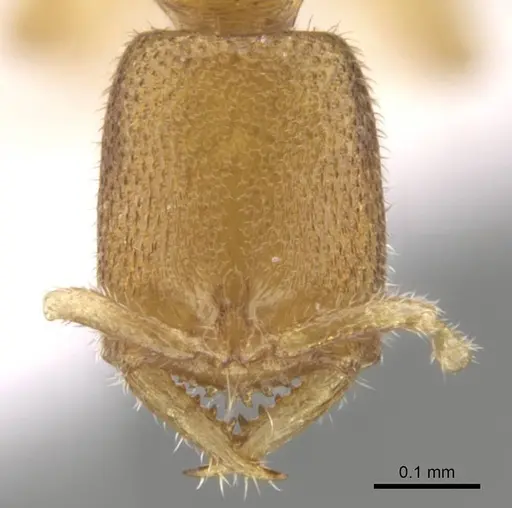
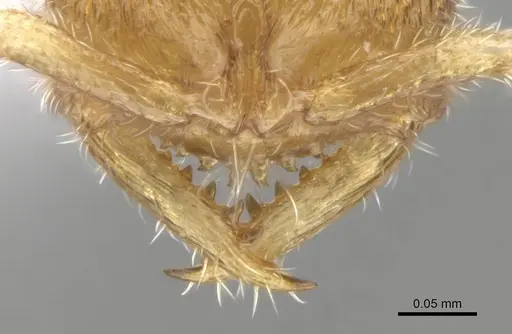
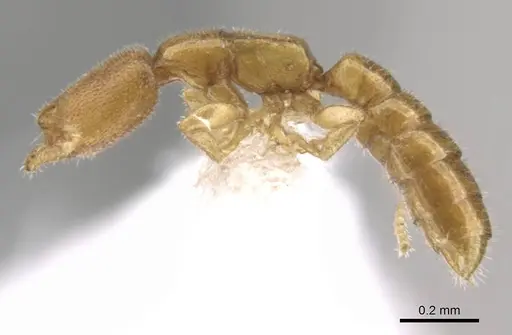
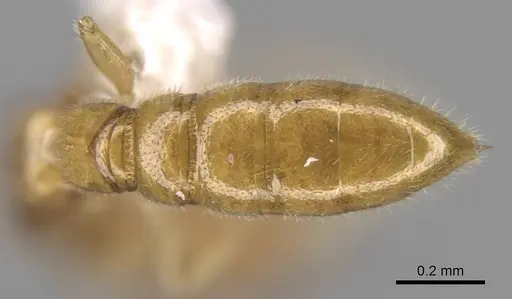
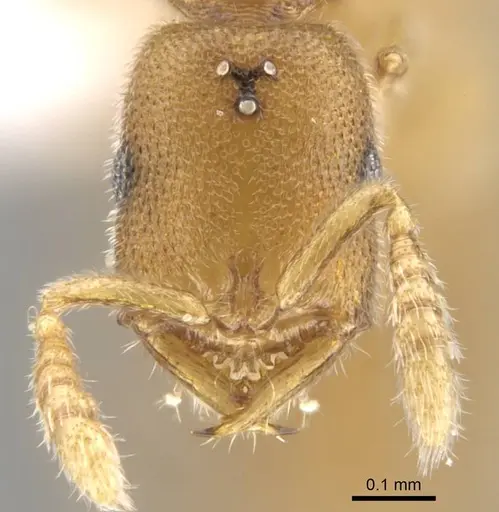
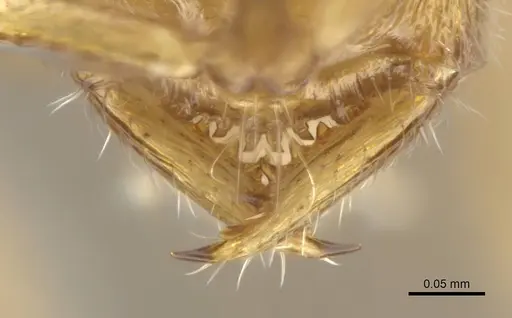
Workers of F. degenerata are among the smallest ants you might encounter. Their most distinctive feature is the reduced antennae, with only 6 or 7 segments, most ants have 12 or more [1]. This extreme reduction is shared with only a few other ant species. The small size and reduced antennae make them distinctive under magnification, though they're rarely seen due to their cryptic habits. The species was originally described by Borgmeier in 1957 as Fulakora degenerata, later moved to Stigmatomma, and finally placed in Fulakora by Ward and Fisher in 2016 [4].
Frequently Asked Questions
Can I keep Fulakora degenerata as a pet?
No. This species cannot be kept long-term in captivity. The queen has never been described or discovered, meaning no one has ever documented a colony. Without a queen, breeding is impossible, and wild colonies have never been observed. Even if you found workers, their specialized diet (raiding other ant colonies for brood hemolymph) cannot be replicated in captivity.
Why has no one ever found a Fulakora degenerata queen?
The queen has simply never been discovered. All specimens known to science are workers collected from soil and leaf litter samples. This could mean the species lives in very small colonies, queens are extremely cryptic, or they have ergatoid (worker-like) queens that are hard to distinguish. The related Fulakora minima was once thought to be the male of this species, but genetic analysis disproved that theory [2].
What do Fulakora degenerata eat?
As dracula ants, they feed on the hemolymph (insect blood) of other ant species' brood. They raid neighboring ant nests and puncture larvae or pupae to drink their fluids [4]. This specialized diet makes them impossible to keep with standard ant food. You would need to maintain live colonies of other ant species specifically for raiding, which is impractical.
Where does Fulakora degenerata live?
They range from Guatemala to Brazil, found in mature forests and forest fragments below 2000 meters elevation. Specimens have been collected from clay soil at tree bases and in leaf litter samples [2][3]. The original type locality was in Santa Catarina, Brazil.
How big are Fulakora degenerata workers?
They are tiny ants. The only measurements available are head width under 0.70mm and trunk length under 1.10mm, but full body size data is unavailable [1]. Combined with their 6-7 segmented antennae, they're quite distinctive under magnification.
Are Fulakora degenerata dangerous?
Unknown. No one has documented their defensive behavior. Related Amblyoponinae species can deliver mild stings, but given their tiny size, any sting would likely be imperceptible to humans. Their primary defense is likely avoidance and cryptic behavior.
Do they need hibernation?
No. As a tropical species ranging from Guatemala to Brazil, they do not experience cold winters. No diapause or hibernation requirement is expected, though no specific studies exist.
What temperature and humidity do they need?
No specific care data exists. Based on their tropical forest habitat, aim for 24-28°C with high humidity. Keep the substrate consistently moist. These are forest floor species from humid environments.
Report an Issue
The current care sheet is based fully on literature. See inconsistencies, or something that's incorrect? Please , it will be resolved after review from an admin. Contributing to the blogs tab also helps providing information, to make us be able to further improve the caresheets. Thank you for your support!
References

This caresheet is licensed under CC BY-SA 4.0 .
Community Blogs
CASENT0610643
View on AntWeb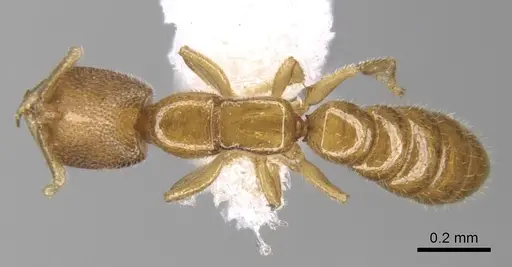
CASENT0615011
View on AntWeb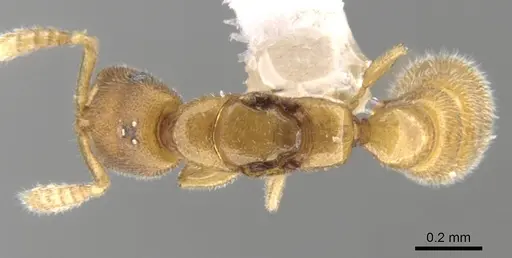
Literature
Loading distribution map...Loading products...