
Dogwood Guest Ant
Formicoxenus hirticornis
- Sci. Name
- Formicoxenus hirticornis
- Tribe
- Crematogastrini
- Subfamily
- Myrmicinae
- Author
- Emery, 1895
- Common Name
- Dogwood Guest Ant
- Distribution
- Found in 2 countries
Introduction
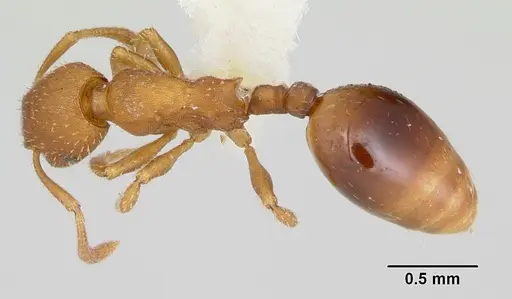
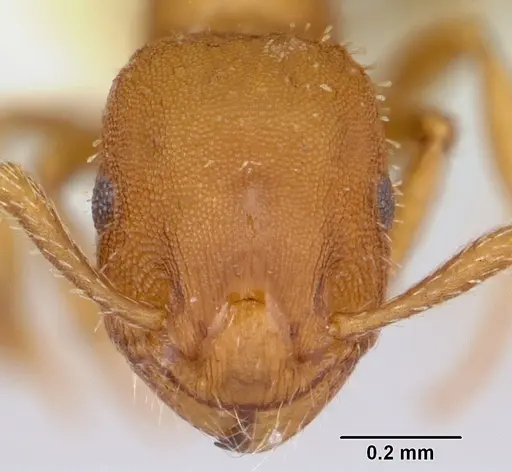
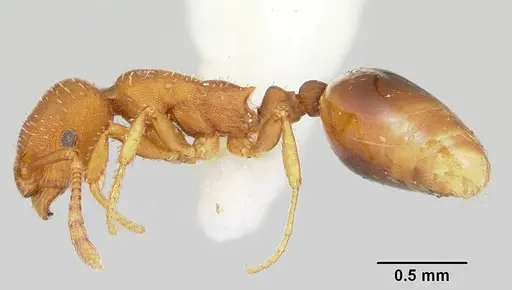
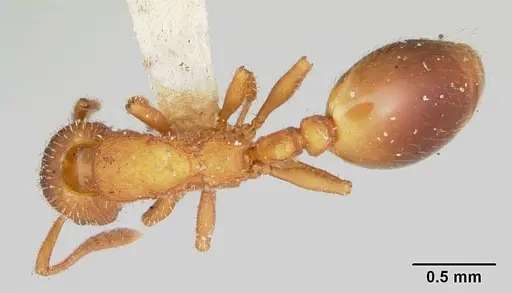
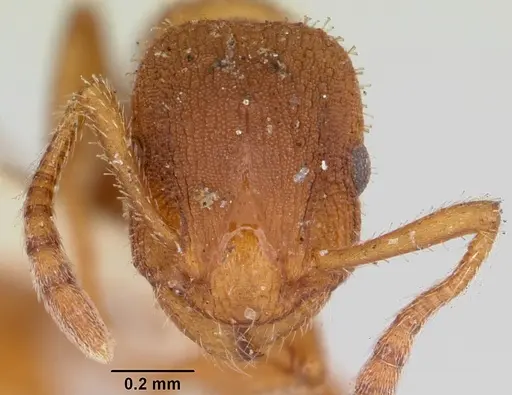
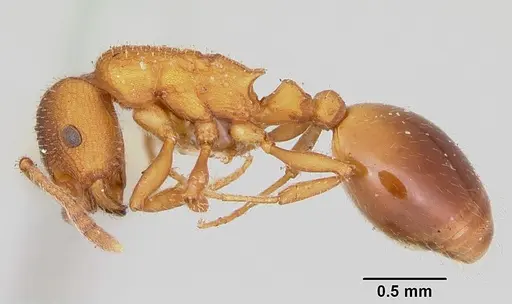
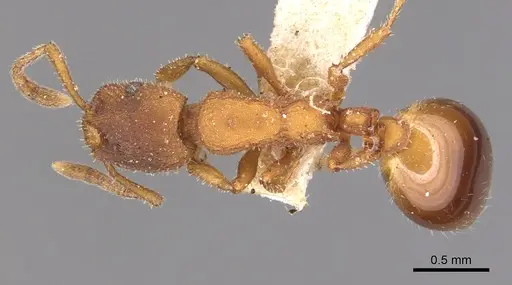
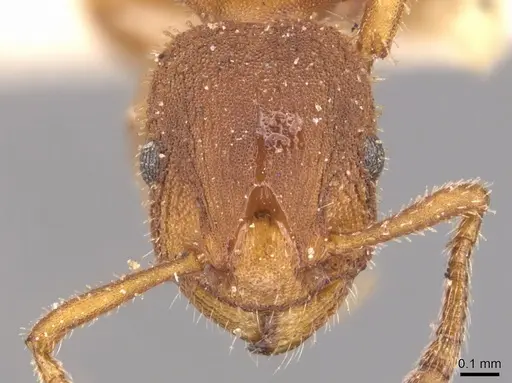
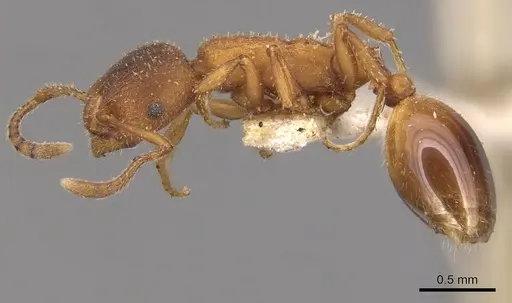
Formicoxenus hirticornis is a tiny ant measuring 2.5-3.5mm in length, with a brown to dark brown coloration . This species is distinctive for having several erect hairs on its eyes that project between the ommatidia, and a clypeus that is weakly depressed in the middle near the anterior border . The propodeal spines are well-developed and thickened, and the mesosoma has dense punctures. Found across western North America from the Dakotas south to Colorado and west to California, these ants live exclusively in the nests of Formica rufa-group ants, making them true inquiline guests . This is one of the most challenging ants to keep in captivity because they cannot establish their own colonies - they require a host Formica colony to survive. The species has ergatoid (wingless) queens and males, which is unusual among ants. In the wild, colonies are typically small, with one documented colony containing only 11 workers alongside its host colony .
Quick Summary
- Difficulty: Expert
- Origin & Habitat: Western North America, found in pine forests across the Dakotas, Colorado, Utah, and California, extending into Canadian provinces (Alberta, Saskatchewan, Manitoba). They nest exclusively in association with Formica rufa-group ants, particularly Formica obscuripes and Formica oreas [3][4][6].
- Colony Type: Inquiline guest species, lives as a permanent guest in host Formica colonies. Colonies are small and cannot survive without a host colony. Has ergatoid (wingless) queens that develop in the nest [5][7].
- Size & Growth:
- Queen: 2.5-3.5mm (ergatoid, wingless) [1]
- Worker: 2.5-3.5mm [1]
- Colony: Up to 11 workers documented in wild colonies [5]
- Growth: Slow, small colony size suggests slow growth
- Development: Unknown, no direct data available (Development is unstudied. Given their inquiline lifestyle and small colony size, development is likely slower than independent-nesting species.)
- Antkeeping:
- Temperature: Keep at room temperature (20-24°C). This species has not been specifically studied for temperature requirements, but Formica hosts typically do well at moderate temperatures.
- Humidity: Standard humidity appropriate for Formica hosts. Keep the nest moderately moist but not waterlogged. The host colony's needs should guide humidity levels.
- Diapause: Likely yes, Formica rufa-group ants require winter dormancy. The inquiline likely enters diapause alongside its host.
- Nesting: Cannot be kept independently. Requires a mature Formica rufa-group host colony (such as Formica obscuripes or Formica oreas). The inquiline nests deep within the host nest structure, with one documented colony found 17 inches deep in a Formica obscuripes mound [5].
- Behavior: Extremely docile and passive, this is a guest species that has lost its ability to establish independent colonies. Workers are tiny and cannot defend themselves. They move freely within the host nest and are tolerated by host workers. Escape risk is moderate due to their small size, but they are not strong climbers and are unlikely to escape from well-maintained setups. They do not have a functional stinger and pose no danger to keepers.
- Common Issues: this species cannot be kept without a host Formica colony, attempting to keep them alone will result in colony death, host colony maintenance is complex, keeping two species alive simultaneously is extremely difficult, finding a host colony (Formica rufa-group) may be difficult depending on your location, small colony size means the population is fragile and vulnerable to stress, these ants are rarely available in the antkeeping hobby due to their parasitic nature
Understanding Inquiline Ants
Formicoxenus hirticornis is an inquiline ant, this means it lives as a permanent guest in the nests of other ant species, specifically Formica rufa-group ants like Formica obscuripes and Formica oreas [3][6]. Unlike some parasites that harm their hosts, inquiline ants are generally tolerated guests that do not directly harm the host colony. They simply share the host's nest space and food resources. This lifestyle has made them highly specialized, they have lost the ability to establish their own colonies and would not survive without a host. For antkeepers, this makes them one of the most challenging species to maintain, as you must keep both the inquiline AND a healthy host colony alive simultaneously. The host colony typically consists of much larger Formica workers that can be 5-9mm, dwarfing the tiny 2.5mm F. hirticornis workers [5].
Housing Requirements - The Host Colony Problem
You cannot keep Formicoxenus hirticornis in a traditional ant setup. These ants require a host Formica rufa-group colony to survive. This means you need to establish and maintain both a Formica host colony (such as Formica obscuripes or Formica oreas) AND the inquiline ants within or near it. The inquiline colony is typically found deep within the host nest, one study found them nesting 17 inches deep in a Formica obscuripes mound [5]. In captivity, this might mean providing a setup where both species can interact naturally. This is extremely difficult and rarely attempted. Most antkeepers would need to collect a wild colony that already contains both species, which is rare, one study sampled 75 Formica obscuripes mounds and only found one inquiline colony [5]. If you do obtain a mixed colony, keep both species together in appropriate housing for the host species.
Feeding and Diet
The diet of F. hirticornis in the wild is not well-documented, but as an inquiline in Formica nests, they likely feed on a combination of host colony food scraps, trophallaxis (food sharing between ants), and possibly small prey items. Formica rufa-group ants are known foragers that collect honeydew, insects, and sugary liquids. The inquiline likely benefits from these resources through trophallaxis with host workers. In captivity, if you successfully maintain a mixed colony, the host workers would likely forage and bring back food that could be shared with the inquiline. Do not expect to feed the inquiline directly, they rely on the host colony's foraging behavior. The tiny size of F. hirticornis workers (2.5-3.5mm) means any prey would need to be very small [1].
Finding and Collecting This Species
Finding Formicoxenus hirticornis in the wild is extremely difficult. They are considered rare, with only one colony found among 75 sampled host mounds in one study [5]. They are associated with Formica rufa-group ants, particularly Formica obscuripes and Formica oreas. In Alberta, they have been found specifically in sand hill forests where their host species nest [6]. The distribution covers the Dakotas, Colorado, Utah, California, and Canadian provinces including Alberta, Saskatchewan, and Manitoba [3][4][8]. If you wish to find this species, you would need to locate active Formica rufa-group mounds and carefully excavate deep into the nest (potentially 17 inches or more) to find the inquiline guests. This is not a species that can be ethically or practically collected for the antkeeping hobby, they are rare, difficult to find, and require specialized care that few keepers can provide.
Legal and Ethical Considerations
Before considering keeping this species, check your local regulations regarding ant collection and keeping. Formicoxenus hirticornis is native to North America and may be protected in certain areas or jurisdictions. Additionally, because this species is so specialized and rare, collecting them from the wild is generally not recommended. They are not available through commercial ant breeders due to the difficulty of maintaining their host colony requirements. If you are interested in this species, consider learning about them through observation in the wild (where they are legal to observe) rather than attempting to keep them. Supporting conservation of their native habitats is more appropriate than attempting captive cultivation of such a specialized species.
Frequently Asked Questions
Can I keep Formicoxenus hirticornis in a test tube like other ants?
No. Unlike most ant species, Formicoxenus hirticornis cannot be kept independently. They are inquiline ants that require a host Formica rufa-group colony to survive. Keeping them in a test tube alone will result in certain death. You would need to maintain both the host colony and the inquiline together, which is extremely difficult.
What do I feed Formicoxenus hirticornis?
You cannot feed them directly. As an inquiline species, they rely on trophallaxis (food sharing) from their host Formica workers. The host colony does the foraging, and the inquiline benefits from shared food. This means you must keep a healthy host colony fed and functional.
How long does it take for Formicoxenus hirticornis to develop from egg to worker?
This is unknown, the development timeline has not been scientifically documented for this species. Given their small colony size and inquiline lifestyle, development is likely slower than independent-nesting ants, but no specific data exists.
Do Formicoxenus hirticornis ants sting?
No. These tiny ants (2.5-3.5mm) do not have a functional stinger and pose no danger to humans. They are completely docile and rely on their host colony for protection [1].
Are Formicoxenus hirticornis good for beginners?
No. This species is absolutely not suitable for beginners. In fact, it is not suitable for any hobbyist keeper except the most experienced experts with specific reasons. The requirement for a host Formica colony makes them one of the most difficult ants to maintain. Most antkeepers should not attempt to keep this species.
Can I keep multiple queens of Formicoxenus hirticornis together?
This question is irrelevant to keeping this species. The critical question is whether you can maintain a host Formica colony at all. Multiple inquiline queens would likely be tolerated within a host nest, but you cannot keep the inquiline without a host colony first.
Where can I find Formicoxenus hirticornis in the wild?
They are found in pine forests across western North America (Dakotas, Colorado, Utah, California, and Canadian provinces). They live exclusively in nests of Formica rufa-group ants, particularly Formica obscuripes and Formica oreas. They are extremely rare, one study found only one colony among 75 host mounds sampled. Finding them requires excavating deep into Formica mounds [5][6].
Do Formicoxenus hirticornis need hibernation?
Likely yes. Since they live in host Formica rufa-group colonies, and those ants require winter dormancy, the inquiline likely enters diapause alongside its host. However, this has not been specifically studied.
Why are Formicoxenus hirticornis so difficult to keep?
They are inquiline ants, a parasitic lifestyle where they cannot survive without a host colony. They have lost the ability to establish independent colonies through millions of years of specialization. You must keep both the tiny inquiline AND a large Formica host colony alive simultaneously. Additionally, they are extremely rare in the wild and are not available through commercial sources.
How big do Formicoxenus hirticornis colonies get?
Very small. Documented wild colonies contain only around 11 workers, plus brood and reproductive individuals [5]. This is much smaller than typical ant colonies and reflects their specialized guest lifestyle within host nests.
Report an Issue
The current care sheet is based fully on literature. See inconsistencies, or something that's incorrect? Please , it will be resolved after review from an admin. Contributing to the blogs tab also helps providing information, to make us be able to further improve the caresheets. Thank you for your support!
References

This caresheet is licensed under CC BY-SA 4.0 .
Community Blogs
Literature
Loading distribution map...Loading products...