
Variable-haired Guest Ant
Formicoxenus diversipilosus
- Sci. Name
- Formicoxenus diversipilosus
- Tribe
- Crematogastrini
- Subfamily
- Myrmicinae
- Author
- Smith, 1939
- Common Name
- Variable-haired Guest Ant
- Distribution
- Found in 2 countries
Introduction
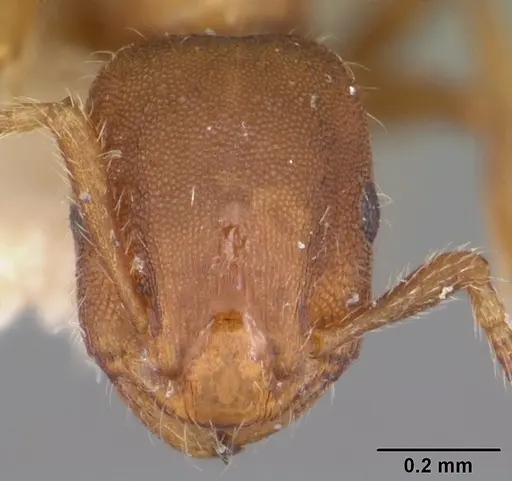
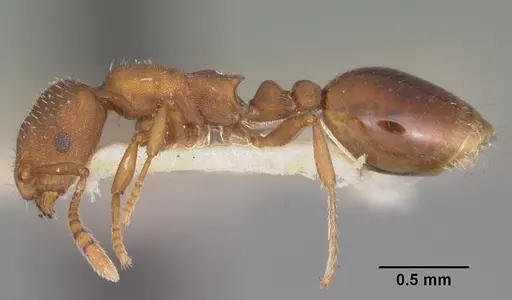
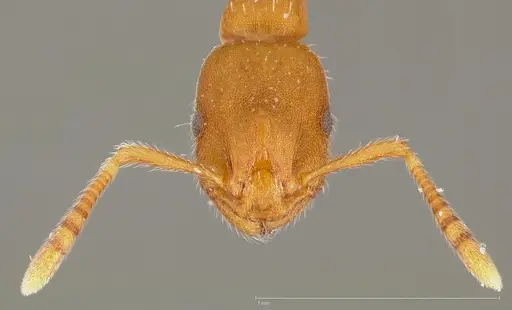
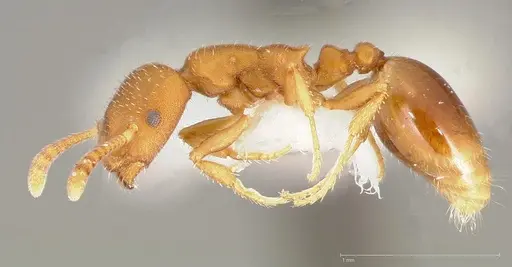
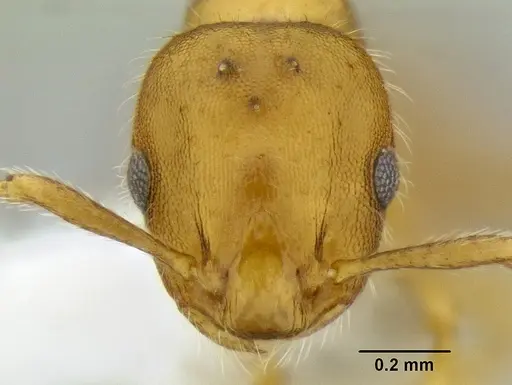
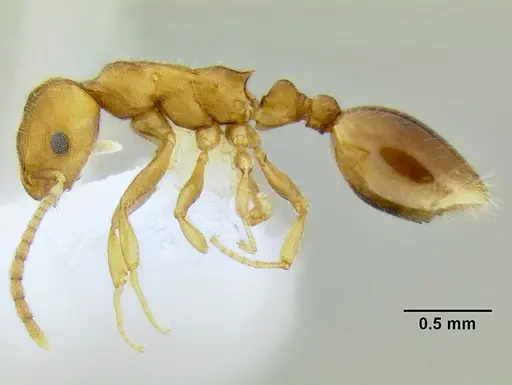
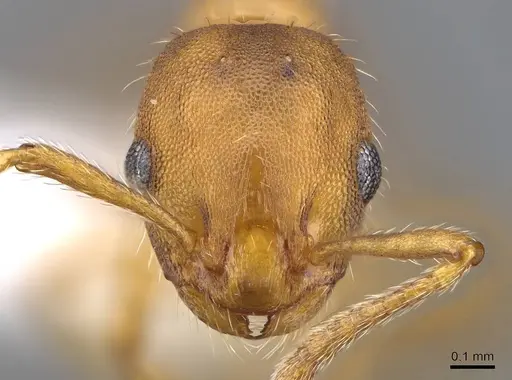
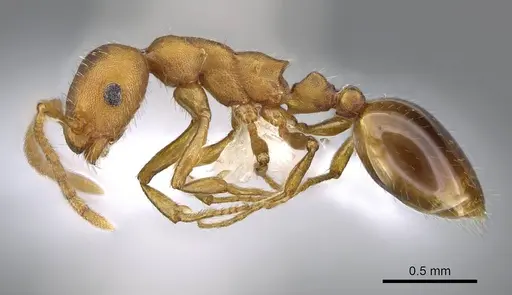
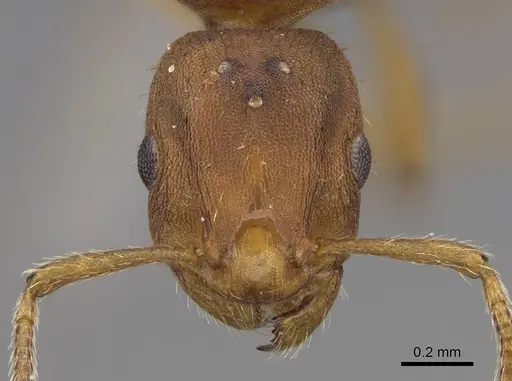
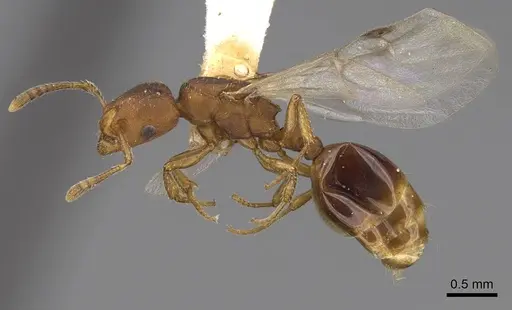
Formicoxenus diversipilosus is a tiny guest ant native to the Nearctic region, primarily found in Washington state and northern California. Workers measure 2.6-2.8mm and are dark ferruginous in color with short, erect, almost capitate hairs covering their body . This species is a xenobiont social parasite that cannot survive without its host - specifically ants in the Formica rufa group like Formica obscuripes. The ants live within the host mound nest, occupying hollow twigs and root clumps separate from the main colony . Unlike typical ants, these guests do not forage for food themselves but obtain meals through trophallaxis (food exchange) directly from host workers . The species is notable for having multiple intermediate castes - intermorphs between workers and queens make up about 17.8% of the adult population, while fully developed queens are rare at only 4.1% .
Quick Summary
- Difficulty: Expert
- Origin & Habitat: Western North America, primarily Washington state and northern California. Found in moist forest habitats, particularly in the humid Transition Zone at low elevations with Douglas fir and moss-covered ground. Nests within large thatch mounds of host Formica species [1][2].
- Colony Type: Functional monogyny, single egg-laying queen per colony despite the presence of multiple queen forms. Intermorphs (intermediates between workers and queens) make up about 17.8% of the adult population, while fully developed gynomorph queens are rare at only 4.1% [2].
- Size & Growth:
- Queen: 3.1mm (ergatoid queen) [1]
- Worker: 2.6-2.8mm [1]
- Colony: Small colonies, likely under 100 workers based on typical guest ant patterns
- Growth: Unknown, likely slow due to small colony size and dependence on host
- Development: Unknown, no direct development data available (Development likely mirrors related Formicoxenus species but has not been specifically studied)
- Antkeeping:
- Temperature: Keep around 20-22°C, similar to what host Formica colonies prefer. Avoid temperature extremes.
- Humidity: Requires high humidity, similar to the moist forest floor conditions where host mounds are found. Keep nesting area damp but not waterlogged.
- Diapause: Likely requires winter dormancy following the host colony's seasonal pattern. Formica obscuripes enters diapause in winter.
- Nesting: Cannot be kept in isolation, requires presence of host Formica colony. In nature, they nest in hollow twigs and root clumps within the host mound. Captive setup would need a dual-colony system with the host nest accessible to guest ants.
- Behavior: Extremely passive temperament, these tiny ants are completely dependent on their host and have no defensive stingers. Workers rarely leave the host nest and obtain all food through trophallaxis. Males are ergatoid (wingless) and mate within the nest or on the mound surface. Escape risk is low due to their small size and tendency to remain near hosts. However, this species is NOT aggressive and cannot defend itself, it relies entirely on host tolerance.
- Common Issues: this species cannot survive without a host Formica colony, keeping it alone will result in death, finding and maintaining a healthy host colony (Formica obscuripes or related species) is extremely difficult, dual-colony setup is required, guest ants need access to host workers for food exchange, small colony size means slow population growth and vulnerability to stress, legal concerns, always verify you can legally acquire host species in your area
Understanding Xenobiosis: The Guest Ant Lifestyle
Formicoxenus diversipilosus is a xenobiont, a type of social parasite that lives within the nest of another ant species without being fully integrated into the host colony. This is different from slave-making ants (which raid other colonies for workers) or temporary social parasites (which invade, kill the host queen, and use host workers temporarily). Xenobionts like F. diversipilosus live alongside their hosts in a semi-separate sub-nest within the host mound, obtaining food through trophallaxis but maintaining their own brood separately [2][1]. The host colony typically treats the guests with indifference, occasionally showing slight hostility, but generally tolerates their presence. This lifestyle means F. diversipilosus has lost many typical ant behaviors, workers do not forage, do not defend the nest, and cannot survive without their host providing food.
Housing Requirements: The Dual-Colony Challenge
Keeping F. diversipilosus is among the most challenging antkeeping endeavors because you must maintain TWO colonies simultaneously, the host Formica colony and the guest ant colony. The host species (Formica obscuripes or related Formica rufa-group ants) already requires experienced care as a large, aggressive ant that builds prominent thatch mounds. The guest ants must be able to access host workers for food exchange while maintaining their own separate nesting area within the setup. A common approach would be a naturalistic setup where the host builds its mound, with small hollow twigs or root clumps placed within the mound structure for the guest ants. The guest ants cannot be kept in a standard formicarium, they require the complex environment of a host mound to exhibit natural behaviors. This setup is beyond the scope of most antkeepers and should only be attempted by experts with extensive Formica husbandry experience. [1]
Feeding and Nutrition
F. diversipilosus workers do not leave the nest to forage, they obtain all nutrition through trophallaxis (regurgitated food sharing) with host workers. In laboratory studies, guests could obtain food directly from a host worker or, more commonly, by intercepting two host workers during food exchange [1]. This means you cannot feed the guest ants directly. Their nutrition depends entirely on what the host colony is eating. Host Formica colonies are omnivorous, consuming honeydew, insects, and sweet liquids. The guest ants essentially scavenge from the host's food exchanges. This makes providing adequate nutrition to the guests entirely dependent on feeding the host colony well. The guests may also scavenge organic debris that host workers bring into the nest, but this has not been well documented.
Unique Reproductive Biology
This species has one of the most unusual reproductive systems in ants. Unlike most ants with distinct worker and queen castes, F. diversipilosus has multiple intermediate forms. Intermorphs (intermediates between workers and queens) make up about 17.8% of the adult population, while fully developed gynomorphic queens are rare at only 4.1% [2]. Despite this polymorphism, colonies exhibit functional monogyny, only one queen actually lays eggs at a time. Males are also unusual: they are ergatoid, meaning they are wingless and worker-like in appearance, with larger eyes than workers but no wings [1]. Mating occurs within the nest or on top of the nest mound, not during nuptial flights. This reproductive strategy allows the species to maintain multiple potential reproductives while keeping colony resources focused on a single egg-layer.
Host Species and Range
The primary host for F. diversipilosus is Formica obscuripes (Western thatching ant), though it has also been documented with Cephalotes haemorrhoidalis and Formica integroides [2]. The species occurs primarily in Washington state and northern California, living in the large thatch mounds these Formica species build. In Washington, F. diversipilosus was found in 30% of sampled F. obscuripes nests across various environmental conditions, from sea level to higher elevations, showing the guest ant has adapted to broad conditions within its host's range [1]. The guest ants occupy separate sub-nests within the host mound, typically in hollow twigs, root tufts, or organic matter within the thatch structure. This spatial separation keeps the guests apart from the main host brood while allowing occasional contact for food exchange.
Frequently Asked Questions
Can I keep Formicoxenus diversipilosus in a test tube?
No. This species cannot survive without a host Formica colony, and a test tube setup cannot accommodate both the host and guest ants. Keeping guest ants in isolation will result in death within days as they cannot forage and depend entirely on host workers for food.
How do I feed Formicoxenus diversipilosus?
You cannot feed them directly. Guest ants obtain all food through trophallaxis (regurgitated food sharing) with host workers. This means you must feed the host Formica colony well, and the guests will obtain nutrition from the host's food exchanges. The guests may also scavenge organic debris collected by host workers.
Can I keep Formicoxenus diversipilosus without a host colony?
No. This is a xenobiont social parasite that cannot survive without its host. Laboratory studies confirmed F. diversipilosus cannot survive when separated from the host colony [1]. Keeping this species requires maintaining both the guest ants AND a healthy host Formica colony simultaneously.
What is the difficulty level for keeping Formicoxenus diversipilosus?
Expert only. This is one of the most difficult ant species to keep because it requires maintaining two colonies (host and guest) in a complex setup. You need extensive experience with Formica husbandry before attempting this species. Most antkeepers should not attempt this, consider easier species like Lasius or Camponotus first.
Do Formicoxenus diversipilosus ants sting?
No. These tiny ants (2.6-2.8mm workers) have no functional stinger and are completely harmless. They are entirely dependent on their host for defense and survival. Their only defense is remaining within the protected environment of the host mound.
How fast do Formicoxenus diversipilosus colonies grow?
Growth rate is unknown but likely slow. Guest ant colonies typically remain small (likely under 100 workers) due to their dependent lifestyle and the limited resources allocated by the host colony. The presence of multiple queen forms (intermorphs) may allow flexible reproduction but colony expansion is constrained.
Do Formicoxenus diversipilosus need hibernation?
Likely yes, following the host colony's seasonal pattern. Formica obscuripes enters winter dormancy, and the guest ants would likely slow their activity accordingly. The specific diapause requirements for this species have not been documented, but they would mirror their host's seasonal cycle.
Where can I find Formicoxenus diversipilosus?
This species is found in Washington state and northern California, living as a guest ant in nests of Formica rufa-group ants. Finding them requires locating established Formica obscuripes or related host mounds and carefully searching for the tiny guest ants within the thatch structure. This should only be attempted by experts and with appropriate collection permits.
What makes Formicoxenus diversipilosus different from other ants?
Unlike typical ants that forage and defend their own nests, F. diversipilosus is completely dependent on host workers for food, has multiple intermediate castes (intermorphs), and lives in separate sub-nests within the host mound. Males are wingless (ergatoid), and mating occurs inside the host nest rather than during nuptial flights. This is one of the most specialized and dependent ant lifestyles known.
Report an Issue
The current care sheet is based fully on literature. See inconsistencies, or something that's incorrect? Please , it will be resolved after review from an admin. Contributing to the blogs tab also helps providing information, to make us be able to further improve the caresheets. Thank you for your support!
References

This caresheet is licensed under CC BY-SA 4.0 .
Community Blogs
CASENT0003227
View on AntWeb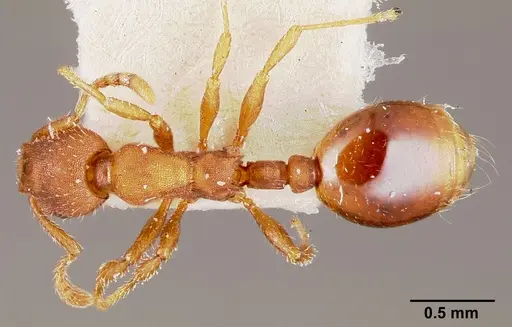
CASENT0005680
View on AntWeb
CASENT0106244
View on AntWeb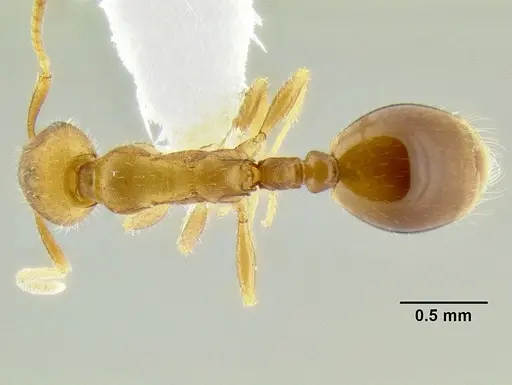
CASENT0914973
View on AntWeb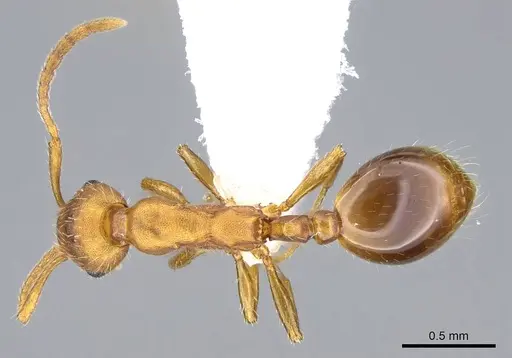
CASENT0923055
View on AntWeb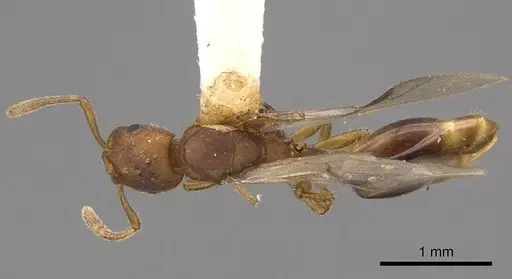
Literature
Loading distribution map...Loading products...