
Formica longiceps
- Sci. Name
- Formica longiceps
- Tribe
- Formicini
- Subfamily
- Formicinae
- Author
- Dlussky, 1964
- Distribution
- Found in 0 countries
Introduction
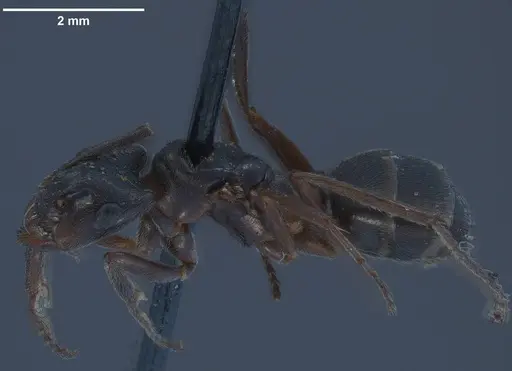
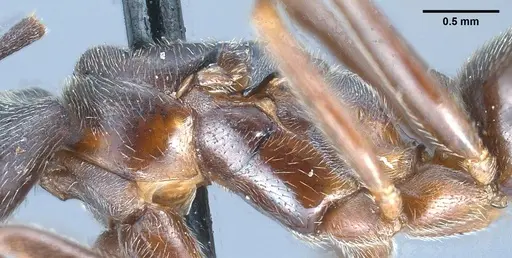
Formica longiceps is a small ant from the subgenus Coptoformica, easily recognized by its elongated head, longer than wide. Workers measure 3.7-5mm with a slender body that is dark orange-red to reddish-brown on the head, mesosoma, and node, while the gaster is brownish-black to black . This species is endemic to Eastern Siberia and Mongolia, where it lives in open steppe habitats, mountain slopes, and subalpine to alpine meadows at elevations up to 2000m . It is considered the rarest of the Siberian Formica species . Nearly all nests are found in open steppe, with only one record in moister grassland . Alates have been observed between July 20 and August 2 .
Quick Summary
- Difficulty: Medium
- Origin & Habitat: Eastern Siberia and Mongolia, between 45.9-56.2°N and 95.7-115.7°E. Occurs in open steppe habitats, mountain-slope stony steppes, subalpine grass-forb meadows, and high-mountain cold alpine steppes at 1700-2000m elevation [3][4][5].
- Colony Type: Not confirmed in literature, based on Coptoformica patterns, likely single-queen (monogyne) colonies [3].
- Size & Growth:
- Queen: Size data unavailable (only head measurements exist in literature, body length not documented) [3].
- Worker: 3.7-5mm [1][2].
- Colony: Not documented.
- Growth: Uncertain, likely moderate based on genus patterns.
- Development: Not documented, estimated 8-12 weeks based on typical Formica development. (Development is temperature-dependent. First workers (nanitics) are smaller than mature workers.)
- Antkeeping:
- Temperature: Keep at 20-24°C during active season. Provide a cooler area in the nest. This is a cold-adapted species, so avoid overheating. Inferred from high-elevation Siberian habitat [4][3].
- Humidity: Moderate humidity with a moisture gradient. In nature they nest under stones in variable moisture, so provide a damp area but good ventilation [6].
- Diapause: Yes, required. Inferred from harsh Siberian winters, estimate 3-4 months at 5-10°C [3].
- Nesting: Naturalistic setup with flat stones over moist substrate, or a Y-tong (autoclaved aerated concrete) nest with narrow chambers. In the wild they nest under stones and occasionally build small twig domes [6].
- Behavior: Workers are generally calm and non-aggressive. They spray formic acid as a chemical defense (typical for Formicinae). Escape risk is high due to small size, use tight barriers. They are active ground foragers adapted to cool conditions [1][2].
- Common Issues: overheating can be fatal, keep the colony cool and avoid temperatures above 28°C., inadequate hibernation may prevent brood production in spring, ensure a proper 3-4 month cold period., wild-caught colonies may carry parasites that reduce colony health in captivity., slow growth compared to tropical species can tempt beginners to overfeed or disturb the colony.
Nest Preferences and Housing
Formica longiceps naturally nests under stones and occasionally builds small domes of twigs in steppe and alpine habitats. For captive care, use a naturalistic setup with flat stones over a moist substrate, or a Y-tong (autoclaved aerated concrete) nest with narrow chambers scaled to their size. The key is providing a temperature gradient, these ants are adapted to cool conditions and will do best when part of the nest is cooler. Use a substrate that holds moisture well but doesn't stay waterlogged. Plaster nests also work for humidity control. Avoid setups that overheat easily, this species struggles more than it benefits from warmth [6][4].
Feeding and Diet
This ant is omnivorous. Offer a constant sugar source (sugar water, honey, or diluted syrup). For protein, provide small insects like fruit flies, small crickets, or mealworms 2-3 times per week. Remove uneaten prey after 24 hours to prevent mold. In their natural steppe habitat, they likely forage for small invertebrates, but no specific dietary data is available from the literature [1].
Temperature and Seasonal Care
This is a cold-adapted species from high-elevation Siberia and Mongolia. Keep colony temperatures in the 20-24°C range during the active season, with cooler areas in the nest for them to self-regulate. Do not keep them warm like tropical ants, overheating can be fatal. During winter, provide a proper diapause period of 3-4 months at 5-10°C. This simulates their natural cycle in the harsh Siberian climate and is essential for colony health. Reduce feeding during hibernation and ensure the nest doesn't dry out completely. Move the colony to an unheated garage, basement, or use a refrigerator for the winter rest period. Inferred from habitat and genus patterns [3][4].
Behavior and Colony Dynamics
Formica longiceps workers are relatively calm and not particularly aggressive. They forage on the ground surface for small invertebrates and honeydew. As a Formicine, they spray formic acid as a chemical defense rather than stinging. Colonies grow moderately, not as fast as tropical species. This species is rare even in its native range, making captive colonies uncommon. Workers are slender and fast-moving, adapted to traversing the uneven terrain of steppe environments. They do not form supercolonies and typically maintain discrete nest sites [1][2].
Reproduction and Nuptial Flights
Nuptial flights occur between July 20 and August 2 in their native range, based on field observations [3]. After mating, newly mated queens must find suitable nesting sites, typically under stones or in small crevices. The founding process is unconfirmed but likely claustral (queen seals herself in and uses stored fat reserves to raise the first brood), which is typical for Formica species. This is a critical period, the founding queen and brood are vulnerable to disturbance and drying out.
Frequently Asked Questions
Is Formica longiceps a good species for beginners?
This species is rated as medium difficulty. While not as challenging as some exotic species, it does require attention to temperature (keep cool) and proper hibernation. Beginners should be prepared to provide a cold winter rest period and avoid overheating. The species is also quite rare in the hobby, so finding a colony may be difficult.
How long does it take for Formica longiceps to produce first workers?
No precise data is available. Based on typical Formica species, it likely takes 8-12 weeks from egg to first worker at favorable temperatures. The first workers (nanitics) will be smaller than mature ones. Growth is slower than tropical species, so patience is required.
What temperature range is best for Formica longiceps?
Keep them at 20-24°C during the active season. This is a cold-adapted species from Siberia and Mongolia, so avoid warm conditions. Provide a temperature gradient so workers can choose cooler areas. Never exceed 28°C [3][4].
Do Formica longiceps need hibernation?
Yes, hibernation is critical. This species is adapted to harsh Siberian winters and requires a cold period of 3-4 months at 5-10°C each year. Without proper hibernation, colonies may fail to produce brood properly in spring and may have reduced lifespans [3].
Can I keep multiple Formica longiceps queens together?
This is not recommended. The colony structure is unconfirmed, but based on Coptoformica patterns, colonies are likely monogyne (single queen). Combining unrelated queens has not been documented and would likely result in fighting. Only keep one queen per colony.
What do Formica longiceps eat?
They are omnivorous. Offer sugar water, honey, or diluted syrup as a constant carbohydrate source. For protein, provide small insects like fruit flies, small crickets, or mealworms 2-3 times per week. They will likely also accept other soft-bodied prey [1].
How big do Formica longiceps colonies get?
Colony size is not documented in the literature. Based on typical Coptoformica patterns, mature colonies may reach a few hundred to a few thousand workers, but this is speculative. Growth is moderate.
Where is Formica longiceps found in the wild?
This species is endemic to Eastern Siberia and Mongolia, ranging from about 45.9-56.2°N latitude. They inhabit open steppe habitats, mountain slopes, and subalpine to alpine meadows at elevations up to 2000m. It is the rarest of the Siberian Formica species [3][4].
When do Formica longiceps have nuptial flights?
Nuptial flights occur between July 20 and August 2 based on field observations in their native range [3].
Report an Issue
The current care sheet is based fully on literature. See inconsistencies, or something that's incorrect? Please , it will be resolved after review from an admin. Contributing to the blogs tab also helps providing information, to make us be able to further improve the caresheets. Thank you for your support!
References

This caresheet is licensed under CC BY-SA 4.0 .
Community Blogs
ANTWEB1008407
View on AntWeb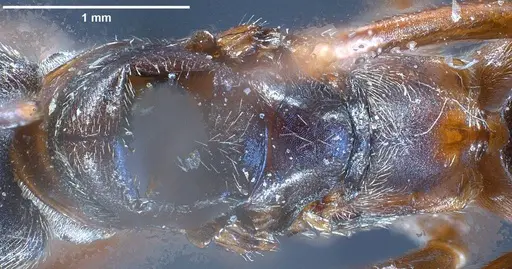

Literature
Loading distribution map...Loading products...