
Formica dusmeti
- Sci. Name
- Formica dusmeti
- Tribe
- Formicini
- Subfamily
- Formicinae
- Author
- Emery, 1909
- Distribution
- Found in 2 countries
Introduction
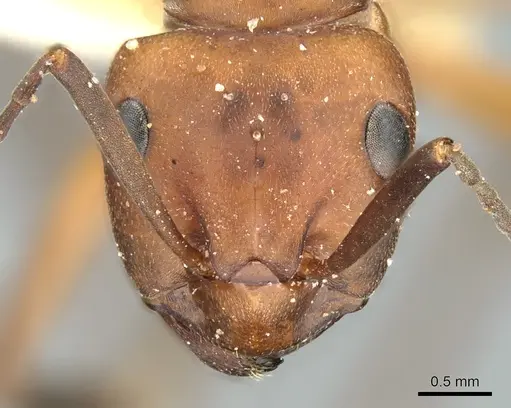
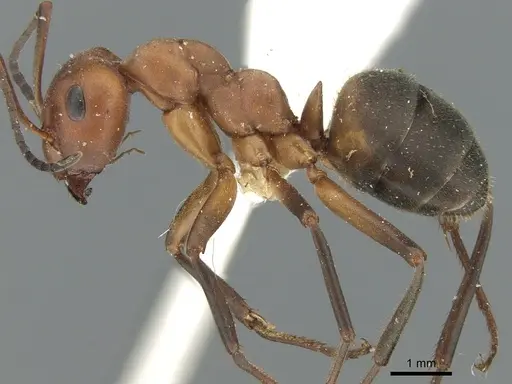
Formica dusmeti is a medium-sized red wood ant endemic to the Iberian Peninsula. Workers measure approximately 4-5mm and feature a distinctive bicolored appearance - a red or reddish-brown thorax with a mostly black gaster, while head color varies from entirely red to nearly black. This species belongs to the Formica rufa group and is most easily recognized by being almost completely hairless - unlike most related species, they lack hairs on their eyes, scapes, thorax, and petiolar scale . These ants build characteristic mound nests from pine needles and twigs in coniferous forests, typically at higher elevations in the subalpine zone . This species is phylogenetically close to Formica truncorum, a northern European species, but is restricted to the northern half of the Iberian Peninsula . It is a pugnacious ant that freely squirts formic acid when threatened . Formica dusmeti is classified as Vulnerable (VU D2) by IUCN criteria due to highly fragmented populations and threat from deforestation - it represents a conservation priority in Spain .
Quick Summary
- Difficulty: Medium
- Origin & Habitat: Iberian Peninsula endemic found in Portugal and mainland Spain. Inhabits coniferous forests at higher elevations (1100-1700m), particularly in subalpine vegetation zones. Nests are located under large stones, in pine stumps, or built as mounds of pine needles and twigs [2][3][1][7].
- Colony Type: Single-queen colonies. Nests can contain several thousand workers, though they likely do not reach ten thousand in this species [2].
- Size & Growth:
- Queen: ~9-11mm, inferred from Formica rufa group species
- Worker: ~4-5mm [8]
- Colony: Up to several thousand workers [2]
- Growth: Moderate
- Development: Unconfirmed, estimated 6-8 weeks at optimal temperature based on related Formica species (Development time inferred from genus patterns, exact timing unstudied for this specific species)
- Antkeeping:
- Temperature: Keep at room temperature (18-22°C) with a gentle gradient. This is a temperate species adapted to cooler mountain conditions, avoid overheating [3].
- Humidity: Moderate humidity. Provide a water tube and keep nesting area moderately moist. Being a forest species, they benefit from some moisture but avoid waterlogging [2].
- Diapause: Yes, requires winter hibernation. Reduce temperature to 5-10°C for 3-4 months during winter, mimicking their natural subalpine habitat [3].
- Nesting: Y-tong (AAC) nests or plaster nests work well. They prefer darker nest chambers. Can also use naturalistic setups with soil and flat stones. In the wild, they nest under large stones or in pine stumps [2][7].
- Behavior: These ants are defensive and will readily spray formic acid when threatened, handle with care. They are active foragers that hunt insects and tend to honeydew-producing aphids. Workers are medium-sized and relatively robust. They build characteristic mound nests in captivity when given appropriate substrate. Escape risk is moderate, standard barrier methods are sufficient for ants this size [5][2].
- Common Issues: colonies are slow to establish, patience is required during the founding phase, this is a vulnerable species, ethical collection may be restricted and wild populations should not be disturbed, hibernation is essential, colonies that are not allowed to overwinter properly often fail within a year, high elevation origin means they do not tolerate heat well, keep away from direct sunlight and heating elements, populations are highly fragmented in the wild, making this species rare in the antkeeping hobby
Natural History and Distribution
Formica dusmeti is endemic to the Iberian Peninsula, making it a truly special species for European antkeepers. It is found primarily in the northern half of the peninsula, with confirmed populations in Spain (provinces of Albacete, Jaén, León, Madrid, Navarra, Teruel, Zamora, Burgos, Lleida, Logroño, and Soria) and Portugal [1][9][10]. This species is closely related to Formica truncorum, which is distributed across northern Europe, but F. dusmeti has evolved to occupy the mountainous coniferous forests of the Iberian highlands [4].
In the Sierra de Guadarrama, researchers found this species most commonly in the subalpine vegetation step (26.4% of localities), with some presence in montane zones (10.6%) and alpine areas (7.1%). It was absent from the basal vegetation step, confirming its preference for cooler, higher-elevation habitats [3]. The species is classified as Vulnerable (VU D2) by IUCN criteria due to its restricted distribution, highly fragmented populations, and threat from deforestation [6][2].
Nest Preferences and Housing
In the wild, Formica dusmeti nests under large stones, in pine stumps, or builds characteristic mound nests (dolmens) made of pine needles and small twigs, similar to other red wood ants in the rufa group [2][1][7]. One study found colonies nesting in partially covered pine stumps at 1100m elevation in black pine forest clearings with Juniperus [7]. The nests can house several thousand workers, though they typically remain smaller than the massive colonies of some related species.
For captive care, Y-tong (AAC) nests or plaster nests work well for this species. They prefer darker nest chambers, which reflects their natural tendency to nest under stones and in shaded forest clearings. A naturalistic setup with a soil layer and flat stones can also replicate their natural conditions. Provide a water tube for humidity and consider adding a small outworld for foraging [2].
Feeding and Diet
Like other Formica rufa group species, Formica dusmeti is primarily insectivorous. In the wild, they hunt various small invertebrates and also tend to aphids for honeydew. Workers will actively forage for protein sources and sugar.
In captivity, offer a varied diet including small insects (fruit flies, small crickets, mealworms) as protein sources 2-3 times per week. Sugar can be provided via sugar water, honey water, or honeydew substitutes. Always ensure fresh water is available. Given their moderate colony size, portion sizes should match, avoid overfeeding which can lead to mold problems [2][5].
Temperature and Seasonal Care
As a species adapted to higher elevations in the Iberian Peninsula, Formica dusmeti prefers cooler temperatures than many other Formica species. Keep the nest area at room temperature (18-22°C) with a gentle gradient, some areas slightly warmer, some cooler, allowing the colony to self-regulate. Avoid placing the nest in direct sunlight or near heating elements, as overheating can be fatal.
This species requires a proper winter hibernation period. During autumn, gradually reduce temperatures over 2-3 weeks, then maintain 5-10°C for 3-4 months. This mimics their natural cycle in subalpine environments and is essential for colony health and longevity. Colonies that are not allowed to overwinter properly typically fail within a year. Resume normal temperatures gradually in spring [3][2].
Behavior and Defense
Formica dusmeti is a pugnacious species that readily defends its nest. When threatened, workers will raise their abdomen and spray formic acid, a defensive secretion that can irritate skin and eyes. This is a genuine defense mechanism, so handle the colony with care and avoid provoking the ants [5].
Workers are active foragers that search for food both on the ground and in low vegetation. They communicate through chemical trails and can recruit nestmates to food sources. The species builds visible mound nests in the wild, and given appropriate substrate in captivity, they may attempt similar construction behavior. Their moderate size and defensive nature make them an engaging species to observe [5][2].
Frequently Asked Questions
Is Formica dusmeti a good species for beginners?
Formica dusmeti is of medium difficulty and may not be ideal for complete beginners. While not as demanding as some tropical species, it requires proper hibernation setup and does not tolerate heat well. The main challenge is that this is a vulnerable, rare species in the wild, so obtaining a colony ethically can be difficult. If you can find a captive-bred colony and are prepared for the hibernation requirements, it can be a rewarding species to keep.
How long does it take for Formica dusmeti to produce first workers?
Development time is unconfirmed for this specific species. Based on related Formica rufa group species, expect approximately 6-8 weeks from egg to first worker at optimal temperature (around 20°C). Founding colonies can be slow to establish, patience is essential during the founding phase when the queen is sealed in and raising her first brood alone.
Can I keep multiple Formica dusmeti queens together?
Colony social structure is unconfirmed for this species. Based on typical Formica rufa group patterns, colonies likely have a single queen. Attempting to introduce multiple unrelated queens will likely result in fighting. If you acquire a colony, it should already have one established queen.
What temperature do Formica dusmeti ants need?
Keep them at room temperature, ideally 18-22°C. This is a temperate species adapted to cooler mountain conditions in the Iberian Peninsula, they do not tolerate heat well. Avoid direct sunlight and heating elements. A gentle temperature gradient within the setup allows the colony to choose its preferred zone.
Do Formica dusmeti need hibernation?
Yes, hibernation is essential. As a species from subalpine environments in the Iberian highlands, they require a winter rest period of 3-4 months at 5-10°C. Gradually reduce temperatures in autumn, maintain cold through winter, and gradually warm them in spring. Colonies that are not allowed to overwinter properly typically fail within a year.
How big do Formica dusmeti colonies get?
Colonies reach up to several thousand workers, but likely do not exceed 10,000 individuals. This is smaller than some other Formica rufa group species which can form massive mound colonies. The moderate colony size makes them manageable in captivity without requiring enormous amounts of space.
What makes Formica dusmeti different from other Formica species?
This species is almost completely hairless, a key identifying feature distinguishing it from related species like Formica frontalis. Workers lack hairs on their eyes, scapes, thorax, and petiolar scale. It is also one of the few ant species endemic to the Iberian Peninsula and is listed as Vulnerable due to habitat loss and fragmented populations.
Where is Formica dusmeti found in the wild?
Formica dusmeti is endemic to the Iberian Peninsula, found only in Portugal and mainland Spain. It is restricted to the northern half of the peninsula at higher elevations (1100-1700m) in coniferous forests. Known populations exist in provinces including Madrid, Navarra, Zamora, Burgos, and others. It is considered rare and vulnerable due to deforestation of its coniferous forest habitat.
Report an Issue
The current care sheet is based fully on literature. See inconsistencies, or something that's incorrect? Please , it will be resolved after review from an admin. Contributing to the blogs tab also helps providing information, to make us be able to further improve the caresheets. Thank you for your support!
References

This caresheet is licensed under CC BY-SA 4.0 .
Community Blogs
CASENT0906316
View on AntWeb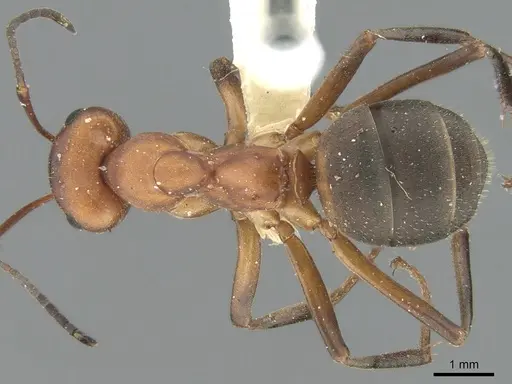
Literature
Loading distribution map...Loading products...