
Bradley's Field Ant
Formica bradleyi
- Sci. Name
- Formica bradleyi
- Tribe
- Formicini
- Subfamily
- Formicinae
- Author
- Wheeler, 1913
- Common Name
- Bradley's Field Ant
- Distribution
- Found in 2 countries
Introduction
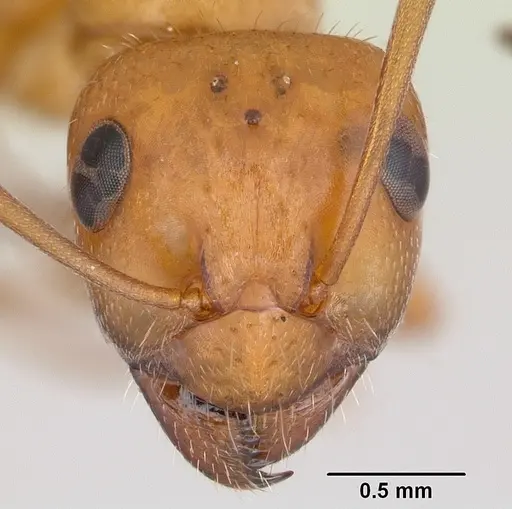
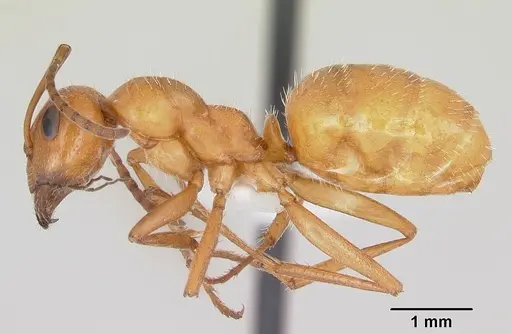
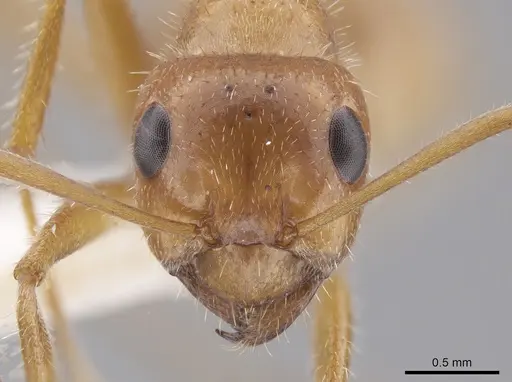
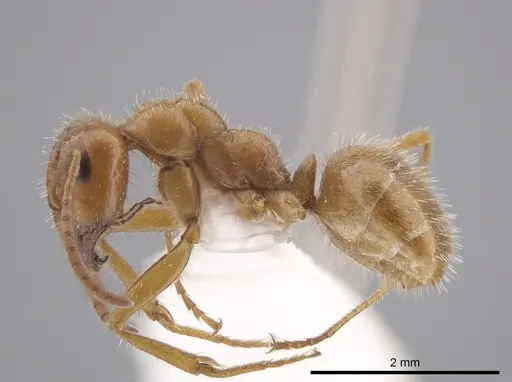
Formica bradleyi is a small ant with uniform yellowish-red coloration across the entire body, including legs and antennae. The body is covered in bristly white hairs, and the clypeus has a concave anterior margin . Body size data is unavailable from research. This species is found in northern North America from Colorado to Alberta and is a sand specialist, nesting in deep sandy deposits at grass clump bases . It tends aphids for honeydew, forming mutualistic relationships . What makes Formica bradleyi unique is its specialization for sandy environments and its close relationship with aphids, making it an interesting choice for antkeepers who want to observe natural behaviors.
Quick Summary
- Difficulty: Medium
- Origin & Habitat: Northern North America, including Canada (Alberta, Manitoba) and the United States (Minnesota, Iowa, Montana, North Dakota, Nebraska, Wyoming, Colorado), with records in Oklahoma [2]. They are sand specialists, nesting almost exclusively in deep sandy deposits at the base of grass clumps [1][3].
- Colony Type: Polygynous, multiple queens per colony [5].
- Size & Growth:
- Queen: Size data unavailable, no total length measurements in research context.
- Worker: Size data unavailable, no total length measurements in research context.
- Colony: Unknown maximum, no specific colony size data available.
- Growth: Moderate, inferred from Formica genus patterns.
- Development: Approximately 6-8 weeks at optimal temperature, inferred from Formica genus patterns. (Development time is estimated based on typical Formica species, actual time may vary with temperature.)
- Antkeeping:
- Behavior: Workers are moderately aggressive and defend nests by spraying formic acid, not stinging, as they belong to Formicinae which lack stings. They are active foragers and tend aphids for honeydew.
- Common Issues: limited availability in the antkeeping hobby, making colonies difficult to obtain, polygynous colonies may have queen conflicts during establishment, multiple queens need careful integration, dry habitat requirements mean overwatering can cause fungal problems, winter diapause is essential, colonies not hibernated may fail to thrive, limited species-specific care information may require adapting from related Formica species
Housing and Nest Preferences
Formica bradleyi does well in Y-tong (AAC) nests or formicariums with sandy substrate. As a sand-specialist species, they appreciate having sandy material they can manipulate [3]. A test tube setup works fine for founding colonies, use a test tube with a water reservoir and fill roughly one-third with cotton, leaving space for the queen and her brood. For established colonies, provide a formicarium with chambers sized appropriately for their worker count. They prefer dry to moderately moist conditions, so avoid over-wetting the nest. Escape prevention is standard, these are not particularly small ants and typical barriers work well.
Feeding and Diet
Formica bradleyi is omnivorous but shows strong preference for honeydew from aphids. In captivity, offer sugar water or honey as a constant energy source. For protein, provide small insects like fruit flies, small crickets, or mealworms. They will also accept other protein sources. Since they form mutualistic relationships with aphids in the wild [4], providing occasional aphid honeydew or sugar sources mimics their natural feeding patterns. Feed protein 2-3 times per week, and keep a sugar source available at all times. Remove uneaten prey after 24-48 hours to prevent mold.
Temperature and Seasonal Care
Keep Formica bradleyi at temperatures between 20-24°C during the active season. A slight temperature gradient in the formicarium allows workers to regulate their own temperature. During summer months, room temperature in most homes is suitable. In winter, they require a diapause period of 3-4 months at temperatures between 5-10°C. This hibernation period is essential for colony health and reproductive success. Place the colony in a cool location like an unheated garage or refrigerator during winter. Reduce feeding during diapause but do not stop entirely, occasionally offer a drop of sugar water. Return to normal temperatures gradually in spring.
Colony Structure and Queen Management
This is a polygynous species, meaning colonies naturally have multiple queens [5]. In the wild, multiple queens coexist and all contribute to reproduction. In captivity, you may keep multiple queens together, though introductions should be done carefully during founding. Queens are claustral, they seal themselves in a chamber and raise the first brood without foraging. The first workers (nanitics) will be smaller than mature workers. Multiple mating has been documented in this species (2-3 matings per queen) [5]. Colonies can grow to several hundred workers over several years.
Behavior and Defense
Workers of Formica bradleyi are moderately aggressive and will defend their nest by spraying formic acid, as they lack a functional sting. They are active foragers, searching for food during daylight hours. They are known to practice tandem running, one worker leads another to a food source. Their association with aphids means they may actively protect aphid colonies in captivity if aphids are present. They are not extreme escape artists, but standard formicarium barriers should be used.
Frequently Asked Questions
Is Formica bradleyi good for beginners?
Formica bradleyi is of moderate difficulty and may not be the best choice for complete beginners. While not as demanding as some species, they have specific habitat requirements (sandy, dry conditions), require winter diapause, and can be defensive. They are also rarely available in the hobby. If you're new to antkeeping, consider starting with a more common species like Lasius niger or Camponotus before attempting Formica bradleyi.
How long does it take for Formica bradleyi to produce first workers?
Based on typical Formica development patterns, expect first workers (nanitics) to emerge approximately 6-8 weeks after the queen lays eggs, at optimal temperatures around 22°C. The queen will remain sealed in her chamber during this time, raising the brood on her stored fat reserves. Nanitics will be smaller than mature workers but will immediately begin helping with colony tasks.
Can I keep multiple Formica bradleyi queens together?
Yes, this is actually recommended. Formica bradleyi is a polygynous species, meaning colonies naturally have multiple queens [5]. Unlike monogyne species where multiple queens will fight, polygynous species like this one can coexist. When introducing multiple foundress queens, it's best to place them together in a test tube setup from the start and provide plenty of space.
What do Formica bradleyi eat?
They are omnivorous with a strong preference for sugar. Offer sugar water or honey constantly as an energy source. For protein, feed small insects like fruit flies, small crickets, or mealworms 2-3 times per week. In the wild, they heavily rely on honeydew from aphids [4], so this is a natural food source they will readily accept.
Do Formica bradleyi need hibernation?
Yes, as a temperate species from northern North America, they require a winter diapause. Provide 3-4 months of cold temperatures (5-10°C) during winter. This can be done in an unheated garage, basement, or refrigerator. Reduce feeding during this period but occasionally offer sugar water. Proper hibernation is essential for colony health and queen reproduction.
When should I move Formica bradleyi to a formicarium?
Move them from a test tube setup to a formicarium once the colony reaches roughly 50-100 workers. At this size, they need more space for foraging and brood-rearing. Make sure the formicarium has appropriate sandy substrate since they are sand specialists. Always ensure the test tube is well-established with no mold issues before moving.
Why is my Formica bradleyi colony declining?
Common causes include: improper humidity (too wet, they prefer dry conditions), lack of proper hibernation, insufficient protein in diet, stress from excessive disturbance, or disease. Check that the nest is not too humid and that you are providing varied protein foods. Also ensure they are getting enough sugar. If the colony was wild-caught, parasites or queen death may be responsible.
Report an Issue
The current care sheet is based fully on literature. See inconsistencies, or something that's incorrect? Please , it will be resolved after review from an admin. Contributing to the blogs tab also helps providing information, to make us be able to further improve the caresheets. Thank you for your support!
References

This caresheet is licensed under CC BY-SA 4.0 .
Community Blogs
CASENT0104877
View on AntWeb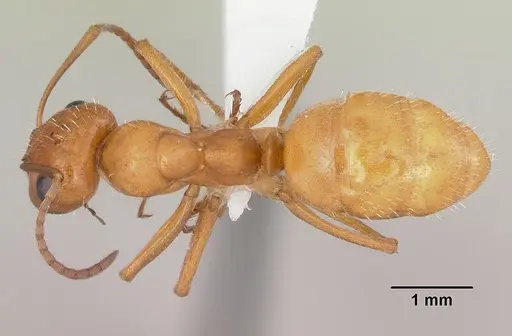
CASENT0656137
View on AntWeb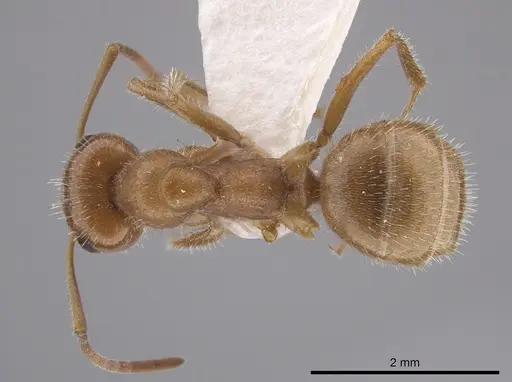
Literature
Loading distribution map...Loading products...