
Eutetramorium parvum
- Sci. Name
- Eutetramorium parvum
- Tribe
- Crematogastrini
- Subfamily
- Myrmicinae
- Author
- Bolton & Fisher, 2014
- Distribution
- Found in 1 countries
Introduction
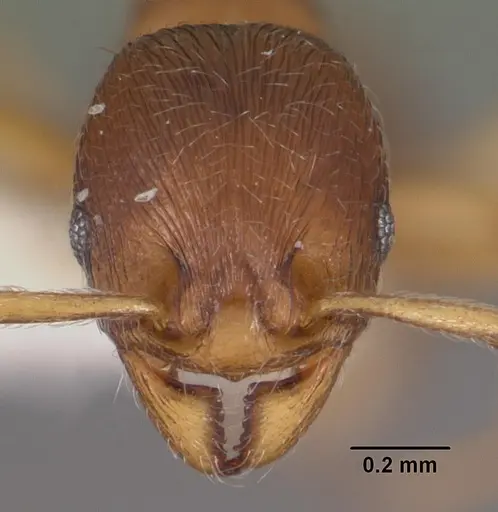
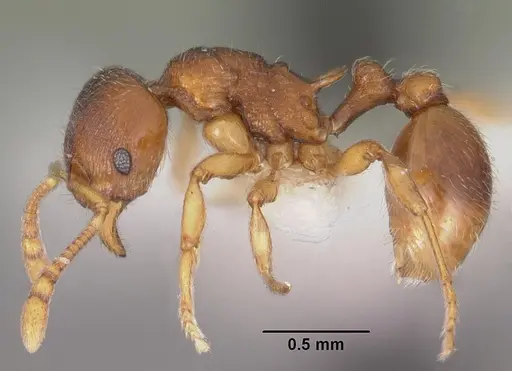
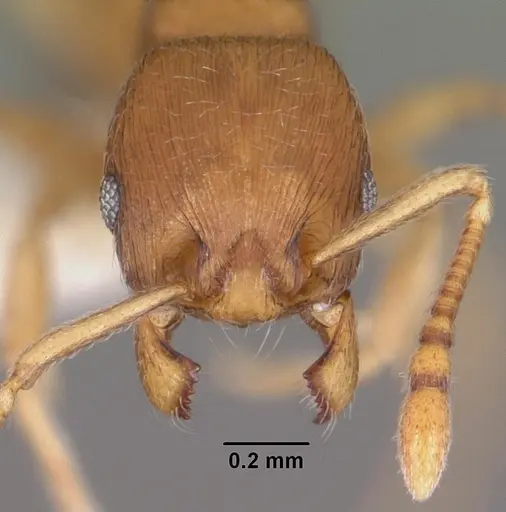
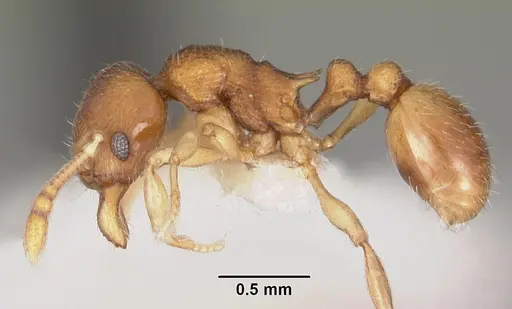
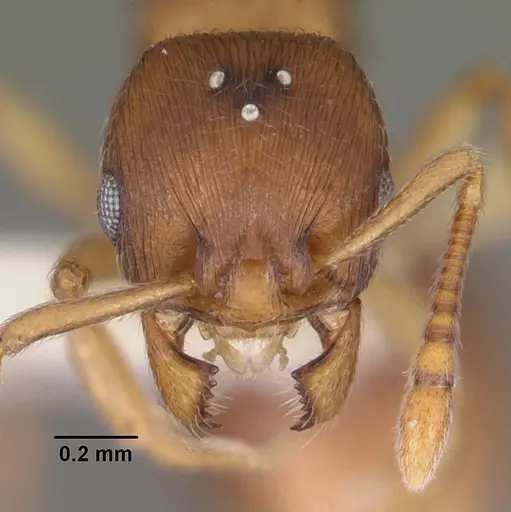
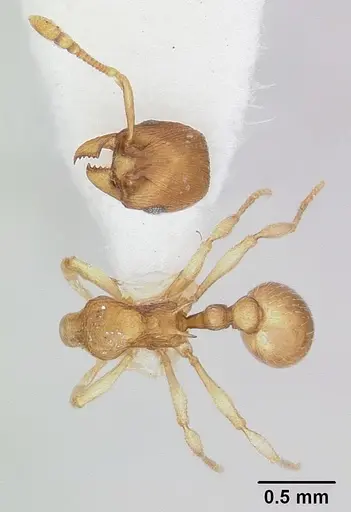
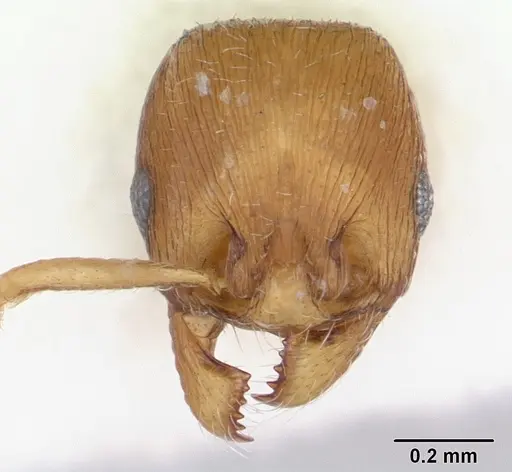
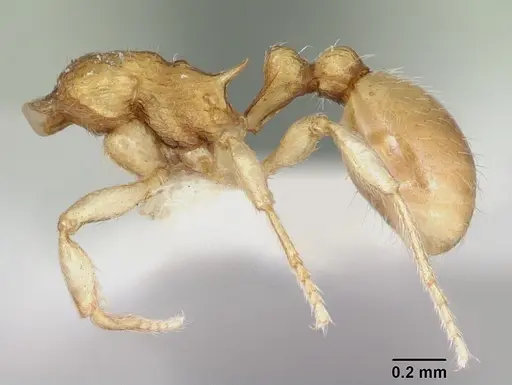
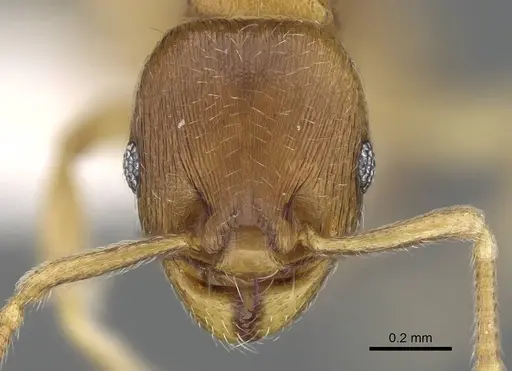
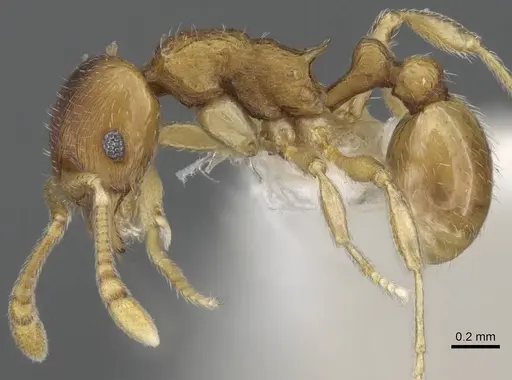
Eutetramorium parvum is a tiny myrmicine ant endemic to Madagascar, found only in the Chaines Anosyennes mountain range at approximately 1900m elevation in humid montane forest. Workers measure about 2.7mm in total length, making them among the smallest ants in the genus - the species name 'parvum' means small. They are dull yellow to light brownish yellow in color, with relatively large eyes for their size and a finely sculptured body. Queens reach about 3.6mm and are dealate (wingless) in known specimens. This species was described in 2014 and remains extremely poorly known, known only from a single collection made in 1971. The type series includes workers, a dealate queen, and a possible ergatoid (wingless reproductive) specimen.
Quick Summary
- Difficulty: Hard
- Origin & Habitat: Madagascar, specifically the Chaines Anosyennes mountain range in southern Madagascar at approximately 1900m elevation in humid montane forest [1][2]. The type series was collected from soil and leaf litter samples in pristine mountain rainforest.
- Colony Type: Colony structure is unconfirmed. The type series includes workers, a dealate queen, and a possible ergatoid specimen, but the relationship between these castes is unclear.
- Size & Growth:
- Antkeeping:
- Temperature: Based on their Madagascar mountain forest origin at 1900m elevation, they likely prefer temperatures in the low-to-mid 20s°C. Start around 22-26°C and provide a gentle thermal gradient.
- Humidity: Based on their collection from humid forest leaf litter, they likely require high humidity. Keep substrate consistently moist but not waterlogged.
- Diapause: Unknown for this species. The type locality at 1900m elevation suggests mild seasonal variation. Start without hibernation and observe for seasonal changes in activity.
- Nesting: In nature they live in soil and leaf litter in humid forest. In captivity, a small test tube setup with moist substrate works well for founding colonies. Given their tiny size, ensure chambers and passages are appropriately scaled.
- Behavior: Behavior is unstudied. Based on their small size and ground-nesting habits, they likely forage in leaf litter and soil. Their large eyes suggest some visual orientation. Escape prevention is critical, at 2.7mm they can squeeze through extremely small gaps. Use fine mesh barriers and tight-fitting lids.
- Common Issues: escape prevention is critical due to their very small size., no biological data exists, keepers must experiment with care conditions., colony failure is likely since no established husbandry protocols exist., wild-caught colonies may have been damaged during collection from litter samples., this species is extremely rare in the antkeeping hobby
Why This Species Is Challenging
Eutetramorium parvum presents unique challenges for antkeepers. It is one of the most poorly documented ant species in existence, known only from a single collection made in 1971. There is no published biological data on colony founding, development times, diet preferences, queen behavior, or any aspect of their captive care. The original description provides only morphological measurements and notes on the type locality. This means keepers are essentially pioneering husbandry for this species with no established protocols to follow. Success will require careful observation, patience, and experimentation. [1][2]
Housing and Setup
Given their tiny size and ground-nesting habits, a small test tube setup works best for founding colonies. The test tube should have a water reservoir at one end with a cotton plug creating a humid chamber. For a queen-right colony, provide a small outworld for foraging. Because they are so small, standard formicarium chambers may be too large, consider using small containers with appropriately scaled spaces. Escape prevention is absolutely critical, these ants can squeeze through gaps that seem impossible. Use fine mesh on any ventilation and ensure all connections are sealed. [1]
Feeding and Diet
Diet is entirely unconfirmed for this species. As a small Myrmicinae from Madagascar, they likely accept small live prey such as springtails and other tiny arthropods found in leaf litter. Their small size means prey items must be appropriately scaled. They may also tend aphids or collect honeydew, though this is unconfirmed. Start by offering tiny live prey and observe acceptance. Sugar sources like diluted honey may be accepted but should be offered in very small quantities. Remove any uneaten food promptly to prevent mold in the humid setup.
Temperature and Humidity
The type locality at 1900m elevation in southern Madagascar suggests they experience cooler temperatures than lowland tropical ants, but still within tropical ranges. Aim for temperatures in the low-to-mid 20s Celsius as a starting point. Provide a gentle thermal gradient so ants can choose their preferred temperature. Humidity should be high, these ants came from humid montane forest. Keep the nest substrate consistently moist but not saturated. A water tube connected to the nest helps maintain humidity. Avoid both drying out and creating stagnant, overly wet conditions. [1]
Understanding the Ergatoid Form
The type series includes an unusual specimen that is larger than workers but smaller than the queen, lacking flight sclerites but with a more prominent mesonotum. This appears to be an ergatoid, a wingless reproductive form that may serve as a replacement queen if the primary queen dies. However, researchers noted that with so few specimens, they could not determine if this represents a larger worker caste, a worker-queen intercaste, or a true ergatoid. For antkeepers, this means colonies may potentially produce ergatoid reproductives, but the functional significance is unclear. [1]
Frequently Asked Questions
How long does it take for Eutetramorium parvum to develop from egg to worker?
This is completely unknown, no development data exists for this species. Expect significant trial and error to establish what works.
Can I keep multiple Eutetramorium parvum queens together?
Not recommended. The colony structure is unconfirmed, and combining unrelated queens has not been documented. The known queen was dealate, suggesting claustral founding is typical. Start with a single queen.
What do Eutetramorium parvum ants eat?
Unconfirmed, but likely small live prey. Start with tiny live prey like springtails and micro-arthropods. They may accept diluted honey but this is speculative. Remove uneaten food quickly to prevent mold.
Do Eutetramorium parvum ants sting?
Unknown and unlikely given their minute size. At 2.7mm, their sting would be imperceptible to humans even if present. They are not considered dangerous.
Is Eutetramorium parvum a good species for beginners?
No. This is an expert-level species due to complete lack of biological data, tiny size requiring specialized care, and the likelihood of colony failure without established protocols. Only experienced antkeepers should attempt this species.
What temperature should I keep Eutetramorium parvum at?
Start around 22-26°C based on their Madagascar mountain forest origin. Provide a gentle gradient so ants can self-regulate. Adjust based on observed colony activity. Do not let temperatures drop below around 18°C or exceed 30°C.
How big do Eutetramorium parvum colonies get?
Unknown. The type series includes only a handful of specimens. Wild colonies may be small given their tiny size and ground-nesting habits. Do not expect large colonies in captivity without significant time and successful growth.
Do Eutetramorium parvum need hibernation?
Unknown. The type locality at 1900m elevation in Madagascar suggests mild seasonal variation. Start without hibernation and observe for seasonal slowdowns. If the colony becomes less active in cooler months, reduce temperatures slightly rather than forcing full diapause.
Why is my Eutetramorium parvum colony dying?
Without established protocols, colony failure is extremely likely. Common causes likely include: escape through tiny gaps, improper humidity, temperature stress, inadequate prey size, or mold from poor ventilation. Document conditions carefully and adjust one variable at a time.
When should I move Eutetramorium parvum to a formicarium?
Given their tiny size and lack of data, keeping them in a test tube setup long-term may be best. If you do move them, use a small setup with appropriately scaled chambers. Wait until the colony is established with multiple workers and shows consistent activity.
Report an Issue
The current care sheet is based fully on literature. See inconsistencies, or something that's incorrect? Please , it will be resolved after review from an admin. Contributing to the blogs tab also helps providing information, to make us be able to further improve the caresheets. Thank you for your support!
References

This caresheet is licensed under CC BY-SA 4.0 .
Community Blogs
CASENT0102296
View on AntWeb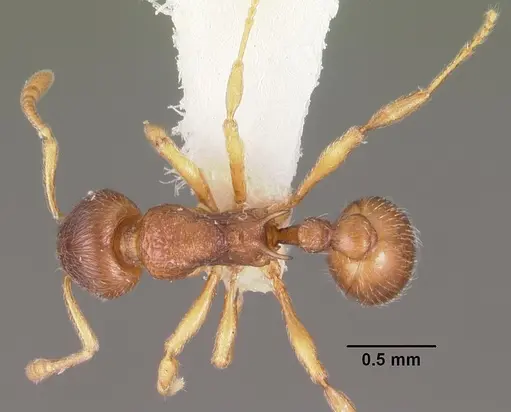
CASENT0102297
View on AntWeb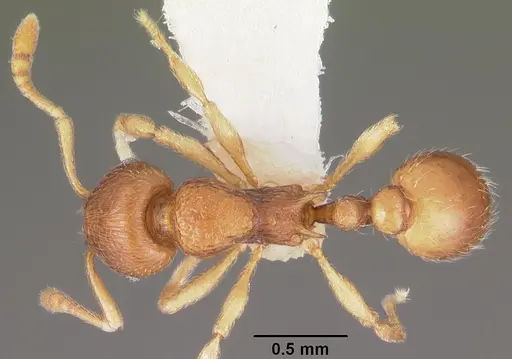
CASENT0102298
View on AntWeb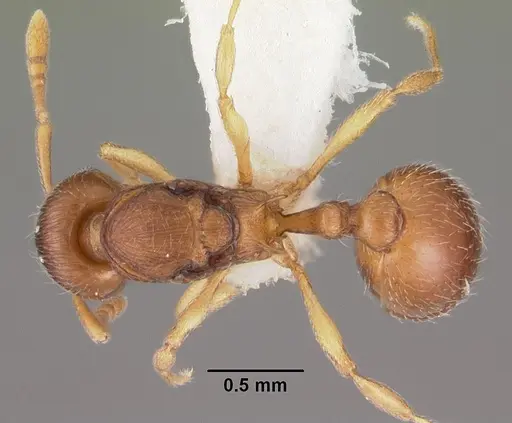
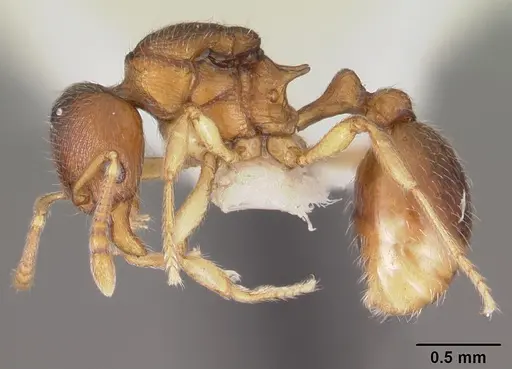
CASENT0173545
View on AntWeb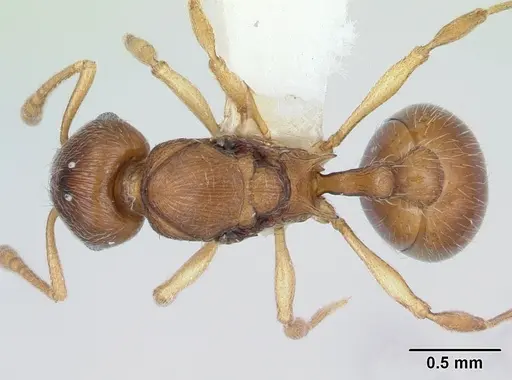
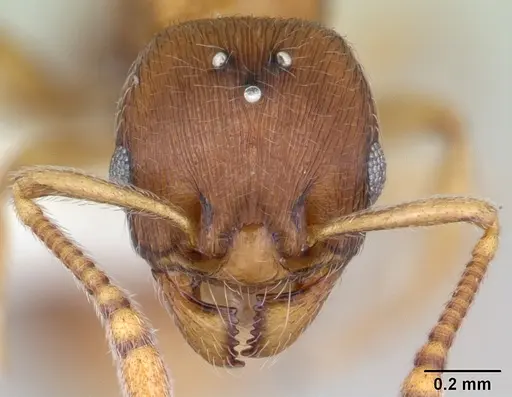
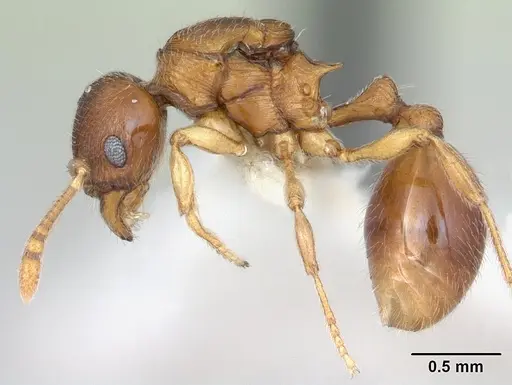
CASENT0173546
View on AntWeb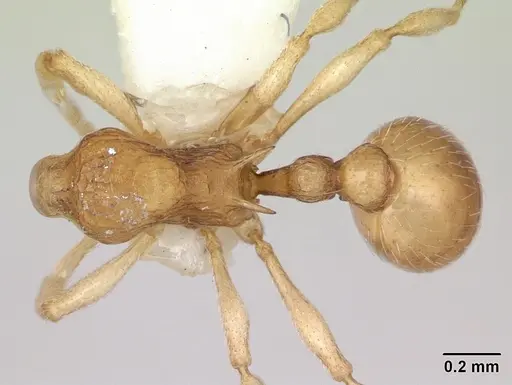
CASENT0195002
View on AntWeb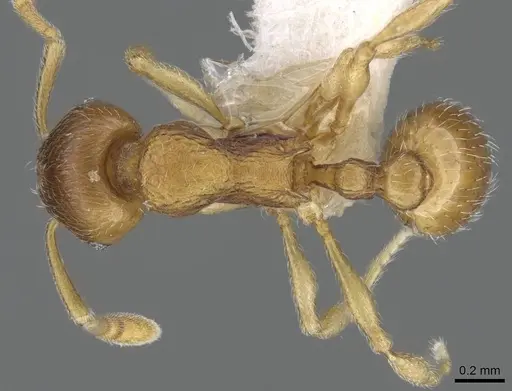
Literature
Loading distribution map...Loading products...