
Eurhopalothrix vulcan
- Sci. Name
- Eurhopalothrix vulcan
- Tribe
- Attini
- Subfamily
- Myrmicinae
- Author
- Longino, 2013
- Distribution
- Found in 1 countries
Introduction
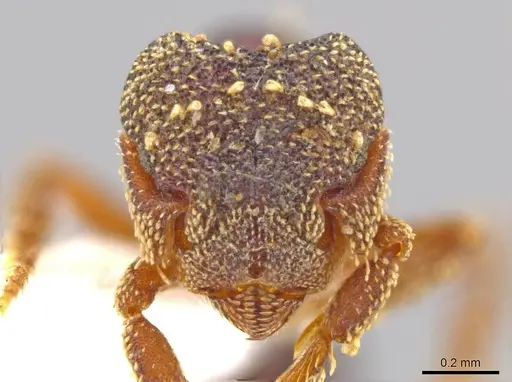
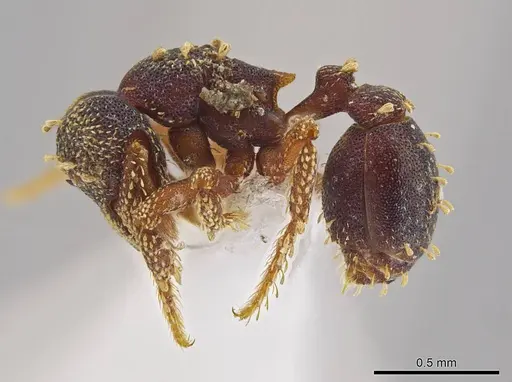
Eurhopalothrix vulcan is a rare ant species known from a single worker collected in Guatemala's cloud forests at 1625 meters elevation. These are tiny ants with a distinctive appearance featuring specialized erect setae on their face and promesonotum. They are reddish-brown in color and possess unique clay-coating behavior where particles adhere to their specialized spatulate setae, providing camouflage against the forest floor. The genus Eurhopalothrix is characterized by 7-segmented antennae and triangular mandibles with a double tooth row. This species is closely related to Eurhopalothrix sepultura from the Sierra Madre de Chiapas mountains.
Quick Summary
- Difficulty: Expert
- Origin & Habitat: Guatemala (Suchitepéquez: 4km S Volcán Atitlán) at 1625m elevation in cloud forest. They inhabit leaf litter and soil in high-elevation tropical forests. [1][2]
- Colony Type: Unknown, only a single worker has ever been collected. Colony structure, queen presence, and colony size have not been documented. [1]
- Size & Growth:
- Queen: Unknown, queen has never been described or collected [1]
- Worker: size data unavailable, only head measurements exist (HW 0.71mm, HL 0.70mm). Based on Eurhopalothrix genus patterns, workers are likely 2-3mm total length. [1]
- Colony: Unknown, only single worker known [1]
- Growth: Unknown, no colony development data exists
- Development: Unknown, no development data exists for this species (No brood or colony development has ever been observed.)
- Antkeeping:
- Temperature: Based on cloud forest habitat, aim for 18-22°C with stable, cool conditions. Avoid overheating. [1]
- Humidity: High humidity required, cloud forest species need 70-85% relative humidity with consistently moist substrate. Keep the nest environment damp but not waterlogged. [2]
- Diapause: Unknown, no seasonal data exists. Cloud forest ants may experience reduced activity during cooler months but likely do not enter true hibernation given the mild tropical highland climate.
- Nesting: Natural nesting occurs in leaf litter and soil. In captivity, provide moist substrate with fine chambers scaled to their tiny size. Minimal disturbance is recommended. [2]
- Behavior: These are cryptic leaf-litter predators that use stealth or sit-and-wait hunting techniques. Workers forage individually in the leaf litter layer. Their small size and clay-camouflage make them extremely difficult to spot. Escape risk is very low given their tiny size, they cannot climb smooth surfaces effectively, but excellent containment is still recommended. Temperament is unknown but likely non-aggressive given their cryptic hunting strategy. [2]
- Common Issues: only one worker has ever been collected, acquisition requires field collection in Guatemala, no captive breeding or husbandry information exists, keeping this species would be entirely experimental, very small size requires specialized setups that most keepers do not have access to, cloud forest humidity requirements are difficult to maintain consistently in captivity, lack of any queen or colony data means founding and development cannot be guided by experience
Why This Species Is Extremely Challenging
Eurhopalothrix vulcan represents one of the most poorly known ant species in captivity, it has never been kept in captivity. The entire scientific knowledge base consists of a single worker collected in 2009 from cloud forest leaf litter in Guatemala. No queens have ever been found, no colonies have been observed, and no nuptial flight data exists. There is zero established husbandry guidance for this species. Any attempt to keep them would be entirely experimental and based on inference from related species. The genus Eurhopalothrix as a whole is rarely encountered in antkeeping, and these ants are considered among the most cryptic and difficult to maintain. Unless you have access to specialized field collection in Guatemala or established relationships with researchers, obtaining this species is essentially impossible. [1][2]
Inferred Care Requirements
Since no captive data exists, care must be inferred from the species' known ecology and related Attini leaf-litter ants. They are predators that hunt small arthropods in forest leaf litter using sit-and-wait techniques, this suggests they would accept small live prey like springtails, micro-arthropods, and tiny insects. Their cloud forest origin at 1625m elevation indicates they prefer cool, stable temperatures around 18-22°C and high humidity around 70-85%. The clay-coating behavior observed in the genus suggests they require access to fine particulate matter to maintain their camouflage. Nesting would likely be in small chambers within moist leaf litter or soil, requiring a naturalistic setup with fine substrate. [2][1]
Related Species for Reference
The genus Eurhopalothrix contains about 20 described species across Central America and the Caribbean. They are all cryptic leaf-litter specialists with similar morphology and behavior. Related species like Eurhopalothrix sepultura and Eurhopalothrix hunhau share the distinctive facial setae pattern and clay-coating behavior. If you are interested in keeping Eurhopalothrix species, studying the broader genus behavior and connecting with researchers who study these ants in the wild would be essential. The Attini tribe includes many leaf-litter ants with similar husbandry requirements, so general Attini care guides may provide partial guidance. However, no Eurhopalothrix species are commonly kept, making this an expert-only endeavor. [1]
Legal and Ethical Considerations
Eurhopalothrix vulcan is native to Guatemala and has never been documented anywhere else. Any collection would require appropriate permits from Guatemalan authorities, and international transport would require CITES documentation and export permits. Given that only a single specimen has ever been collected, any wild collection would be scientifically significant and should be conducted in collaboration with researchers. Releasing any collected ants in other countries would be inappropriate, this species has no established populations outside Guatemala and should not be introduced elsewhere. Always ensure your ants were obtained legally and ethically. [1]
Frequently Asked Questions
Can I keep Eurhopalothrix vulcan as a pet ant?
In practical terms, no, this species has never been kept in captivity and only a single worker has ever been collected. There is no established husbandry guidance, queens have never been found, and obtaining this species would require field collection in Guatemala with proper permits. Even if you obtained one, there would be no way to establish a colony without guidance on founding behavior.
How big do Eurhopalothrix vulcan colonies get?
Unknown, colony size has never been documented. The single known worker is tiny, with head measurements of 0.71mm width. Based on Eurhopalothrix genus patterns, colonies likely remain small, but this is purely speculative. [1]
What do Eurhopalothrix vulcan ants eat?
They are predators that use sit-and-wait hunting in leaf litter. In captivity, they would likely accept small live prey like springtails, micro-arthropods, and tiny insects. Sugar sources are unlikely to be accepted given their predatory nature. This is inferred from genus behavior, no feeding observations exist for this specific species. [2]
What temperature and humidity do they need?
Based on their cloud forest origin at 1625m elevation in Guatemala, aim for cool temperatures around 18-22°C and high humidity around 70-85%. They would be sensitive to overheating and drying out. This is inferred from habitat data, no captive trials have been conducted. [1]
Are Eurhopalothrix vulcan good for beginners?
Absolutely not. This is an expert-only species that has never been kept in captivity. There is zero husbandry information, queens have never been documented, and obtaining them requires field collection in Guatemala. Even experienced antkeepers would find this species extremely challenging. Start with more established species like Lasius, Camponotus, or Messor. [1]
How long does it take for Eurhopalothrix vulcan to develop from egg to worker?
Unknown, no brood or development has ever been observed for this species.
Can I find Eurhopalothrix vulcan in the United States?
No. This species is only known from Guatemala and has never been documented elsewhere. It has not been introduced to any other country. The only known specimen is the holotype collected from cloud forest near Volcán Atitlán in Guatemala. [1]
Do they need hibernation or diapause?
Unknown, no seasonal data exists. As a cloud forest species from a tropical highland area, they likely experience mild temperature fluctuations but may not enter true hibernation. The climate is relatively stable year-round at 1625m elevation in Guatemala. [1]
What makes Eurhopalothrix vulcan unique?
They are one of the rarest ant species in the world, known from a single worker collected in 2009. They have distinctive clay-coating behavior where specialized spatulate setae hold clay particles for camouflage. They also have a unique facial setae pattern with 5 pairs of erect hairs arranged in a distinctive rectangle. Their entire scientific description fits on a few pages. [1][2]
Report an Issue
The current care sheet is based fully on literature. See inconsistencies, or something that's incorrect? Please , it will be resolved after review from an admin. Contributing to the blogs tab also helps providing information, to make us be able to further improve the caresheets. Thank you for your support!
References

This caresheet is licensed under CC BY-SA 4.0 .
Community Blogs
CASENT0612902
View on AntWeb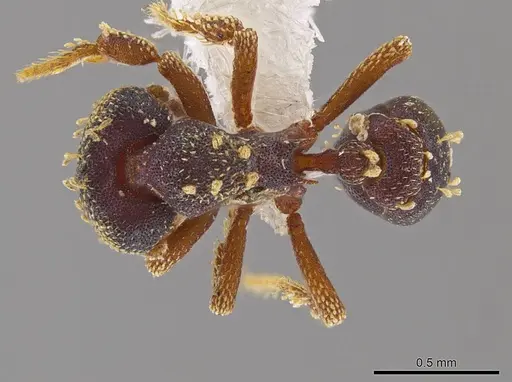
Literature
Loading distribution map...Loading products...