
Eurhopalothrix speciosa
- Sci. Name
- Eurhopalothrix speciosa
- Tribe
- Attini
- Subfamily
- Myrmicinae
- Author
- Brown & Kempf, 1960
- Distribution
- Found in 1 countries
Introduction
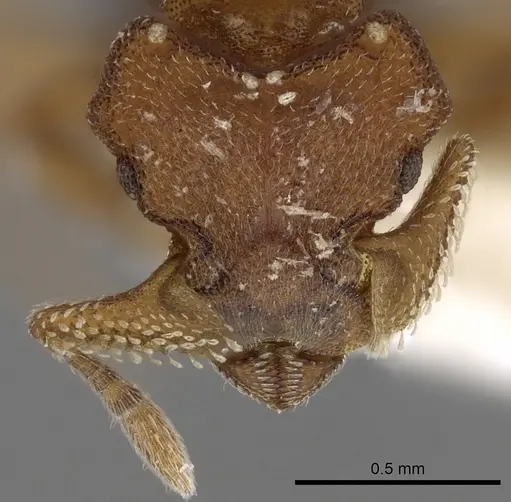
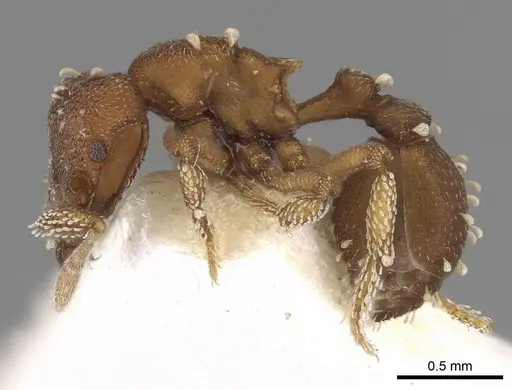
Eurhopalothrix speciosa is a tiny leaf-litter ant native to the Atlantic Forest of southern Brazil. Workers measure 2.8-3.3mm in total length and belong to the bolaui species group, characterized by their distinctive specialized setae (stiff hairs) arranged in a tight square pattern on the head. They have relatively large compound eyes for the genus, with 7-8 ommatidia, and a medium ferruginous (reddish-brown) coloration with yellower legs. This species is known only from worker castes, with no described queens or males. Nothing is directly documented about their biology in the wild - they were collected by sifting through leaf mold, suggesting they live in the forest floor layer like other cryptic leaf-litter ants [AntWiki].
Quick Summary
- Difficulty: Expert
- Origin & Habitat: Southern Brazil (Santa Catarina, São Paulo) in Atlantic Forest regions, collected from sifted leaf mold at elevations of 300-500m [2]. This is a cryptic forest-floor species.
- Colony Type: Colony structure is unconfirmed, only workers have been collected, no queens or males described.
- Size & Growth:
- Queen: Undescribed, no queens have been collected or described [2]
- Worker: 2.8-3.3mm total length [3]
- Colony: Unknown, no colony data exists
- Growth: Unknown
- Development: Unconfirmed, no development data exists for this species. (No direct observations of founding, brood development, or colony growth exist for this species.)
- Antkeeping:
- Temperature: Keep around 22-26°C, aim for warm, stable conditions typical of Brazilian Atlantic Forest. Use a heating cable on one side of the nest if room temperature falls below 22°C.
- Humidity: Keep the nest substrate consistently moist but not waterlogged. These forest-floor ants need damp conditions, mist occasionally and provide a water tube. The substrate should feel damp to the touch.
- Diapause: Unknown, no data on overwintering requirements. Southern Brazil experiences mild winters, so they may not need a true diapause. Keep at reduced temperatures (15-18°C) for 2-3 months during winter months if colony shows reduced activity.
- Nesting: Use a naturalistic setup with moist substrate (soil/peat mix) or a Y-tong/plaster nest with tight chambers. They are tiny and cryptic, avoid tall open spaces. Provide small chambers scaled to their 3mm size.
- Behavior: These ants are extremely cryptic and likely nocturnal or crepuscular. They probably forage in the leaf litter layer, hunting small prey. No aggression data exists, but related species are not aggressive. Their tiny size means excellent escape prevention is critical, use fine mesh and tight-fitting barriers. They will likely avoid light and disturbance.
- Common Issues: no biological data exists, this is one of the least studied ant species in captivity, escape prevention is critical due to their tiny 3mm size, no established feeding protocols, start with small live prey and observe acceptance, colony may be difficult to establish from wild collections due to unknown queen location, very rare in the antkeeping hobby with no established care protocols
Nest Preferences and Housing
Eurhopalothrix speciosa is a cryptic leaf-litter ant that lives in the forest floor layer. In the wild, they have been collected from sifted leaf mold in the Atlantic Forest of southern Brazil [2]. For captivity, a naturalistic setup with a moist soil/peat substrate works best, this mimics their natural environment and allows them to create small chambers. Alternatively, a Y-tong nest with tight, narrow chambers scaled to their tiny size can work well. Avoid large, open spaces in the nest, these ants prefer cramped, dark spaces. Keep the nest humid and provide a water tube for moisture. Place the setup in a quiet, dark location as they are likely light-sensitive.
Feeding and Diet
The diet of Eurhopalothrix speciosa is completely unstudied in the wild. As members of the tribe Attini, they are likely omnivorous or predaceous. Based on related Eurhopalothrix species, they probably hunt small invertebrates in the leaf litter. For captivity, start with small live prey: micro-arthropods like springtails, tiny booklice, or fruit fly larvae. Offer prey every 2-3 days and remove uneaten items. Sugar sources (honey water) may be accepted but should not be the primary food. Observe your colony carefully, acceptance of foods is unknown and will require experimentation. Do not overfeed, as leftover prey can mold and harm the colony.
Temperature and Seasonal Care
This species comes from southern Brazil (Santa Catarina, São Paulo) in the Atlantic Forest region [1]. The climate is subtropical with mild temperatures year-round. Keep the nest at 22-26°C for normal activity and brood development. Use a heating cable on one side of the nest if needed to create a gentle temperature gradient. Regarding winter dormancy: no data exists on diapause requirements. Southern Brazil experiences mild winters, so a true diapause may not be necessary. However, if your colony shows reduced activity during winter months, you can reduce temperatures to 15-18°C for 2-3 months. Monitor colony behavior, if they remain active, continue normal care. Always avoid temperature extremes and sudden changes.
Behavior and Observation
Nothing is directly documented about the behavior of Eurhopalothrix speciosa. Based on related species in the genus, they are likely nocturnal or crepuscular foragers that hunt small prey in the leaf litter layer. They are probably not aggressive and will avoid confrontation. Their tiny size means they are easily overlooked and likely have cryptic habits. When keeping them, expect minimal visible activity, they will spend most of their time in dark, humid chambers within the nest. Avoid disturbing the colony frequently. Use red film or keep the setup in low light to observe them without causing stress. Their large compound eyes (7-8 ommatidia) suggest they may have better vision than typical cryptic ants [1].
Acquiring This Species
Eurhopalothrix speciosa is extremely rare in the antkeeping hobby. It is known only from a handful of worker specimens collected in southern Brazil in the 1950s [2]. No queens have ever been described, and no nuptial flight data exists. The only known specimens are the holotype and paratypes collected by Fritz Plaumann in Santa Catarina. Unless you are conducting field research in Brazil, obtaining this species is highly unlikely. For antkeepers interested in similar ants, consider more commonly kept Eurhopalothrix species or other small leaf-litter ants from the Attini tribe. If you do acquire wild-caught specimens from Brazil, never release them outside their native range.
Frequently Asked Questions
How long does it take for Eurhopalothrix speciosa to go from egg to worker?
This is completely unconfirmed, no development data exists for this species.
What do Eurhopalothrix speciosa ants eat?
Their diet is unstudied. Based on related species, they likely hunt small invertebrates. In captivity, offer small live prey like springtails, tiny booklice, or fruit fly larvae. Sugar water may be accepted but should not be the primary food.
Are Eurhopalothrix speciosa good for beginners?
No. This is an expert-level species with no established care protocols. No biological data exists, even basic information like founding behavior, diet, and colony size is unknown. They are also extremely rare in the hobby.
Can I keep multiple queens of Eurhopalothrix speciosa together?
Unknown, no queens have ever been described for this species, so colony structure is completely unconfirmed. Do not attempt combining unrelated foundresses without data.
What temperature should I keep Eurhopalothrix speciosa at?
Keep the nest around 22-26°C. This matches the subtropical climate of their native Atlantic Forest habitat in southern Brazil. Use a heating cable if room temperature is lower.
Do Eurhopalothrix speciosa need hibernation?
Unknown, no diapause data exists. Southern Brazil has mild winters, so a true hibernation may not be necessary. If colony activity decreases in winter, you can reduce temperatures to 15-18°C for 2-3 months.
How big do Eurhopalothrix speciosa colonies get?
Unknown, no colony size data exists. Only a handful of workers have ever been collected. Related species likely have small colonies.
What is the best nest type for Eurhopalothrix speciosa?
A naturalistic setup with moist substrate (soil/peat mix) or a Y-tong/plaster nest with small, tight chambers. They are tiny cryptic ants that prefer cramped, humid, dark spaces.
Where does Eurhopalothrix speciosa live in the wild?
Only known from southern Brazil, Santa Catarina and São Paulo states in the Atlantic Forest. They live in leaf litter on the forest floor, collected by sifting through leaf mold.
Why is Eurhopalothrix speciosa so hard to find?
They are extremely cryptic leaf-litter ants that live hidden in the forest floor layer. Only a handful of workers have ever been collected, all by one researcher (Fritz Plaumann) in the 1950s. No one has ever found a queen.
Report an Issue
The current care sheet is based fully on literature. See inconsistencies, or something that's incorrect? Please , it will be resolved after review from an admin. Contributing to the blogs tab also helps providing information, to make us be able to further improve the caresheets. Thank you for your support!
References

This caresheet is licensed under CC BY-SA 4.0 .
Community Blogs
CASENT0280767
View on AntWeb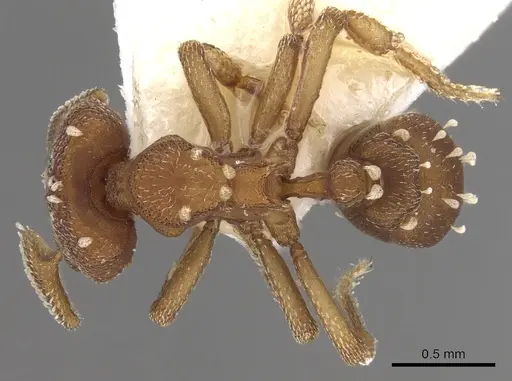
Literature
Loading distribution map...Loading products...