
Eurhopalothrix gravis
- Sci. Name
- Eurhopalothrix gravis
- Tribe
- Attini
- Subfamily
- Myrmicinae
- Author
- Mann, 1922
- Distribution
- Found in 10 countries
Introduction
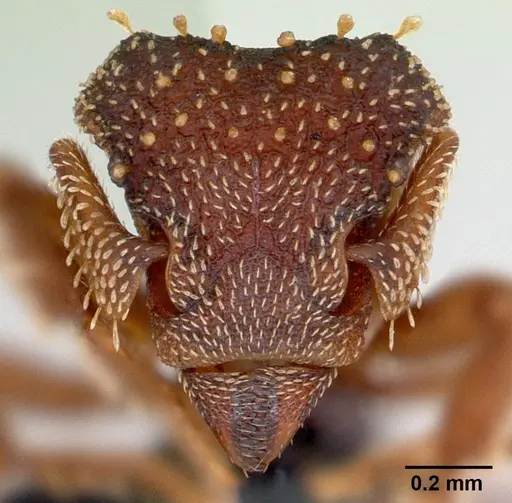
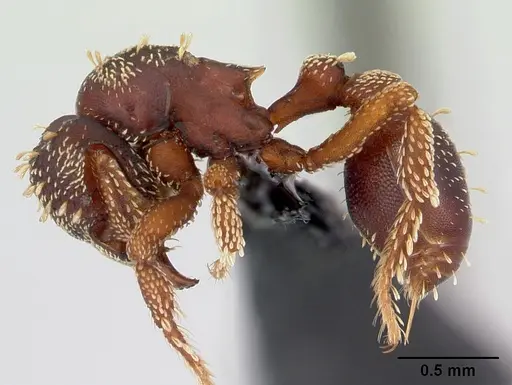
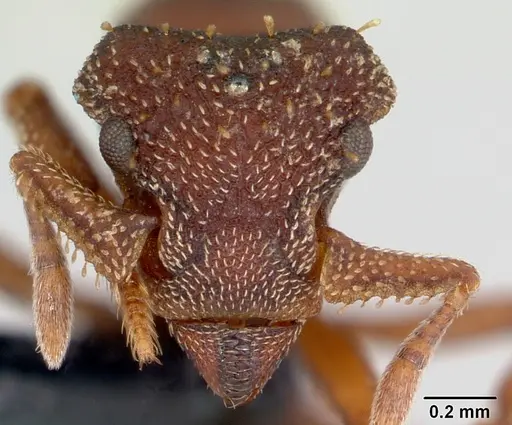
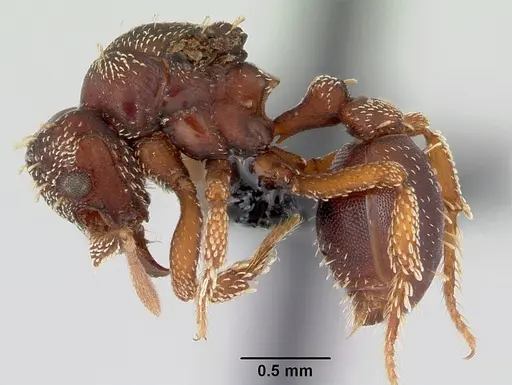
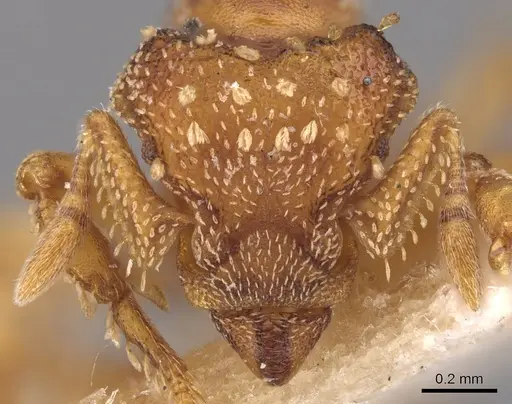
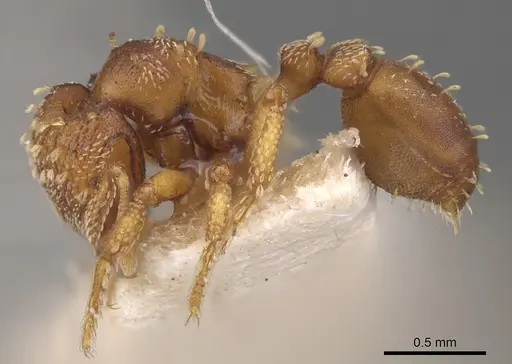
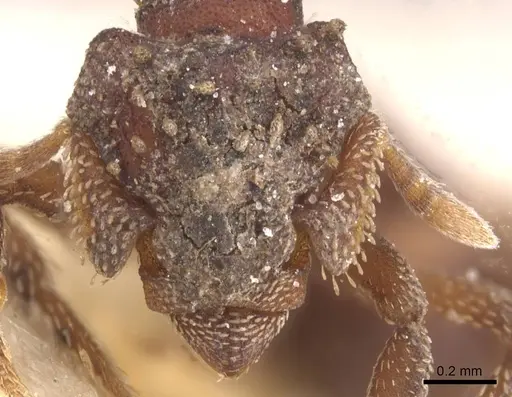
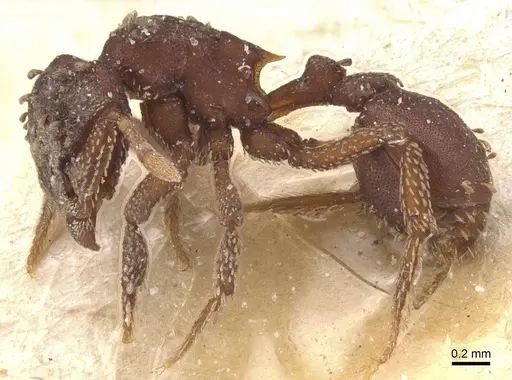
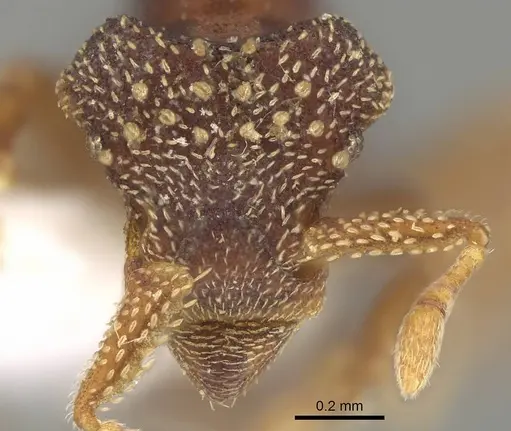
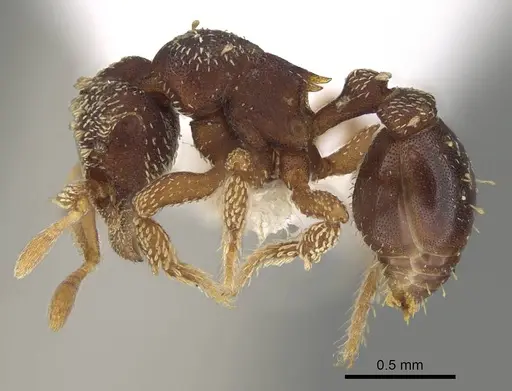
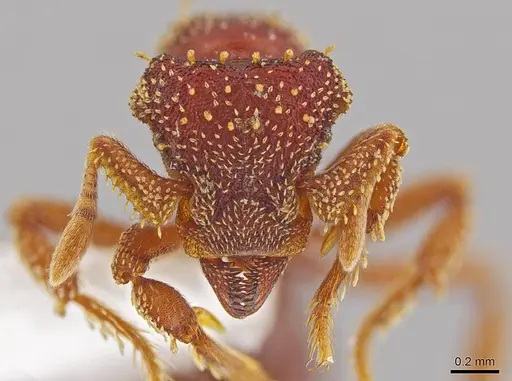
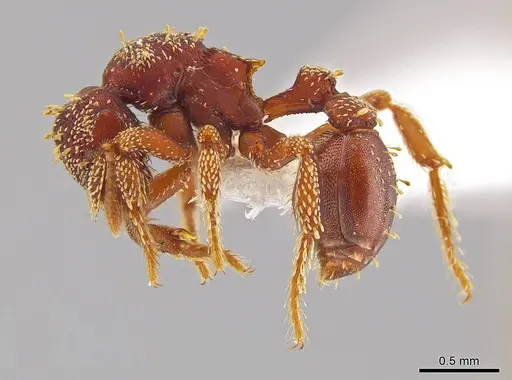
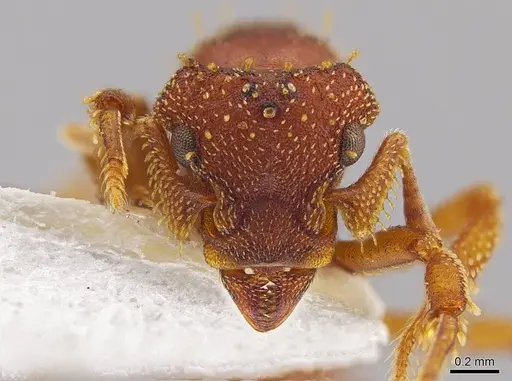
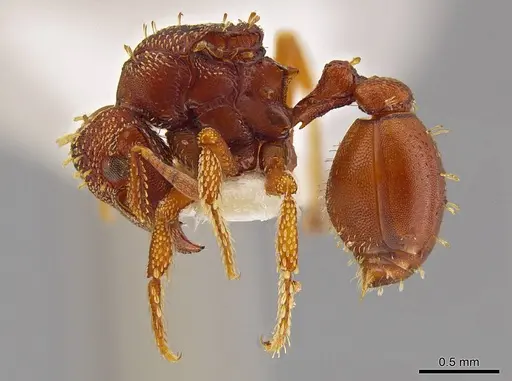
Eurhopalothrix gravis is a tiny, cryptic predatory ant from Central America and northern South America. Workers are extremely small (head width about 0.9 mm) and have a distinctive orange-brown color . They have 18 specialized spoon-shaped hairs on the face and a double row of teeth on their triangular mandibles for seizing tiny prey . A thin layer of clay coats their bodies, especially the face, helping them blend into the leaf litter and ambush prey . As a member of the tribe Attini (subfamily Myrmicinae), they have a functional sting, though it is too small to affect humans. They are stealth predators that hide and wait for prey in tropical forest floors . Colonies are tiny and rarely seen in the wild.
Quick Summary
- Difficulty: Expert
- Origin & Habitat: Southern Mexico to Costa Rica, with records extending to Colombia and possibly Brazil (Santa Catarina). Found in mature to second growth wet forests from sea level to 1100 m elevation [1]. Nests in decaying wood and leaf litter on the forest floor [4].
- Colony Type: Unconfirmed, no published data on queen number or colony structure.
- Size & Growth:
- Queen: Size data unavailable in literature.
- Worker: Size data unavailable in literature.
- Colony: Unknown, likely small based on low occurrence in litter samples [1].
- Growth: Unknown, likely slow
- Development: No direct data available. Based on similar small Myrmicinae, estimate 6–10 weeks at optimal temperature. (No published development studies exist for this species.)
- Antkeeping:
- Temperature: Keep around 22–26°C, inferred from lowland wet forest habitat [1]. Avoid drops below 20°C or spikes above 30°C.
- Humidity: Very high humidity essential, keep nest substrate consistently moist but not waterlogged. Mature wet forest habitat [1].
- Diapause: Unknown, as a tropical lowland species, formal diapause may not be required, but a slight cool period (18–20°C) during winter may be tried cautiously.
- Nesting: Naturalistic setup works best: small chambers with leaf litter, small pieces of rotting wood, or a Y-tong/plaster nest with tight spaces scaled to their tiny size. Avoid tall open areas.
- Behavior: Extremely cryptic and secretive. Workers stay hidden under loose bark or in leaf litter [1]. They are predatory and rely on stealth. Their minute size makes escape prevention critical, standard barriers need fine mesh. They possess a sting, but it is not medically significant.
- Common Issues: escape prevention is critical, they are tiny and will slip through standard barriers without fine mesh, no published care information means all recommendations are estimates based on genus patterns, slow growth and tiny colony sizes may test keeper patience, wild-caught colonies may have parasites that kill them in captivity, they require live micro-prey and may not accept sugar sources
Natural History and Identification
Eurhopalothrix gravis is a small, cryptic ant that most keepers will never see in the wild. Workers are tiny (head width 0.83–0.94 mm) with orange-brown color and unique features [1]. One of the most unusual traits is their specialized spatulate setae, stiff, spoon-shaped hairs that cover the body, especially 18 hairs on the face [1]. These setae help the ant stick clay particles to its body, creating a camouflaged coating that makes it nearly invisible on the forest floor [3]. The mandibles have a double row of teeth: an outer row of 10 flattened teeth and an inner row of 3 long needle-shaped teeth for grabbing prey [1]. The genus Eurhopalothrix has 7-segmented antennae and triangular mandibles [3]. This species is separated from related ones by short labral lobes, thin standing setae, and 6 setae on the promesonotum [5]. They also have a functional sting, typical of the tribe Attini, but it is harmless to humans.
Distribution and Habitat
Eurhopalothrix gravis has a patchy distribution from southern Mexico through Central America (Guatemala, Honduras, Nicaragua, Costa Rica) and into northern South America (Colombia, Venezuela) [1][6]. An unconfirmed record exists from Brazil (Santa Catarina) [1]. It occurs from sea level to about 1100 m elevation, making it a true lowland species [1]. They live in mature to second growth wet forests, never in dry habitats [1]. Inside the forest, they nest in decaying wood and leaf litter. Unlike many leaf litter ants, they are sometimes found under loose bark of rotting wood [1]. They are typically low density: less than 1% of Winkler samples contain this species, though one Costa Rican site at 1100 m had 8% occurrence [1]. An alate queen was captured in a flight intercept trap in Belize in late August 2007,suggesting nuptial flights happen in the rainy season [1].
Feeding and Diet
Eurhopalothrix gravis is a specialized predator in tropical leaf litter, using stealth or sit-and-wait tactics [3][4]. Their clay coating helps them ambush tiny prey that walks past. In captivity, offer very small live prey: springtails, fruit flies, and other micro-arthropods. Even pinhead crickets may be too large. Sugar acceptance is unknown, many related Basicerotini are purely predatory, but some may occasionally take honeydew. Offer sugar water or honey occasionally, but don’t rely on it. Feed small prey 2–3 times per week and remove any leftovers within 24 hours to prevent mold.
Housing and Nest Setup
To keep Eurhopalothrix gravis, you need to recreate their leaf litter microhabitat. They are tiny and secretive, so a naturalistic setup works better than standard test tubes. Use a Y-tong (AAC) nest with narrow chambers scaled to their tiny size. Alternatively, a small plaster nest or a natural setup with leaf litter and rotting wood pieces. Provide small, tight spaces, avoid tall open areas that make them feel exposed. High humidity is critical: keep the nest substrate consistently moist but not waterlogged. A water tube helps, and misting occasionally maintains humidity. Escape prevention must be excellent, use fine mesh and tight seals, as they can slip through gaps that hold larger ants. [4]
Temperature and Seasonal Care
Eurhopalothrix gravis comes from warm, humid lowlands, so keep them at 22–26°C [1]. A heating cable on one side of the nest gives a gentle gradient so they can choose. Avoid temperatures below 20°C or above 30°C. Since they are tropical lowland ants, formal diapause is probably not required. If you live in a temperate region, you could try a slight cool period (18–20°C for 2–3 months) to mimic seasonal cycles, but this is speculative. Consistency is key, avoid sudden temperature changes. Watch the colony: if workers cluster together, they may be cold, if they avoid the heated area, it’s too warm. Adjust accordingly.
Challenges and Common Problems
This species is for experienced keepers only, almost nothing is known about captive care. All advice is based on genus patterns and related species, so you’ll need to experiment. Escape prevention is critical despite their small size, they can slip through standard barriers. Growth is likely very slow, so patience is essential. Overfeeding or wrong housing often kills colonies. Wild-caught colonies may carry parasites that can wipe them out. If your colony fails, that’s normal given the lack of published methods. Never combine multiple foundresses, colony founding is unstudied.
Frequently Asked Questions
How long does it take for Eurhopalothrix gravis to produce first workers?
Unknown, no published data. Based on similar small Myrmicinae, estimate 6–10 weeks at around 24°C. Expect slow progress.
Can I keep Eurhopalothrix gravis in a test tube?
Test tubes are not ideal. They prefer tight, high-humidity spaces. A small Y-tong nest with narrow chambers or a natural setup with leaf litter works much better.
What do Eurhopalothrix gravis eat?
They are predators of tiny arthropods. Offer springtails, fruit flies, and other micro-prey. Sugar water may be tried occasionally but is not a primary food source.
Are Eurhopalothrix gravis good for beginners?
No. Only for experts. No captive care information exists, and they need very specific conditions. Slow growth also tests patience.
How big do Eurhopalothrix gravis colonies get?
Unknown but likely small (probably under 100 workers). They occur at very low density in the wild [1].
Do Eurhopalothrix gravis need hibernation?
Unknown. As a tropical lowland species, formal diapause is likely not needed. A mild cool period (18–20°C) during winter may be tried, but it's speculative.
Why are my Eurhopalothrix gravis dying?
Common causes: incorrect humidity (too dry), temperature stress, overfeeding leading to mold, parasites from wild colonies, or improper housing. No published care protocol exists, so expect some trial and error.
Can I keep multiple queens together?
No data exists. Colony founding is unconfirmed. Do not combine foundresses – keep each queen separately.
What is the best nest type for Eurhopalothrix gravis?
A Y-tong (AAC) nest with small, tight chambers scaled to their tiny size. Alternatively, a small plaster nest or natural setup with leaf litter and rotting wood. Avoid large, open spaces.
Report an Issue
The current care sheet is based fully on literature. See inconsistencies, or something that's incorrect? Please , it will be resolved after review from an admin. Contributing to the blogs tab also helps providing information, to make us be able to further improve the caresheets. Thank you for your support!
References

This caresheet is licensed under CC BY-SA 4.0 .
Community Blogs
CASENT0107554
View on AntWeb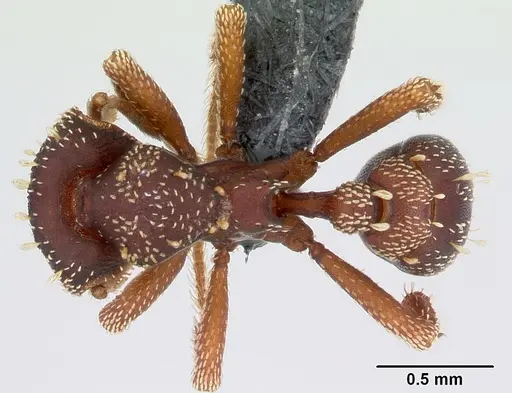
CASENT0172770
View on AntWeb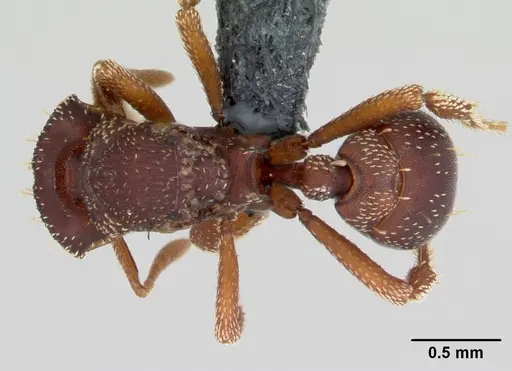
CASENT0900928
View on AntWeb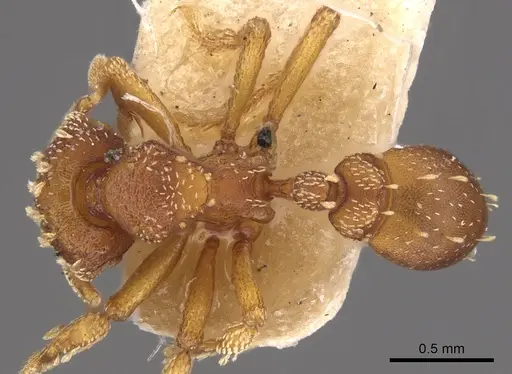
CASENT0912537
View on AntWeb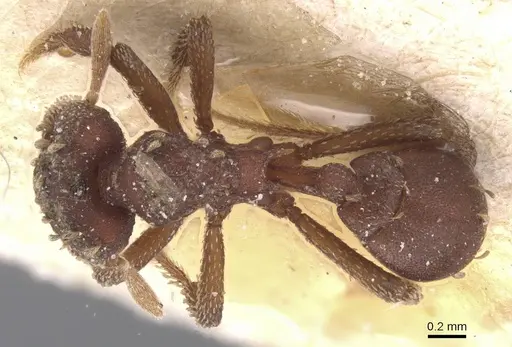
CASENT0914899
View on AntWeb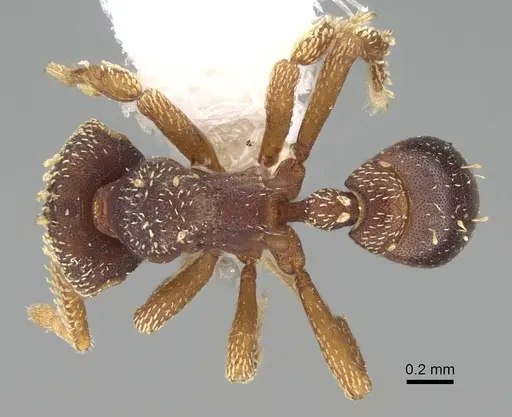
INB0003212671
View on AntWeb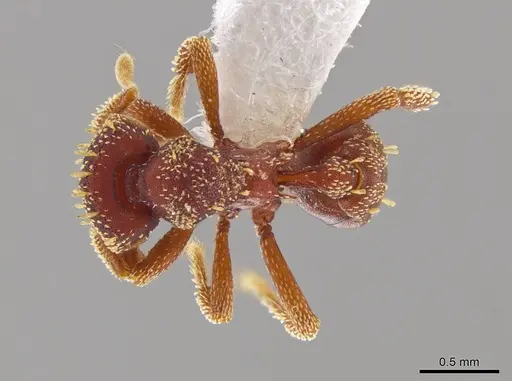
INBIOCRI001237722
View on AntWeb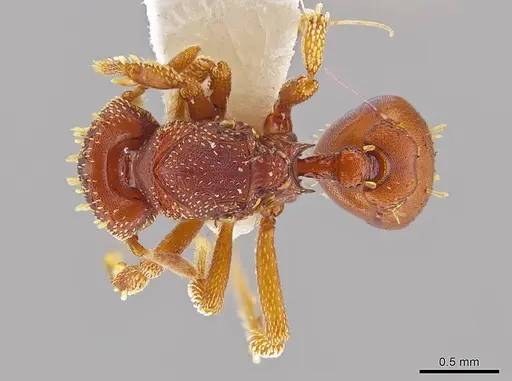
Literature
Loading distribution map...Loading products...