
Eurhopalothrix alopeciosa
- Sci. Name
- Eurhopalothrix alopeciosa
- Tribe
- Attini
- Subfamily
- Myrmicinae
- Author
- Brown & Kempf, 1960
- Distribution
- Found in 1 countries
Introduction
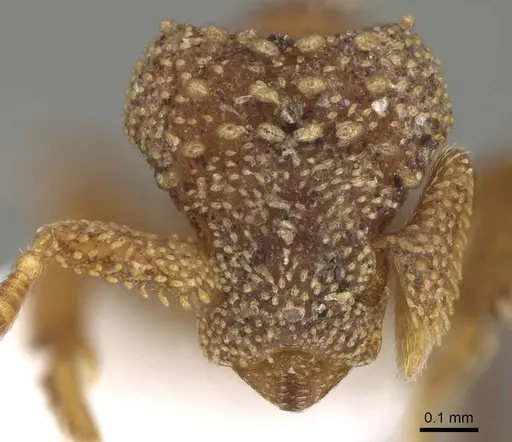
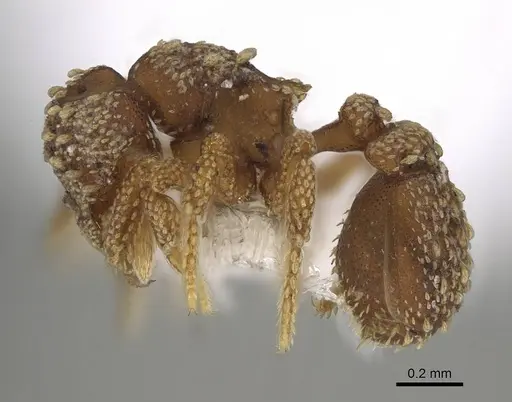
Eurhopalothrix alopeciosa is a tiny ant measuring about 2mm in total length [AntWiki]. Workers have a distinctive appearance with abundant ground pilosity - small, flattened hairs lying close to the body - along with larger erect setae that are nearly circular and almost as wide as they are long, giving them a fuzzy or pompon-like appearance. The first gastral tergite displays these specialized hairs in an irregular double row. This species belongs to the tribe Attini and is known only from type specimens collected in Trinidad, with additional records from Colombia and Ecuador . What makes this species particularly interesting is its extreme rarity - it has never been documented in the wild since the original type specimens were described in 1960. This makes it one of the least studied ants in existence, and all care recommendations must be inferred from related species in the genus. The genus Eurhopalothrix is known for cryptic, litter-dwelling habits where these tiny ants forage in the dark, humid microhabitats of forest floors.
Quick Summary
- Difficulty: Expert
- Origin & Habitat: Trinidad, Colombia, and Ecuador in the Neotropical region. This species inhabits tropical forest leaf litter in very humid, shaded environments [2].
- Colony Type: Colony structure is unconfirmed, only worker castes have been documented, and no queens have been described in scientific literature [2].
- Size & Growth:
- Antkeeping:
- Temperature: Keep warm at 24-28°C. As a tropical species from Trinidad and Colombia, they likely prefer stable warm conditions.
- Humidity: Very high humidity required, think damp forest floor. Keep the nest substrate consistently moist but not waterlogged. These tiny ants are prone to desiccation.
- Diapause: Unknown, likely no true diapause given their tropical origin, but they may show reduced activity during dry seasons.
- Nesting: In captivity, use small test tubes with cotton-plugged water reservoirs or small nests with tight chambers scaled to their tiny size. The chambers should be narrow, these are litter-dwelling ants that prefer cramped, dark spaces. A layer of moist substrate helps maintain humidity.
- Behavior: Extremely cryptic and rarely seen. Based on related species, they are likely slow-moving and forage in the leaf litter layer, possibly predating on tiny arthropods. Their very small size means escape prevention is critical, they can squeeze through the tiniest gaps. Workers likely have mild temperament but may bite if threatened. They possess a stinger but due to their tiny size, any sting would likely be imperceptible to humans.
- Common Issues: escape prevention is critical due to their extremely small size, use fine mesh and tight-fitting lids, no documented colony founding behavior makes establishing from queen uncertain, humidity control is challenging, too dry kills them, too wet causes mold, they are extremely rare in the hobby with almost no established husbandry protocols, lack of documented diet means determining accepted foods requires experimentation
Understanding Eurhopalothrix alopeciosa
This is one of the rarest and least studied ants in existence. Eurhopalothrix alopeciosa was described in 1960 from specimens collected in Trinidad, and despite subsequent surveys in Colombia and Ecuador, no additional colonies have been documented in the scientific literature [2]. This means we know almost nothing about their actual biology in the wild, no one has ever observed a queen, a founding colony, or watched them forage.
The genus Eurhopalothrix belongs to the tribe Attini, which includes leaf-cutter ants but also many smaller, more cryptic species that are predatory or fungivorous. These ants are characterized by their distinctive pilosity, the combination of flattened ground hairs and larger erect setae that give them a fuzzy appearance. Related species like Eurhopalothrix pilulifera and Eurhopalothrix clypeata share similar morphology [2].
For antkeepers, this species represents a true challenge: there are no established husbandry protocols, no documented care guides, and no one to ask about what works. Every aspect of keeping this species would be experimental. This makes it an expert-level species suitable only for experienced antkeepers who enjoy the challenge of pioneering new husbandry methods.
Housing and Nest Setup
Given their tiny size and cryptic nature, housing requires careful attention to scale and humidity. Use test tubes with cotton-plugged water reservoirs, the small diameter matches their natural preference for cramped spaces. Alternatively, small nests with chambers no more than 3-4mm in height work well.
The nest material should retain moisture well, coco fiber, peat moss, or a soil mixture all work. Cover the nest partially with a damp layer of substrate to prevent rapid drying. These ants are adapted to the dark, humid understory of tropical forests and will not do well in dry, bright conditions.
Because of their minute size, escape prevention must be excellent. Standard test tube stoppers may have gaps, wrap parafilm around connections and use fine mesh on any ventilation holes. Even a 1mm gap is enough for these ants to escape.
Feeding and Diet
The diet of Eurhopalothrix alopeciosa is completely unstudied, but based on related species in the genus and their position in the Attini tribe, they likely fall into one of two categories: small predators feeding on micro-arthropods, or fungivorous species that cultivate small fungal gardens.
For captive feeding, start with small live prey: springtails are an ideal size for these tiny ants. Other options include fruit flies, newly hatched pinhead crickets, and small mealworms cut into tiny pieces. You may also try offering small amounts of honey or sugar water, though acceptance is uncertain.
Given how little we know about this species, keep a detailed log of what you offer and whether it gets consumed. This experimental approach is necessary when working with an unstudied species. Remove any uneaten prey after 24-48 hours to prevent mold.
Temperature and Humidity Management
As a tropical species from Trinidad and Colombia, Eurhopalothrix alopeciosa requires warm, stable conditions. Aim for temperatures in the 24-28°C range, the middle to upper end of typical room temperature in most homes. If your room is cooler, use a heating cable placed on top of the nest (never underneath, as this can dry out the substrate too quickly).
Humidity is more critical than temperature for this species. Their natural habitat is the humid leaf litter layer of tropical forests, where humidity approaches 100%. In captivity, keep the nest substrate consistently moist. A water reservoir in the test tube helps, but check regularly that the substrate hasn't dried out.
Avoid both excessive ventilation (which dries them out) and no ventilation (which causes mold). A balance is needed, small ventilation holes that allow some air exchange without rapid moisture loss.
The Challenge of an Unstudied Species
Eurhopalothrix alopeciosa represents a unique challenge in antkeeping: there is no established protocol, no community knowledge base, and no guarantee that any approach will work. The queen has never been documented, so founding a colony from a wild-caught queen may not even be possible, we do not know if they have ergatoid (wingless) queens like some related species.
This uncertainty is part of what makes the species interesting for expert antkeepers. You would be pioneering husbandry methods for a species that has never been kept in captivity. Success would represent a genuine contribution to antkeeping knowledge.
Approach this species with patience and scientific curiosity. Document everything, what you feed, temperature ranges, humidity levels, colony behavior. Share your findings with the antkeeping community. Even failures provide valuable information about what does not work. [2]
Frequently Asked Questions
How long does it take for Eurhopalothrix alopeciosa to develop from egg to worker?
The development timeline is completely unknown, no one has ever documented the development of this species.
Can I keep Eurhopalothrix alopeciosa in a test tube?
Yes, test tubes are likely the best housing option for these tiny ants. Use small-diameter tubes with cotton-plugged water reservoirs. The small chambers match their natural preference for cramped, dark spaces in leaf litter.
What do Eurhopalothrix alopeciosa ants eat?
Diet is unconfirmed, but based on related species, they likely accept small live prey like springtails, fruit flies, and tiny arthropods. Sugar sources may or may not be accepted. Start with springtails as primary food and experiment with other options.
Are Eurhopalothrix alopeciosa ants good for beginners?
No, this species is absolutely not suitable for beginners. It is one of the least studied ants in existence, with no established husbandry protocols. Only expert antkeepers with experience in difficult species should attempt this challenge.
Do Eurhopalothrix alopeciosa ants need hibernation?
Diapause requirements are unknown, but given their tropical origin (Trinidad, Colombia), they likely do not require a true hibernation period. They may show reduced activity during dry seasons, but this is not well-documented.
How big do Eurhopalothrix alopeciosa colonies get?
Colony size is completely unknown, no wild colonies have ever been documented.
Why is Eurhopalothrix alopeciosa so rare in antkeeping?
This species is known only from type specimens collected in the 1930s-1960s. No additional wild colonies have been documented despite surveys in the region. The queen has never been described, making it impossible to found colonies from wild-caught queens. They remain one of the rarest ants in scientific collections.
What temperature should I keep Eurhopalothrix alopeciosa at?
Keep them warm at 24-28°C. As a tropical species from Trinidad and Colombia, they prefer stable warm conditions. If your room is below 24°C, use a heating cable on top of the nest to raise temperatures into this range.
How do I prevent Eurhopalothrix alopeciosa from escaping?
Escape prevention is critical due to their extremely small size (about 2mm). Use fine mesh on all ventilation, wrap parafilm around tube connections, and ensure all lids fit tightly. Even tiny gaps that would not concern other ants are escape risks for this species.
Report an Issue
The current care sheet is based fully on literature. See inconsistencies, or something that's incorrect? Please , it will be resolved after review from an admin. Contributing to the blogs tab also helps providing information, to make us be able to further improve the caresheets. Thank you for your support!
References

This caresheet is licensed under CC BY-SA 4.0 .
Community Blogs
CASENT0914891
View on AntWeb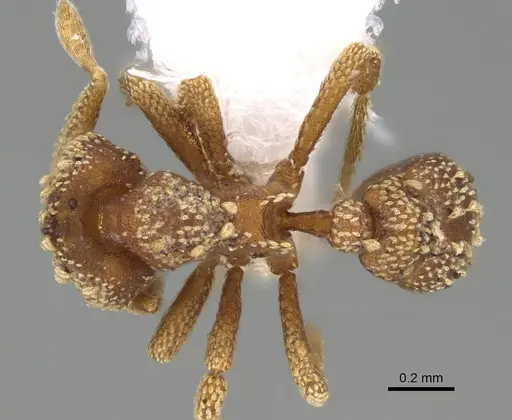
Literature
Loading distribution map...Loading products...