
Epopostruma mercurii
- Sci. Name
- Epopostruma mercurii
- Tribe
- Attini
- Subfamily
- Myrmicinae
- Author
- Shattuck, 2000
- Distribution
- Found in 0 countries
Introduction
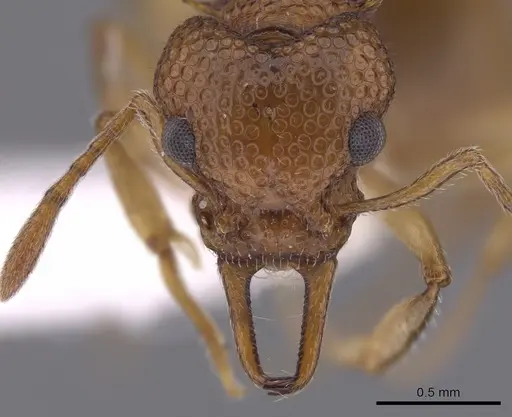
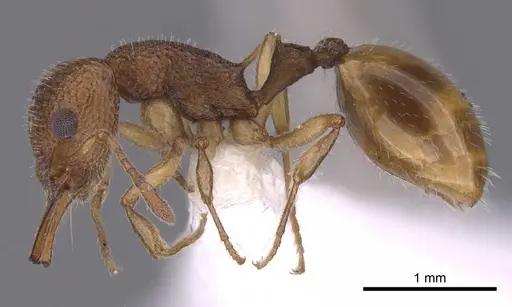
Epopostruma mercurii is a tiny Australian ant measuring 4.4mm in total length. Workers are yellow-red with a weak dark spot on the head, and the gaster is typically golden brown, sometimes with faint banding. This species is instantly recognizable by its most striking feature: the postpetiole (the segment between the waist and abdomen) has expanded into thin, wing-like lateral extensions that give it an unusual appearance. The species was described in 2000 from a single collection in Western Australia near Eneabba. It closely resembles its relative Epopostruma sowestensis but can be distinguished by its well-developed petiolar spines and the absence of flanges between the propodeal spines [AntWiki]. Very little is known about this species in the wild. What makes Epopostruma interesting as a genus is their unusual morphology - they have specialized mandibles and the distinctive wing-like postpetiole. These are trap-jaw relatives, though their hunting behavior has not been specifically documented [AntWiki].
Quick Summary
- Difficulty: Expert
- Origin & Habitat: Western Australia, specifically collected near Eneabba in the south-west region. The natural habitat in this area consists of dry sclerophyll forest and woodland [2].
- Colony Type: Unknown, colony structure has not been documented for this species. Related Epopostruma species typically form small colonies.
- Size & Growth:
- Antkeeping:
- Temperature: Keep around 24-28°C based on Western Australian climate. Provide a gentle temperature gradient so ants can choose their preferred zone. Room temperature in most homes (22-25°C) should be acceptable.
- Humidity: Moderate humidity around 50-60%. These ants are from a relatively dry region of Western Australia, so avoid overly damp conditions.
- Diapause: Unknown, Western Australian ants may have reduced activity in winter but true hibernation requirements are unstudied.
- Nesting: No specific nesting data exists. Based on related species and collection location, they likely nest in soil or under stones in the ground layer. A naturalistic setup with soil substrate and flat stones for cover, or a Y-tong/plaster nest with tight chambers would be appropriate.
- Behavior: Behavior is unstudied for this species. As trap-jaw relatives, they likely have specialized predatory instincts and may be shy or secretive. Their unusual mandibles suggest they can deliver a quick bite. Expect them to be slow-moving and not aggressive. Escape prevention should be moderate, at 4.4mm they are small but not extremely tiny.
- Common Issues: completely unstudied biology means care is largely experimental, no confirmed diet, must determine what they accept through trial and error, slow growth expected based on related species, hibernation requirements unknown, may cause colony stress if incorrect, single collection location means very limited genetic diversity in captive colonies
Discovery and Identification
Epopostruma mercurii was described by Steve Shattuck in 2000 from material collected in Western Australia. The species is known from only a single collection, making it one of the rarest Australian ants in captivity. The type locality is near Eneabba, a town in the Wheatbelt region of Western Australia [1].
The most distinctive feature of this species is the wing-like expansion of the postpetiole, those flat, blade-like extensions on each side of the waist. This feature is shared with other Epopostruma but is particularly pronounced in E. mercurii. You can distinguish it from the similar E. sowestensis by checking the petiole: E. mercurii has distinct, well-developed spines, while E. sowestensis has only small angles. Additionally, E. mercurii lacks the flanges between the propodeal spines that E. sowestensis possesses [1].
Natural History and Biology
The biology of Epopostruma mercurii is entirely unknown, this is one of the least studied ant species in Australia. We do not know what they eat, how they found colonies, when they have nuptial flights, or anything about their colony structure. This represents both a challenge and an opportunity for antkeepers: you are truly pioneering the husbandry of this species.
Based on the genus, they are likely predatory on small invertebrates, using their specialized mandibles to capture prey. The Epopostruma genus is related to trap-jaw ants (Strumigenys), though they do not have the extreme snap-jaw mechanism. They probably forage slowly through leaf litter, hunting micro-arthropods. The collection location in Western Australia's wheatbelt suggests they prefer open woodland or forest habitats with well-drained soils [2][1].
Housing and Nest Setup
Since we have no specific information about this species' nesting preferences, you will need to experiment. Based on the collection locality and related species, a naturalistic setup with a soil substrate works best. Use a mix of sand and fine soil that holds some moisture but drains well, these are from a relatively dry region.
Provide multiple hiding spots using flat stones, pieces of bark, or leaf litter on the surface. The ants will likely nest in the soil rather than in wood, so focus on substrate quality. A test tube setup can work for founding colonies, but be prepared to move them to a larger naturalistic setup once the colony grows. The wing-like postpetiole suggests they may be surface-active, so ensure the outworld has plenty of floor space.
Feeding and Diet
Diet is entirely speculative for this species. As Epopostruma are related to trap-jaw ants, they are almost certainly predatory. Start with small live prey: fruit flies, pinhead crickets, and tiny insects are appropriate sizes for 4.4mm workers. You might also try small mealworms, but chop them into manageable pieces.
Because nothing is known about their acceptance of sugar sources, offer a small test tube of sugar water or honey water, but do not rely on it being accepted. Some Myrmicinae take honeydew from aphids, so you could try providing sugar water as a supplement. The key is patience, expect to spend time determining what this species will accept. Keep the diet simple: small live prey should be the primary food source.
Temperature and Seasonal Care
Eneabba in Western Australia experiences a Mediterranean climate with hot, dry summers and cool, wet winters. This suggests the ants can tolerate a range of temperatures but prefer warmth during their active season. Keep the nest at 24-28°C during the active season, with a slight gradient so they can move to cooler areas if needed.
For winter, consider providing a cool period around 15-18°C for 2-3 months. This mimics the Australian winter and may trigger natural seasonal behaviors. However, since this species has not been studied, monitor your colony closely, if they remain active and healthy through winter, they may not need a true diapause. Err on the side of providing some cooling rather than keeping them warm year-round.
Frequently Asked Questions
How long does it take for Epopostruma mercurii to produce first workers?
We do not know, this species has never been bred in captivity and no development data exists. Be patient with this species.
What do Epopostruma mercurii ants eat?
Diet is unconfirmed, but based on their relation to trap-jaw ants, they are likely predatory. Offer small live prey like fruit flies, pinhead crickets, and tiny insects. Sugar water may be accepted as a supplement but should not be the primary food. Start with live prey and experiment.
Are Epopostruma mercurii good for beginners?
No, this species is not recommended for beginners. Almost nothing is known about their care requirements, and they are extremely rare in the antkeeping hobby. You should have experience with other Myrmicinae species before attempting this one.
How big do Epopostruma mercurii colonies get?
Colony size is unknown. Based on related Epopostruma species, they likely form small colonies. Do not expect the large colonies typical of some Myrmicinae.
Can I keep multiple Epopostruma mercurii queens together?
We do not know their colony structure. Multiple unrelated queens are not recommended since this has never been documented. Start with a single founding queen and see how she progresses.
What temperature should I keep Epopostruma mercurii at?
Keep them warm: around 24-28°C. Provide a temperature gradient so they can choose their preferred zone. Room temperature (22-25°C) in most homes should be acceptable, but warmer is likely better for growth.
Do Epopostruma mercurii need hibernation?
Hibernation requirements are unknown. Based on their Western Australian origin, they likely benefit from a cool period in winter (15-18°C for 2-3 months). Monitor your colony, if they remain active, they may not need full diapause.
What makes Epopostruma mercurii special compared to other ants?
Their most distinctive feature is the wing-like expansion of the postpetiole, flat, blade-like structures on each side of the waist segment. They are also extremely rare, known from only a single collection in Western Australia. Keeping this species is genuinely pioneering antkeeping [1].
Where can I get Epopostruma mercurii?
This species is extremely rare in the antkeeping hobby. It was described from a single collection in Western Australia and is not commonly available. You would need to find a specialized Australian antkeeper or breeder who has obtained them [1].
Report an Issue
The current care sheet is based fully on literature. See inconsistencies, or something that's incorrect? Please , it will be resolved after review from an admin. Contributing to the blogs tab also helps providing information, to make us be able to further improve the caresheets. Thank you for your support!
References

This caresheet is licensed under CC BY-SA 4.0 .
Community Blogs
CASENT0900025
View on AntWeb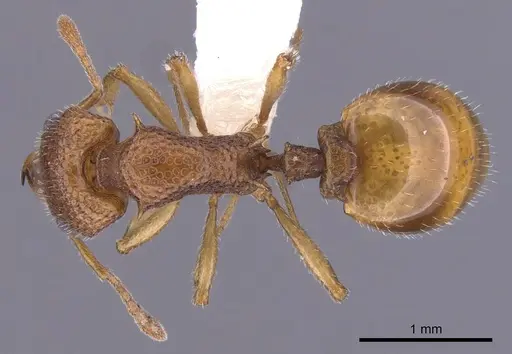
Literature
Loading distribution map...Loading products...