
Epopostruma frosti
- Sci. Name
- Epopostruma frosti
- Tribe
- Attini
- Subfamily
- Myrmicinae
- Author
- Brown, 1948
- Distribution
- Found in 1 countries
Introduction
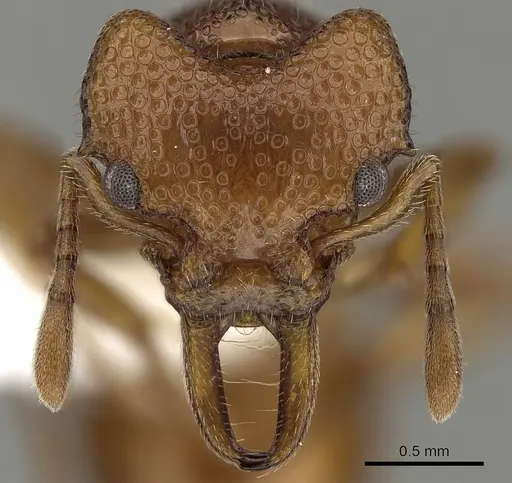
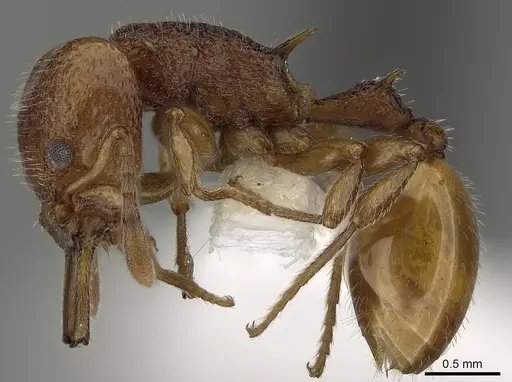
Epopostruma frosti is a small Australian ant belonging to the tribe Attini (Dacetini). Workers measure 4.7-5.6mm in total length with a distinctive very broad head featuring a sharp tooth or projection immediately above each eye . The body is yellow-red in color, with legs and sometimes the abdomen slightly lighter than the mesosoma. This species occurs in southern South Australia and Western Australia, where it inhabits mallee and dry sclerophyll habitats . The genus Epopostruma is known for their unusual broad heads and spiny appearance, making these ants quite striking to observe.
Quick Summary
- Difficulty: Medium
- Origin & Habitat: Southern Australia, found in mallee, dry sclerophyll forests, and ridges with low heath scrub. Nests have been collected under logs, under mossy limestone rocks (where they build carton material nests), and in soil and leaf litter [1].
- Colony Type: Colony structure is unconfirmed. Related Dacetini species are typically monogyne (single queen), but specific data for E. frosti is lacking.
- Size & Growth:
- Queen: Size data unavailable, no documented measurements for queens in available literature
- Worker: 4.7-5.6mm total length [1]
- Colony: Unknown, no colony size data available
- Growth: Unknown, no development data available
- Development: Unconfirmed, no direct development data exists for this species (Development time is unknown. Related Dacetini species typically have slow development.)
- Antkeeping:
- Temperature: Keep at room temperature (around 20-24°C). No specific temperature requirements are documented for this species.
- Humidity: Provide a humidity gradient, keep substrate lightly moist but allow it to dry partially between waterings. These ants inhabit dry sclerophyll and mallee areas.
- Diapause: Likely required. Southern Australian species typically need a winter rest period. Reduce temperature for 2-3 months during winter.
- Nesting: Provide a naturalistic setup with soil and small stones, or a Y-tong/plaster nest with narrow chambers. They nest under rocks and in leaf litter in the wild, and are known to build carton material nests. Include some cover and darker areas [1].
- Behavior: Epopostruma frosti is a nocturnal to crepuscular forager. Workers have been collected at sugar baits late in the evening and at honey baits on tree trunks on cold, moonless nights [1]. As a Dacetini, they are likely predatory on small invertebrates, particularly micro-arthropods like springtails. Workers are not aggressive but may bite if threatened. Their small size means they can fit through small gaps, use standard escape prevention.
- Common Issues: lack of documented care information makes this a species for experienced antkeepers, no data on founding behavior means establishing colonies from wild-caught queens may be challenging, slow growth typical of Dacetini requires patience, predatory diet means you must commit to providing live small prey regularly, hibernation requirements are inferred but not directly studied for this species
Appearance and Identification
Epopostruma frosti workers are distinctive among Australian ants due to their very broad head with a sharp tooth or projection immediately above each eye. This feature makes them immediately recognizable and sets them apart from most other Myrmicinae. Workers measure 4.7-5.6mm in total length. The body is yellow-red, with the legs and sometimes the gaster (abdomen) being slightly lighter than the mesosoma (middle body section). They have pronotal spines that are elongate, and the petiole and postpetiole also bear distinctive spines. The first gastral tergite is smooth, and the body has short erect hairs on the dorsum [1].
Natural Habitat and Distribution
This species occurs in southern South Australia and Western Australia. The type locality was originally recorded as 'N. Mecklenburg' (now Putpayerta) in the Nuriootpa Hundred of South Australia, agricultural country that was originally covered with low rainfall vegetation including mallee scrub and savannah woodland [1]. They have been collected in mallee, dry sclerophyll, and dry sclerophyll on ridges with low heath scrub and tall gums on hillsides. Specific collection situations include foraging at sugar baits late evening and at honey baits on tree trunks during cold, moonless nights, indicating nocturnal foraging behavior. Nests have been found under logs, under mossy limestone rocks (where they construct nests from carton material), and in soil and leaf litter [1][2].
Feeding and Diet
As a member of the tribe Attini (Dacetini), Epopostruma frosti is likely primarily predatory on small invertebrates, particularly micro-arthropods like springtails, mites, and small insects. This is typical behavior for Dacetini ants, which have specialized mandibles for catching small prey. In captivity, you should offer live small prey such as springtails, small isopods, and tiny insects. Offer prey several times per week, removing any uneaten items after 24 hours. Sugar sources like honey water or sugar water may be accepted given their nocturnal foraging at sugar baits in the wild, but protein prey should form the primary diet.
Temperature and Seasonal Care
Keep nest temperatures at room temperature (around 20-24°C). This species comes from southern Australia where temperatures are moderate, but they do experience warm summers. During winter (roughly May-August in the southern hemisphere), reduce temperatures to simulate their natural seasonal cycle. Monitor colony activity, if workers become sluggish and cluster together, the temperature is appropriate for hibernation. Do not feed during diapause but ensure some moisture is available.
Nesting Requirements
In the wild, Epopostruma frosti nests under rocks, in soil and leaf litter, and under mossy limestone rocks where they build carton material nests. For captivity, a naturalistic setup with a soil-filled container works well, or you can use a Y-tong/plaster nest with appropriately scaled chambers. The chambers should be narrow enough that the ants feel secure but large enough for the colony to move freely. Include some form of cover or darker areas in the outworld to encourage foraging. The substrate should be kept lightly moist but allowed to dry partially between waterings, reflecting their preference for drier sclerophyll habitats. Provide a water tube for drinking [1].
Behavior and Foraging
This species is primarily nocturnal to crepuscular. Workers have been collected at sugar baits late in the evening and at honey baits on tree trunks during cold, moonless nights, indicating they forage under low light conditions [1]. They are likely slow-moving but capable of quick strikes when capturing prey. As Dacetini, they probably use their specialized mandibles to capture small invertebrates. Workers are not known to be aggressive toward keepers but may bite if handled roughly or if their nest is threatened. Their small size means they can squeeze through small gaps, use standard escape prevention but no special measures are needed for this medium-sized ant.
Defense Mechanism
Epopostruma frosti belongs to the subfamily Myrmicinae and tribe Attini. Like other Myrmicinae, they possess a functional stinger used to inject venom. However, their sting is not medically significant to humans. They may bite if threatened rather than using their stinger.
Frequently Asked Questions
How long does it take for Epopostruma frosti to produce first workers?
The exact development time is unknown. No documented development data exists for this species.
What do Epopostruma frosti ants eat?
They are likely predatory on small invertebrates. Feed live springtails, small isopods, and tiny insects. Sugar sources like honey water may also be accepted given their documented attraction to sugar baits in the wild.
Do Epopostruma frosti ants need hibernation?
Yes, likely required. As a southern Australian species, they probably need a winter rest period of 2-3 months at reduced temperatures to simulate their natural seasonal cycle.
Are Epopostruma frosti good for beginners?
This species is not ideal for beginners. There is limited documented care information available, and establishing colonies may be challenging. Consider starting with more commonly kept species before attempting Epopostruma frosti.
What size colony do Epopostruma frosti reach?
Colony size data is not available for this species.
What temperature should I keep Epopostruma frosti at?
Keep the nest at room temperature (around 20-24°C). No specific temperature requirements are documented for this species.
Can I keep multiple queens together?
Colony structure is unconfirmed for this species. Without documented information on multi-queen founding, it is not recommended to house unrelated queens together.
When do Epopostruma frosti alates appear?
Nuptial flight timing is unknown. No documented information exists on when sexuals (queens and males) are produced or when mating flights occur.
What makes Epopostruma frosti different from other Australian ants?
Their most distinctive feature is the sharp tooth or projection immediately above each eye, giving them a unique appearance among Australian Myrmicinae. They also have unusually broad heads compared to most ants.
Report an Issue
The current care sheet is based fully on literature. See inconsistencies, or something that's incorrect? Please , it will be resolved after review from an admin. Contributing to the blogs tab also helps providing information, to make us be able to further improve the caresheets. Thank you for your support!
References

This caresheet is licensed under CC BY-SA 4.0 .
Community Blogs
CASENT0280691
View on AntWeb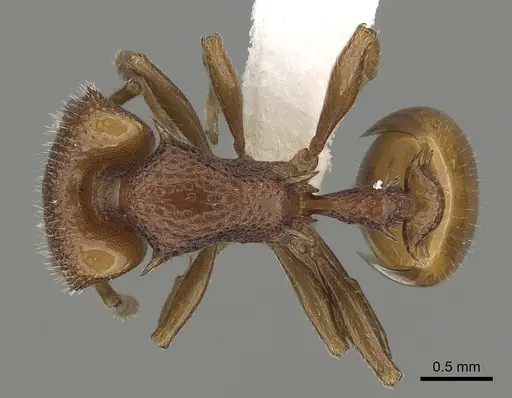
Literature
Loading distribution map...Loading products...