
Ectomomyrmex astutus
- Sci. Name
- Ectomomyrmex astutus
- Tribe
- Ponerini
- Subfamily
- Ponerinae
- Author
- Smith, 1858
- Distribution
- Found in 5 countries
Introduction
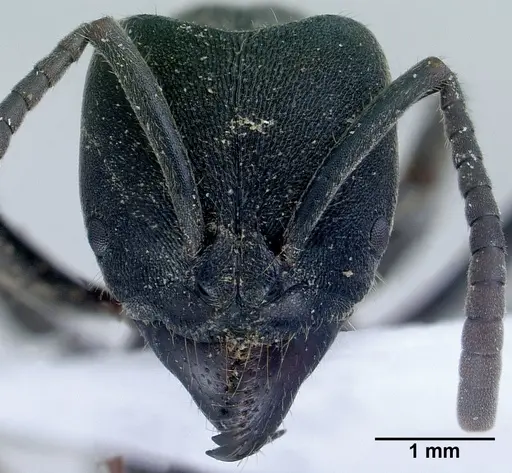
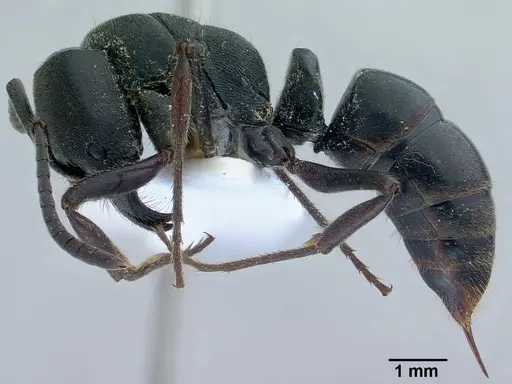
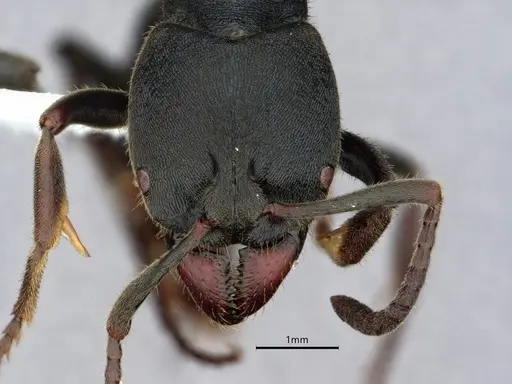
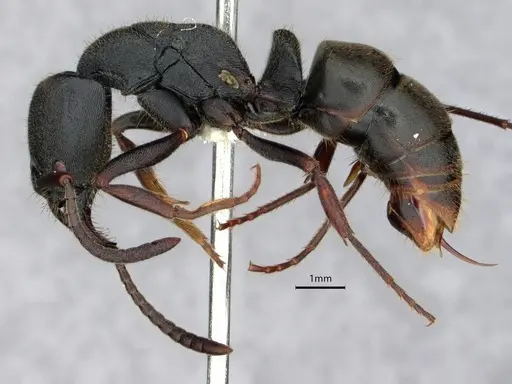
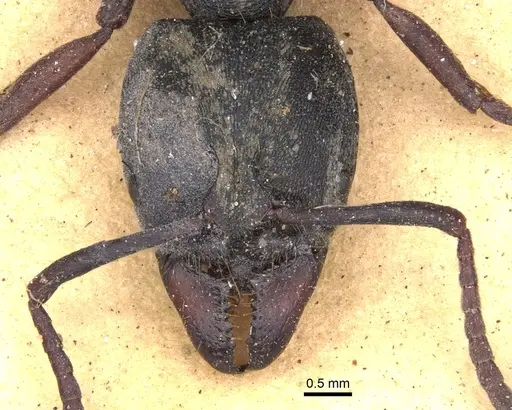
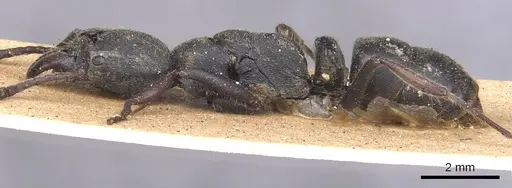
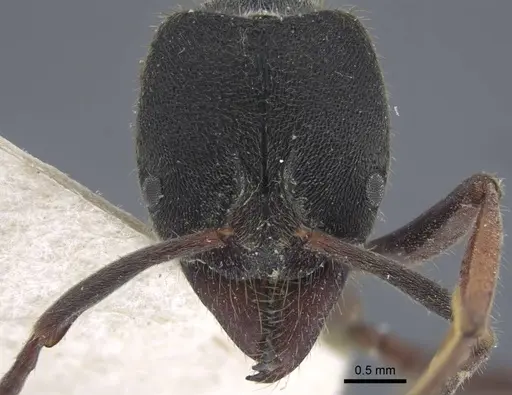
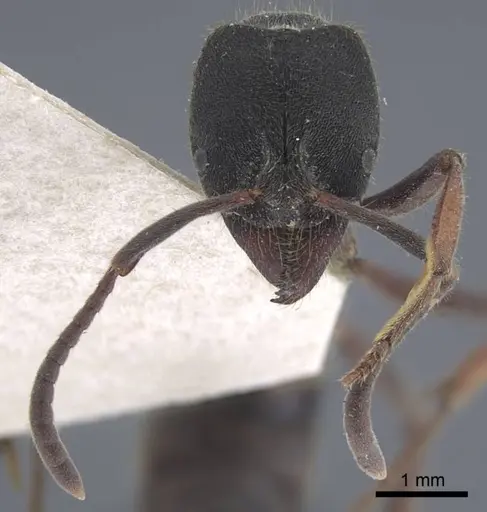
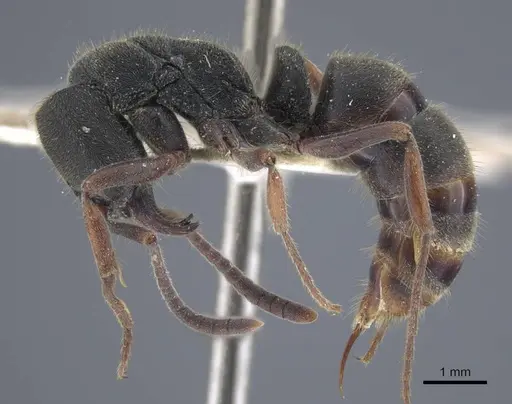
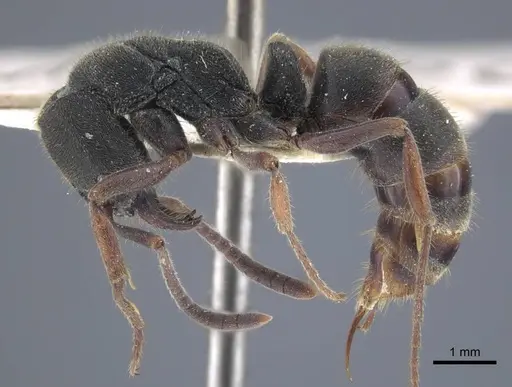
Ectomomyrmex astutus is a large ponerine ant, with workers measuring 8.5–16 mm . The body is black to brownish-black, with reddish-brown mandibles, antennae, and leg tarsi. The head and thorax have coarse longitudinal striations, while the gaster is finely punctured with a faint blue sheen . It is widespread across South and Southeast Asia, southern China, and into Australasia, including Australia, New Guinea, and Indonesia . It inhabits tropical forests, including mixed deciduous and limestone forests, nesting in soil and foraging on the ground . This species is an aggressive solitary predator equipped with a powerful sting , making it a challenging species for experienced keepers.
Quick Summary
- Difficulty: Hard
- Origin & Habitat: Tropical and subtropical regions from Australia (type locality) through Southeast Asia to southern China, India, and Indonesia [10][1][2][4]. Inhabits mixed deciduous forests, limestone forests, and warm broadleaved forests, nests in soil and forages on the ground surface [5][6][7][11].
- Colony Type: Polygynous – multiple queens can coexist within a colony. Workers can also become reproductive gamergates, providing flexible reproduction [12][13].
- Size & Growth:
- Queen: Not documented in available literature
- Worker: 8.5–16 mm [1][2][3]
- Colony: Up to 38 workers [14]
- Growth: Slow – colonies remain very small
- Development: Estimated 8–12 weeks (no direct data, based on typical Ponerinae patterns) (Development likely dependent on temperature and food availability.)
- Antkeeping:
- Temperature: Keep at 24–28 °C year-round. Use a heating cable to create a warm gradient. Avoid prolonged temperatures below 20 °C [6].
- Humidity: Keep the nest substrate consistently damp but not waterlogged. Provide a moisture gradient within the nest (no exact RH data, forest-dwelling ground-nester).
- Diapause: No – as a tropical species, maintain warmth year-round. Activity may slow in cooler months but no true diapause.
- Nesting: Deep soil layer (5–10 cm) for natural excavation. Y-tong (AAC) or plaster nests with large chambers also work well. Ensure secure lid to prevent escape [5][13].
- Behavior: Aggressive and quick to sting [8]. Solitary foragers that hunt individually on the ground [9]. Despite small colony size, they defend their nest vigorously. Escape risk is moderate – use tight-fitting lids and avoid gaps.
- Common Issues: slow colony growth (max ~38 workers) can cause frustration, powerful sting requires careful handling and protective gear, tropical warmth needed year-round increases energy costs, soil setup requires regular moisture maintenance and monitoring, wild-caught colonies may carry Wolbachia, but this is widespread and usually not harmful [12]
Housing and Nest Setup
Ectomomyrmex astutus is a ground-nesting species [5][13]. Provide at least 5–10 cm of substrate (coconut coir or soil mix) for burrowing. Alternatively, a Y-tong (AAC) or plaster nest with large, humid chambers works well. The nest must maintain a damp environment, a water reservoir or regular misting helps. Attach a heating cable to part of the nest to create a warm zone (24–28 °C). The outworld can be drier with a few hiding spots. Secure the lid tightly – while workers are large, they are strong and can push open weak lids.
Feeding and Diet
These ants are solitary predators that hunt small invertebrates on the ground [9][7]. Offer live prey such as small crickets, mealworms, or fruit flies 2–3 times per week. They are opportunistic and may also accept crushed insects or small pieces of meat. Sugar water is not a primary food but may be taken occasionally. Place prey directly in the outworld, workers will locate it individually.
Temperature and Seasonal Care
As a tropical species, Ectomomyrmex astutus requires warm temperatures year-round [6][2]. Maintain a gradient of 24–28 °C in the nest, with the warm end heated. No diapause is needed, if temperatures drop below 20 °C for extended periods, the colony may weaken. In winter, simply keep the heat source running. Activity may dip slightly during cooler months but the colony remains active.
Colony Structure and Reproduction
This species is polygynous, meaning multiple egg-laying queens can coexist [12][13]. Additionally, workers can become gamergates (reproductive workers) and contribute to egg production. Colony propagation occurs through independent founding (haplometrosis), budding (a queen leaves with workers), and fission (colony splits). The maximum recorded colony size is 38 workers [14]. Reproduction is flexible, which helps maintain colony stability.
Behavior and Temperament
Ectomomyrmex astutus is an aggressive ant with a powerful sting [8]. Workers forage solitarily, searching the ground for prey rather than using recruitment trails [9]. They will attack any intruder near the nest, including larger animals. Handling requires extreme caution – always wear gloves and use tools when opening the nest. Despite their small colony size, they are bold and will sting repeatedly if provoked.
Frequently Asked Questions
How long does it take for Ectomomyrmex astutus to develop from egg to worker?
Exact development time has not been published. Based on typical Ponerinae patterns, estimate 8–12 weeks at optimal temperatures (24–28 °C). Colonies grow slowly and remain small (max ~38 workers) [14].
Can I keep multiple Ectomomyrmex astutus queens together?
Yes, this is natural for the species. Ectomomyrmex astutus is polygynous, so multiple queens can coexist peacefully. If you capture multiple queens after a nuptial flight, you can keep them together from the start [12][13].
What do Ectomomyrmex astutus eat?
They are predators that hunt small invertebrates. Feed live prey such as small crickets, mealworms, or fruit flies 2–3 times a week. They forage individually [9] so prey should be placed where workers can find it. Sugar solutions are occasionally accepted but not essential.
Are Ectomomyrmex astutus good for beginners?
No. This species is recommended for experienced antkeepers. They have a powerful sting, require tropical warmth year-round, and colonies grow slowly. The small colony size and need for careful handling make it unsuitable for beginners.
How big do Ectomomyrmex astutus colonies get?
The maximum recorded colony size is 38 workers [14]. This is a very small colony compared to many ant species. Do not expect large numbers – these ants focus on individual strength rather than numbers.
Do Ectomomyrmex astutus need hibernation?
No, they do not require hibernation. As a tropical species, they need warm conditions (24–28 °C) all year. Activity may slow slightly in cooler months but this is not a true diapause. Provide consistent warmth [6][2].
When should I move Ectomomyrmex astutus to a formicarium?
No specific data exists for this species. In general, wait until the colony has at least 10–15 workers before transferring from a test tube or starter container. Move them to a naturalistic setup with deep soil once the colony is established.
What is the best nest type for Ectomomyrmex astutus?
A naturalistic setup with deep soil (5–10 cm) is ideal since they are ground-nesting ants [5]. Y-tong (AAC) or plaster nests with large, humid chambers also work. Ensure the nest has a moist area and a heating gradient.
Report an Issue
The current care sheet is based fully on literature. See inconsistencies, or something that's incorrect? Please , it will be resolved after review from an admin. Contributing to the blogs tab also helps providing information, to make us be able to further improve the caresheets. Thank you for your support!
References

This caresheet is licensed under CC BY-SA 4.0 .
Community Blogs
CASENT0179011
View on AntWeb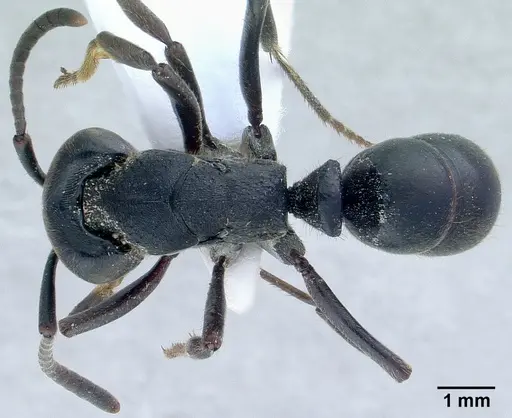
CASENT0882082
View on AntWeb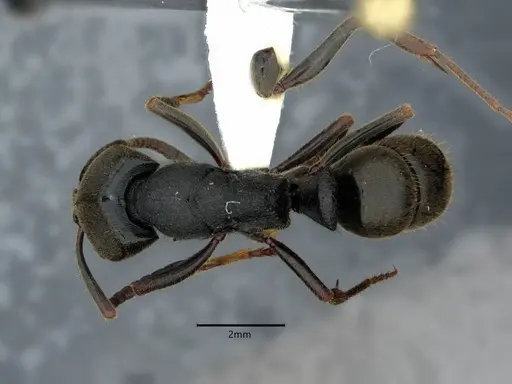
CASENT0902492
View on AntWeb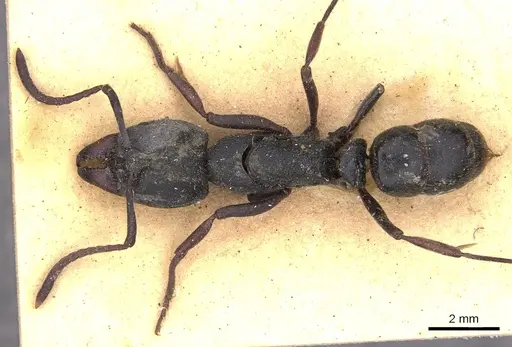
CASENT0916823
View on AntWeb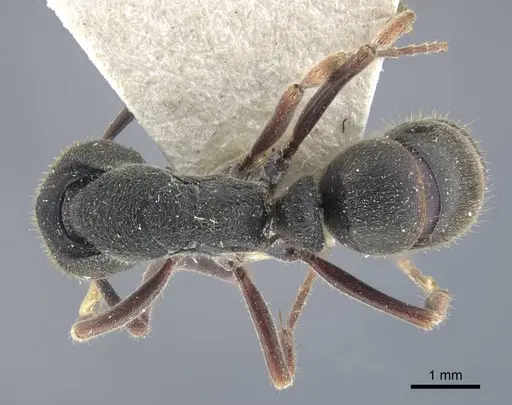
Literature
Loading distribution map...Loading products...