
Echinopla vermiculata
- Sci. Name
- Echinopla vermiculata
- Tribe
- Camponotini
- Subfamily
- Formicinae
- Author
- Emery, 1898
- Distribution
- Found in 1 countries
Introduction
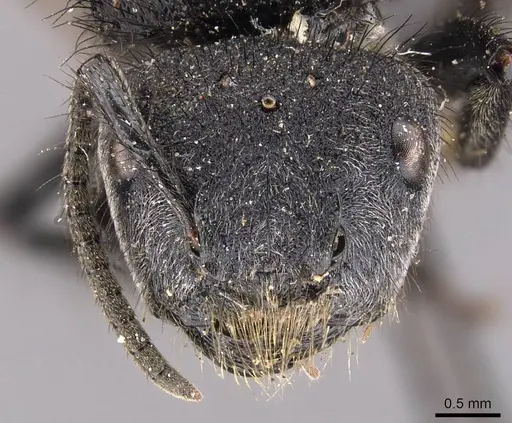
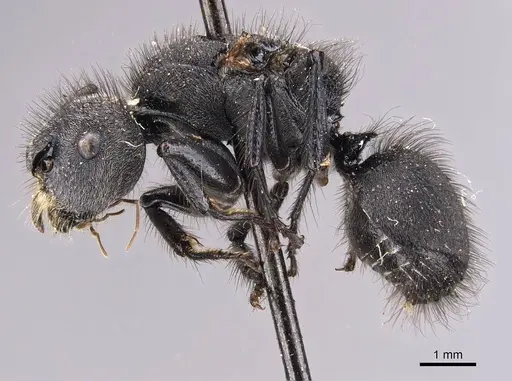
Echinopla vermiculata is a small, dark ant species in the Formicinae subfamily. These ants are entirely black and belong to the striata species group, characterized by their distinctive spiny petiole - each side has a long spine, with the distance between spine tips wider than the propodeum. The head and propodeum show irregular rugose texture rather than longitudinal striations. Workers are modest in size and adapted to arboreal life, nesting in dead twigs, vines, and branches on trees. This species has been recorded from Indonesia, the Philippines, and Sulawesi, making it a Southeast Asian species with limited distribution. They are rarely encountered in the wild, representing only 0.07% of ant collections in studies where they were found .
Quick Summary
- Difficulty: Unknown, likely Expert
- Origin & Habitat: Southeast Asia (Indonesia, Philippines, Sulawesi) in the Indomalaya region. These are arboreal ants that nest in dead twigs, vines, and branches on trees [1]. They have been found in cave environments (Salawao cave in Mindanao) suggesting they may tolerate varied conditions [1].
- Colony Type: Colony structure is unconfirmed. Based on related Formicinae like Camponotus, likely single-queen colonies, but this has not been documented for this specific species.
- Size & Growth:
- Queen: size data unavailable, no measurements exist for this species
- Worker: size data unavailable, no measurements exist for this species
- Colony: Unknown, no colony size data available
- Growth: Unknown, no development data available
- Development: Unconfirmed, no direct measurements exist. Based on typical Formicinae patterns, estimate 6-10 weeks at warm temperatures, but this is speculative. (No development studies exist for this species.)
- Antkeeping:
- Temperature: Temperature requirements are unconfirmed. Start with a warm setup around 24-28°C typical for tropical Southeast Asian arboreal ants, and observe colony activity. A gentle heat gradient allows ants to self-regulate.
- Humidity: Humidity requirements are unconfirmed. As an arboreal species from humid tropical regions, aim for moderate to high humidity in the nest area. Provide a water tube for drinking access.
- Diapause: Unknown, no data on overwintering requirements. As a tropical species from Southeast Asia, they likely do not require formal hibernation, but may show reduced activity during cooler periods.
- Nesting: Arboreal nesting behavior means they prefer elevated nests with small chambers. In captivity, a Y-tong (AAC) nest works well. Provide twigs or small wooden elements they can climb on. Test tube setups are acceptable for founding colonies.
- Behavior: These ants are arboreal and likely formicarium-active, frequently climbing on surfaces. They are in the subordinate Camponotini functional group, suggesting they are relatively peaceful and not highly aggressive [1]. Their small size and arboreal nature mean escape prevention is important, use fine mesh barriers. They likely forage in the upper regions of their enclosure. As Formicinae, they lack a functional sting and defend by biting and spraying formic acid from their acidopore, but are not considered dangerous to humans.
- Common Issues: lack of available care information makes proper husbandry difficult, escape prevention is critical due to small arboreal ants squeezing through tiny gaps, no confirmed diet information, unknown what foods they will accept, no development data makes it hard to assess colony health, rare species means wild-caught colonies may have collection-related stress, no hibernation data makes seasonal care challenging
Species Identification and Morphology
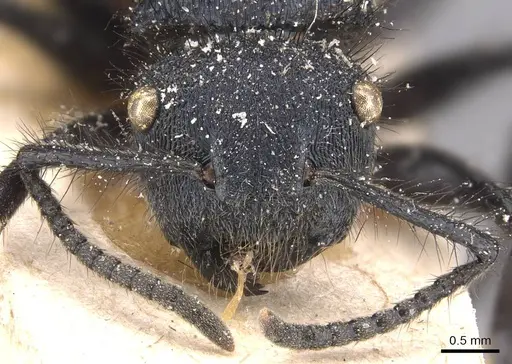
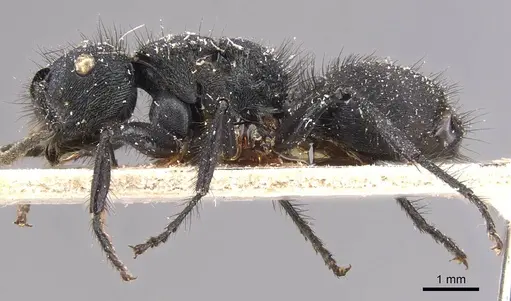
Echinopla vermiculata is a member of the striata species group within the genus Echinopla. The species can be identified by several key morphological features: the frons of the head shows irregular rugose texture rather than longitudinal striations, the propodeum is also irregularly rugose, and in dorsal view the humeral corners of the pronotum form a right angle. Perhaps most distinctive is the petiole, which has a long spine on each side, with the distance between spine tips being wider than the propodeum. The entire body is black in color. These morphological features help distinguish it from related species in the same group [2].
Distribution and Habitat
This species is found exclusively in the Indomalaya region, with confirmed records from Indonesia, the Philippines, and Sulawesi [2][1]. Unlike many ground-nesting ants, Echinopla vermiculata is arboreal, nesting in dead twigs, vines, or branches on trees. They are rarely collected and are considered one of the least abundant ant species in studies where they have been found, representing only 0.07% of collected specimens [1]. Their presence has been documented in cave environments (Salawao cave in Mindanao, Philippines), suggesting they can tolerate a range of microhabitats [1]. This rarity makes them a challenging species to find and study in the wild.
Nest Preferences and Housing
Based on their arboreal nature in the wild, these ants should be provided with elevated nesting options in captivity. They naturally nest in dead twigs, vines, and branches on trees, so incorporating small wooden elements, twigs, or cork bark into the setup is beneficial. For captive housing, a Y-tong (AAC) nest with narrow passages scaled to their size works well. Test tube setups are acceptable for founding colonies. Because they are arboreal, they will benefit from climbing structures and vertical space in their outworld. Ensure the nest area maintains appropriate humidity while allowing for some ventilation. [1]
Feeding and Diet
The specific dietary requirements of Echinopla vermiculata have not been documented in available literature. As members of the Formicinae subfamily, they likely have omnivorous diets similar to related genera like Camponotus, potentially accepting sugar sources and small protein. However, being an arboreal species that nests in twigs may indicate a preference for small arthropods and honeydew from aphids or scale insects. Start by offering standard ant foods: a sugar source (honey or sugar water) and small protein sources (fruit flies, small mealworms, crickets). Observe acceptance and adjust accordingly. As this species has not been kept in captivity extensively, dietary experimentation may be necessary.
Temperature and Seasonal Care
As a tropical species from Southeast Asia (Indonesia, Philippines, Sulawesi), Echinopla vermiculata likely prefers warm conditions [2][1]. While specific temperature requirements are unconfirmed, start with a warm setup around 24-28°C, which is typical for tropical arboreal ants. A gentle heat gradient allows the colony to self-regulate their temperature preference. Monitor colony activity, if workers consistently avoid the heated area, reduce temperature, if they cluster near heat, increase slightly. Regarding diapause or hibernation, no data exists. As a tropical species, they likely do not require formal hibernation, but may show reduced activity during cooler periods. Maintain stable temperatures year-round.
Behavior and Colony Dynamics
Echinopla vermiculata belongs to the subordinate Camponotini functional group, which suggests relatively peaceful colony behavior rather than aggressive or dominant tendencies [1]. As arboreal ants, they are likely formicarium-active and will frequently climb on surfaces within their enclosure. The spiny petiole is a defensive adaptation, when threatened, they can use these spines to deter predators. Escape prevention is important due to their small size and arboreal climbing behavior, use fine mesh barriers and ensure all connections are secure. Colony founding behavior is unconfirmed, but like most Formicinae, the queen likely seals herself in a chamber and raises the first brood alone (claustral founding), though this needs confirmation.
Frequently Asked Questions
How do I care for Echinopla vermiculata ants?
Care for Echinopla vermiculata is largely speculative due to limited documented information. Provide a warm setup (24-28°C), moderate humidity, and arboreal-style housing with climbing structures. Offer sugar sources and small protein foods, and monitor acceptance. This is an expert-level species due to the lack of available care information.
What do Echinopla vermiculata ants eat?
Specific diet is unconfirmed. Based on related Formicinae, they likely accept sugar sources (honey water, sugar water) and small insects. Start with standard ant foods and observe what they accept. Being arboreal, they may prefer small live prey.
What size colony do Echinopla vermiculata reach?
Colony size is unknown, no colony size data exists in available literature. They are considered rare, representing only 0.07% of ant collections in studies where they were found [1].
Do Echinopla vermiculata ants need hibernation?
Hibernation requirements are unknown. As a tropical Southeast Asian species, formal hibernation is likely not required, but they may reduce activity during cooler periods.
Are Echinopla vermiculata good for beginners?
No, this species is not recommended for beginners. There is virtually no documented care information, making proper husbandry extremely difficult. The species is also very rare in the wild.
What temperature should I keep Echinopla vermiculata at?
Temperature requirements are unconfirmed. Start around 24-28°C typical for tropical arboreal ants, and adjust based on colony behavior. A gentle heat gradient allows self-regulation.
How long does it take for Echinopla vermiculata to develop from egg to worker?
Development timeline is unconfirmed, no direct measurements exist. Based on typical Formicinae patterns, estimate 6-10 weeks at warm temperatures, but this is speculative.
Where does Echinopla vermiculata live in the wild?
They are arboreal ants found in Indonesia, Philippines, and Sulawesi. They nest in dead twigs, vines, and branches on trees. They are rarely encountered, representing only 0.07% of collected specimens in studies [2][1].
Can I keep multiple Echinopla vermiculata queens together?
Colony structure is unconfirmed. No data exists on whether they are monogyne (single queen) or polygyne (multiple queens). Based on related Formicinae, they are likely single-queen colonies, but this needs confirmation.
Report an Issue
The current care sheet is based fully on literature. See inconsistencies, or something that's incorrect? Please , it will be resolved after review from an admin. Contributing to the blogs tab also helps providing information, to make us be able to further improve the caresheets. Thank you for your support!
References

This caresheet is licensed under CC BY-SA 4.0 .
Community Blogs
CASENT0905644
View on AntWeb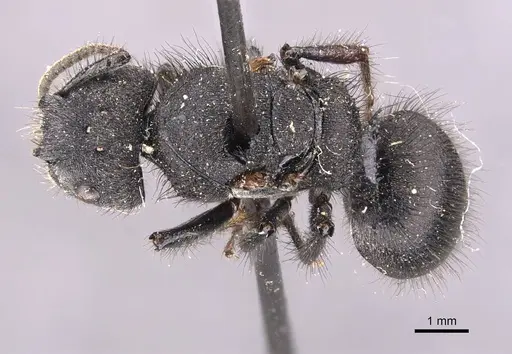
CASENT0905645
View on AntWeb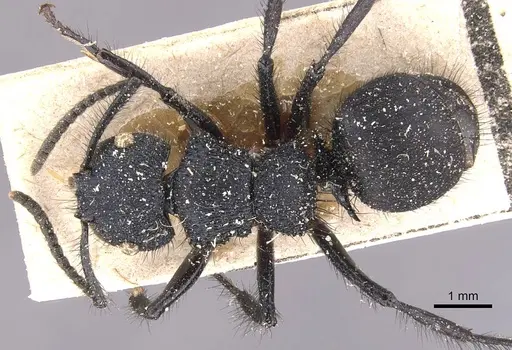
Literature
Loading distribution map...Loading products...