
Dorymyrmex bruchi
- Sci. Name
- Dorymyrmex bruchi
- Tribe
- Leptomyrmecini
- Subfamily
- Dolichoderinae
- Author
- Forel, 1912
- Distribution
- Found in 1 countries
Introduction
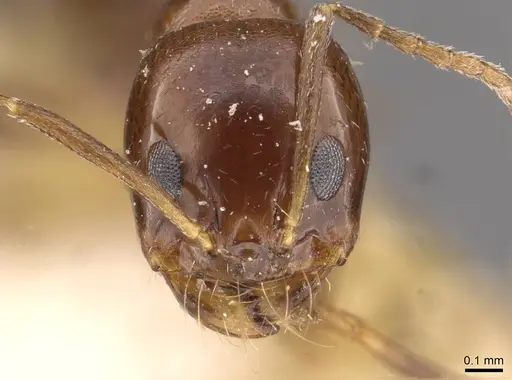
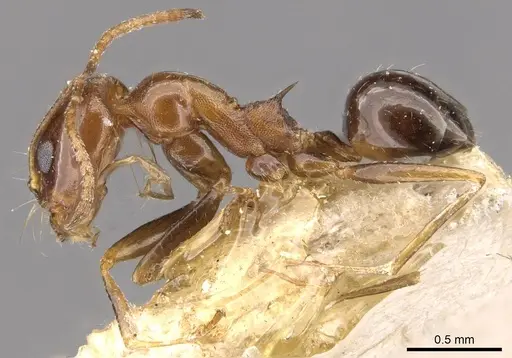
Dorymyrmex bruchi is a South American ant species in the genus Dorymyrmex, part of the subfamily Dolichoderinae. This species is taxonomically significant because it displays a unique combination of morphological features - it has the nodiform petiole scale typical of Dorymyrmex s. str., but also shows a weakly depressed metanotal groove and apical attachment of the fifth maxillary palp segment, which are characteristics associated with related genera Conomyrma and Araucomyrmex . This intermediate morphology has made it important for understanding evolutionary relationships within this ant genus group. Workers are small ants with a distinctive cone-shaped petiole, giving them the common name 'cone ants'.
Quick Summary
- Difficulty: Unknown
- Origin & Habitat: Native to South America, specifically Argentina. Dorymyrmex species typically inhabit open, sandy, or disturbed areas and nest in the ground [2].
- Colony Type: Colony structure is unconfirmed for this specific species.
- Size & Growth:
- Queen: ~5-7mm, inferred from Dorymyrmex genus patterns
- Worker: ~2-4mm, inferred from Dorymyrmex genus patterns
- Colony: Unknown, likely several hundred workers at maturity based on genus typical size
- Growth: Unknown
- Development: Unknown, estimated 6-10 weeks based on typical Dolichoderinae development at warm temperatures (Development timeline is estimated based on genus-level data for related species)
- Antkeeping:
- Temperature: Start around 22-26°C and observe colony activity. Dorymyrmex species are typically found in warmer climates and prefer moderate to warm temperatures.
- Humidity: Dorymyrmex species generally prefer dry to moderately humid conditions. Keep nest substrate slightly moist but allow some drying between waterings.
- Diapause: Unknown for this species, many South American Dorymyrmex species may not require strong diapause, but a cool period during winter months may be beneficial.
- Nesting: Natural nesting is in soil, typically in open sunny areas. In captivity, a naturalistic setup with soil or sand substrate works well. Test tube setups are suitable for founding colonies.
- Behavior: Behavior is not specifically documented for this species. Dorymyrmex ants are generally active foragers, often trailing in search of honeydew and small insects. They may be moderately aggressive when defending their nest. Escape risk is moderate due to their small size, standard barrier precautions apply.
- Common Issues: specific care requirements are poorly documented due to limited research on this species, colony founding may be challenging as founding behavior has not been studied, temperature and humidity requirements are estimates based on genus patterns, not species-specific data, slow growth compared to more common species may frustrate beginners, wild-caught colonies may have parasites or diseases not yet characterized
Species Background and Taxonomy
Dorymyrmex bruchi is a species within the genus Dorymyrmex, which contains approximately 20 species distributed throughout the Americas. The genus name translates to 'sharp ant' referring to their pointed petiole. This species has attracted scientific attention due to its intermediate morphological features, it possesses characteristics typical of Dorymyrmex s. str. (the nodiform petiole scale) while also showing features associated with other genera in the group [1]. This has made it important for understanding the evolutionary relationships within this complex of ant genera. The species was originally described from Argentina and appears to be primarily distributed in southern South America.
Defense Mechanism
Dorymyrmex bruchi belongs to the subfamily Dolichoderinae, which lacks a functional sting. Instead, these ants defend themselves by secreting defensive chemical compounds from a slit-like opening at the tip of the abdomen. This is a smear defense mechanism common among dolichoderine ants.
Housing and Nesting
For Dorymyrmex bruchi, a naturalistic setup with a soil or sand chamber works well, reflecting their natural ground-nesting habits. A test tube setup is suitable for founding colonies, fill the tube with water, plug with cotton, and let the queen establish her chamber in the dark area. Once the colony reaches 20-30 workers, you can consider moving to a formicarium with a digging area. Use a substrate that holds its structure well for tunneling, a mix of sand and soil works nicely. Ensure the nest has some dry areas as Dorymyrmex species generally prefer conditions that are not overly humid.
Feeding and Diet
While specific feeding preferences for Dorymyrmex bruchi have not been documented, Dorymyrmex species are typically omnivorous, feeding on honeydew from aphids and scale insects, as well as small insects and arthropods. In captivity, offer a varied diet including sugar water or honey as an energy source, and protein sources such as small crickets, mealworms, or other small insects. Feed protein sources 2-3 times per week, and keep sugar water available at all times. Remove uneaten prey after 24-48 hours to prevent mold.
Temperature and Seasonal Care
Dorymyrmex bruchi likely prefers warmer conditions given its South American origin. Start with temperatures in the 22-26°C range and observe colony behavior, if workers are consistently clustered near the warmer side of the nest, you can increase slightly. During winter months, a slight reduction to around 15-18°C may be appropriate, though this species may not require a true diapause period. Avoid temperature extremes and sudden fluctuations. A heating cable on one side of the nest can create a useful gradient.
Behavior and Colony Dynamics
Specific behavioral observations for Dorymyrmex bruchi are not documented in available research. However, Dorymyrmex species are generally active foragers that establish visible trails to food sources. They are moderately defensive and will respond to threats. Workers are typically small and may be overlooked by keepers, this means escape prevention should be taken seriously despite their modest size. Colonies likely grow at a moderate pace, with the queen laying eggs continuously once workers are established.
Frequently Asked Questions
How long does it take for Dorymyrmex bruchi to produce first workers?
The exact timeline is unknown for this species. Based on typical Dolichoderinae development, expect approximately 6-10 weeks from egg to worker at warm temperatures (around 24-26°C). The first workers (nanitics) will be smaller than mature workers.
What do Dorymyrmex bruchi ants eat?
While not specifically studied, Dorymyrmex species are omnivorous. Offer sugar water or honey for energy, and small insects like crickets, mealworms, or fruit flies for protein. They likely also collect honeydew in the wild.
Can I keep multiple Dorymyrmex bruchi queens together?
This has not been documented for this species. Based on genus patterns, they are likely monogyne (single queen). Do not combine unrelated queens, they will likely fight.
What temperature do Dorymyrmex bruchi ants need?
Keep them at 22-26°C initially and adjust based on colony behavior. They prefer warm conditions typical of their South American habitat.
How big do Dorymyrmex bruchi colonies get?
Colony size is unconfirmed for this species. Based on genus patterns, colonies likely reach several hundred workers at maturity.
Is Dorymyrmex bruchi a good species for beginners?
This species is not well-documented in the antkeeping hobby, and specific care requirements are largely unknown. It cannot be recommended for beginners until more keeper experience is documented. Consider starting with more established species like Lasius or Camponotus.
Does Dorymyrmex bruchi need hibernation?
Diapause requirements are unconfirmed for this species. Given its South American origin, a true hibernation may not be necessary, but a cool period around 15-18°C during winter months may be beneficial.
What type of nest should I use for Dorymyrmex bruchi?
A naturalistic setup with soil or sand for tunneling is most appropriate. Test tubes work for founding colonies. Once established, a formicarium with a digging area and moderate humidity works well.
Why are my Dorymyrmex bruchi dying?
Without species-specific research, causes of colony failure are speculative. Ensure proper temperature (22-26°C), moderate humidity without saturation, and adequate protein food. Poor colony growth may also indicate suboptimal conditions.
Report an Issue
The current care sheet is based fully on literature. See inconsistencies, or something that's incorrect? Please , it will be resolved after review from an admin. Contributing to the blogs tab also helps providing information, to make us be able to further improve the caresheets. Thank you for your support!
References

This caresheet is licensed under CC BY-SA 4.0 .
Community Blogs
CASENT0909725
View on AntWeb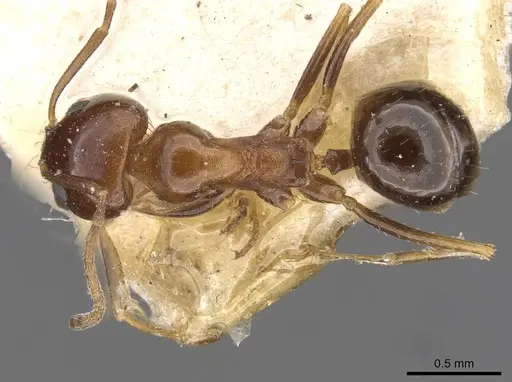
Literature
Loading distribution map...Loading products...