
Dorylus titan
- Sci. Name
- Dorylus titan
- Subfamily
- Dorylinae
- Author
- Santschi, 1923
- Distribution
- Found in 2 countries
Introduction
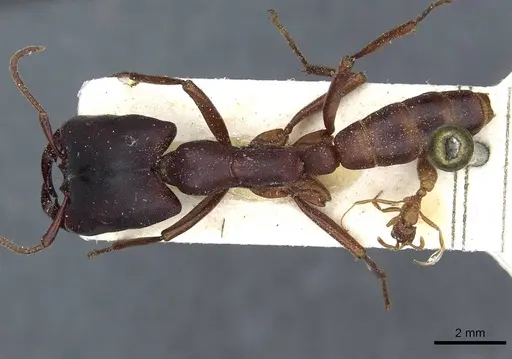
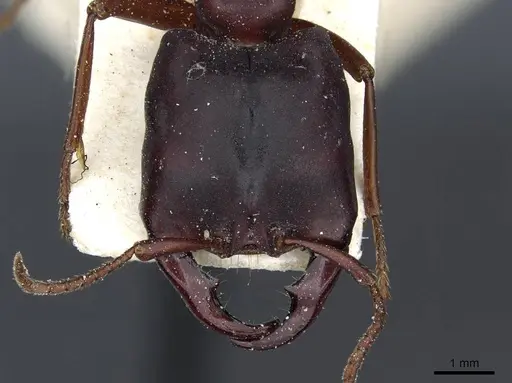
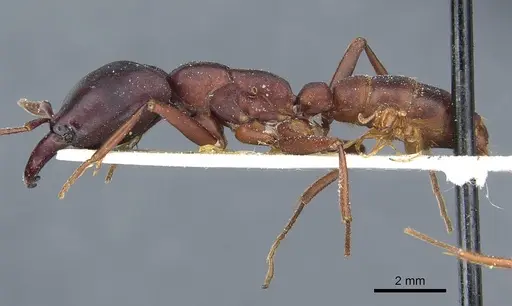
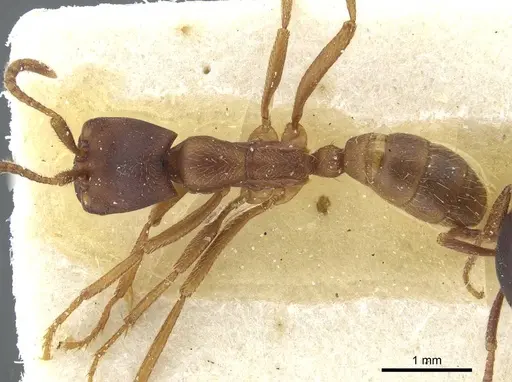
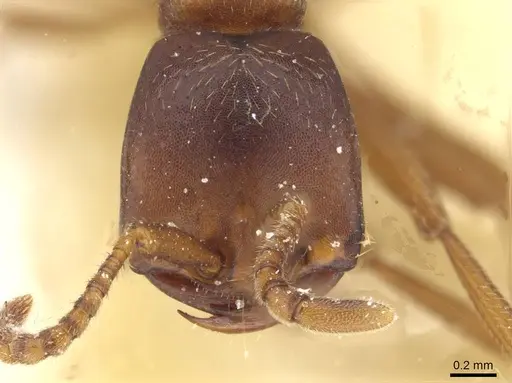
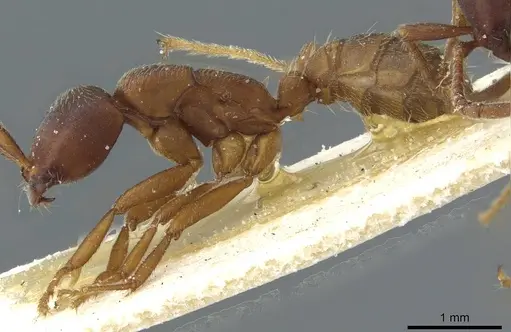
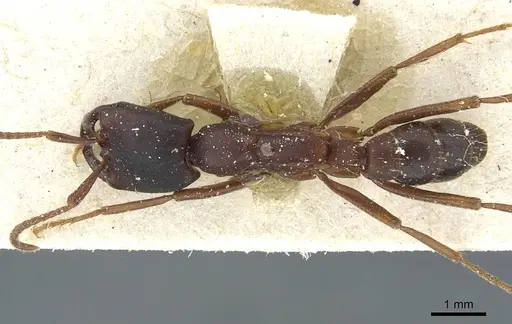
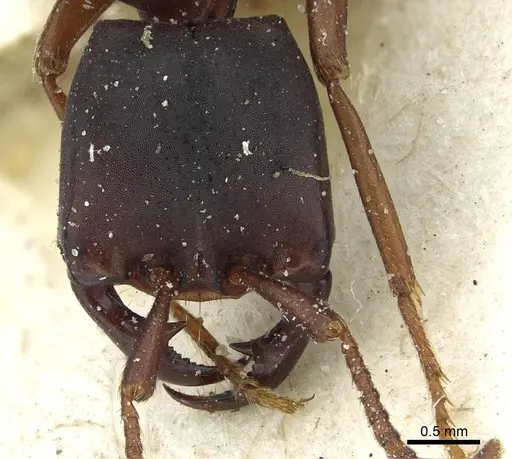
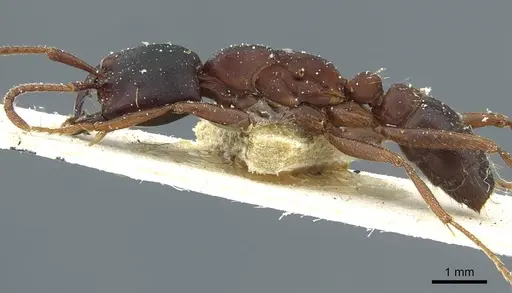
Dorylus titan is a large army ant species belonging to the Dorylinae subfamily, described by Santschi in 1923. It is found in the rainforests of Central Africa, specifically documented from the Democratic Republic of Congo (Kasai region, Kondué) and Guinea . Workers are polymorphic, ranging from small minors to large soldiers with powerful mandibles. As with other Dorylus species, this ant forms large colonies, though specific colony structure details are poorly documented for this species. The genus Dorylus is known for its nomadic, raiding behavior, but specific behavioral data for D. titan is limited.
Quick Summary
- Difficulty: Expert
- Origin & Habitat: Democratic Republic of Congo and Guinea in Central Africa. The species is documented from tropical rainforest environments in the Kasai region [1][2].
- Colony Type: Colony structure is unconfirmed. While many Dorylus species are polygyne, specific data for D. titan is unavailable.
- Size & Growth:
- Queen: Size data unavailable, Dorylus queens are among the largest ants, but no specific measurements exist for this species
- Worker: Polymorphic workers, specific size range data unavailable for this species
- Colony: Large colonies expected based on genus patterns, but exact size data unavailable
- Growth: Growth rate data unavailable
- Development: Development timeline unconfirmed for this species (Army ant development is typically fast, but specific data for D. titan is unavailable)
- Antkeeping:
- Temperature: Temperature requirements unconfirmed for this species. Based on its Central African rainforest habitat, warm conditions (24-28°C) are likely appropriate, but this is inferred from genus patterns rather than specific data.
- Humidity: Humidity requirements unconfirmed. Based on rainforest habitat, high humidity (70-85%) is likely appropriate, but specific data is unavailable.
- Diapause: No, being tropical, no hibernation is expected. This is inferred from habitat, not confirmed for this species.
- Nesting: Non-nesting in traditional sense, Dorylus species are nomadic. In captivity, provide large outworld space with multiple retreat areas. Specific nesting preferences unconfirmed.
- Behavior: Behavior is poorly documented for this specific species. Based on genus patterns, Dorylus titan is likely a predatory army ant that hunts in columns. Workers have powerful mandibles and can deliver painful bites. Escape prevention is critical as they will exploit any gap. They are likely nocturnal or crepuscular in the wild.
- Common Issues: Limited specific care data, much is inferred from genus patterns rather than species-specific research, Colony collapse from insufficient feeding, army ants need constant live prey, Space constraints, large colonies require extensive enclosures, Escape prevention failures, determined explorers that find any weakness in barriers, Incompatible with other ant species, will raid other colonies if housed nearby
Housing and Space Requirements
Dorylus titan is not a typical ant to keep and requires expert-level care. Army ants are nomadic by nature and do not maintain a permanent nest. In captivity, provide a large outworld (at least 60x40cm minimum for a growing colony) with multiple areas that can serve as temporary bivouacs. Use a deep substrate layer to allow chamber formation. Multiple feeding stations spread throughout the outworld are essential. Cover all ventilation with fine mesh, these ants will find any gap larger than about 0.5mm. This species is documented from the DRC and Guinea, but specific habitat preferences within that range are poorly studied. [1][2]
Feeding and Nutrition
Dorylus titan is likely an obligate predator based on genus patterns, though specific dietary data for this species is unavailable. Provide constant access to live prey including crickets, mealworms, roaches, and other insects appropriate to worker size. For smaller workers, offer fruit flies, springtails, and other small arthropods. For major soldiers, provide larger prey items. Feed daily or every other day, removing uneaten prey after 24 hours to prevent mold. Army ant colonies can decline rapidly without constant protein. This advice is based on general Dorylus husbandry knowledge rather than species-specific research.
Temperature and Seasonal Care
As a tropical species from Central Africa, Dorylus titan likely requires warm, stable temperatures year-round. Maintain 24-28°C in the outworld with a slight gradient. Use a heating cable or mat under one section if needed. Avoid temperature drops below 22°C. There is no confirmed diapause requirement for this species, this is inferred from its tropical habitat rather than documented. Monitor humidity closely. The substrate should remain damp but never saturated.
Colony Structure and Behavior
Dorylus titan colony structure is poorly documented. Workers are polymorphic: minor workers handle most foraging and brood care, while major soldiers have enlarged heads and powerful mandibles. The colony likely moves in raiding columns, though specific behavioral data for this species is unavailable. Multiple queens are suspected based on genus patterns, but unconfirmed for D. titan specifically. Nuptial flight timing is undocumented. The colony will establish bivouacs in dark, humid areas, provide multiple dark retreats.
Handling and Safety
Dorylus titan workers have powerful mandibles and will bite defensively. While not medically significant for healthy adults, the bite can be painful and may break skin. Major soldiers can deliver a more significant pinch. When working with the colony, use gentle, slow movements and avoid disturbing the bivouac area directly. Always use excellent escape prevention, once scattered, these ants are extremely difficult to contain. Fluon applied to barrier edges works well, but ensure all lid seams and ventilation holes are secure. Consider working in a contained space when accessing the setup.
Frequently Asked Questions
Is Dorylus titan good for beginners?
No. Dorylus titan is an expert-level species. They require constant live prey, very large enclosures, and specialized care. They are also extremely difficult to acquire. Start with easier species like Lasius niger, Camponotus, or Messor before considering army ants.
How often should I feed Dorylus titan?
Feed daily or every other day based on general Dorylus husbandry. Army ants cannot store food and may decline without constant protein. Provide prey at multiple stations throughout the outworld. Remove uneaten prey after 24 hours to prevent mold.
Can I keep multiple queens together in one colony?
Multiple queens are suspected based on genus patterns, but specific data for D. titan is unavailable. Many Dorylus species are polygyne, but this has not been confirmed for this species.
How long does it take for the first workers to appear?
Development timeline is unconfirmed for Dorylus titan. General Dorylus development is relatively fast compared to many ant species, but specific timing data is unavailable for this species.
What size enclosure do I need for Dorylus titan?
You need a large outworld, at minimum 60x40cm for a growing colony, but larger is always better. Army ants are nomadic and need space to form bivouacs and move between areas. The enclosure should have deep substrate and multiple potential nest sites.
Do Dorylus titan need hibernation?
No, as a tropical species from Central Africa, they likely do not require hibernation. This is inferred from habitat rather than confirmed. Maintain consistent warm temperatures year-round.
Why is my Dorylus titan colony dying?
The most common causes are: starvation (not enough live prey), insufficient humidity, temperatures too low, or stress from relocation. Army ants are demanding and require precise conditions. Review all parameters and ensure you are providing adequate live prey.
When should I move Dorylus titan to a formicarium?
Army ants do not use traditional formicaria well. Instead, provide a large outworld with multiple test tube setups, acrylic chambers, or naturalistic areas they can use as bivouacs. They prefer to form their own temporary nests within the outworld.
Report an Issue
The current care sheet is based fully on literature. See inconsistencies, or something that's incorrect? Please , it will be resolved after review from an admin. Contributing to the blogs tab also helps providing information, to make us be able to further improve the caresheets. Thank you for your support!
References

This caresheet is licensed under CC BY-SA 4.0 .
Community Blogs
Literature
Loading distribution map...Loading products...