
Dorylus bequaerti
- Sci. Name
- Dorylus bequaerti
- Subfamily
- Dorylinae
- Author
- Forel, 1913
- Distribution
- Found in 2 countries
Introduction
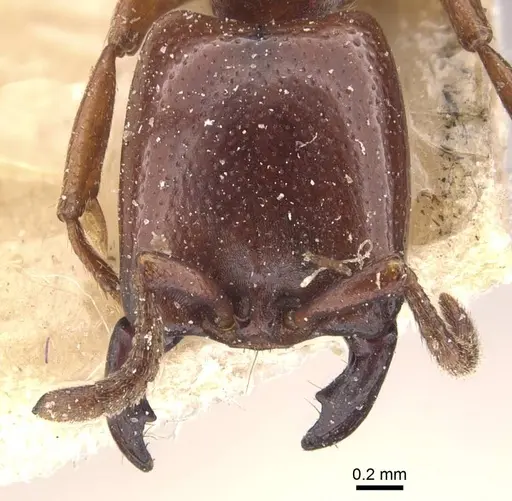
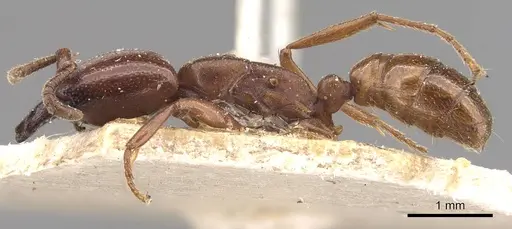
Dorylus bequaerti is an army ant species described by Forel in 1913,found across central to southern Africa including the Democratic Republic of Congo, Mozambique, and South Africa . Workers are small, dark reddish-brown to black, typical of army ants in the genus Dorylus . As with all Dorylus species, these ants form large colonies and conduct coordinated raids on other ant colonies and arthropods . What makes Dorylus bequaerti notable is its colony structure. Like other Dorylus species, they have ergatoid queens - wingless queens that never leave the nest to mate. Their colonies can reach very large sizes, though the exact maximum for this specific species is unclear. Their specialized predatory lifestyle and enormous space requirements make them extremely challenging to keep in captivity .
Quick Summary
- Difficulty: Expert
- Origin & Habitat: Afrotropical region, Democratic Republic of Congo, Mozambique, and South Africa. They inhabit forest floors and savanna ecosystems where they conduct ground raids [3][2].
- Colony Type: Colonies contain an ergatoid (wingless) queen that never leaves the nest. Colony structure is large, with workers forming bivouacs (temporary nests). They are nomadic, regularly moving as food sources are depleted [3].
- Size & Growth:
- Queen: Ergatoid queens are wingless and larger than workers, exact size data unavailable for this species [3].
- Worker: Small, approximately 2-5mm [3].
- Colony: Colonies can reach very large numbers of workers, Dorylus colonies are among the largest in the ant world [3].
- Growth: Moderate to fast, army ant colonies grow continuously once established [3].
- Development: Development timeline is unconfirmed for this specific species [3]. (Army ants typically have faster development than most ants to support their nomadic lifestyle)
- Antkeeping:
- Temperature: Keep at 24-28°C (tropical range). They require consistently warm temperatures year-round [3].
- Humidity: Moderate to high humidity (60-80%). They prefer humid forest floor conditions but need good ventilation to prevent mold in captive setups [3].
- Diapause: No, as a tropical species, they do not hibernate. Activity may slow during cooler dry seasons in their native range [3].
- Nesting: In nature, they create temporary bivouacs in hollow logs, under stones, or in underground chambers. They are constantly on the move, abandoning nests every few weeks. In captivity, they need space to form large clusters and must be allowed to relocate periodically [3].
- Behavior: Aggressive predators. They conduct coordinated raids in columns, overwhelming other ant colonies and capturing brood and adults. They are primarily nocturnal or crepuscular. Workers are small but numerous, and they will attack anything that threatens the colony. Escape prevention is critical, they will rapidly disperse and establish new bivouacs if given any opportunity to escape. Their bite is noticeable but not medically significant for healthy humans [3].
- Common Issues: massive space requirements make them nearly impossible to house properly in typical ant setups, predatory nature means they will attack and consume any other insects, making them difficult to keep in multi-species setups, nomadic lifestyle requires frequent relocation, captive colonies may decline if unable to move, colonies can quickly become stressed in small enclosures and may abandon brood, they are extremely difficult to acquire, queens are ergatoid and don't fly, making nuptial flights nonexistent
Understanding Army Ant Biology
Dorylus bequaerti belongs to the army ant subgroup of Dorylinae, ants famous for their predatory lifestyle and large colonies. Unlike most ants that have permanent nests, army ants are nomadic. They establish temporary bivouacs (temporary nests made of living workers linked together) and move every few weeks as they deplete local food sources [3]. The queen is ergatoid, completely wingless and never leaves the nest. She is permanently housed inside the bivouac and produces eggs continuously once established [3]. Workers are polymorphic, with major workers (soldiers) having larger heads and mandibles for defense and processing large prey, while minor workers handle most foraging and brood care [3]. This species is found across central to southern Africa, with documented records from the DRC, Mozambique, and South Africa [1][2].
Housing Dorylus bequaerti
Housing Dorylus bequaerti presents one of the greatest challenges in antkeeping. These ants require enormous space, colonies need room to form large bivouacs and conduct raids. A typical setup would require multiple connected enclosures totaling several square feet of floor space. The nest area should allow workers to cluster together in a humid chamber, with access to a foraging area where raids can be conducted. Because they are nomadic, you must design the setup to allow colony relocation, this can be achieved by providing multiple potential nest sites and allowing the colony to choose. Escape prevention is absolutely critical, they will rapidly disperse and establish new bivouacs if any escape route exists. Use tight-fitting lids, seal all gaps, and consider using fluon on enclosure edges. Never house them in setups designed for typical ants, they will simply abandon small enclosures and decline [3].
Feeding and Predation
Dorylus bequaerti are obligate predators. In the wild, they survive by raiding other ant colonies and capturing various arthropods including termites, beetles, and caterpillars. Their raids are impressive, columns of workers sweep across the forest floor, overwhelming colonies through sheer numbers [3]. In captivity, you must provide a constant supply of live prey. This means maintaining cultures of feeder insects (crickets, mealworms, roaches) or keeping target ant colonies as prey. Some keepers provide pre-killed insects, but live prey triggers the natural raiding behavior that keeps the colony active and healthy. Feed generously, a hungry army ant colony will become stressed and may consume its own brood. Sugar water is sometimes accepted but should never be a primary food source [3].
Temperature and Seasonal Care
As a tropical African species, Dorylus bequaerti requires warm temperatures year-round. Keep the nest area at 24-28°C with a slight gradient allowing workers to self-regulate. A heating cable or mat on one side of the enclosure can provide this gradient. They do not hibernate, but activity may decrease during cooler periods. In their native range, they experience seasonal variation in rainfall rather than temperature, with peak activity during wet seasons when prey is abundant. Maintain consistent humidity (60-80%) in the nest area, but ensure good ventilation to prevent mold. The foraging area can be slightly drier. Avoid temperature drops below 20°C as this can stress the colony and slow brood development. Monitor colony behavior, if workers become sluggish and cluster tightly, the temperature may be too low [3].
The Challenge of Colony Establishment
Acquiring Dorylus bequaerti is exceptionally difficult. Unlike most ant species, they cannot be collected via nuptial flights because ergatoid queens never leave the nest to mate. Instead, reproduction occurs within the colony, and new colonies form when a group of workers with a queen breaks off (fission) or when a queen is adopted by a fragment colony. This means wild colonies cannot be sustainably harvested without destroying them. Most captive colonies available in the hobby are either collected as fragments with a queen or are acquired through specialized dealers who work with African suppliers. Expect to pay premium prices and wait for availability. When you do acquire a colony fragment, it may take months for the queen to begin laying eggs and for the colony to stabilize. Do not disturb the colony during this critical establishment period [3].
Frequently Asked Questions
Can I keep Dorylus bequaerti in a test tube?
No. Dorylus bequaerti requires enormous space, colonies can reach very large numbers of workers. A test tube or typical formicarium will cause the colony to abandon the nest, stress, and likely die. You need a custom-built setup with multiple connected chambers totaling several square feet of floor space [3].
How long does it take for Dorylus bequaerti to produce first workers?
If you acquire a colony fragment with an established queen, egg production may begin within weeks. However, development time is unconfirmed for this specific species. Full colony establishment can take 6-12 months or longer with proper care [3].
Can I keep multiple Dorylus bequaerti queens together?
No. This species is monogyne, colonies have a single ergatoid queen. While the colony may contain many workers, only one queen produces eggs. Introducing additional queens will result in fighting [3].
What do Dorylus bequaerti eat?
They are obligate predators. They primarily raid other ant colonies, consuming brood and adult ants. In captivity, they need constant access to live prey, feeder insects, other ant colonies, or arthropods. Some will accept pre-killed insects, but live prey triggers natural raiding behavior [3].
Are Dorylus bequaerti good for beginners?
No. This species is rated Expert difficulty. Their massive space requirements, need for constant live prey, nomadic lifestyle, and difficulty of acquisition make them unsuitable for anyone other than very experienced antkeepers with specialized setups [3].
Do Dorylus bequaerti need hibernation?
No. As a tropical African species, they do not hibernate. They require consistent warm temperatures (24-28°C) year-round. Temperature drops below 20°C can stress the colony [3].
Why is my Dorylus bequaerti colony declining?
Common causes include: insufficient space, lack of live prey, temperature too low or unstable, excessive disturbance, or poor humidity. Army ant colonies are highly sensitive to captive conditions and will quickly decline if their needs aren't met. Ensure you are providing enough prey and space for the colony to conduct natural behaviors [3].
How big do Dorylus bequaerti colonies get?
Dorylus colonies can reach very large numbers of workers, potentially reaching thousands to millions. In captivity, healthy colonies can reach tens of thousands of workers with proper care over several years [3].
When should I move Dorylus bequaerti to a formicarium?
This species is not suitable for standard formicariums. They need custom-built enclosures with multiple connected areas allowing for bivouac formation and colony relocation. A naturalistic setup with soil, hiding structures, and a large foraging area works best [3].
Report an Issue
The current care sheet is based fully on literature. See inconsistencies, or something that's incorrect? Please , it will be resolved after review from an admin. Contributing to the blogs tab also helps providing information, to make us be able to further improve the caresheets. Thank you for your support!
References

This caresheet is licensed under CC BY-SA 4.0 .
Community Blogs
CASENT0905917
View on AntWeb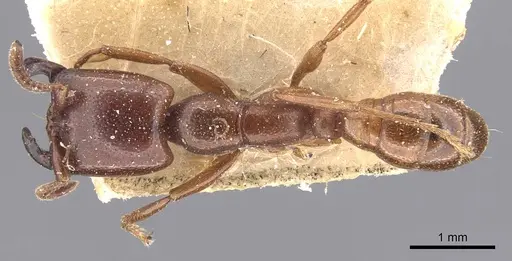
Literature
Loading distribution map...Loading products...