
Dorylus atriceps
- Sci. Name
- Dorylus atriceps
- Subfamily
- Dorylinae
- Author
- Shuckard, 1840
- Distribution
- Found in 1 countries
Introduction
Dorylus atriceps is an African army ant belonging to the Dorylinae subfamily. Males are distinguished by morphological features including long antennae and specific genitalia characteristics that help identify this species within the Dorylus orientalis-group . Workers in the Dorylus genus are typically blind and operate in massive raiding swarms that can overwhelm prey much larger than individual ants. This species is found across West and Central Africa including Gambia, Guinea, Ivory Coast, Kenya, Democratic Republic of Congo, Angola, Cameroon, Congo, Ethiopia, Gabon, and Senegal . As with other army ants, colonies are highly nomadic and do not maintain permanent nests, instead moving between bivouacs as they exhaust food sources in each hunting territory.
Quick Summary
- Difficulty: Expert
- Origin & Habitat: West and Central Africa, found in Gambia, Guinea, Ivory Coast, Kenya, Democratic Republic of Congo, Angola, Cameroon, Congo, Ethiopia, Gabon, and Senegal. Inhabits tropical and subtropical forest regions [1][2][3][4].
- Colony Type: Polygyne colonies with multiple queens, typical of Dorylus army ants.
- Size & Growth:
- Queen: size data unavailable
- Worker: size data unavailable
- Colony: Colonies can reach very large sizes, among the largest ant colonies known.
- Growth: Fast, army ant colonies grow rapidly when well-fed.
- Development: development timeline unconfirmed (Army ant brood development is typically rapid compared to most ants.)
- Antkeeping:
- Temperature: Keep at 24-28°C, army ants are tropical and require warm, stable temperatures.
- Humidity: Maintain moderate to high humidity, they prefer humid tropical conditions. Provide moisture sources but ensure ventilation prevents stagnation.
- Diapause: No true diapause, as tropical army ants, they remain active year-round if temperatures are maintained.
- Nesting: Nomadic by nature, they do not establish permanent nests. In captivity, provide a large foraging area with multiple potential bivouac sites. They will move their bivouac regularly.
- Behavior: Extremely aggressive and active predators. Workers are blind but coordinate through chemical trails and vibrations. They conduct massive raids that can include thousands of individuals moving in coordinated columns. Escape risk is significant given their small worker size and tendency to explore. They will readily attack and overwhelm prey items much larger than individual workers.
- Common Issues: massive space requirements, army ant colonies need far more space than typical ant setups, difficulty maintaining nomadic behavior in captivity, they become stressed without movement opportunities, prey requirements, they need large, regular protein meals that can be difficult to provide, colony stress from confinement, can lead to colony decline or abandonment of broods, escape prevention challenging due to small worker size and persistent exploration behavior
Understanding Dorylus Army Ants
Dorylus atriceps belongs to a genus of army ants known for their highly specialized predatory lifestyle. Unlike most ant species that maintain permanent nests, army ants are nomadic, they establish temporary bivouacs (living structures made of their own bodies) and move regularly as they exhaust prey in their hunting grounds. Workers are blind or nearly so, relying entirely on chemical pheromone trails and vibrations to coordinate their massive raids. The genus Dorylus is found exclusively in Africa and Asia, with Dorylus atriceps specifically distributed across West and Central African regions including Gambia, Guinea, Ivory Coast, Kenya, Democratic Republic of Congo, Angola, Cameroon, Congo, Ethiopia, Gabon, and Senegal [1][2][3]. These ants are among the most ecologically impactful invertebrates in their range, shaping invertebrate communities through their intense predation pressure.
Housing and Space Requirements
Housing Dorylus atriceps presents significant challenges due to their nomadic nature and massive colony size. You will need an exceptionally large setup, think room-scale or dedicated ant room rather than a typical formicarium. Provide a spacious foraging area connected to multiple potential bivouac sites. The foraging area should allow for natural raid formation with plenty of floor space for columns to form. Because they do not settle in one location, you cannot use a traditional fixed nest. Instead, create a system where they can form bivouacs in various locations within your setup. Water sources should be provided via multiple test tubes or a water reservoir, as army ants need constant access to moisture. Escape prevention is critical, use fluon on all rim edges and ensure all connections are secure, as their small workers will find any gap.
Feeding and Predatory Behavior
Dorylus atriceps is an obligate predator that requires a constant supply of live prey. They do not typically collect honeydew or scavenge, instead, they raid arthropod colonies and capture live insects. In captivity, you will need to provide large quantities of prey regularly. Suitable prey includes crickets, mealworms, roaches, and other insects appropriate to the worker size. Colonies this size can consume kilograms of prey over time. Feed prey directly into the foraging area where raiding columns can find them. Unlike typical ants, army ants do not store food, everything is consumed immediately or fed to larvae. You may need to establish a prey breeding colony to maintain a constant food supply. Some colonies will accept pre-killed prey if it is fresh, but live prey triggers their natural raiding behavior.
Temperature and Climate Control
As a tropical African species, Dorylus atriceps requires warm temperatures year-round. Maintain ambient temperatures between 24-28°C throughout their enclosure. Temperature drops below 20°C can stress colonies and slow or stop raid behavior. Use heating cables or mats on one side of the setup to create a thermal gradient, allowing the colony to choose their preferred temperature zone. Avoid placing heat sources directly on water reservoirs as this causes rapid evaporation. Monitor temperatures carefully, army ants are sensitive to temperature fluctuations and may become inactive or cluster excessively if conditions are not ideal. No hibernation or winter rest period is needed or recommended for this species.
Colony Structure and Social Organization
Dorylus colonies are characterized by their polygyne structure, multiple reproductive queens coexist within a single colony. Queens are significantly larger than workers and can produce thousands of eggs daily when the colony is thriving. The colony contains multiple worker castes (major and minor workers) that serve different functions during raids. Major workers serve as soldiers and can overwhelm large prey items, while minor workers handle brood care and smaller prey. The colony operates as a superorganism, individuals are highly specialized and the collective behavior emerges from simple rules followed by each ant. Understanding this social structure helps keepers appreciate why army ant colonies behave so differently from typical ant species.
Frequently Asked Questions
Can I keep Dorylus atriceps as a pet ant?
Only if you have expert-level antkeeping experience and can provide massive space requirements. This species is not suitable for beginners or even intermediate antkeepers. You need to accommodate colonies that can reach hundreds of thousands of individuals with space for raiding behavior.
How big do Dorylus atriceps colonies get?
Colonies can reach very large sizes, making them among the largest ant colonies possible. This is significantly larger than typical ant species and requires proportionally larger housing.
Do Dorylus atriceps ants sting?
Yes, they can sting and do so defensively. However, their small worker size typically makes stings mild for humans. The real concern is the sheer number of ants that can attack simultaneously during colony disturbance.
What do I feed Dorylus atriceps?
They require live prey, primarily insects like crickets, mealworms, and roaches. They are obligate predators and do not typically accept sugar sources or scavenged food. You will need a reliable, large-scale prey supply.
How often should I feed Dorylus atriceps?
Feed multiple times per week, with prey available constantly. Army ant colonies consume enormous quantities of protein. Monitor consumption and adjust, prey should be consumed within 24-48 hours.
Do Dorylus atriceps need hibernation?
No, as tropical ants, they do not require hibernation. Maintain warm temperatures (24-28°C) year-round to keep the colony active and healthy.
When will Dorylus atriceps produce alates (reproductives)?
In large, established colonies, alates (males and new queens) are produced during optimal conditions. This typically requires a colony of significant size and consistent feeding over many months.
Can I keep multiple Dorylus atriceps queens together?
Yes, this species is naturally polygyne with multiple queens per colony. Introducing unrelated queens to an established colony is not recommended and may result in aggression.
Why isn't my Dorylus atriceps colony raiding?
Raiding behavior depends on temperature, colony size, and hunger levels. Ensure temperatures are in the 24-28°C range and the colony is adequately hungry. New colonies or stressed colonies may be inactive initially.
How do I set up a formicarium for Dorylus atriceps?
Do not use a traditional formicarium, they are nomadic and need space to form bivouacs. Create a large, open foraging area with multiple potential resting sites. Connect test tubes for water and provide a substrate they can cluster on. The setup should allow for natural column formation.
Report an Issue
The current care sheet is based fully on literature. See inconsistencies, or something that's incorrect? Please , it will be resolved after review from an admin. Contributing to the blogs tab also helps providing information, to make us be able to further improve the caresheets. Thank you for your support!
References

This caresheet is licensed under CC BY-SA 4.0 .
Community Blogs
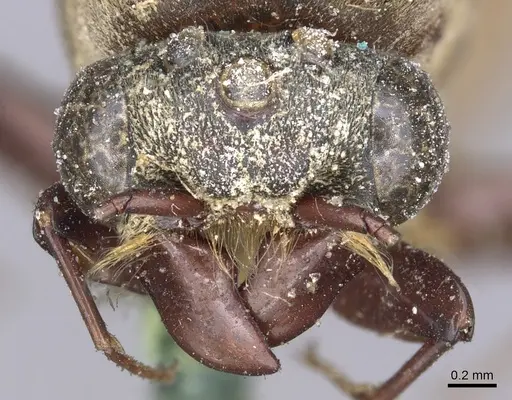
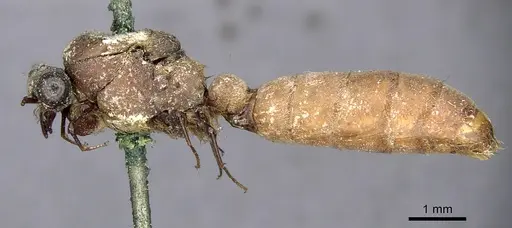
CASENT0902697
View on AntWeb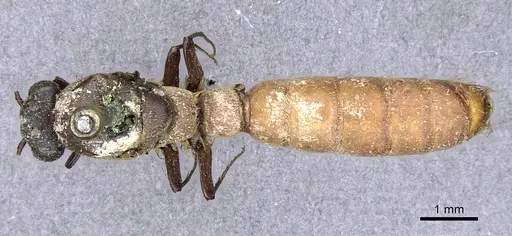
Literature
Loading distribution map...Loading products...