
Dorylus aethiopicus
- Sci. Name
- Dorylus aethiopicus
- Subfamily
- Dorylinae
- Author
- Emery, 1895
- Distribution
- Found in 2 countries
Introduction
Dorylus aethiopicus is a small army ant species belonging to the Dorylus orientalis-group, found across North Africa and the Horn of Africa. Major workers measure approximately 5.0mm in total length, with 9-segmented antennae characteristic of the subgenus Alaopone, and a distinctive sharp ventral tooth on the petiole . The head shows sparse but noticeable puncturation. This species was originally described as a subspecies of Dorylus atriceps before being elevated to full species status in 1923 . The distribution spans Tunisia, Libya, Mali, and Sudan east to Eritrea, with a 2015 record from Morocco's Atlantic coast representing a significant range extension . What makes this species unusual is its beach dune habitat - unlike most Dorylus species associated with dense tropical forests, D. aethiopicus has been collected from coastal sand dunes near Mirleft, Morocco, where workers were found nesting in small holes dug into pure beach sand at depths shallower than 20cm . This indicates adaptation to drier, more open coastal habitats than typical for army ants.
Quick Summary
- Difficulty: Expert
- Origin & Habitat: North Africa and Horn of Africa, coastal sand dunes and degraded beach habitats with open scrub vegetation. Recorded from Tunisia, Libya, Mali, Sudan, and Eritrea [1][2][3]. Found at low elevations (12m at Mirleft, Morocco) to moderate elevations (651m at Foum Zguid, Morocco) [1].
- Colony Type: Colony structure is unconfirmed for this species. No published data exists on queen number or colony organization for Dorylus aethiopicus specifically.
- Size & Growth:
- Queen: Size data unavailable, no documented measurements for queens in available literature
- Worker: Major workers approximately 5.0mm total length [1]. Minor workers would be smaller.
- Colony: Unknown, no colony size data available. The Morocco collection yielded approximately 140 workers [1].
- Growth: Unknown
- Development: Unknown, no development data available for this species (No published research documents development timeline for Dorylus aethiopicus.)
- Antkeeping:
- Temperature: Based on North African distribution, likely tolerates 20-30°C. Start around 22-26°C and observe colony response. A heating gradient allows workers to self-regulate.
- Humidity: Moderate to low, the Morocco specimens were found in beach sand habitat, suggesting tolerance for drier conditions than typical rainforest army ants. Keep substrate lightly moist but allow drying between waterings. Avoid waterlogging.
- Diapause: Unknown, no specific data on overwintering requirements. The species occurs in regions with mild winters, so extended cold dormancy is unlikely.
- Nesting: Field data shows nesting in sandy substrates, digging small chambers in beach sand. In captivity, use deep sandy substrate (at least 10-15cm) with good drainage. A naturalistic setup with sand-filled chambers works best.
- Behavior: Army ant behavior, Dorylus species are predatory and form colony raids. Workers are active hunters of insects and other arthropods. They form characteristic columns and raid parties. Major workers have larger mandibles for defense. Escape prevention is important, they are prolific climbers and will exploit any gap. Use fluon on container rims and fine mesh on ventilation. They do not sting but can deliver a painful bite with their mandibles.
- Common Issues: no development data means you are pioneering captive breeding, expect trial and error, lack of colony structure data makes queen number uncertain, predatory diet requires constant live prey availability, dune habitat suggests specific humidity requirements that differ from typical army ants, limited availability and expert-level difficulty make this species unsuitable for beginners
Natural History and Distribution
Dorylus aethiopicus occupies a unique niche among army ants, it is found in coastal and arid habitats rather than dense rainforests typically associated with Dorylus. The species ranges from Tunisia and Libya in the north, through Mali and Sudan, to Eritrea in the Horn of Africa. A 2015 study documented the first record from Morocco, where approximately 140 workers were collected at Plage Imi n'Tourga near Mirleft, at just 12m elevation [1]. This finding extended the known range significantly westward along Africa's Atlantic coast. Additional males were captured via light trap at Foum Zguid (651m elevation) in August 2011 and Merzouga in July 2010 [1]. The species belongs to the Dorylus orientalis-group.
Field Habitat and Nesting
The 2015 Morocco study provides the best insight into this species' habitat preferences. Workers were found in a sand dune habitat next to the beach, surrounded by open scrub of Atriplex halimus and other Amaranthaceae plants. The substrate was pure beach sand, and specimens were dug from small holes approximately 50cm radius, with most found above 20cm depth though some reached deeper than 30cm [1]. This differs from typical Dorylus nesting in soil or rotting wood in forest floors. The habitat showed signs of degradation and was strewn with litter. This suggests D. aethiopicus is adapted to drier, more open coastal environments than most army ants. In captivity, replicate these conditions with a sandy, well-draining substrate rather than damp soil used for many tropical species.
Identification and Morphology
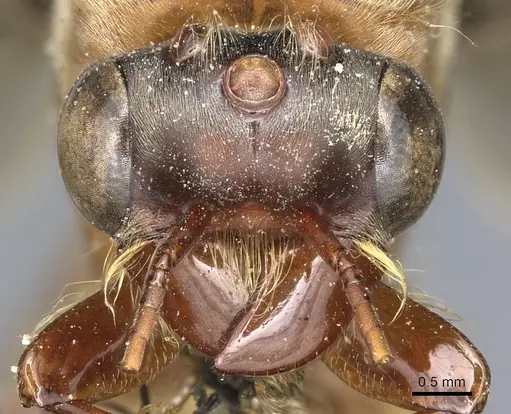
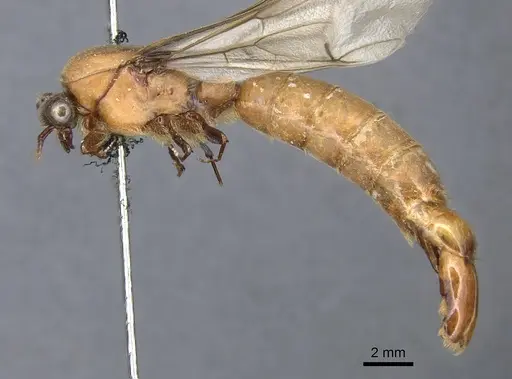
Workers of Dorylus aethiopicus can be identified by several key features. Major workers reach approximately 5.0mm in total length [1]. The antennae have 9 segments, which is characteristic of the subgenus Alaopone [1]. The petiole has a sharp and distinct ventral tooth, this is a reliable diagnostic feature [1]. The head is sparsely but noticeably puncturate [1]. Males have broad, plate-like mandibles. The species was originally described from male specimens in 1895, with workers first described by Forel in 1907. When identifying your ants, count the antennal segments and check for the ventral petiolar tooth, these will confirm you have a Dorylus species, and the 9-segment antennae and North African distribution strongly suggest D. aethiopicus.
Feeding and Diet
As a Dorylus army ant, this species is predatory and requires a protein-rich diet. In the wild, army ants are active hunters that raid columns of insects and other arthropods. In captivity, offer live prey such as small crickets, mealworms, fruit flies, and other small insects. Feed prey roughly twice weekly, adjusting based on colony size and consumption. Remove uneaten prey after 24-48 hours to prevent mold. Unlike some ants, Dorylus species typically do not rely heavily on sugar sources, their nutrition comes primarily from protein. However, you can occasionally offer a drop of honey or sugar water as a supplement.
Housing and Setup
Given this species' beach sand nesting preference, a naturalistic setup works best. Use a container with at least 10-15cm of sandy substrate, play sand or calcium sand mixed with some soil works well. The substrate should be lightly moist but drain quickly, avoid the waterlogged conditions used for tropical forest species. Provide a shallow water dish for drinking. Since they are predatory, you may want an outworld area where you can add prey without disturbing the nest. For escape prevention, use fluon on all rim edges and ensure any ventilation has fine mesh, army ants are excellent climbers and will find any gap. [1]
Temperature and Seasonal Care
Based on the species' North African distribution, it likely tolerates a wide temperature range. The Morocco specimens were collected at elevations from 12m to 651m, suggesting adaptation to both coastal and warmer inland conditions. Aim for temperatures in the low-to-mid 20s°C (around 22-26°C) as a starting point. You can create a slight thermal gradient so workers can self-regulate. Place a heating cable on one side of the nest if room temperature is below 20°C. Regarding seasonal cycles, specific data is lacking, but the species occurs in regions with mild winters. Expect reduced activity during cooler months but likely no true diapause, maintain stable temperatures year-round. The light trap captures of males in July, August, and November suggest nuptial flights occur during warm summer months. [1]
Frequently Asked Questions
How long does it take for Dorylus aethiopicus to go from egg to worker?
The egg-to-worker timeline is unconfirmed, no research has documented their development. Monitor your colony and maintain stable, warm conditions to support development.
What do Dorylus aethiopicus ants eat?
They are predatory army ants that hunt insects and other arthropods. Feed live prey such as small crickets, mealworms, fruit flies, and other tiny insects roughly twice weekly. Remove uneaten prey after a day or two. They may occasionally accept sugar sources like honey water, but protein from prey is their primary nutrition.
Can I keep multiple queens together?
This is unknown, the colony structure has not been documented for Dorylus aethiopicus. Without specific data, we cannot recommend combining unrelated queens. Keep queens separate until you confirm they will tolerate each other, or start with one queen.
What temperature should I keep Dorylus aethiopicus at?
Aim for roughly 22-26°C. Based on their North African distribution, they likely tolerate temperatures from about 20°C to 30°C. A heating gradient allows workers to choose their preferred temperature. If your room is below 20°C, use a heating cable on one side of the nest.
Are Dorylus aethiopicus good for beginners?
No, this species is rated Expert difficulty. There is almost no captive care information available, with no documented colony structure, development timeline, or specific humidity requirements. You will be pioneering their husbandry. They also require constant live prey, which is demanding. Only experienced antkeepers should attempt this species.
What kind of nest should I use?
Based on field data showing they nest in beach sand, use a naturalistic setup with deep sandy substrate (at least 10-15cm). A container filled with sand that you can moisten works well. The substrate should drain quickly, avoid waterlogged conditions.
Do Dorylus aethiopicus need hibernation?
Diapause requirements are unknown. The species occurs in regions with mild winters, so a true hibernation is unlikely. Maintain stable temperatures year-round. Expect reduced activity during cooler periods but no extended dormancy.
How big do colonies get?
Colony size is unknown, no data exists on maximum colony size for this species.
Why are my Dorylus aethiopicus dying?
Without specific data, common issues likely include: improper humidity (this species prefers drier conditions than typical army ants, avoid overwatering), insufficient prey (they need constant live protein), temperature stress (too cold or unstable), and escape-related losses. Review each parameter and adjust incrementally.
Report an Issue
The current care sheet is based fully on literature. See inconsistencies, or something that's incorrect? Please , it will be resolved after review from an admin. Contributing to the blogs tab also helps providing information, to make us be able to further improve the caresheets. Thank you for your support!
References

This caresheet is licensed under CC BY-SA 4.0 .
Community Blogs
CASENT0903715
View on AntWeb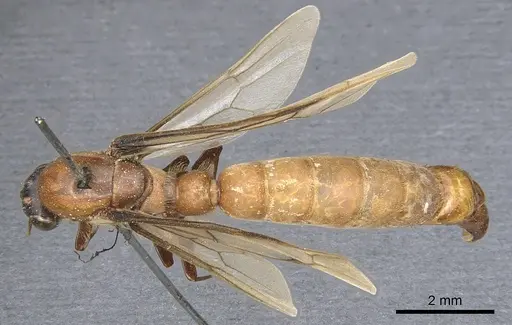
Literature
Loading distribution map...Loading products...