
Dolichoderus pilinomas
- Sci. Name
- Dolichoderus pilinomas
- Tribe
- Dolichoderini
- Subfamily
- Dolichoderinae
- Author
- Dill, 2002
- Distribution
- Found in 0 countries
Introduction
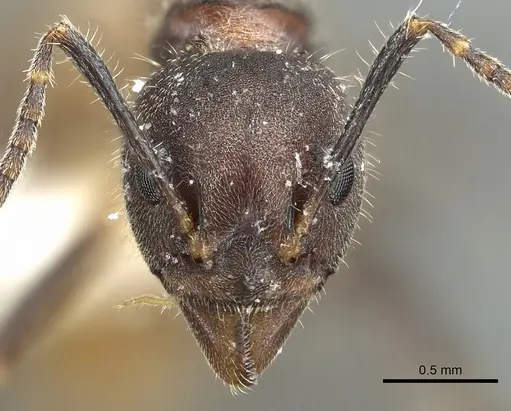
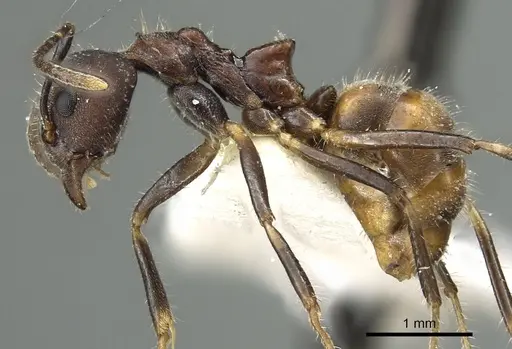
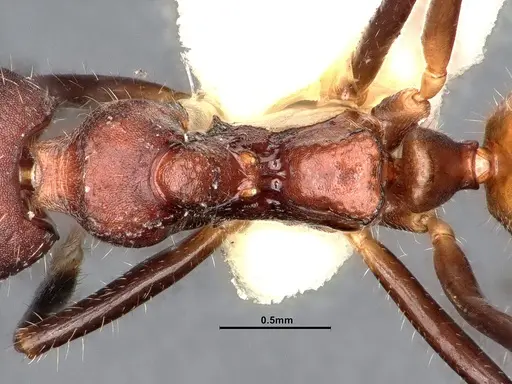
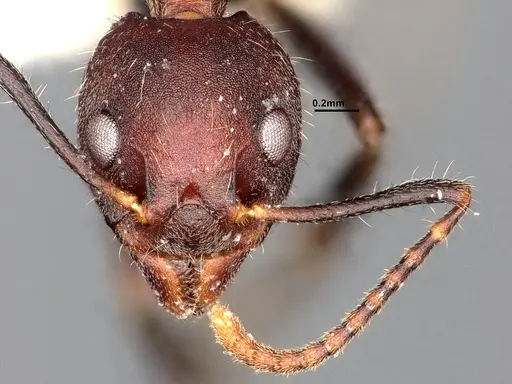
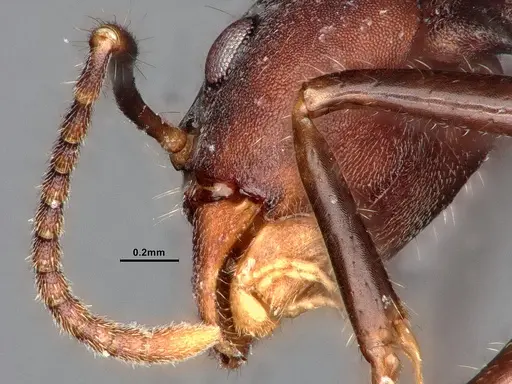
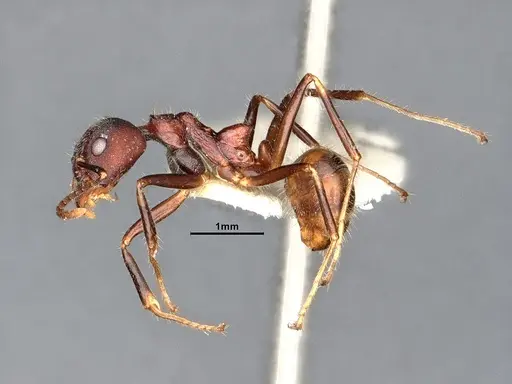
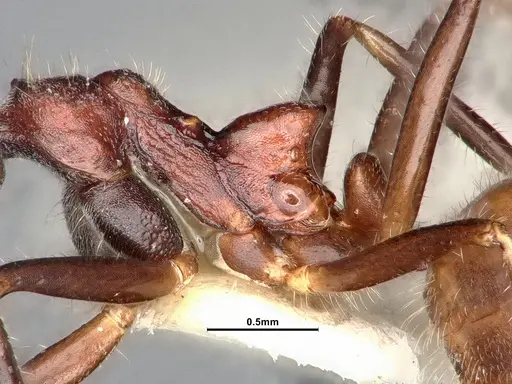
Dolichoderus pilinomas is a small ants measuring 4-5mm for workers and around 6mm for queens. They have a distinctive appearance with reddish-brown to medium-brown coloration and erect hairs on the dorsal surface of their head and body - a unique trait among migrating herdsmen ants. Their propodeum is notably large and high, overtopping the mesonotum. This species belongs to the Dolichoderus cuspidatus group, known as 'herdsmen ants' for their unusual relationship with mealybugs. They are known only from Western Sarawak in northwestern Borneo, specifically from the Gua Kapur (Fairy Cave) area near Bau. What makes D. pilinomas truly special is their partnership with the mealybug Borneococcusbauensis. Workers actively carry these mealybugs around and keep them within their nest structure - a bivouac-like arrangement. This is a specialized 'herdsmen' lifestyle where the ants protect and tend the mealybugs in exchange for the honeydew they produce. The queen is unusual: she is wingless (apterous) with a fused mesonotum and vestigial wing buds, making her look more like an enlarged worker.
Quick Summary
- Difficulty: Expert
- Origin & Habitat: Known only from Western Sarawak in northwestern Borneo (Gua Kapur/Fairy Cave area at 1°N latitude). They live in tropical rainforest conditions in a cave system. [1]
- Colony Type: Monogyne, single queen colonies. Queens are ergatoid (wingless) with fused mesonotum. [1]
- Size & Growth:
- Antkeeping:
- Temperature: Keep at 24-28°C, they are a tropical Bornean species from near the equator.
- Humidity: High humidity required, think damp tropical cave environment. Keep nest substrate consistently moist but not waterlogged.
- Diapause: No, being a tropical species from near the equator, they do not require hibernation or winter rest.
- Nesting: Based on their natural history as cave-dwelling herdsmen ants, they likely prefer enclosed nests with narrow chambers. A Y-tong (AAC) nest or plaster formicarium with tight chambers would work well. They keep mealybugs in bivouac-like structures, so the nest should have space for this symbiosis.
- Behavior: These are docile, non-aggressive ants that focus on tending their mealybug partners rather than defending territory. Workers are small but active, carrying mealybugs between nest chambers. Their small size means they could slip through small gaps, so standard escape prevention is recommended.
- Common Issues: very limited availability, this species is rarely available in the antkeeping hobby due to its restricted range, specialized diet, they require mealybugs oraphid substitutes for their honeydew source, which complicates feeding, small colony size means they are fragile and slow to grow, tropical humidity requirements can be challenging to maintain consistently, no captive breeding data exists, wild-caught colonies may struggle in captivity, queen is ergatoid (wingless) which may affect how colonies establish
The Herdsmen Lifestyle
Dolichoderus pilinomas is one of the 'herdsmen ants', a fascinating group that has evolved a mutualistic relationship with mealybugs. Workers carry the mealybugs (Borneococcusbauensis) around in their nest and tend them like farmers tending livestock. The mealybugs feed on plant sap and produce honeydew, a sugary secretion that the ants consume. This partnership is so specialized that the ants and mealybugs have become dependent on each other. In captivity, you would need to maintain a colony of mealybugs oraphid substitutes to simulate this natural relationship. The mealybugs are kept within a bivouac-like nest structure, which is different from typical ant nests. [1]
Queen and Colony Structure
The queen of D. pilinomas is unusual, she is ergatoid, meaning she is wingless and worker-like in appearance. She has vestigial wing buds and a fused mesonotum (the middle section of her thorax is fused together). This is different from most ant queens that have full wings and distinct thoracic segments. The documented colony was monogyne, meaning it had a single queen. The colony was also very small, one of the smallest known in the cuspidatus group. This suggests that D. pilinomas may be a slow-growing species that maintains relatively small colonies even at maturity. [1]
Housing and Nest Setup
Because this is a rare species with no captive breeding history, housing recommendations are based on inference from their natural history. They are cave-dwelling ants from tropical Borneo, so they need high humidity and stable temperatures around 24-28°C. A Y-tong (AAC) nest or plaster formicarium with tight, appropriately-sized chambers would work well. The chambers should be scaled to their small worker size. Given their herdsmen lifestyle, the nest should have enough space to accommodate mealybug colonies. Test tubes can work for founding colonies, but you would need to eventually move them to a setup that allows for the mealybug symbiosis. Use standard escape prevention despite their small size.
Feeding and Diet
In the wild, D. pilinomas gets much of its nutrition from the honeydew produced by their mealybug partners. The workers also likely supplement with small insects and other protein sources. In captivity, you would need to provide: 1) A source of honeydew, either live mealybugs/aphids or sugar water/honey as a substitute, 2) Small protein sources like fruit flies, pinhead crickets, or other tiny insects. Sugar acceptance is likely given their honeydew-feeding habit, but the mealybug relationship is essential for long-term colony health. This makes them a challenging species to keep, you are essentially committing to maintaining two colonies (ants and mealybugs).
Temperature and Seasonal Care
As a tropical species from near the equator in Borneo, D. pilinomas does not experience cold winters or seasonal temperature drops. They require year-round warm conditions around 24-28°C. Unlike temperate species, they do not need diapause or hibernation periods. Temperature should be stable, avoid drafts or cooling. A heating cable on one side of the nest can create a gentle gradient, but ensure the heating element is placed on top of the nest rather than underneath to prevent excessive drying. Room temperature within this range is acceptable if your home stays consistently warm.
Frequently Asked Questions
How long does it take for Dolichoderus pilinomas to produce first workers?
The exact timeline is unconfirmed, no captive development studies exist for this species.
Can I keep multiple Dolichoderus pilinomas queens together?
No, this species is monogyne (single queen) based on the documented colony structure. The single known colony had only one queen. Combining unrelated queens is not recommended and would likely result in fighting. [1]
What do Dolichoderus pilinomas eat?
They are herdsmen ants that primarily feed on honeydew from their mealybug partners. In captivity, provide sugar sources (honey water, sugar water) and small protein (fruit flies, tiny insects). The key challenge is maintaining mealybugs oraphid substitutes to simulate their natural diet.
Are Dolichoderus pilinomas good for beginners?
No, this is an expert-level species. They are extremely rare in the hobby, require specialized mealybug symbiosis, need tropical conditions, and no captive breeding data exists. They are not recommended for beginners.
How big do Dolichoderus pilinomas colonies get?
Based on the single documented colony being very small, colonies likely remain small at maturity. This is one of the smallest species in the cuspidatus group. They are not a fast-growing, large-colony species. [1]
Do Dolichoderus pilinomas need hibernation?
No, as a tropical species from near the equator in Borneo, they do not require hibernation or winter rest. Keep them warm year-round at 24-28°C.
What is the best nest type for Dolichoderus pilinomas?
A Y-tong (AAC) nest or plaster formicarium with small, tight chambers scaled to their worker size. They need high humidity and enclosed spaces. Test tubes work for founding but eventually need a setup that can accommodate their mealybug partners.
Why are my Dolichoderus pilinomas dying?
Without captive data, we can only speculate. Likely causes include: improper humidity (too dry), temperature issues (too cold), lack of mealybug/aphid food source, or stress from being wild-caught. This species has no captive breeding history, so establishing stable colonies is challenging.
Report an Issue
The current care sheet is based fully on literature. See inconsistencies, or something that's incorrect? Please , it will be resolved after review from an admin. Contributing to the blogs tab also helps providing information, to make us be able to further improve the caresheets. Thank you for your support!
References

This caresheet is licensed under CC BY-SA 4.0 .
Community Blogs
CASENT0902963
View on AntWeb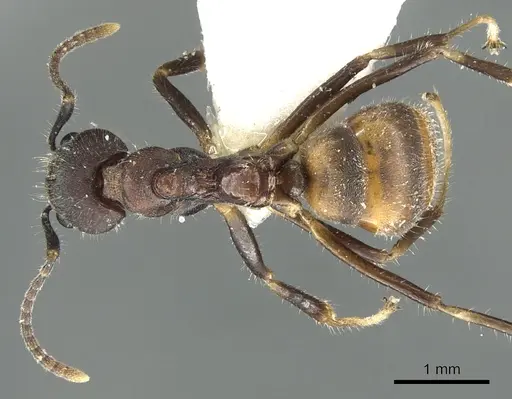
SMFHYM0008900
View on AntWeb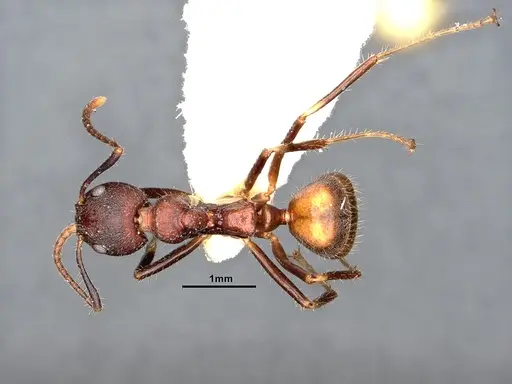
Literature
Loading distribution map...Loading products...