
Dolichoderus kinabaluensis
- Sci. Name
- Dolichoderus kinabaluensis
- Tribe
- Dolichoderini
- Subfamily
- Dolichoderinae
- Author
- Dill, 2002
- Distribution
- Found in 2 countries
Introduction
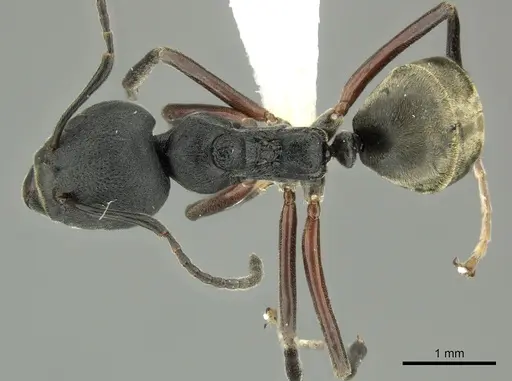
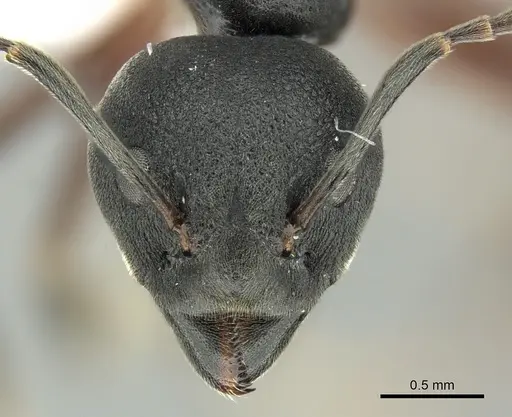
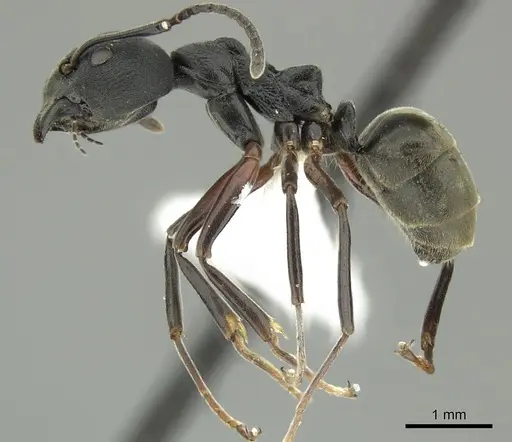
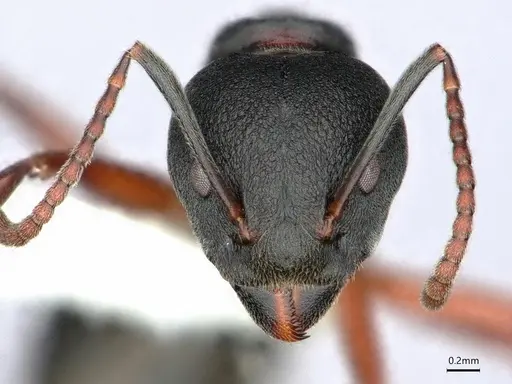
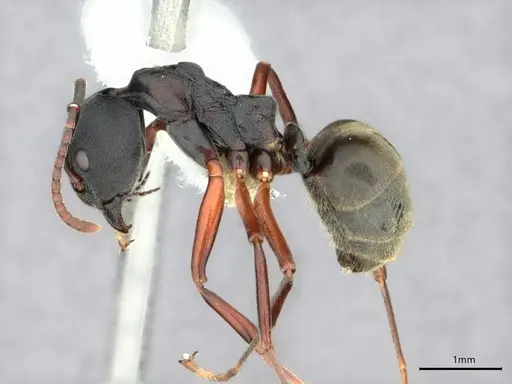
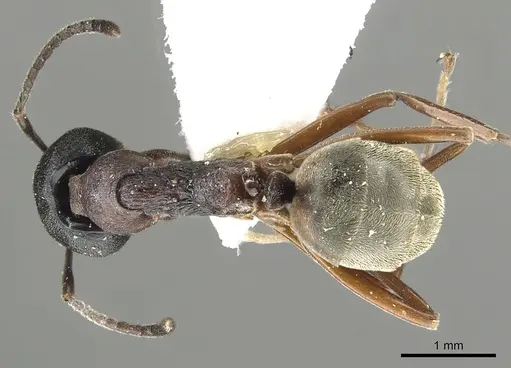
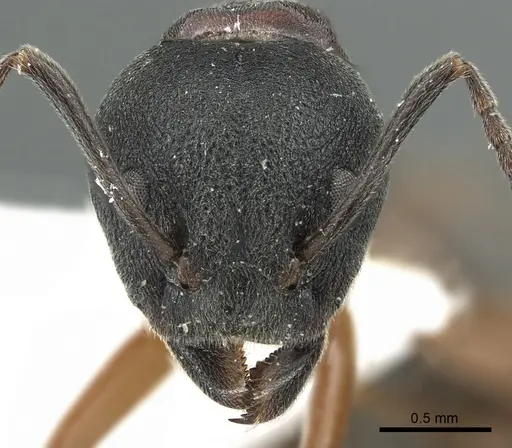
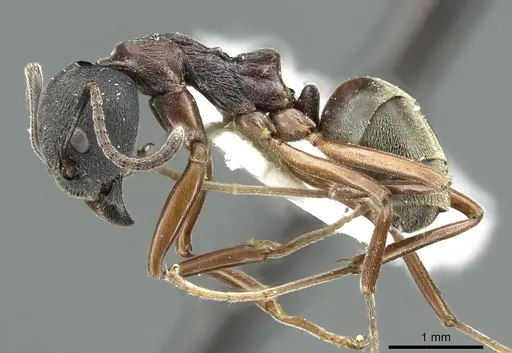
Dolichoderus kinabaluensis is a small to medium-sized ant in the Dolichoderus cuspidatus species group, known as herdsmen ants. Workers measure 4.28-5.80 mm and have black to reddish-brown coloring with dense golden-yellowish pubescence. The propodeum is rounded, and the gaster has pubescence that can appear as golden stripes . This species is found in montane Borneo at 860-2,300 meters elevation in Sabah and East Sarawak . As a herdsmen ant, D. kinabaluensis associates with mealybugs like Bolbococcus oresbius, protecting them for honeydew . The queen is ergatoid (wingless) and becomes physogastric, supporting very large colonies .
Quick Summary
- Difficulty: Medium
- Origin & Habitat: Montane Borneo (860-2,300 m elevation) in Sabah and East Sarawak, nesting in subterranean cavities [1].
- Colony Type: Ergatoid queen system, wingless queen that reproduces in nest. Colony structure (monogyne/polygyne) unconfirmed.
- Size & Growth:
- Antkeeping:
- Temperature: Based on montane habitat (860-2300 m) [1], keep at 20-24°C with a gentle gradient. Avoid overheating.
- Humidity: Subterranean nester [1], so keep nest substrate consistently moist but not waterlogged.
- Diapause: Unknown, not specified in research.
- Nesting: Subterranean cavities [1], so use Y-tong (AAC) or plaster nests with deep chambers. Provide soil or substrate for tunneling.
- Behavior: Calm and non-aggressive, typical of herdsmen ants. Workers move deliberately and rely on chemical defenses. Escape risk is moderate due to worker size (4-5.8 mm) [1].
- Common Issues: mealybug dependency, colonies may struggle without honeydew sources [1], temperature sensitivity, montane origin means they can overheat easily, slow colony growth, large colony size takes time, humidity management, too dry causes desiccation, too wet causes mold, queen replacement, ergatoid queen cannot found colonies alone, you need an established colony
Housing and Nest Setup
Dolichoderus kinabaluensis is a subterranean nester that prefers dark, humid spaces deep in the nest [1]. Use Y-tong (AAC) nests or plaster nests with deep chambers to provide darkness and humidity control. You can also use earth nests with moist soil or sand for tunneling. Keep the nest area consistently humid but not waterlogged. Include space in the outworld for mealybugs or sugar sources, as these ants are herdsmen. A test tube setup works for founding, but established colonies need more space. Minimize lighting on the nest area, these ants thrive with indirect or low light.
Feeding and Diet
As herdsmen ants, D. kinabaluensis associates with mealybugs like Bolbococcus oresbius for honeydew [1]. In captivity, you can keep mealybugs in the outworld or provide constant sugar sources like honey, sugar water, or diluted maple syrup. Change sugar sources every 2-3 days to prevent mold. Offer protein occasionally with small insects like fruit flies or crickets, but these ants are not active hunters. Feed sugar sources constantly and protein 1-2 times per week, removing uneaten prey after 24 hours.
Temperature and Seasonal Care
This is a montane species from 860-2300 m elevation [1], so keep temperatures cooler than typical tropical ants. Aim for 20-24°C with a gentle gradient. Avoid placing the nest near heat sources or in direct sunlight, as they can overheat easily. Monitor colony activity, if workers cluster, temperature may be too low, if they avoid the nest, it may be too warm. Diapause is not specified, so no cool period is required unless the colony shows reduced activity.
Understanding the Ergatoid Queen
The queen is ergatoid (wingless) and becomes physogastric, meaning her abdomen swells with eggs to support large colonies [1]. This means you cannot start a colony from a single queen, you need an established colony with workers. When the colony grows, the physogastric queen will be obvious with a swollen abdomen. This adaptation allows for very large colony sizes.
Behavior and Colony Dynamics
Dolichoderus kinabaluensis is calm and non-aggressive, moving deliberately and relying on chemical defenses rather than stinging [1]. As herdsmen ants, they tend mealybugs for honeydew, which you can observe in the outworld. Colony growth is steady but not rapid, expect establishment in the first year with growth in subsequent years.
Frequently Asked Questions
How long does it take for Dolichoderus kinabaluensis to produce first workers?
The exact timeline is not studied for this species. Based on related Dolichoderus species, it may take several weeks, but no specific data is available.
Can I keep multiple Dolichoderus kinabaluensis queens together?
Colony structure is unconfirmed for this species. Because ergatoid queens require worker assistance, combining unrelated queens is not recommended. Stick with single-queen colonies.
What do I feed Dolichoderus kinabaluensis?
These are herdsmen ants that rely on honeydew from mealybugs [1]. Provide constant sugar sources and optionally keep mealybugs in the outworld. Offer small protein sources occasionally.
Are Dolichoderus kinabaluensis good for beginners?
This species is rated as Medium difficulty. Challenges include needing an established colony, cooler temperature preferences, and mealybug dependency. Experienced antkeepers may have success.
What temperature do Dolichoderus kinabaluensis need?
Keep them at 20-24°C based on their montane habitat [1]. Avoid temperatures above 26°C and direct heat sources.
How big do Dolichoderus kinabaluensis colonies get?
This species forms very large colonies [1], but exact numbers are unconfirmed. Growth takes time, but established colonies can become impressive.
Do Dolichoderus kinabaluensis need hibernation?
Diapause is not specified in research. As a montane species, a cool period may be beneficial if the colony shows reduced activity, but it is not required.
Why is my colony not growing?
Common causes include incorrect temperature, insufficient sugar sources, low humidity, or slow growth typical of Dolichoderus species. Ensure sugar is always available and nest is humid but not wet.
Report an Issue
The current care sheet is based fully on literature. See inconsistencies, or something that's incorrect? Please , it will be resolved after review from an admin. Contributing to the blogs tab also helps providing information, to make us be able to further improve the caresheets. Thank you for your support!
References

This caresheet is licensed under CC BY-SA 4.0 .
Community Blogs
Literature
Loading distribution map...Loading products...