
Dolichoderus inermis
- Sci. Name
- Dolichoderus inermis
- Tribe
- Dolichoderini
- Subfamily
- Dolichoderinae
- Author
- MacKay, 1993
- Distribution
- Found in 1 countries
Introduction
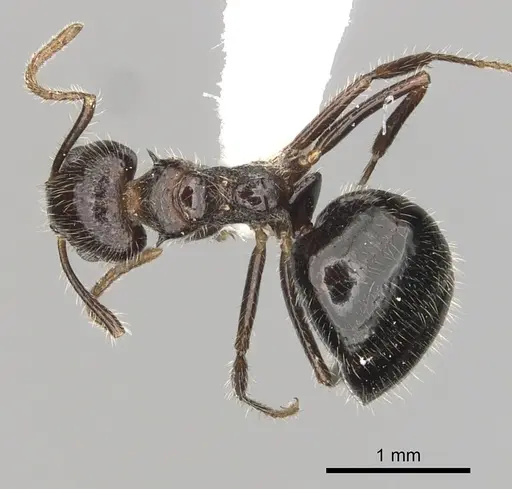
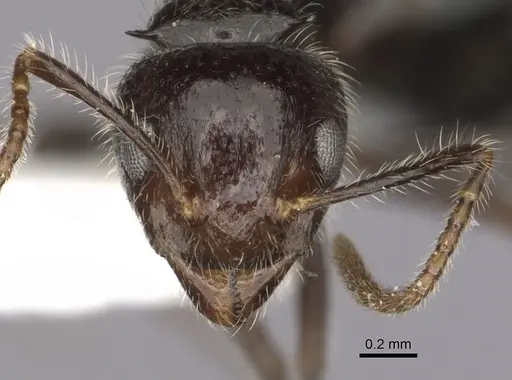
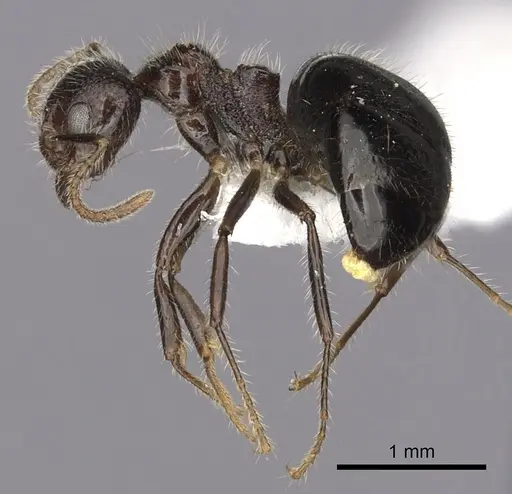
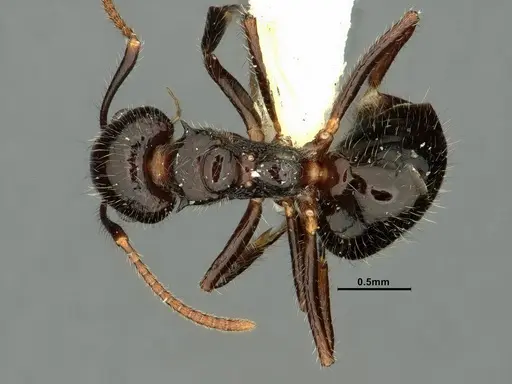
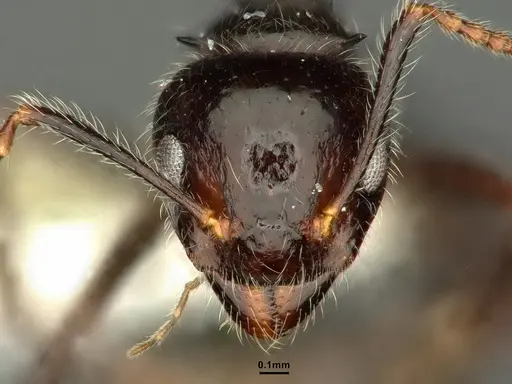
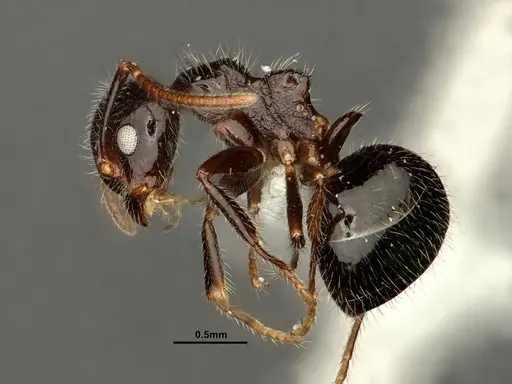
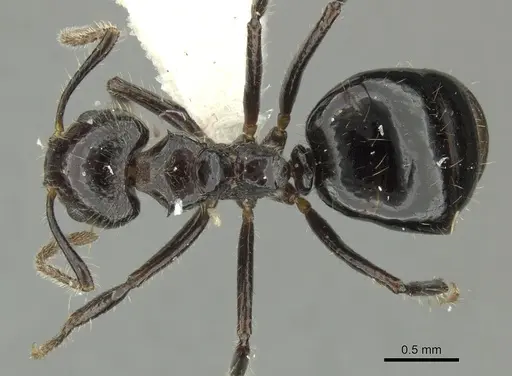
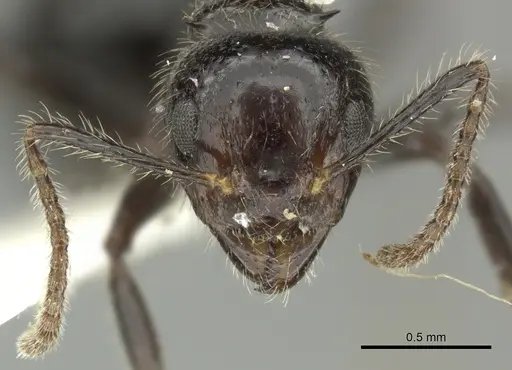
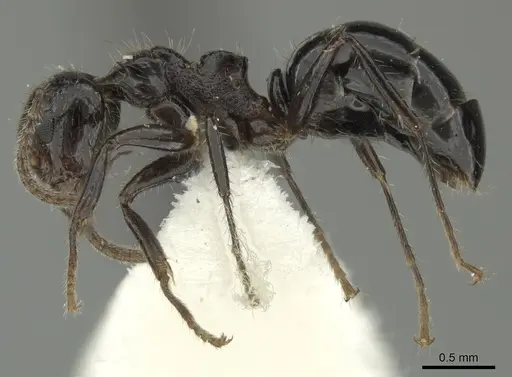
Dolichoderus inermis is a small black ant native to the Neotropical region, found in Costa Rica and French Guiana [AntWiki]. Workers are black with abundant delicate erect hairs on the scapes and mesosomal dorsum. The dorsal and posterior faces of the propodeum meet at a rounded angle rather than projecting as a flange [AntWiki]. This species is parabiotic - it forages alongside Crematogaster carinata in mixed columns, a rare cooperative behavior [AntWiki]. Unlike most Dolichoderus species that flee or attack when disturbed, D. inermis moves very slowly and passively, often carrying its gaster twisted laterally [AntWiki].
Quick Summary
- Difficulty: Medium
- Origin & Habitat: Costa Rica and French Guiana in Neotropical rainforests. In Corcovado National Park, this species is moderately abundant and widely distributed across the Osa Peninsula at Sirena, Los Patos, Los Planes, Cerro Rincon, and Llorona [1]. Found on vegetation and inflorescences in humid forest environments.
- Colony Type: Colony structure is unconfirmed. Observed foraging in mixed groups with Crematogaster carinata, indicating parabiotic relationship [1].
- Size & Growth:
- Queen: Size data unavailable, no specific measurements exist for this species.
- Worker: Size data unavailable, no specific measurements exist for this species.
- Colony: Colony size has not been studied.
- Growth: Growth rate is unconfirmed.
- Development: Unconfirmed, no development studies exist for this species. (Direct observations are needed for accurate guidance.)
- Antkeeping:
- Temperature: Keep at 24-28°C. As a Neotropical species from Costa Rica, they require warm, stable temperatures typical of tropical rainforest environments.
- Humidity: Maintain high humidity, aim for 70-85% relative humidity. These ants live in humid rainforest environments. Keep the nest substrate consistently moist but not waterlogged.
- Diapause: No, as a tropical species from Costa Rica, they do not require hibernation. Maintain consistent warm temperatures year-round.
- Nesting: No specific natural nesting data available. Based on genus patterns and their presence on vegetation and ground strata, they likely nest in rotting wood, under bark, or in soil cavities. A Y-tong (AAC) nest or plaster nest with good moisture retention would likely work well.
- Behavior: Dolichoderus inermis is passive and slow-moving compared to other Dolichoderus species [1]. Workers do not flee or attack when disturbed, they continue moving slowly. They are parabiotic, meaning they forage alongside Crematogaster carinata in mixed columns [1]. Workers are often found on inflorescences where they tend scale insects and collect honeydew [1]. Escape risk is moderate, standard escape prevention measures should be used.
- Common Issues: tropical species requires consistent warmth, cold temperatures can suppress activity and slow development, parabiotic behavior in the wild may indicate they benefit from some social interaction, though they can survive in isolation, slow growth and passive temperament require patience, high humidity requirements mean mold can be an issue if ventilation is poor, wild-caught colonies may carry parasites or pathogens that can cause colony decline in captivity
Natural History and Distribution
Dolichoderus inermis is endemic to the Neotropical region, specifically known from Costa Rica's Corcovado National Park and French Guiana [1]. In Corcovado, it is considered a moderately abundant element of the fauna but has only been documented from this single protected area across multiple collection sites including Sirena, Los Patos, Los Planes, Cerro Rincon, and Llorona [1]. This distribution across the Osa Peninsula suggests the species is well-established in Costa Rica's Pacific coastal rainforests. The species was originally described by Mackay in 1993 based on worker specimens [1]. Workers are classified as Ground strata in ecological surveys [2].
Parabiotic Behavior
One of the most distinctive behaviors of D. inermis is its parabiotic relationship with Crematogaster carinata. In Corcovado National Park, researchers observed workers of both species foraging together on low vegetation, moving in mixed columns and forming clumps of stationary workers [1]. This cooperative foraging is unusual among ants and suggests a mutually beneficial relationship. When disturbed, instead of the aggressive response typical of many Dolichoderus species, D. inermis workers continue their slow, passive movement. Their unique gaster-posture (twisted laterally) may serve a communication or chemical signal function similar to that observed in some Myrmelachista species [1].
Foraging and Diet
In the wild, D. inermis workers are commonly found on plant inflorescences including Acanthaceae, Hamelia axillaris (Rubiaceae), and Melastomataceae [1]. On these plants, they associate with Membracidae (treehoppers) and Coccoidea (scale insects), which they likely tend for honeydew, a sugar-rich excretion that many Dolichoderus species actively seek. This foraging on vegetation rather than just ground-level hunting distinguishes them from some related species. In captivity, offer sugar water, honey, or honey water as a carbohydrate source, along with small insects for protein.
Housing and Nesting
Since specific natural nesting data is not available for this species, we must infer from genus patterns and their known behaviors. Workers have been classified as Ground strata in ecological surveys [2], suggesting they forage on the ground but may nest in soil or rotting wood cavities. Their presence on low vegetation and association with inflorescences indicates they are comfortable in humid, shaded microhabitats. For captivity, a Y-tong (AAC) nest or plaster formicarium with good moisture retention works well for Dolichoderus species. Keep the nest humid (70-85% humidity) with a water tube or moisture reservoir.
Temperature and Seasonal Care
As a tropical species from Costa Rica's rainforests, D. inermis requires warm temperatures year-round. Maintain the nest area at 24-28°C, avoiding any prolonged drops below 22°C. Unlike temperate species, they do not enter diapause or hibernation, maintaining consistent warmth is essential for colony health and brood development. A small heating cable placed on one side of the nest can create a gentle thermal gradient, allowing workers to self-regulate by moving between warmer and cooler areas. Room temperature within the target range is acceptable without additional heating. [1]
Frequently Asked Questions
How long does it take for Dolichoderus inermis to produce first workers?
The egg-to-worker timeline is unconfirmed for this specific species. No development studies exist for D. inermis. Patience is required as this species appears to grow slowly.
What do Dolichoderus inermis ants eat?
Based on their natural behavior of foraging on inflorescences and tending scale insects, they likely feed on honeydew and sugar sources. In captivity, offer sugar water, honey water, or honeydew substitutes. They will also accept small insects like fruit flies or pinhead crickets for protein.
Can I keep multiple Dolichoderus inermis queens together?
Colony structure is unconfirmed for this species. We have no specific data on whether D. inermis accepts multiple queens. It is not recommended to combine unrelated foundress queens without documented evidence of pleometrosis in this species.
Are Dolichoderus inermis good for beginners?
This species is rated as Medium difficulty. While not overly aggressive, the lack of specific care data and their tropical temperature and humidity requirements make them better suited for antkeepers with some experience. Their slow growth and passive nature require patience.
Do Dolichoderus inermis need hibernation?
No, as a tropical species from Costa Rica, they do not require hibernation or winter cooling. Maintain consistent temperatures of 24-28°C year-round. Attempting to hibernate them could be harmful or fatal to the colony.
What size colony do Dolichoderus inermis reach?
Colony size is unknown as this species has not been studied in detail. Their parabiotic lifestyle in the wild may mean they don't develop extremely large colonies when kept alone.
When should I move Dolichoderus inermis to a formicarium?
Keep newly caught or purchased colonies in a test tube setup until the colony reaches 20-30 workers. Once established with a healthy brood population and consistent activity, you can move them to a Y-tong or plaster formicarium with good humidity retention.
Why are my Dolichoderus inermis dying?
Common causes include temperatures below 22°C, low humidity causing desiccation, mold from excessive moisture with poor ventilation, or stress from disturbance. Also ensure they have access to sugar sources, without carbohydrates, colonies can weaken and die. Wild-caught colonies may also carry parasites.
Report an Issue
The current care sheet is based fully on literature. See inconsistencies, or something that's incorrect? Please , it will be resolved after review from an admin. Contributing to the blogs tab also helps providing information, to make us be able to further improve the caresheets. Thank you for your support!
References

This caresheet is licensed under CC BY-SA 4.0 .
Community Blogs
Literature
Loading distribution map...Loading products...